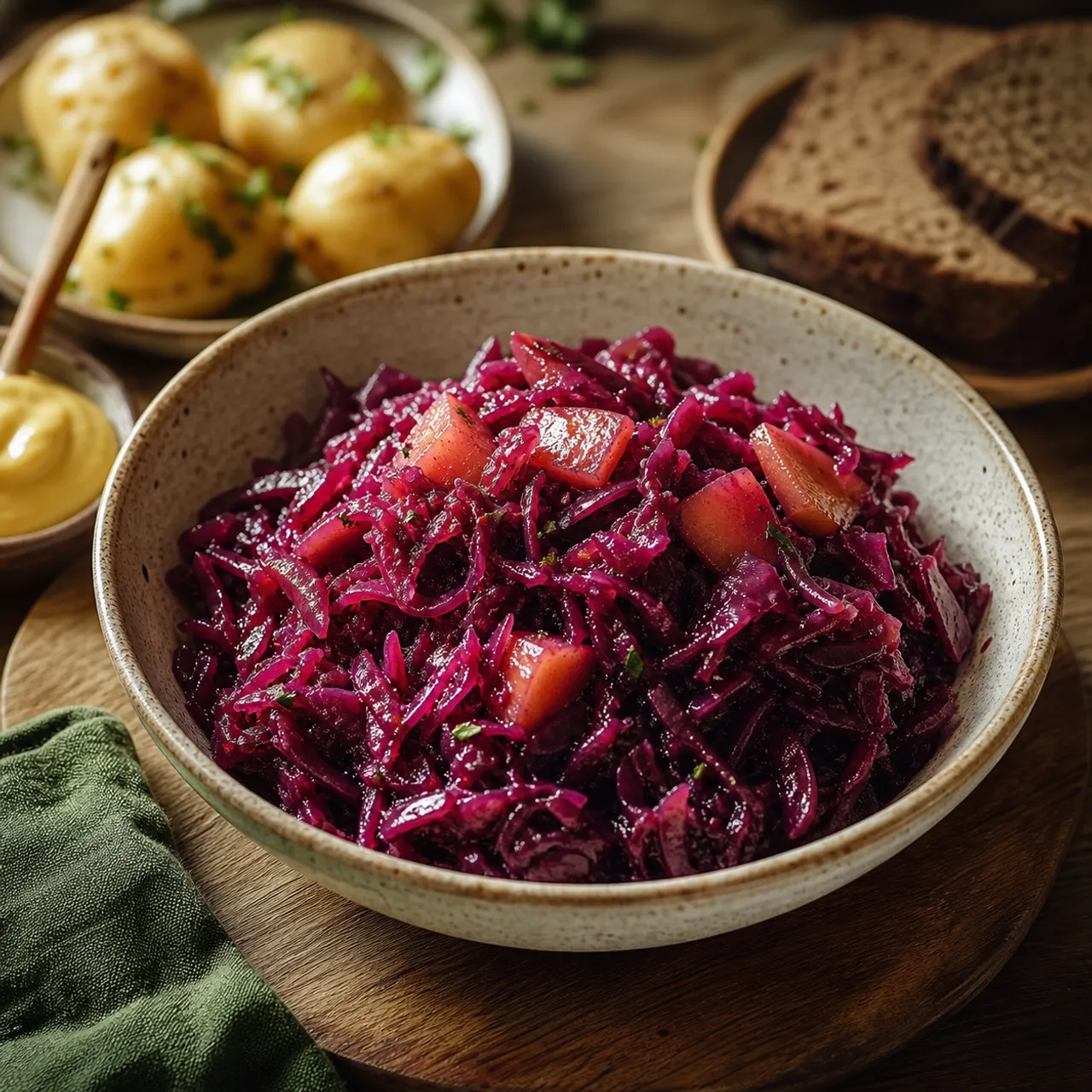
 German Images are for illustrative purposes only, may be inaccurate, and do not guarantee the presence or absence of specific ingredients.
 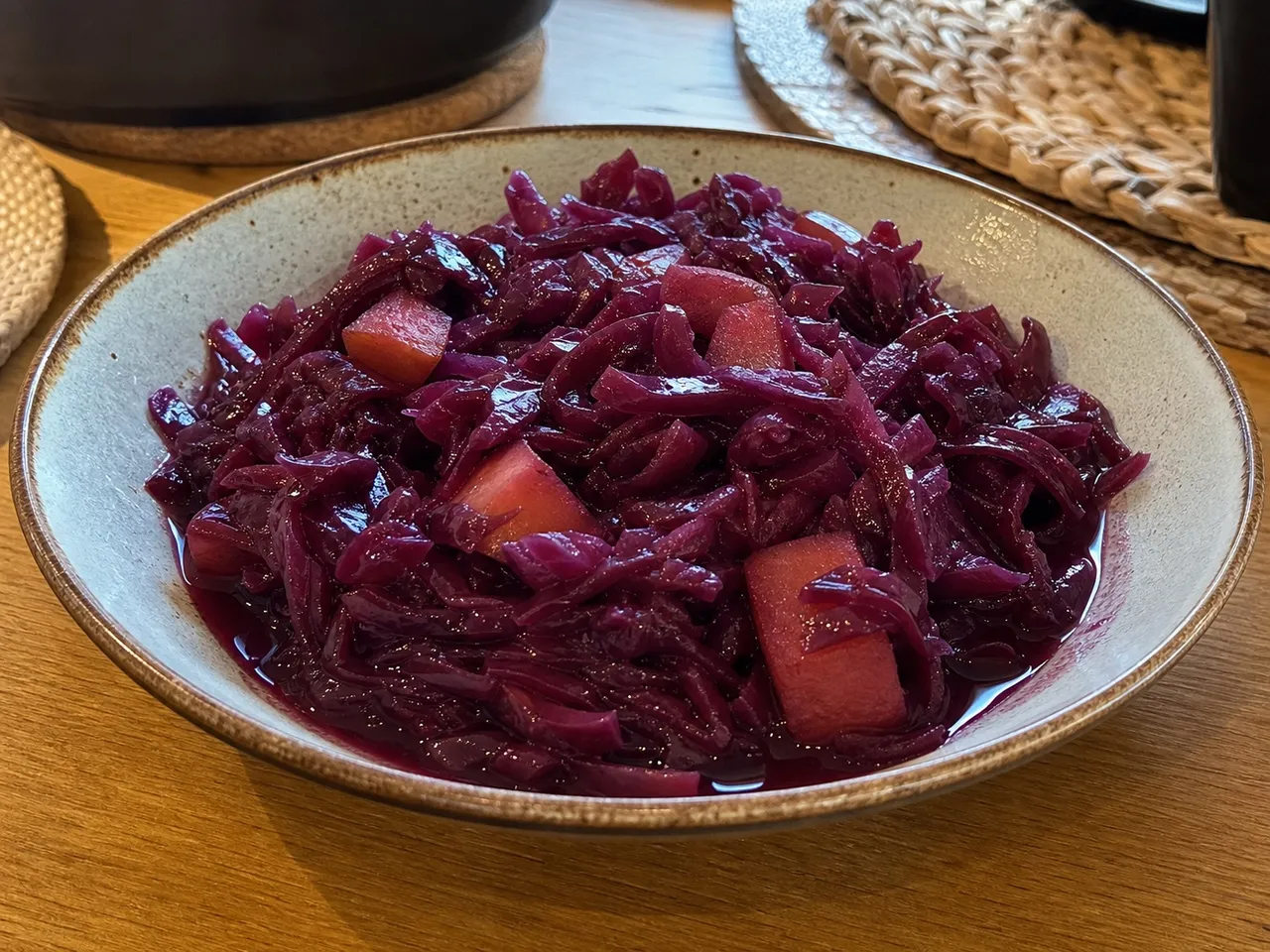 Serving Images are for illustrative purposes only, may be inaccurate, and do not guarantee the presence or absence of specific ingredients.
 Rotkohl (Braised Red Cabbage with Apples)
Sweet-and-sour braised red cabbage with apples, cloves, and a splash of red wine vinegar, a beloved holiday and Sunday-dinner side.
Contains common allergens
In the app, Listahan checks these against your household automatically.
Good to know
- One-pot
Matched from this dish's own ingredients and timing. Browse more: one-pot dinners
Instructions
6 steps- 1
Melt butter or bacon fat in a large pot and sauté the onion until softened.
- 2
Add the diced apples and shredded cabbage, and stir to combine.
- 3
Pour in vinegar, sugar, red wine, and water, then add bay leaves and cloves.
- 4
Bring to a simmer, cover, and cook over low heat for 45-60 minutes, stirring occasionally, until the cabbage is tender.
- 5
Remove the bay leaves and season with salt and pepper to taste.
- 6
Serve warm alongside roasted meats or sausages.
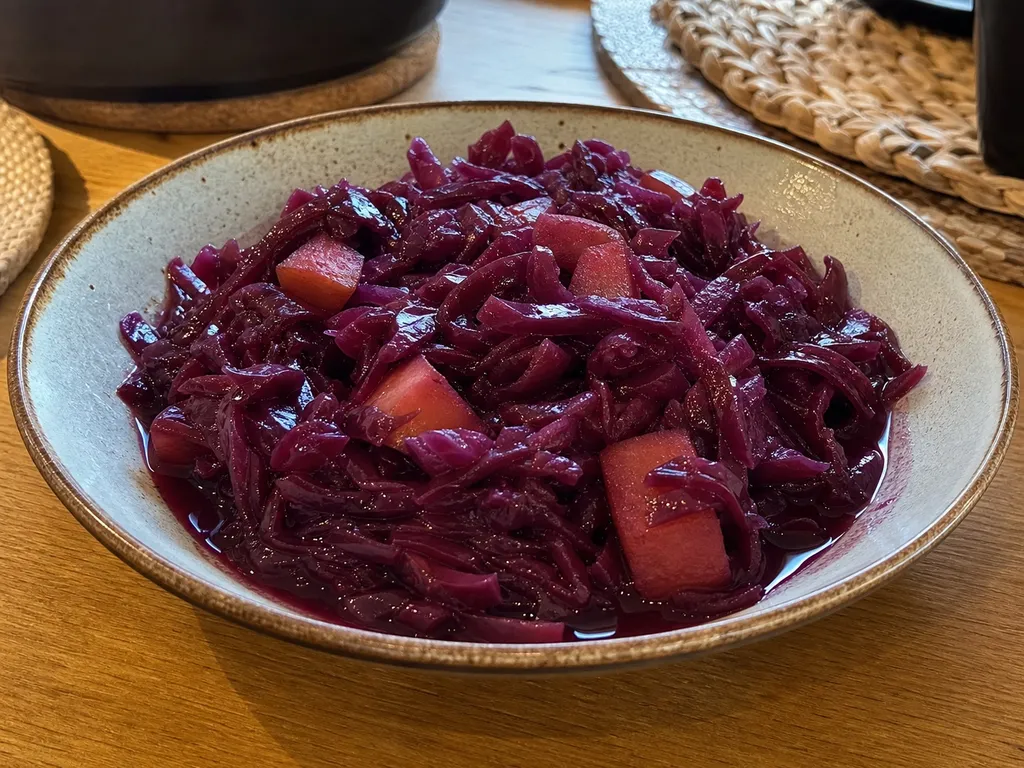 Images are for illustrative purposes only, may be inaccurate, and do not guarantee the presence or absence of specific ingredients.
 Listahan Family Score™
71/100
Good fit for most families
Score reflects how well this recipe fits a typical busy household. In the app, your Family Score is personalized to your household's allergens, kids, and pantry.
Nutrition
per serving175
Calories
3 g
Protein
26 g
Carbs
4 g
Fat
Estimated per serving. Actual values depend on the brands and portions you use.
Listahan cooking guide
Chef notes & practical guide
Technique notes, ingredient swaps, serve-alongside ideas, storage guidance, and equipment for this recipe.
Cultural context
Rotkohl is braised red cabbage cooked slowly with apples, vinegar, and warming spices like cloves and bay leaf, a staple side across Germany especially around Christmas and with roasted meats. The cabbage's color shifts with the acid added, turning a deeper, more vivid red as vinegar and wine are stirred in, which is part of why the dish is built with acid from the start rather than added at the end. It's a make-ahead dish by nature, since the flavor rounds out and deepens after a day in the fridge.
Listahan note
This version builds the sweet-tart balance gradually, layering apples and vinegar in early so they braise into the cabbage rather than sitting on top of it, and leaves enough time on low heat for the cabbage to turn silky rather than staying crunchy.
Technique cues
- Add the vinegar and wine early rather than at the end; the acid helps keep the cabbage's red color vivid and gives the long braise time to mellow the sharpness.
- Cook low and slow rather than at a hard simmer; rushing the heat leaves the cabbage tough in the center even after 45 minutes.
- Taste and adjust the vinegar-to-sugar balance right before serving, since the ratio that tastes right hot on the stove can taste different once the dish cools slightly.
Kitchen flow
- Parallel prep
- Start the cabbage braising before prepping the roast or sausages it will be served with, since it needs the longest cook time of the meal.
- Make-ahead
- Rotkohl is genuinely better made a day ahead; the sweet-tart balance settles and deepens overnight in the fridge.
- Leftover move
- Leftover Rotkohl reheats beautifully alongside a simple fried egg or grilled sausage for an easy next-day meal.
- Cleanup rhythm
- One pot handles the whole braise; the vinegar and wine make cleanup easy since they help lift any browned bits as you go.
Ingredient brief
Role, handling, and swap guidance for each key ingredient.
Red cabbage
Main vegetable
Purpose: Its firm texture needs a long braise to turn tender, and its natural pigment reacts with the acid in the recipe to develop the dish's deep red color.
Handling: Shred evenly so it braises at a consistent rate.
Adaptation: Green cabbage can be used but won't develop the same color or the same slightly sweeter flavor red cabbage has.
Apples
Sweetness and body
Purpose: They break down slightly during the long braise, adding natural sweetness and a bit of body to the sauce that forms around the cabbage.
Handling: Peel and dice so they cook down evenly with the cabbage rather than staying in separate chunks.
Adaptation: Pears work as a milder, less tart alternative.
Red wine vinegar
Acid backbone
Purpose: It's the primary source of the dish's characteristic tang and also helps preserve the cabbage's vivid red color through the long cook.
Handling: Add early in the braise so it has time to mellow rather than tasting sharp.
Adaptation: Apple cider vinegar is a reasonable substitute with a slightly fruitier edge.
Red wine
Depth and color
Purpose: It deepens the color and adds a subtle fruitiness and acidity beyond what vinegar alone provides.
Handling: Add along with the vinegar and water at the start of the braise.
Adaptation: Extra stock or water plus a splash more vinegar can replace the wine for a non-alcoholic version, though the flavor will be simpler.
Whole cloves
Warming spice
Purpose: Cloves are a classic pairing with braised red cabbage in German cooking, adding a warm, slightly sweet spice note.
Handling: Add whole so they can be fished out before serving, since biting into one is unpleasantly intense.
Adaptation: A small pinch of ground allspice can approximate the flavor if whole cloves aren't available, though it will disperse through the dish rather than staying removable.
Technique notes
- Don't skip fishing out the bay leaves and cloves before serving; they're easy to miss in the finished cabbage and unpleasant to bite into.
- If the cabbage still tastes tough after the full cook time, give it another 15 minutes rather than raising the heat, which can scorch the bottom.
- Reheating the next day almost always needs a small splash of water or stock, since the braise thickens as it sits in the fridge.
Ingredient swaps
- Dairy-free direction
- Use oil instead of butter or bacon fat to start the braise; the dish is otherwise naturally dairy-free.
- Gluten-free direction
- This dish is naturally gluten-free as written, so no substitutions are needed on that front.
- Weeknight shortcut
- Use a food processor's slicing attachment to shred the cabbage quickly rather than shredding it by hand.
Serve alongside
- Roast pork or duck
- Bratwurst or other sausages
- Kartoffelknodel (potato dumplings)
- Mashed potatoes
- Dry Riesling
- Dunkel lager
- Mulled wine (in colder months)
Serving suggestions only — check pairings for your household's allergens.
Storage & reheating
- Refrigerate in a sealed container for up to 5 days.
- Reheat gently on the stovetop with a splash of water or stock to loosen it.
- Freeze for up to 2 months; thaw overnight in the fridge before reheating.
Equipment
- Large pot with a lid
- Sharp knife or mandoline for shredding cabbage
- Wooden spoon
Make this household-aware
Listahan Pro checks this recipe against your household's allergens, finds pantry-aware swaps, builds the shopping list, and helps you plan the week around it.
Plan it in Listahan
Add Rotkohl (Braised Red Cabbage with Apples) to your week, check it against your household's allergens, and build the shopping list automatically.
More German recipes
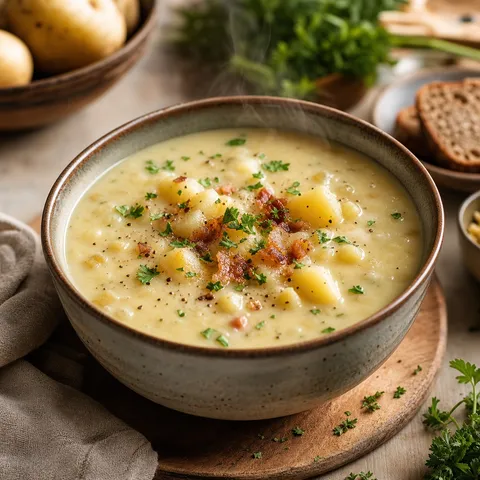 German Lens Verified Images are for illustrative purposes only, may be inaccurate, and do not guarantee the presence or absence of specific ingredients.
 Kartoffelsuppe (Creamy German Potato Soup)
A creamy, comforting German potato soup with leeks, carrots, and a smoky finish of fried sausage or bacon.
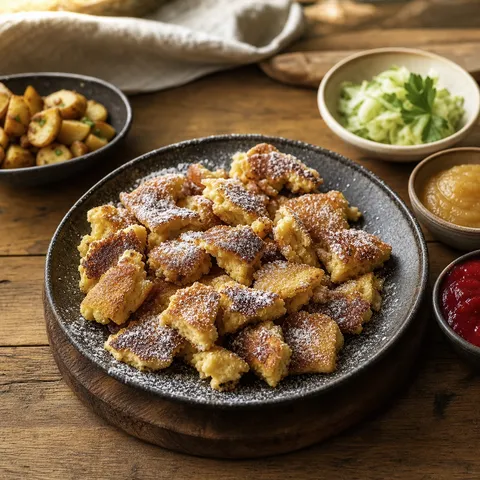 German Lens Verified Images are for illustrative purposes only, may be inaccurate, and do not guarantee the presence or absence of specific ingredients.
 Kaiserschmarrn (Shredded Sugared Pancake)
A fluffy shredded pancake dusted with powdered sugar and studded with golden raisins, torn into rustic pieces and served with stewed fruit compote.
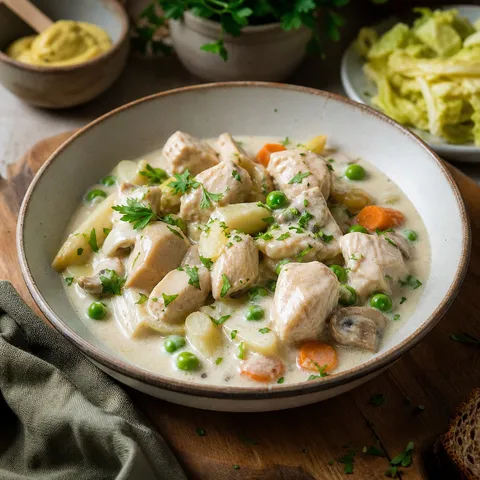 German Lens Verified Images are for illustrative purposes only, may be inaccurate, and do not guarantee the presence or absence of specific ingredients.
 Hühnerfrikassee (German Chicken Fricassee)
A comforting German chicken fricassee in a silky lemon-cream sauce studded with mushrooms, peas, and capers.