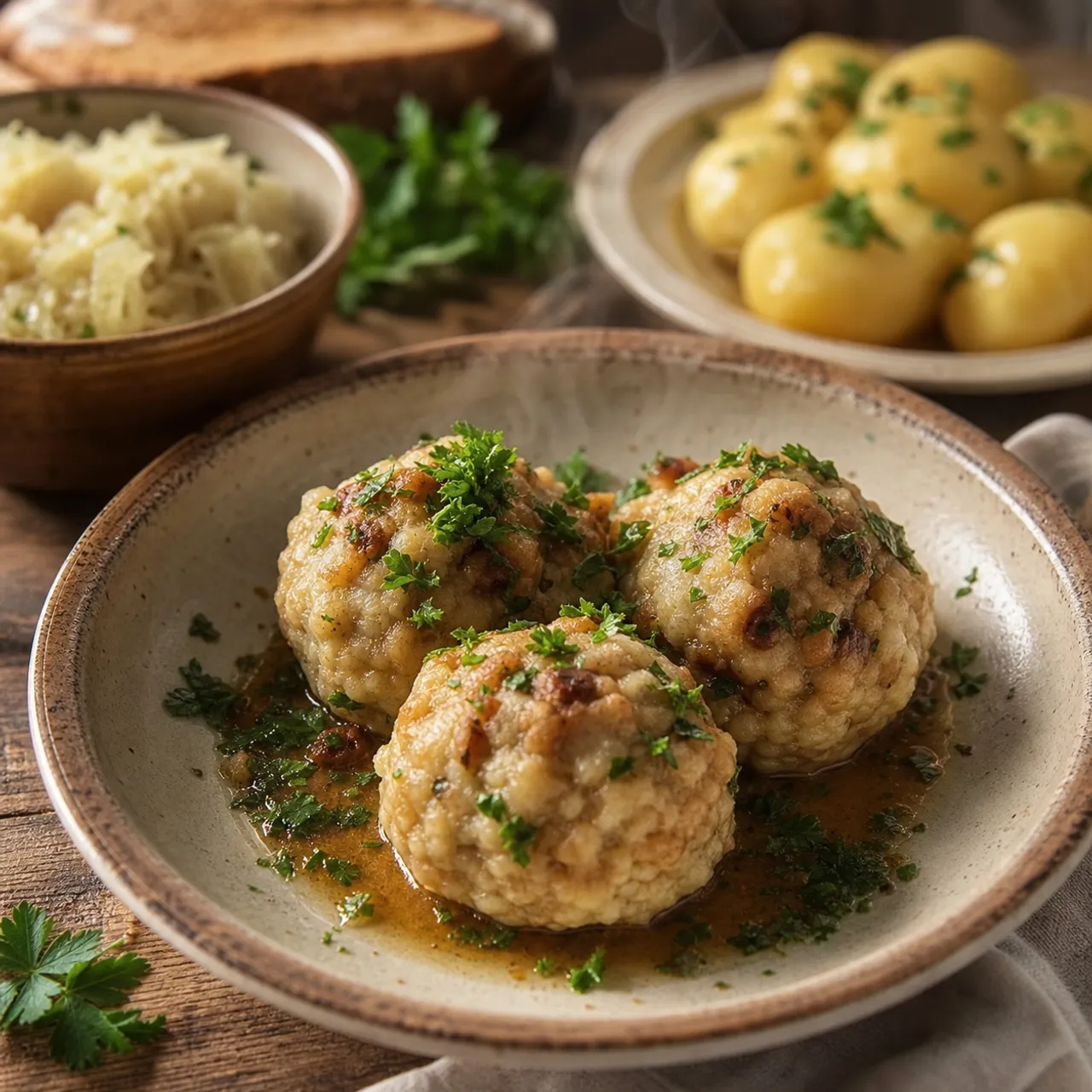
 German Images are for illustrative purposes only, may be inaccurate, and do not guarantee the presence or absence of specific ingredients.
 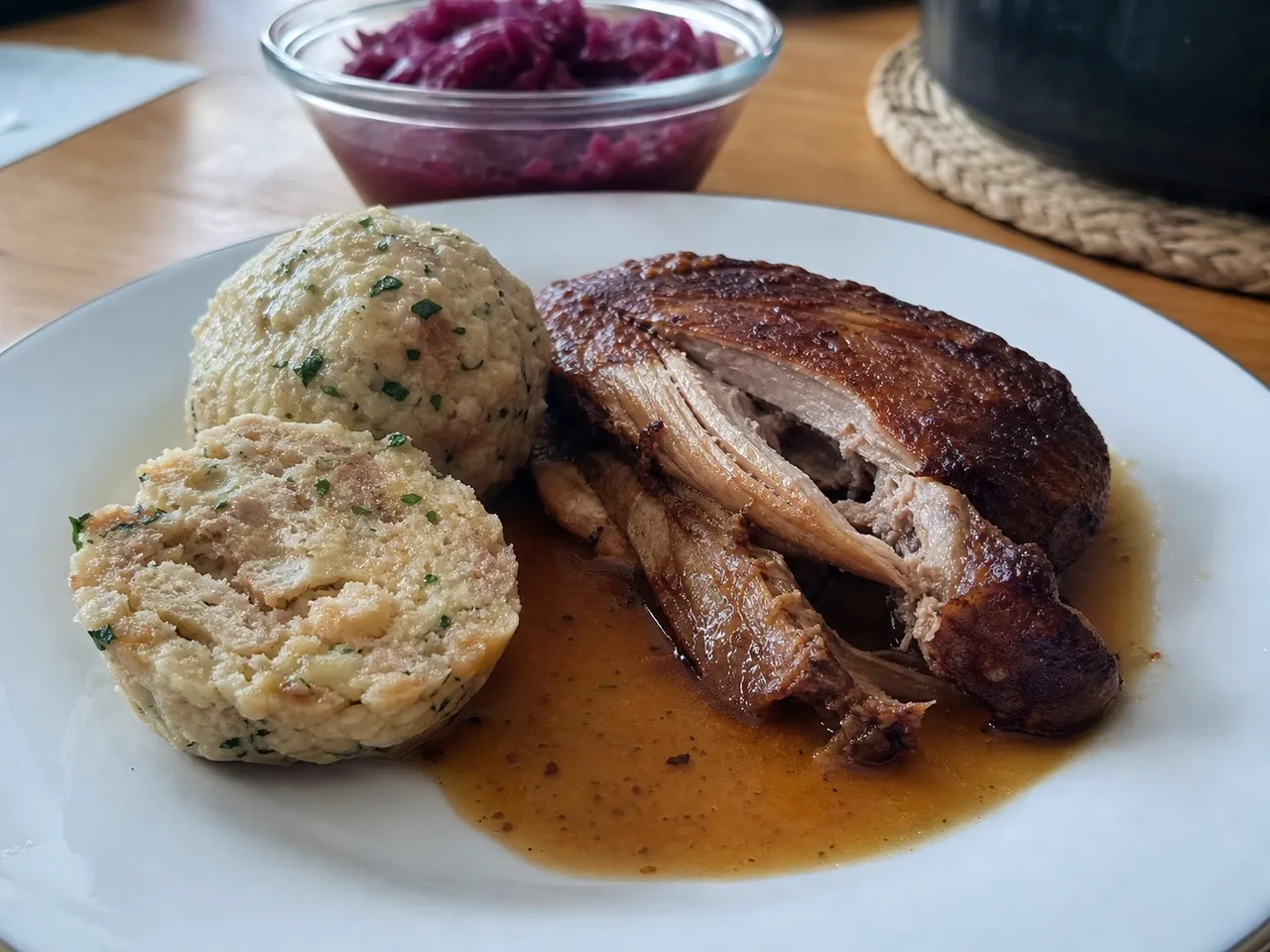 Serving Images are for illustrative purposes only, may be inaccurate, and do not guarantee the presence or absence of specific ingredients.
 Semmelknödel (Bavarian Bread Dumplings)
Bavarian bread dumplings made from day-old rolls soaked in milk and studded with parsley, a rustic companion to roasts and mushroom gravies.
Contains common allergens
In the app, Listahan checks these against your household automatically.
Instructions
6 steps- 1
Place bread cubes in a large bowl and pour warm milk over them; let soak for 10 minutes.
- 2
Sauté onion in butter until soft and translucent, then let cool slightly.
- 3
Add the sautéed onion, eggs, parsley, salt, and nutmeg to the soaked bread, and mix thoroughly until a cohesive dough forms.
- 4
Wet your hands and shape the mixture into 8 round dumplings.
- 5
Bring a large pot of salted water to a gentle simmer and carefully lower in the dumplings.
- 6
Simmer for 20 minutes until firm and cooked through, then drain and serve warm.
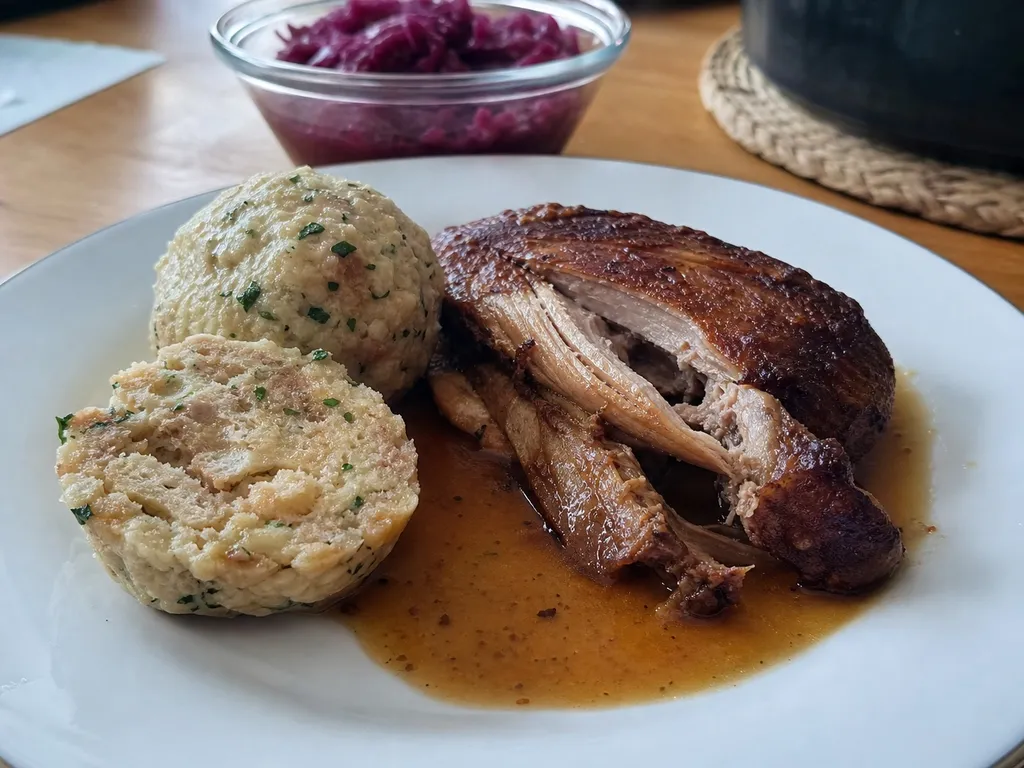 Images are for illustrative purposes only, may be inaccurate, and do not guarantee the presence or absence of specific ingredients.
 Listahan Family Score™
75/100
Good fit for most families
Score reflects how well this recipe fits a typical busy household. In the app, your Family Score is personalized to your household's allergens, kids, and pantry.
Nutrition
per serving250
Calories
9 g
Protein
26 g
Carbs
12 g
Fat
Estimated per serving. Actual values depend on the brands and portions you use.
Listahan cooking guide
Chef notes & practical guide
Technique notes, ingredient swaps, serve-alongside ideas, storage guidance, and equipment for this recipe.
Cultural context
Semmelknodel, or bread dumplings, began as a Bavarian and Austrian way to use up stale bread rolls rather than waste them, soaking the cubes in warm milk before binding them with egg and sauteed onion. They're a classic side for roasts and stews, especially in dishes with a lot of gravy or sauce to soak into the bread's open, tender crumb. The texture is deliberately loose and absorbent, distinct from the denser potato dumpling.
Listahan note
This version leans on genuinely stale bread rather than fresh, since fresh bread turns to paste when soaked, and keeps the dough loosely bound so the finished dumpling stays light and absorbent rather than dense.
Technique cues
- Use bread that's actually stale, a day or two old at least; fresh bread absorbs the milk unevenly and turns the dough gluey rather than tender.
- Let the bread soak the full 10 minutes so the milk penetrates all the way through the cubes, not just the surface, before mixing in the other ingredients.
- Shape the dumplings with wet hands rather than dry ones; dry hands make the dough stick and tear instead of forming a smooth ball.
Kitchen flow
- Parallel prep
- Sautee the onion while the bread cubes soak in warm milk, so both components are ready to combine at the same time.
- Make-ahead
- The dough can be shaped and refrigerated a few hours ahead of simmering, which also helps it firm up before it hits the water.
- Leftover move
- Slice leftover dumplings and pan-fry them in butter the next morning for a savory breakfast side.
- Cleanup rhythm
- Soak the mixing bowl right after shaping the dumplings, since dried egg-and-bread residue is much harder to scrub off once it sets.
Ingredient brief
Role, handling, and swap guidance for each key ingredient.
Stale bread rolls
Main structure
Purpose: Their open, dry crumb soaks up milk evenly and gives the dumpling its signature light, slightly chewy texture once cooked.
Handling: Cut into small, even cubes so they soak through consistently.
Adaptation: Stale baguette or a firm sandwich roll both work if you don't have traditional German bread rolls on hand.
Warm milk
Moistening liquid
Purpose: Warm milk softens the stale bread evenly and adds a little richness that water alone wouldn't provide.
Handling: Warm it gently, not boiling, before pouring over the bread so it doesn't scald.
Adaptation: A dairy-free milk alternative works, though the flavor will be slightly less rich.
Eggs
Binder
Purpose: Eggs hold the soaked bread mixture together through simmering without making the dumpling dense.
Handling: Mix in after the sauteed onion has cooled slightly so the eggs don't scramble on contact.
Adaptation: There isn't a reliable egg-free substitute that keeps the dumpling from falling apart in the simmering water.
Onion, finely chopped
Savory aromatic
Purpose: Sauteing the onion first mellows its sharpness and adds a savory backbone that plain raw onion wouldn't give the dumpling.
Handling: Cook until soft and translucent, then let it cool slightly before mixing in with the eggs.
Adaptation: A shallot works in a pinch for a milder onion flavor.
Fresh parsley
Fresh herbal note
Purpose: It adds a bright, green freshness that balances the rich bread-and-butter base of the dumpling.
Handling: Chop finely and mix in at the end so it stays vibrant rather than wilting into the mixture.
Adaptation: Chives can substitute for a milder, oniony green note.
Technique notes
- If the mixture feels too wet to shape, let it rest 5 more minutes so the bread finishes absorbing the milk before adding more bread or starch.
- Lower the dumplings into a gentle simmer, not a rolling boil, and don't crowd the pot, or they'll cook unevenly and some may fall apart.
- Test the doneness of one dumpling by cutting it open; it should be firm and cooked through but still moist, not dry or crumbly.
Ingredient swaps
- Dairy-free direction
- Use a dairy-free milk alternative and swap the butter for oil when sauteing the onion.
- Gluten-free direction
- Use a good gluten-free bread roll, staled overnight, so it soaks and binds similarly to traditional bread.
- Lighter path
- Use fewer, smaller bread rolls and add a touch more milk for a softer, lighter dumpling if a very dense texture isn't wanted.
Serve alongside
- Beef roulade or roast beef
- Mushroom gravy
- Rotkohl (braised red cabbage)
- Green salad with vinaigrette
- Dunkel lager
- Dry red wine
- Sparkling water
Serving suggestions only — check pairings for your household's allergens.
Storage & reheating
- Refrigerate cooked dumplings for up to 3 days.
- Reheat by steaming gently or slicing and pan-frying in butter until warmed through.
- Freeze cooked and cooled dumplings for up to 1 month; thaw in the fridge before reheating.
Equipment
- Large mixing bowl
- Large pot
- Slotted spoon
Make this household-aware
Listahan Pro checks this recipe against your household's allergens, finds pantry-aware swaps, builds the shopping list, and helps you plan the week around it.
Plan it in Listahan
Add Semmelknödel (Bavarian Bread Dumplings) to your week, check it against your household's allergens, and build the shopping list automatically.
More German recipes
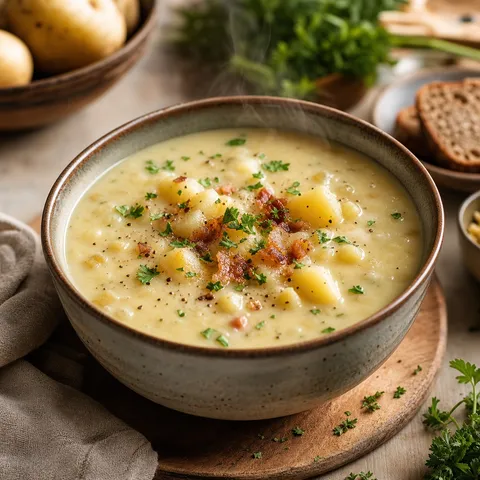 German Lens Verified Images are for illustrative purposes only, may be inaccurate, and do not guarantee the presence or absence of specific ingredients.
 Kartoffelsuppe (Creamy German Potato Soup)
A creamy, comforting German potato soup with leeks, carrots, and a smoky finish of fried sausage or bacon.
 German Lens Verified Images are for illustrative purposes only, may be inaccurate, and do not guarantee the presence or absence of specific ingredients.
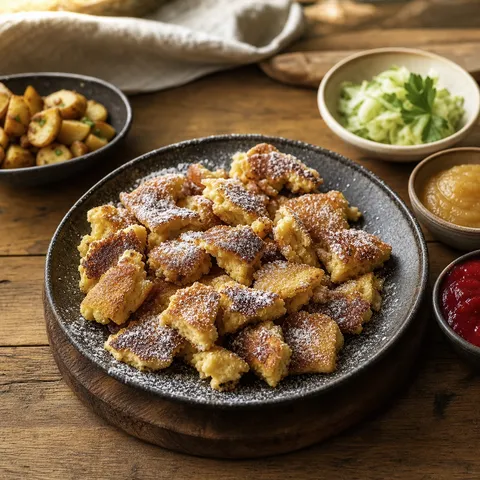
 Kaiserschmarrn (Shredded Sugared Pancake)
A fluffy shredded pancake dusted with powdered sugar and studded with golden raisins, torn into rustic pieces and served with stewed fruit compote.
 German Lens Verified Images are for illustrative purposes only, may be inaccurate, and do not guarantee the presence or absence of specific ingredients.
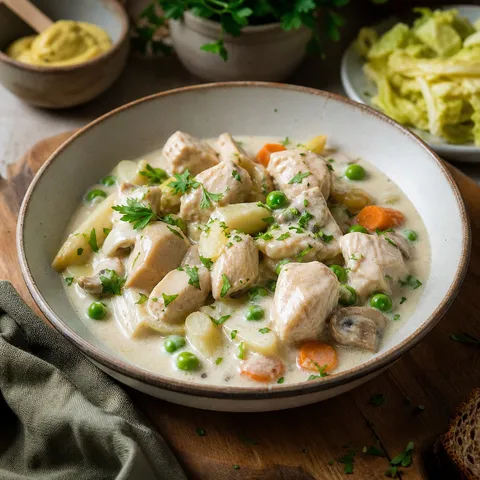
 Hühnerfrikassee (German Chicken Fricassee)
A comforting German chicken fricassee in a silky lemon-cream sauce studded with mushrooms, peas, and capers.