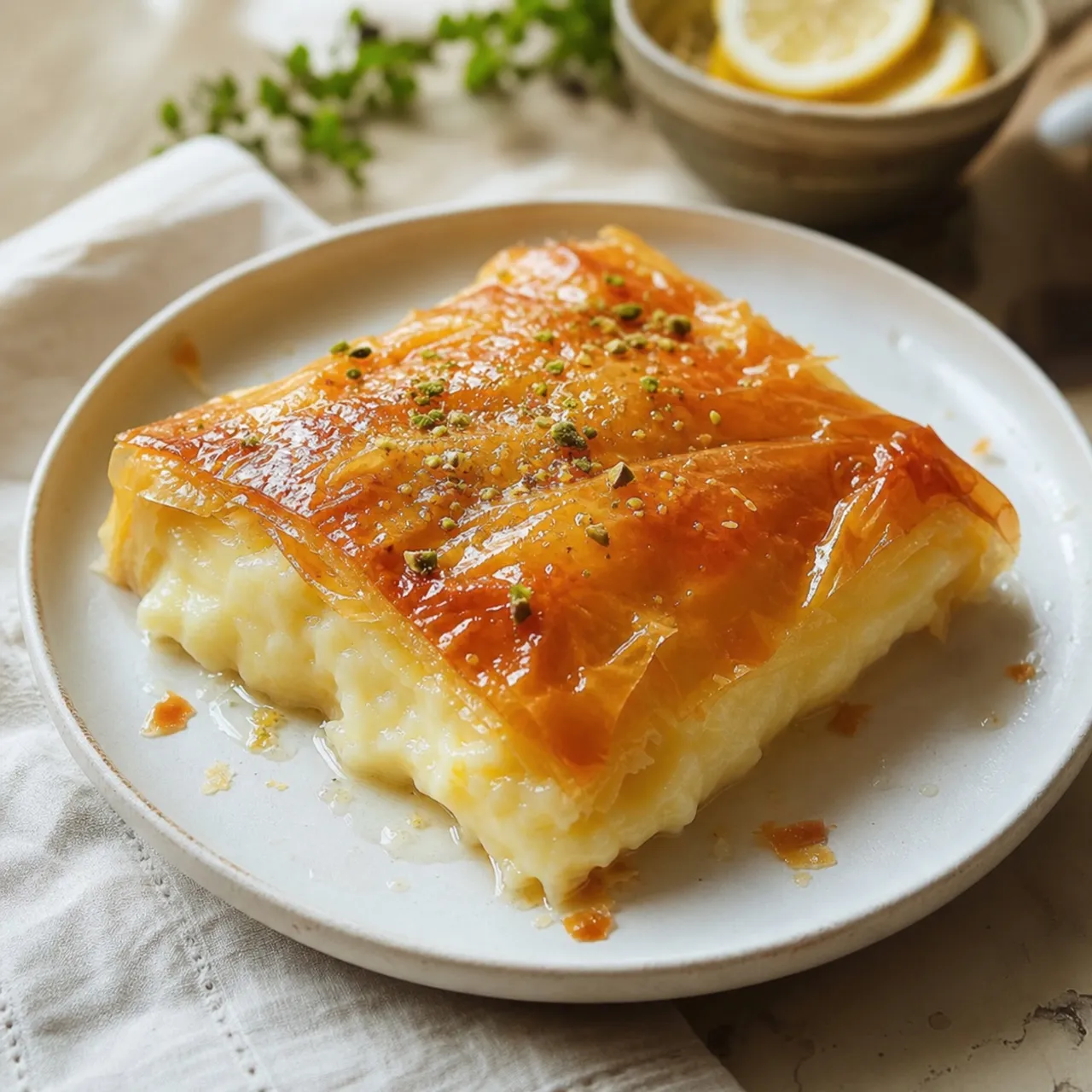
 Greek Images are for illustrative purposes only, may be inaccurate, and do not guarantee the presence or absence of specific ingredients.
 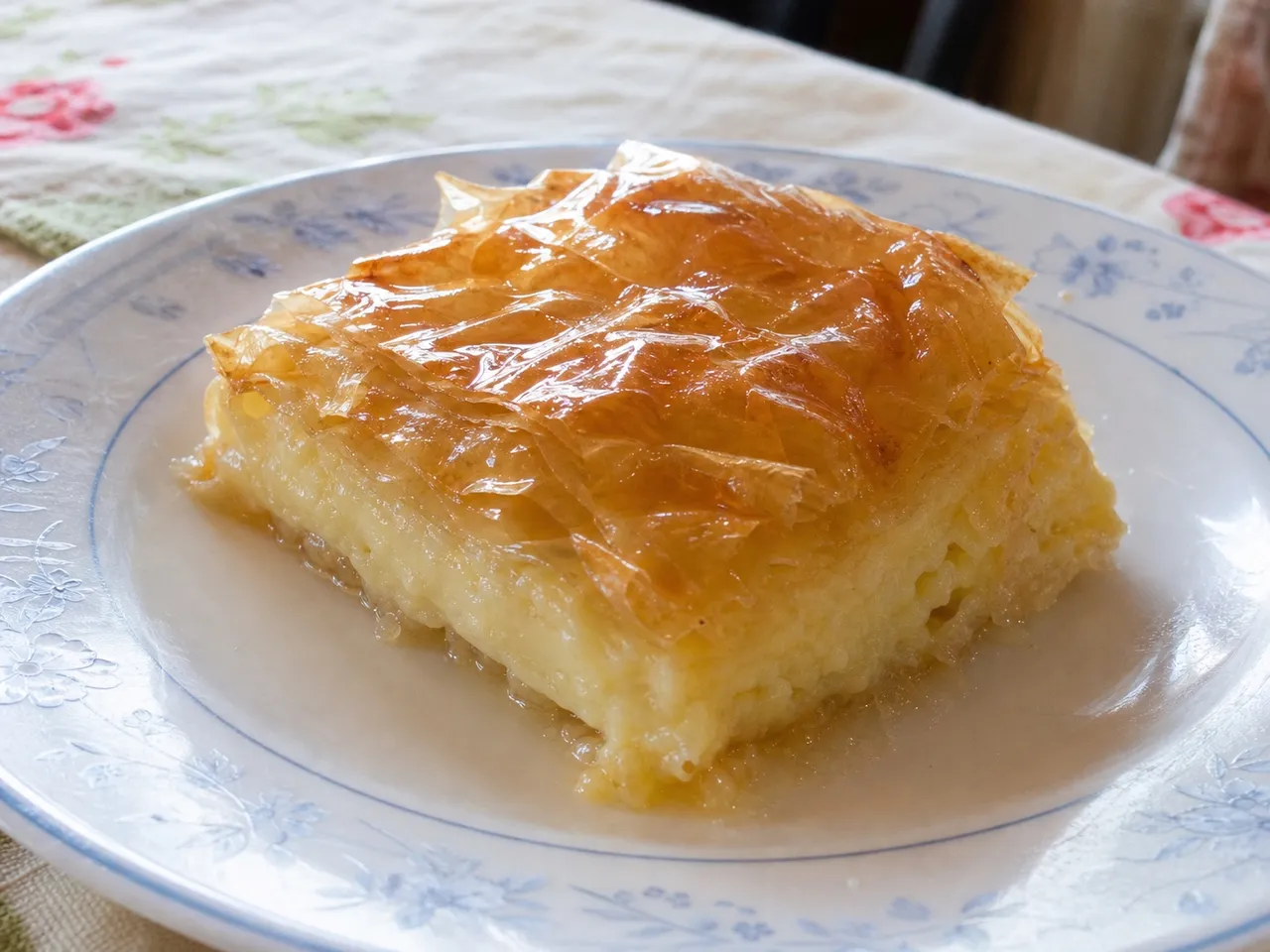 Serving Images are for illustrative purposes only, may be inaccurate, and do not guarantee the presence or absence of specific ingredients.
 Galaktoboureko (Custard-Filled Phyllo Pastry)
A silky semolina custard baked between crisp layers of buttery phyllo, soaked in a bright lemon syrup.
Contains common allergens
In the app, Listahan checks these against your household automatically.
Good to know
- Crispy
Matched from this dish's own ingredients and timing. Browse more: crispy recipes
Instructions
7 steps- 1
In a saucepan, heat the milk until steaming, then gradually whisk in the semolina and sugar, cooking over medium heat until thickened into a custard, about 8-10 minutes.
- 2
Remove from heat and let cool slightly, then whisk in the eggs one at a time, followed by vanilla and lemon zest.
- 3
Brush a baking dish with melted butter and layer half the phyllo sheets on the bottom, brushing each sheet with butter.
- 4
Pour the custard evenly over the phyllo, then layer the remaining phyllo sheets on top, brushing each with butter, and tuck in the edges.
- 5
Score the top layers into squares and bake at 350°F for 40-45 minutes, until deep golden brown and the custard is set.
- 6
While baking, simmer sugar, water, and lemon juice for 8-10 minutes to make a syrup, then pour the hot syrup over the pastry as soon as it comes out of the oven.
- 7
Let cool completely before slicing along the scored lines and serving.
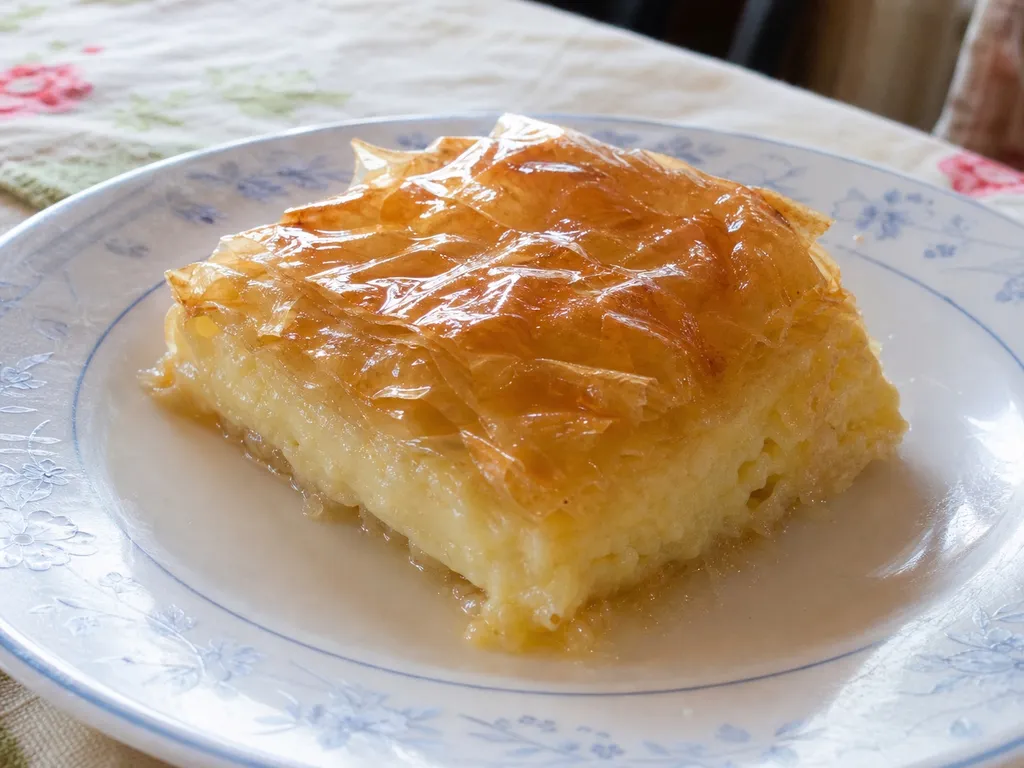 Images are for illustrative purposes only, may be inaccurate, and do not guarantee the presence or absence of specific ingredients.
 Listahan Family Score™
65/100
Works for many families
Score reflects how well this recipe fits a typical busy household. In the app, your Family Score is personalized to your household's allergens, kids, and pantry.
Nutrition
per serving360
Calories
6 g
Protein
41 g
Carbs
20 g
Fat
Estimated per serving. Actual values depend on the brands and portions you use.
Listahan cooking guide
Chef notes & practical guide
Technique notes, ingredient swaps, serve-alongside ideas, storage guidance, and equipment for this recipe.
Cultural context
Galaktoboureko, whose name combines the Greek words for milk and phyllo pie, became a fixture of Greek bakeries and family celebrations as semolina-thickened milk puddings met the layered phyllo tradition already common in savory pies. Soaking the hot pastry in syrup right after baking is a technique shared across many Greek and broader eastern Mediterranean sweets.
Listahan note
This version pours a hot lemon syrup over the pastry the moment it comes out of the oven, which is what lets the syrup soak evenly into the phyllo layers rather than sitting on top.
Technique cues
- Tempering the eggs by whisking them into the slightly cooled custard, rather than directly into the hot milk mixture, prevents them from scrambling and keeps the custard silky rather than grainy.
- Pouring hot syrup over a hot pastry, rather than cold syrup over a cooled one, is essential; the temperature difference is what allows the syrup to be absorbed evenly into the phyllo instead of pooling on the surface.
- Scoring the top phyllo layers into squares before baking, rather than after, lets you cut clean portions once the pastry has cooled without shattering the crisp top layers.
Kitchen flow
- Parallel prep
- Make the custard first since it needs to cool slightly before the eggs go in, using that time to prep and butter the phyllo sheets.
- Make-ahead
- The dish can be baked a day ahead; it actually benefits from resting overnight so the syrup fully absorbs and the layers set.
- Leftover move
- Store leftover squares in the fridge and let them come to room temperature before serving again, since the custard firms up when cold.
- Cleanup rhythm
- Keep the butter brush and bowl right next to the phyllo stack so each sheet gets buttered the moment it is unrolled, before it can dry out.
Ingredient brief
Role, handling, and swap guidance for each key ingredient.
whole milk
custard base
Purpose: its fat content gives the custard richness and a smooth set
Handling: heat until steaming, not boiling, before whisking in the semolina to avoid scorching
Adaptation: a mix of whole milk and a bit of heavy cream makes the custard even richer, though it is not necessary
fine semolina
custard thickener
Purpose: gives the custard its classic slightly grainy but silky texture, distinct from a cornstarch-thickened pudding
Handling: whisk it in gradually to avoid lumps, stirring constantly as it thickens
Adaptation: fine cream of wheat is nearly identical and a common North American stand-in
phyllo dough
pastry casing
Purpose: creates the crisp, flaky top and bottom layers that contrast with the soft custard center
Handling: brush every single sheet with butter, since skipped layers bake dry and separate from the custard
Adaptation: there is no good substitute for the texture, though puff pastry could be used for a different, denser dessert
eggs
custard setter
Purpose: they set the custard into sliceable squares once baked, moving it from a pudding to a pie
Handling: temper by whisking into the slightly cooled milk mixture, not straight into the hot pot
Adaptation: no good substitute, since eggs are essential to the custard's structure
lemon, zest and syrup juice
brightening acid
Purpose: cuts through the richness of the milk custard and butter-soaked phyllo
Handling: use fresh zest in the custard and fresh juice in the syrup for the clearest flavor
Adaptation: orange zest and juice give a different but equally traditional variation
Technique notes
- Whisk the custard constantly over medium heat, not high, since semolina can catch and scorch on the bottom of the pan if left unattended.
- The syrup should still be hot, ideally straight off the stove, when it goes onto the pastry straight from the oven; cooling either one first will leave the top dry and the syrup pooled rather than absorbed.
- Let the baked pastry cool completely, ideally a few hours, before slicing along the scored lines, since cutting it warm causes the custard to ooze rather than hold clean squares.
Ingredient swaps
- Nut-free direction
- No nuts are called for — the custard is milk, semolina, eggs and sugar in phyllo. Check your phyllo brand.
- Lower-sugar direction
- Reduce the sugar in the syrup by up to a third; the dessert will be less intensely sweet but the custard's sugar should stay as written for proper set.
- Dairy-free direction
- This dish relies heavily on milk and butter for both custard and texture, so a fully dairy-free version would need significant reworking and would taste noticeably different.
Serve alongside
- Greek coffee
- Fresh berries on the side for contrast
- A small scoop of vanilla ice cream
- Greek coffee, metrio (medium-sweet)
- A glass of sweet Vinsanto dessert wine
Serving suggestions only — check pairings for your household's allergens.
Storage & reheating
- Refrigerate covered up to 4 days
- Best served at room temperature or lightly chilled, no reheating needed
- Freeze baked, unsliced squares up to 1 month and thaw overnight in the fridge
Equipment
- Medium saucepan for the custard
- Whisk
- 9x13 baking dish
- Pastry brush
Make this household-aware
Listahan Pro checks this recipe against your household's allergens, finds pantry-aware swaps, builds the shopping list, and helps you plan the week around it.
Plan it in Listahan
Add Galaktoboureko (Custard-Filled Phyllo Pastry) to your week, check it against your household's allergens, and build the shopping list automatically.
More Greek recipes
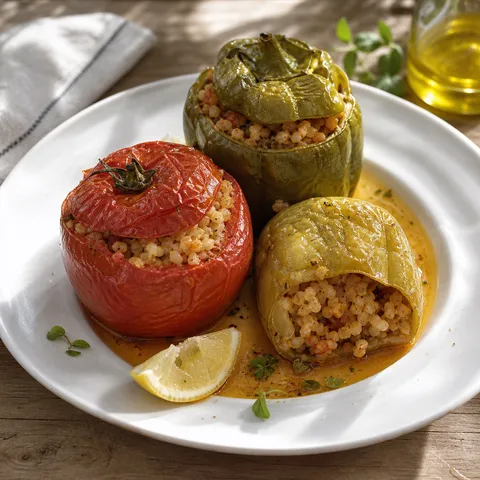 Greek Lens Verified Images are for illustrative purposes only, may be inaccurate, and do not guarantee the presence or absence of specific ingredients.
 Gemista (Stuffed Tomatoes and Peppers with Rice)
Ripe tomatoes and bell peppers hollowed out and stuffed with a savory herbed rice filling, then baked until tender and caramelized.
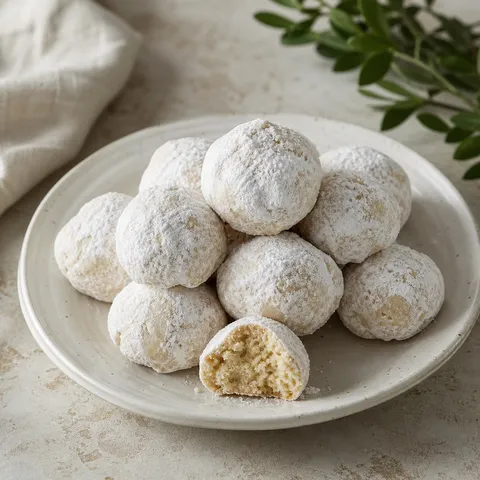 Greek Lens Verified Images are for illustrative purposes only, may be inaccurate, and do not guarantee the presence or absence of specific ingredients.
 Kourabiedes (Greek Almond Butter Cookies)
Buttery, crumbly shortbread cookies studded with toasted almonds and generously dusted with powdered sugar.
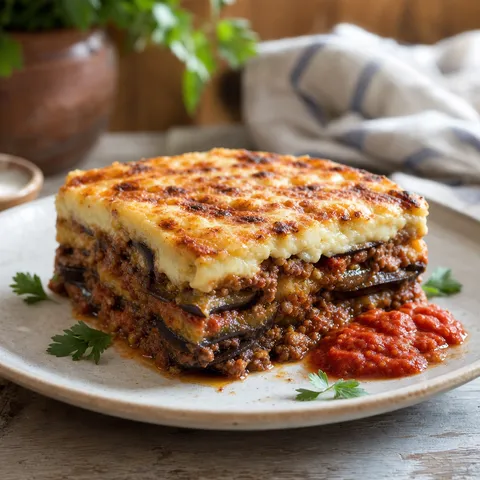 Greek Lens Verified Images are for illustrative purposes only, may be inaccurate, and do not guarantee the presence or absence of specific ingredients.
 Classic Moussaka
A rich, layered Greek casserole featuring roasted eggplant, a hearty spiced meat sauce, and a thick, creamy béchamel topping.