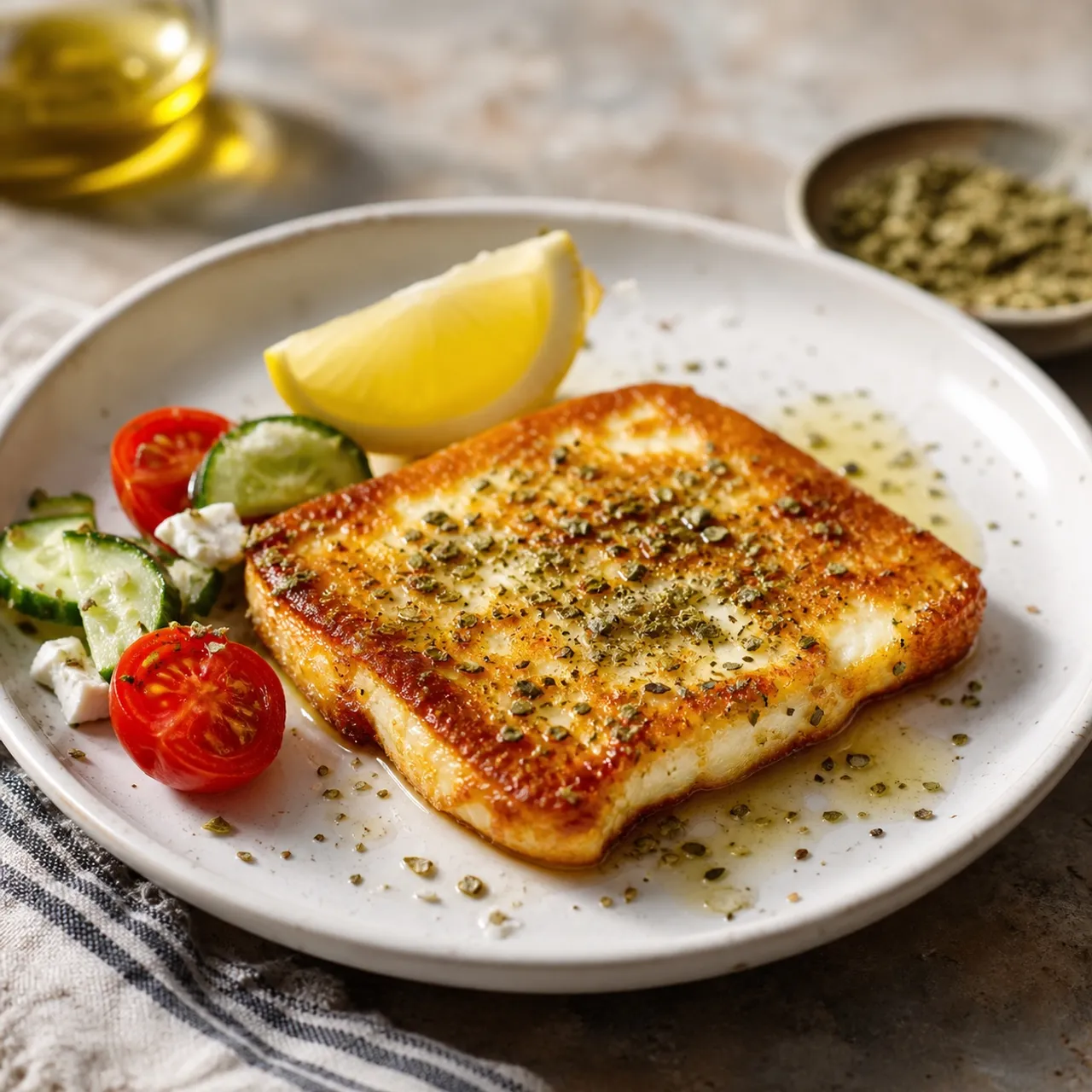
 Greek Images are for illustrative purposes only, may be inaccurate, and do not guarantee the presence or absence of specific ingredients.
 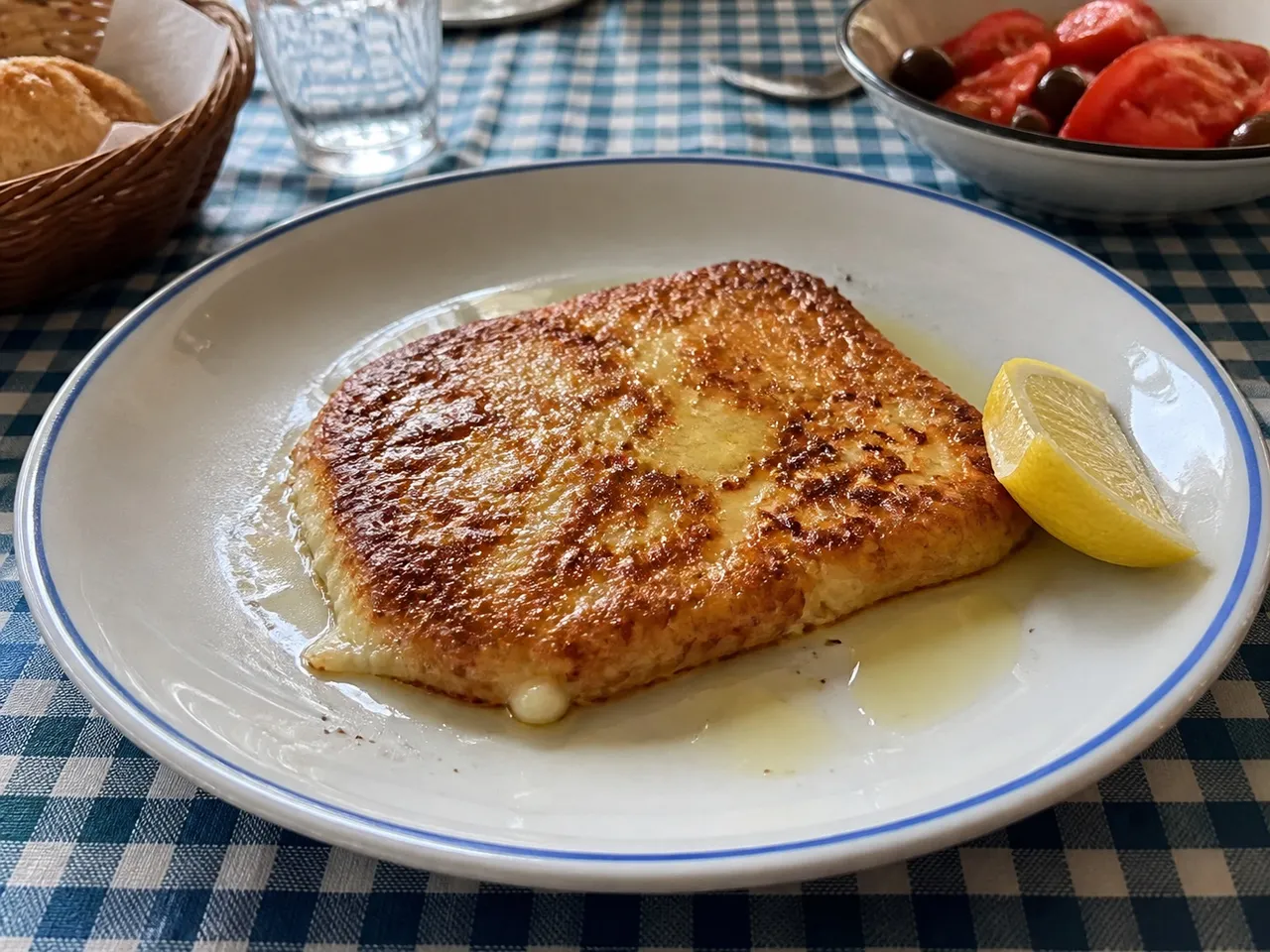 Serving Images are for illustrative purposes only, may be inaccurate, and do not guarantee the presence or absence of specific ingredients.
 Saganaki (Fried Greek Cheese)
Thick slices of firm cheese dredged in flour and pan-fried until crisp and golden outside with a warm, gooey center, finished with a squeeze of lemon.
Contains common allergens
In the app, Listahan checks these against your household automatically.
Good to know
- Crispy
- Ready in under 30 minutes
Matched from this dish's own ingredients and timing. Browse more: crispy recipes30-minute meals
Instructions
6 steps- 1
Pat the cheese slices dry with a paper towel, then dredge each slice in flour, shaking off the excess.
- 2
Heat olive oil in a heavy skillet over medium-high heat until shimmering.
- 3
Fry the cheese slices for 1-2 minutes per side, until deeply golden and crisp on the outside.
- 4
If flaming, carefully pour the warmed brandy over the cheese and ignite briefly, then let the flame die down.
- 5
Transfer to a plate and squeeze fresh lemon juice over the top immediately.
- 6
Garnish with chopped parsley and serve hot with bread.
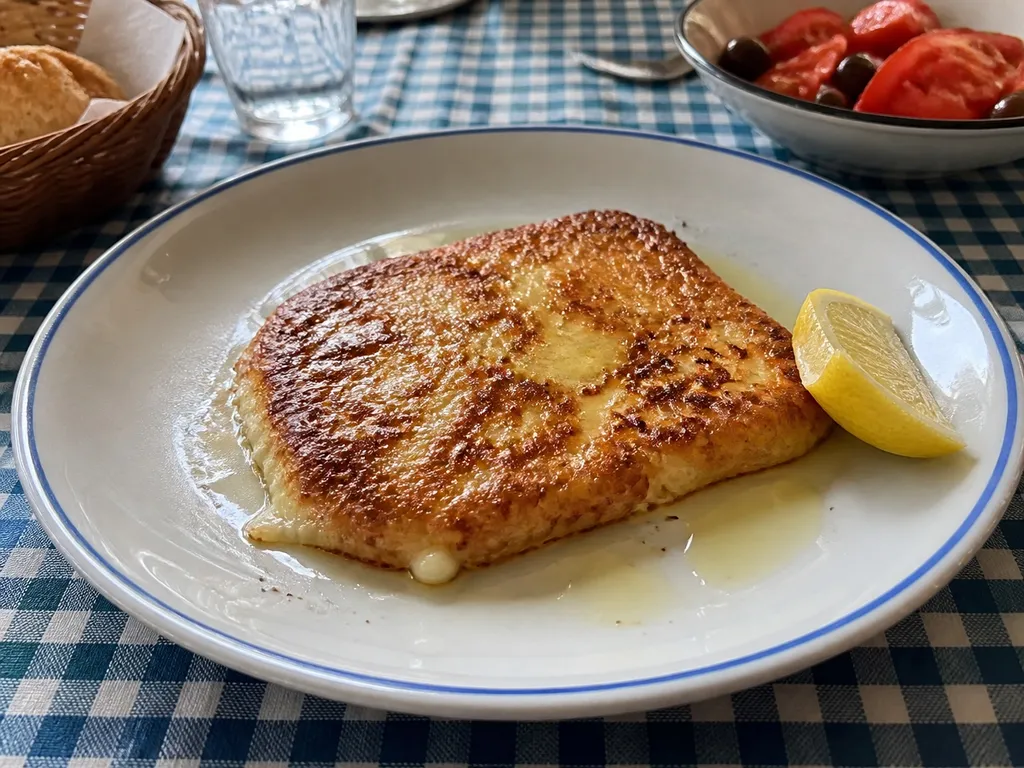 Images are for illustrative purposes only, may be inaccurate, and do not guarantee the presence or absence of specific ingredients.
 Listahan Family Score™
69/100
Works for many families
Score reflects how well this recipe fits a typical busy household. In the app, your Family Score is personalized to your household's allergens, kids, and pantry.
Nutrition
per serving325
Calories
15 g
Protein
8 g
Carbs
26 g
Fat
Estimated per serving. Actual values depend on the brands and portions you use.
Listahan cooking guide
Chef notes & practical guide
Technique notes, ingredient swaps, serve-alongside ideas, storage guidance, and equipment for this recipe.
Cultural context
Saganaki takes its name from the two-handled frying pan (sagani) it's traditionally cooked in, and the tableside flaming version became a fixture of Greek-American tavernas in the mid-20th century, complete with a shouted Opa as the brandy ignites. In Greece itself, the dish is usually simpler: just seared cheese and lemon.
Listahan note
This version keeps the classic flour dredge and quick pan-fry, with the flaming brandy step marked optional so cooks can serve the simpler, still-excellent tavern style without the theater.
Technique cues
- A firm, high-melting-point cheese like kefalotyri or halloumi is essential, low-melting cheeses like feta collapse into the pan instead of forming a crust.
- Patting the cheese bone dry before dredging keeps the flour from clumping into a gummy paste and helps it form an even, crisp shell.
- The pan and oil need to be genuinely hot before the cheese goes in, a lukewarm pan lets the cheese release moisture and steam instead of sear.
Kitchen flow
- Parallel prep
- Slice and dredge the cheese while the oil heats so the coated slices go straight into a hot pan instead of sitting and turning soggy.
- Make-ahead
- Saganaki does not hold or reheat well; it is meant to be fried and eaten within minutes, so prep the dredge station ahead but fry it right before serving.
- Leftover move
- Leftover fried cheese firms up in the fridge; reheat briefly in a dry skillet rather than the microwave to bring some crispness back.
- Cleanup rhythm
- Wipe out the skillet while it's still warm, since browned flour bits stick hard once the pan cools.
Ingredient brief
Role, handling, and swap guidance for each key ingredient.
kefalotyri or halloumi cheese
the dish itself
Purpose: kefalotyri and halloumi both hold their shape at high heat instead of melting into a puddle, which is what makes tableside frying possible
Handling: cut into thick slices, about 1/2 inch, so the center stays soft while the outside crisps
Adaptation: graviera is a milder, slightly sweeter substitute; avoid soft cheeses like feta, which will not hold together in the pan
all-purpose flour
crust former
Purpose: a thin flour coating browns quickly and seals the cheese's surface before it has time to melt through
Handling: dredge each slice just before frying and shake off the excess so the coating stays thin
Adaptation: a gluten-free flour blend or cornstarch works for the same crisping effect if wheat is off the table
olive oil
frying fat
Purpose: it needs to be hot enough to sear the crust in under two minutes per side without the interior fully melting
Handling: heat until it shimmers and moves easily across the pan before adding the cheese
Adaptation: a neutral high-smoke-point oil like avocado oil works too, though it trades away some of the oil's own flavor
lemon
acid finish
Purpose: the squeeze of lemon juice right off the heat cuts the richness of the fried cheese and is what makes saganaki taste bright instead of just heavy
Handling: cut into wedges and squeeze over the cheese the moment it comes out of the pan, while it's still sizzling
Adaptation: a splash of good vinegar works in a pinch, though lemon's aroma is really part of the dish
Technique notes
- If flaming the brandy, warm it slightly first in a small pan or the microwave, cold brandy poured straight from the bottle can be reluctant to ignite.
- Keep a lid nearby when flaming, not to smother the pan but simply to have control if the flame runs longer than expected.
- Don't crowd the pan, frying more than two or three slices at once drops the oil temperature and the cheese steams instead of crisping.
Ingredient swaps
- Gluten-free direction
- Swap the all-purpose flour for a 1:1 gluten-free blend or rice flour; the crust crisps just as well.
- Alcohol-free direction
- Skip the brandy entirely, the fried cheese and lemon are excellent on their own and this is how it's most often served in Greece.
- Lower-sodium direction
- Choose halloumi over kefalotyri, it is typically lower in sodium, and skip added salt since the cheese itself is salty.
Serve alongside
- warm pita bread
- Greek salad (horiatiki)
- grilled octopus
- olives
- ouzo
- a dry white wine
- sparkling water with lemon
Serving suggestions only — check pairings for your household's allergens.
Storage & reheating
- Best eaten immediately; leftovers keep refrigerated up to 2 days.
- Reheat in a dry skillet over medium heat for a minute per side rather than microwaving, which turns the crust rubbery.
- Freezing is not recommended, the fried crust does not survive thawing.
Equipment
- heavy skillet or traditional sagani pan
- tongs
- paper towels
- a long match or lighter (if flaming)
Make this household-aware
Listahan Pro checks this recipe against your household's allergens, finds pantry-aware swaps, builds the shopping list, and helps you plan the week around it.
Plan it in Listahan
Add Saganaki (Fried Greek Cheese) to your week, check it against your household's allergens, and build the shopping list automatically.
More Greek recipes
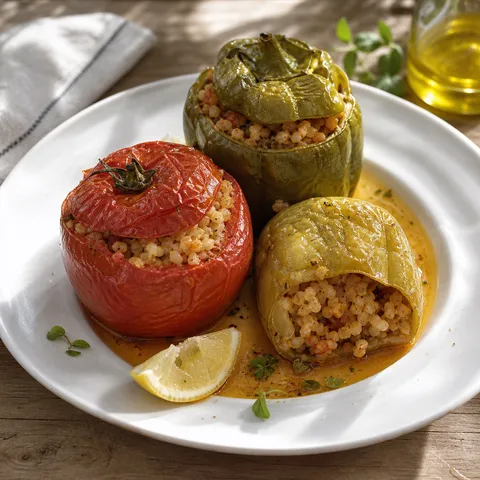 Greek Lens Verified Images are for illustrative purposes only, may be inaccurate, and do not guarantee the presence or absence of specific ingredients.
 Gemista (Stuffed Tomatoes and Peppers with Rice)
Ripe tomatoes and bell peppers hollowed out and stuffed with a savory herbed rice filling, then baked until tender and caramelized.
 Greek Lens Verified Images are for illustrative purposes only, may be inaccurate, and do not guarantee the presence or absence of specific ingredients.
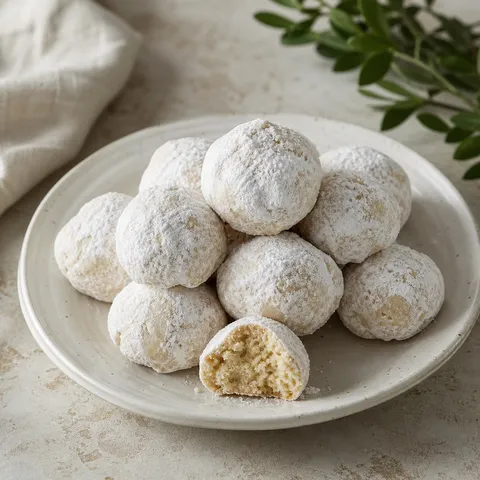
 Kourabiedes (Greek Almond Butter Cookies)
Buttery, crumbly shortbread cookies studded with toasted almonds and generously dusted with powdered sugar.
 Greek Lens Verified Images are for illustrative purposes only, may be inaccurate, and do not guarantee the presence or absence of specific ingredients.
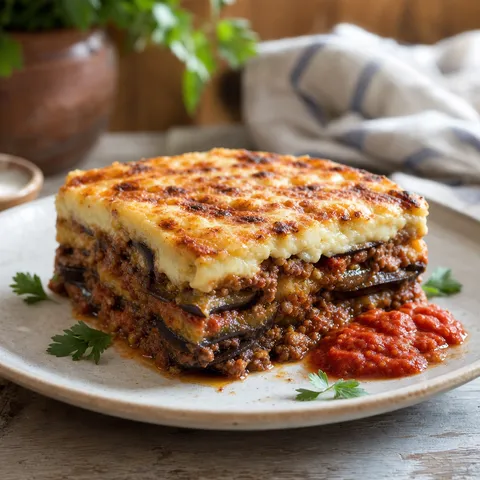
 Classic Moussaka
A rich, layered Greek casserole featuring roasted eggplant, a hearty spiced meat sauce, and a thick, creamy béchamel topping.