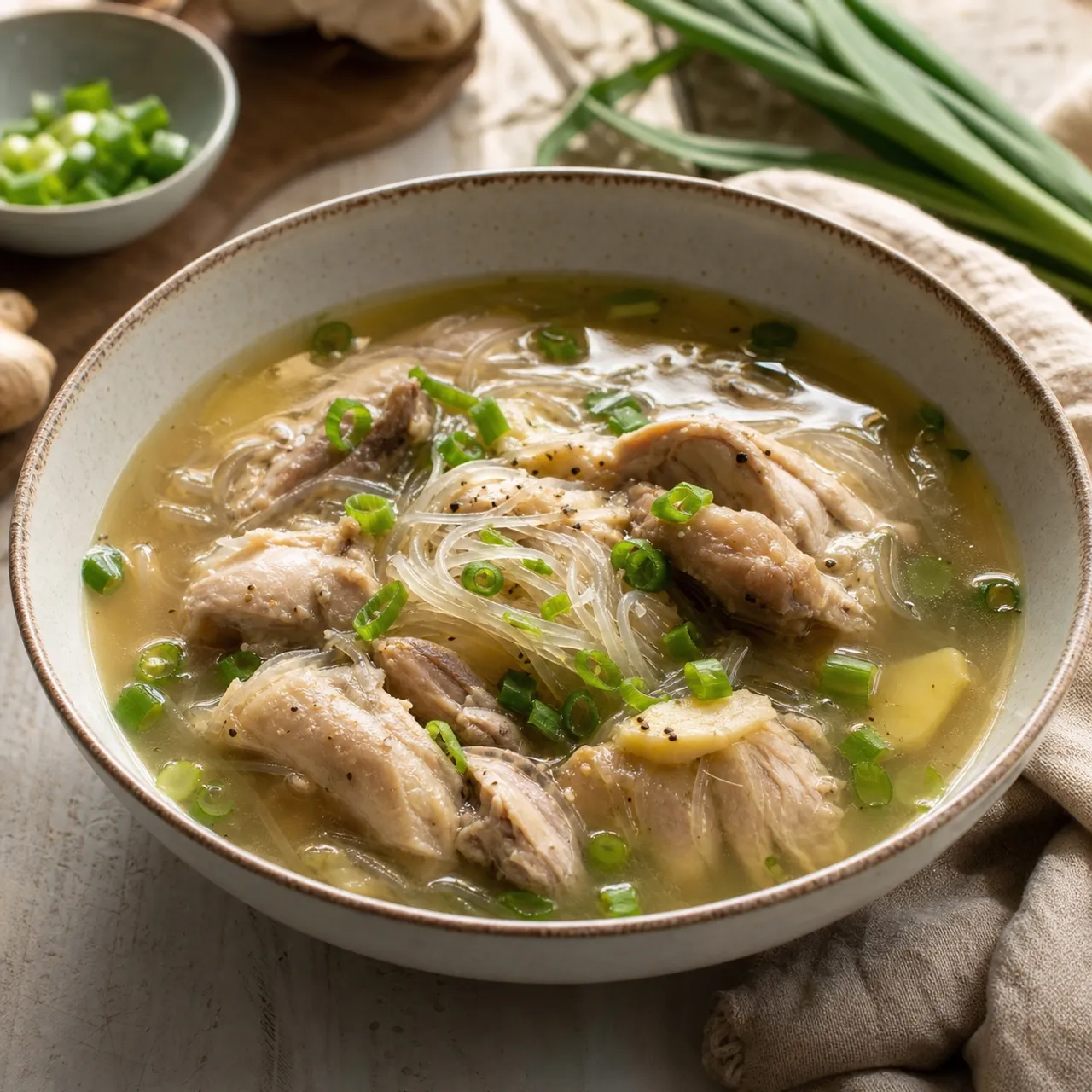
 Hawaiian Images are for illustrative purposes only, may be inaccurate, and do not guarantee the presence or absence of specific ingredients.
 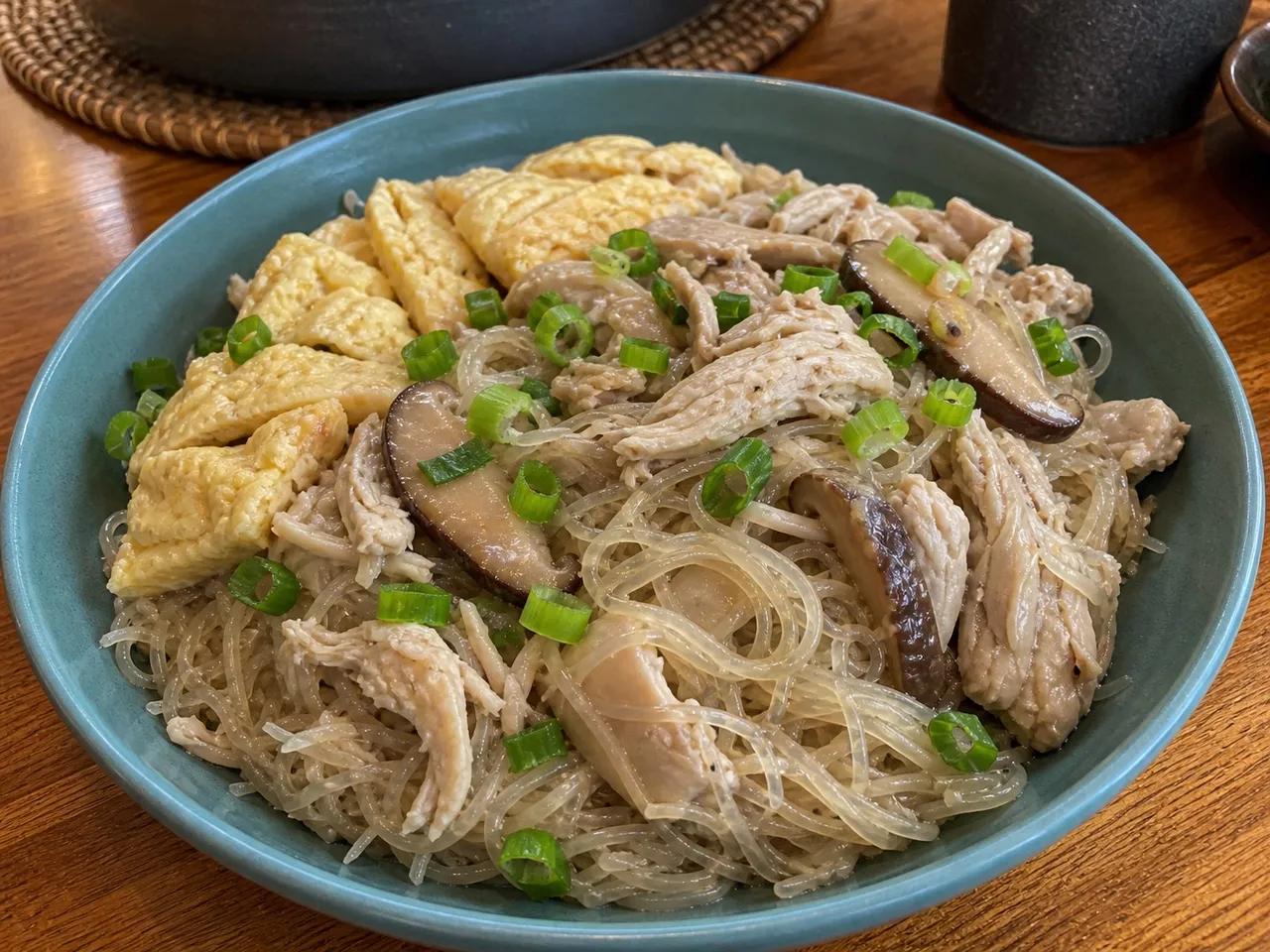 Serving Images are for illustrative purposes only, may be inaccurate, and do not guarantee the presence or absence of specific ingredients.
 Chicken Long Rice
Delicate cellophane noodles simmered in fragrant ginger chicken broth until silky — Hawaii's soothing, light noodle soup with deep comfort-food roots.
Contains common allergens
In the app, Listahan checks these against your household automatically.
Good to know
- One-pot
- Ready in under 30 minutes
Matched from this dish's own ingredients and timing. Browse more: one-pot dinners30-minute meals
Instructions
7 steps- 1
Combine the chicken, water or broth, ginger, onion, and garlic in a large pot. Bring to a boil, then reduce to a gentle simmer and cook, skimming any foam, until the chicken is tender and cooked through, about 25 to 30 minutes.
- 2
Remove the chicken to a plate to cool slightly, then shred the meat off the bones, discarding skin and bones.
- 3
Strain the broth through a fine sieve to remove the ginger, onion, and garlic solids, then return the clear broth to the pot.
- 4
Bring the broth back to a simmer and season with salt, white pepper, and fish sauce or soy sauce if using.
- 5
Drain the softened bean thread noodles and cut them into shorter lengths with kitchen shears for easier eating.
- 6
Add the noodles to the simmering broth and cook until they turn translucent and tender, about 3 to 5 minutes.
- 7
Return the shredded chicken to the pot to warm through, stir in the chopped green onions, and serve hot garnished with extra green onion.
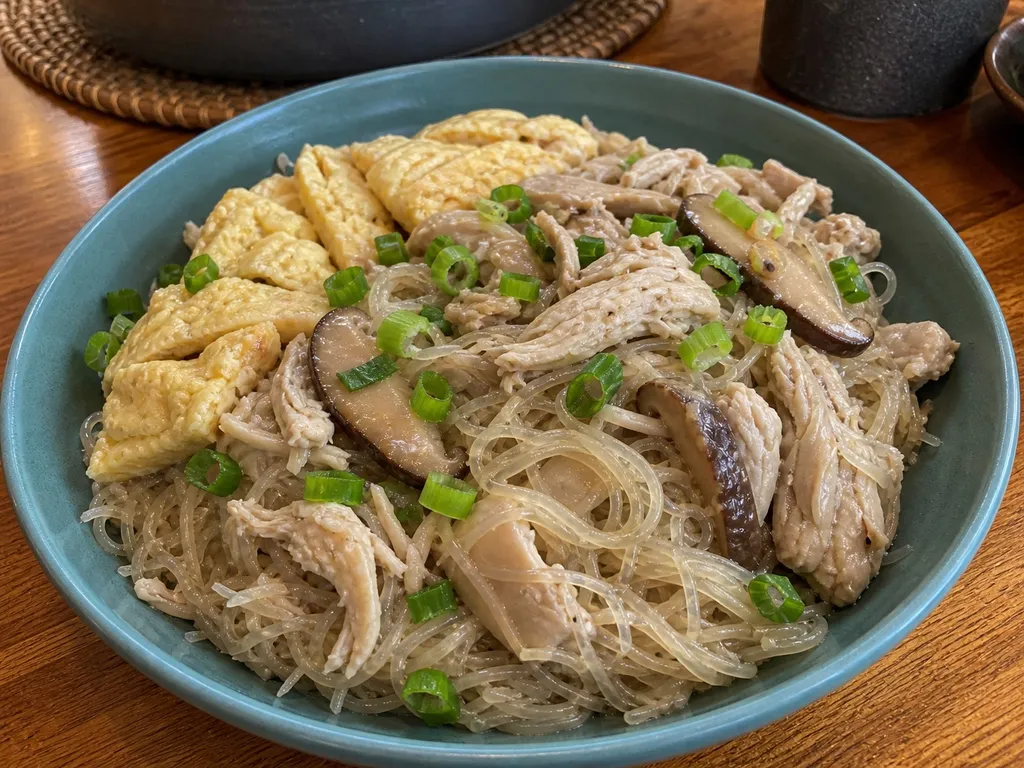 Images are for illustrative purposes only, may be inaccurate, and do not guarantee the presence or absence of specific ingredients.
 Listahan Family Score™
76/100
Good fit for most families
Score reflects how well this recipe fits a typical busy household. In the app, your Family Score is personalized to your household's allergens, kids, and pantry.
Nutrition
per serving350
Calories
32 g
Protein
22 g
Carbs
15 g
Fat
Estimated per serving. Actual values depend on the brands and portions you use.
Listahan cooking guide
Chef notes & practical guide
Technique notes, ingredient swaps, serve-alongside ideas, storage guidance, and equipment for this recipe.
Cultural context
Chicken long rice is one of the oldest dishes in the Hawaiian luau tradition and is believed to have been introduced to the islands by Chinese contract laborers who arrived in the mid-1800s to work on sugar plantations. The 'long rice' refers to glass noodles (mung bean thread noodles), which absorbed the flavor of the ginger-spiked chicken broth and became a staple comfort food. Unlike many fusion dishes, chicken long rice was quickly adopted into the Native Hawaiian festive table and has remained a luau fixture for over a century alongside poi and kalua pork.
Listahan note
This version keeps the broth simple and clear so the ginger and chicken flavor shine without competing additions — letting the noodles do the work of absorbing every bit of it.
Technique cues
- Simmer the chicken gently in the broth rather than boiling — hard boiling turns the breast meat stringy and clouds the broth, while a gentle simmer keeps both the meat and the liquid clean and flavorful.
- Soak the glass noodles in cold water until they are just pliable but not fully soft before adding to the broth; they will absorb the remaining cooking liquid as they finish in the pot and can turn to mush if pre-softened completely.
- Season the broth at the very end, after the noodles have absorbed some liquid — the salt concentration changes as the noodles swell, and seasoning early often leads to an oversalted finished dish.
Kitchen flow
- Parallel prep
- Soak glass noodles in cold water while the chicken simmers; both will finish at roughly the same time.
- Make-ahead
- Chicken and broth can be made up to 2 days ahead and refrigerated; add soaked noodles and simmer for 10 minutes when ready to serve.
- Leftover move
- Add a splash of broth or water when reheating leftovers — noodles absorb all remaining liquid overnight and the dish thickens considerably in the refrigerator.
- Cleanup rhythm
- Everything cooks in one large pot; prep tools are a cutting board and scissors for the noodles — this is a genuinely low-mess one-pot dish.
Ingredient brief
Role, handling, and swap guidance for each key ingredient.
bone-in chicken thighs
protein and broth base
Purpose: The bones release collagen as the chicken simmers, giving the broth body and richness that boneless chicken alone cannot produce.
Handling: Remove skin before cooking to keep the broth clear and less greasy; keep the bone in for the full simmer, then remove and shred before returning meat to the pot.
Adaptation: Bone-in drumsticks work equally well; boneless thighs produce less flavorful broth.
glass noodles (mung bean thread)
starch element and name origin
Purpose: These transparent noodles absorb the ginger-chicken broth completely, becoming silky and deeply flavored while adding no competing taste of their own.
Handling: Cut with kitchen scissors after soaking — long noodles are unwieldy in a serving bowl and difficult to portion; 3- to 4-inch lengths are ideal.
Adaptation: Rice vermicelli is a reasonable substitute with similar texture; wheat noodles change the dish significantly.
fresh ginger
primary aromatic
Purpose: Ginger defines the flavor of the broth in this dish; it is not background seasoning but the central aroma that makes chicken long rice distinctively Hawaiian-Chinese in character.
Handling: Use 5 to 6 thin slices of unpeeled ginger in the broth during simmering and discard before serving; grating adds intensity but can make the broth cloudy.
Adaptation: Ground ginger lacks the fresh bright edge; if out of fresh, use 1 teaspoon ground but know the character shifts.
green onions
finishing garnish and fresh flavor
Purpose: Scattered over the finished dish, green onions add color and a fresh counterpoint to the long-simmered richness of the broth.
Handling: Save until just before serving so they stay crisp and bright rather than wilting into the hot broth.
Adaptation: Chives or thinly sliced leeks provide a similar fresh allium note.
Technique notes
- Skim the surface of the broth with a spoon or ladle during the first 20 minutes of simmering to remove the grey foam — this step is the difference between a clear, clean broth and a murky one.
- If the dish sits too long after cooking, the noodles will absorb all the liquid and clump; serve promptly or keep the noodles in a separate container and add to individual bowls at serving time.
- A small drizzle of sesame oil over the finished bowl right before serving adds an aromatic richness that elevates the dish without overpowering the delicate ginger broth.
Ingredient swaps
- Gluten-free direction
- Use tamari if adding soy sauce for seasoning; glass noodles are made from mung beans and are naturally gluten-free.
- Lower-sodium direction
- Use low-sodium chicken broth as the base and season only at the very end with a light hand; the ginger provides enough aromatic punch to compensate for reduced salt.
Serve alongside
- Kalua pork
- Poi
- Lomi lomi salmon
- Chilled ginger tea
- Sparkling water
Serving suggestions only — check pairings for your household's allergens.
Storage & reheating
- Refrigerate in an airtight container for up to 3 days; store noodles and broth together but expect noodles to absorb all liquid by day 2.
- Freeze the chicken and broth only (without noodles) for up to 2 months; cook fresh noodles when reheating for the best texture.
Equipment
- Large stockpot or Dutch oven
- Kitchen scissors for cutting soaked noodles
- Fine-mesh skimmer for clearing the broth
Make this household-aware
Listahan Pro checks this recipe against your household's allergens, finds pantry-aware swaps, builds the shopping list, and helps you plan the week around it.
Plan it in Listahan
Add Chicken Long Rice to your week, check it against your household's allergens, and build the shopping list automatically.
More Hawaiian recipes
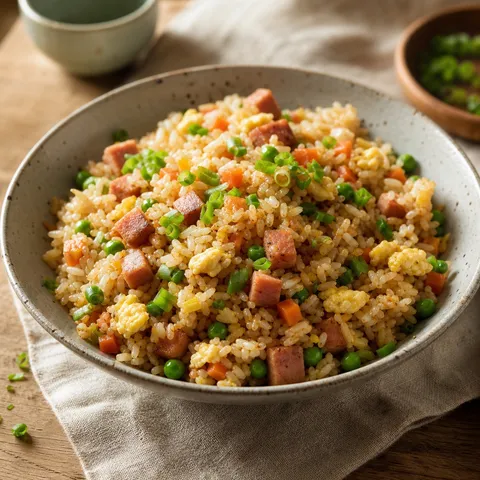 Hawaiian Lens Verified Images are for illustrative purposes only, may be inaccurate, and do not guarantee the presence or absence of specific ingredients.
 Spam Fried Rice
Day-old rice stir-fried with caramelized Spam, egg, soy sauce, and green onion — a quick, satisfying island classic that turns pantry staples into something craveable.
 Hawaiian Lens Verified Images are for illustrative purposes only, may be inaccurate, and do not guarantee the presence or absence of specific ingredients.
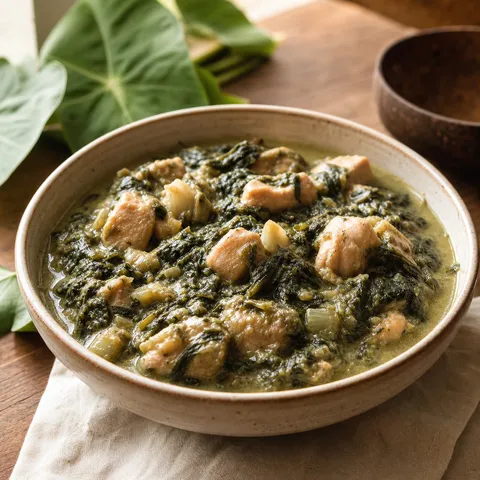
 Chicken Luau
Tender chicken simmered with young taro leaves in coconut milk until velvety and earthy — a quietly comforting Hawaiian stew full of old-fashioned luau warmth.
 Hawaiian Lens Verified Images are for illustrative purposes only, may be inaccurate, and do not guarantee the presence or absence of specific ingredients.
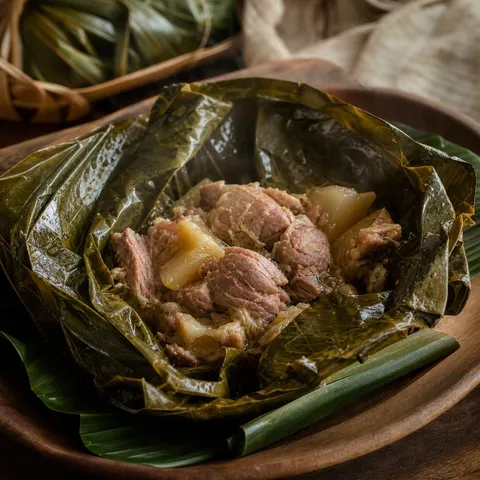
 Lau Lau
Pork shoulder and butterfish bundled in layers of taro leaf and steamed until meltingly tender — earthy, rich, and deeply rooted in Native Hawaiian tradition.