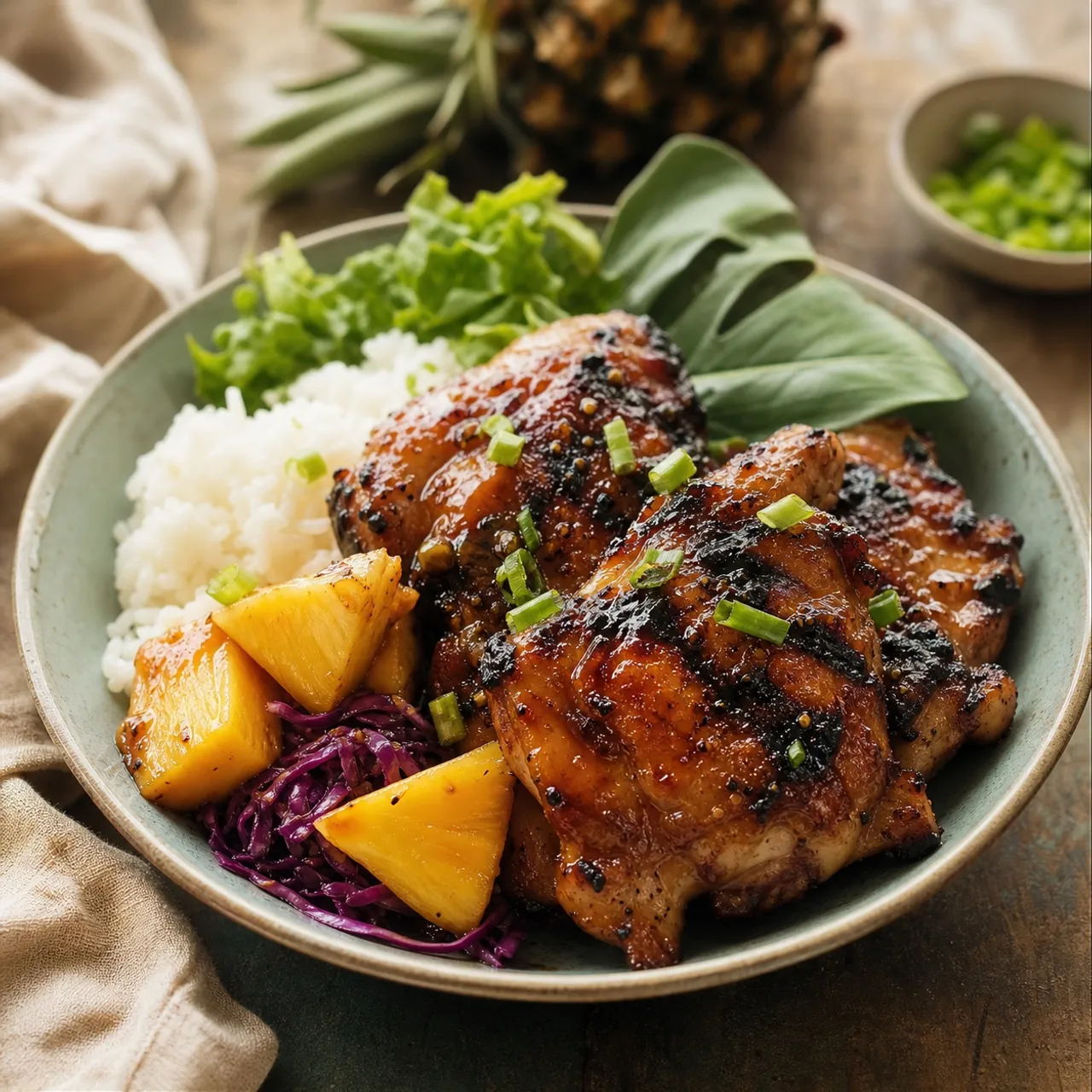
 Hawaiian Images are for illustrative purposes only, may be inaccurate, and do not guarantee the presence or absence of specific ingredients.
 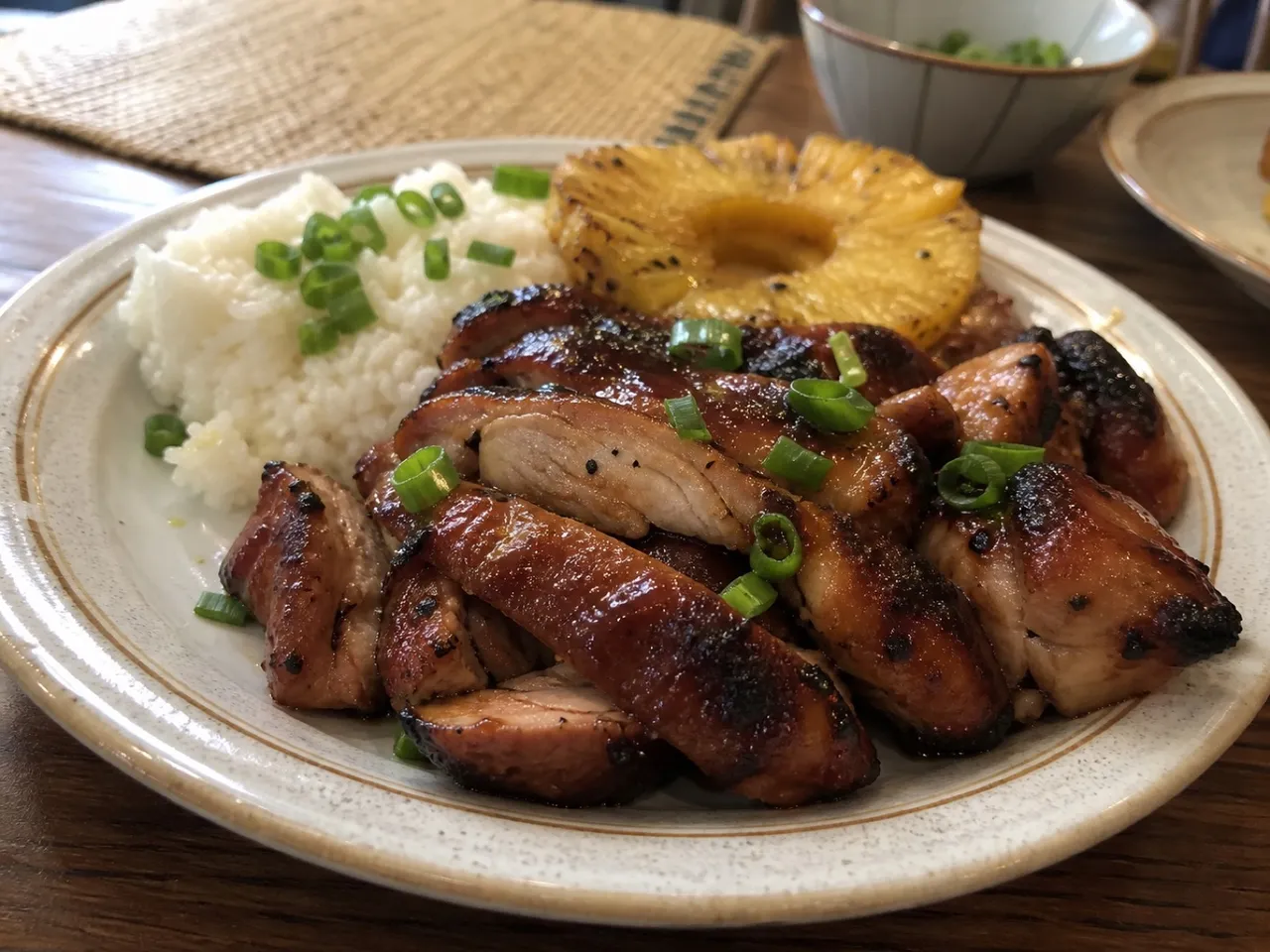 Serving Images are for illustrative purposes only, may be inaccurate, and do not guarantee the presence or absence of specific ingredients.
 Huli Huli Chicken
Grilled over open flames and basted with a sticky soy-ginger-pineapple glaze, this beloved roadside chicken is caramelized, smoky, and packed with flavor.
Contains common allergens
In the app, Listahan checks these against your household automatically.
Good to know
- Ready in under 30 minutes
Matched from this dish's own ingredients and timing. Browse more: 30-minute meals
Instructions
8 steps- 1
Whisk together the shoyu, ketchup, brown sugar, pineapple juice, ginger, garlic, rice vinegar, and sesame oil to make the huli huli glaze.
- 2
Reserve half the glaze in the refrigerator for basting later, and marinate the chicken in the remaining half for at least 2 hours, or up to overnight.
- 3
Preheat a grill to medium heat and oil the grates well to prevent sticking.
- 4
Remove the chicken from the marinade, letting excess drip off, and place skin-side down on the grill over indirect heat.
- 5
Grill for 30 to 35 minutes total, turning every 8 to 10 minutes and basting with the reserved glaze each time, until the skin is deeply caramelized and lacquered.
- 6
Move the chicken to direct heat for the last few minutes per side to char the glaze lightly, watching closely since the sugar burns fast.
- 7
Check that the thickest piece reaches 165F internal temperature, then rest for 5 minutes before serving.
- 8
Serve with steamed white rice and macaroni salad, the classic roadside plate lunch combination.
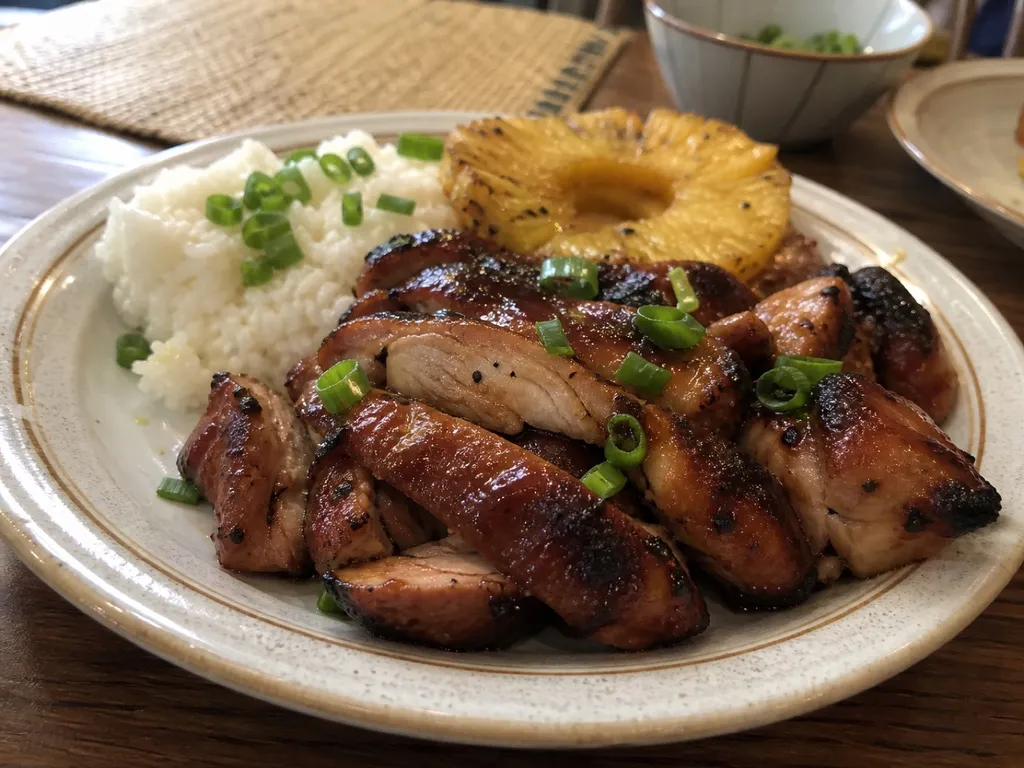 Images are for illustrative purposes only, may be inaccurate, and do not guarantee the presence or absence of specific ingredients.
 Listahan Family Score™
68/100
Works for many families
Score reflects how well this recipe fits a typical busy household. In the app, your Family Score is personalized to your household's allergens, kids, and pantry.
Nutrition
per serving525
Calories
59 g
Protein
7 g
Carbs
30 g
Fat
Estimated per serving. Actual values depend on the brands and portions you use.
Listahan cooking guide
Chef notes & practical guide
Technique notes, ingredient swaps, serve-alongside ideas, storage guidance, and equipment for this recipe.
Cultural context
Huli huli chicken was created in 1955 by Ernest Morgado, who cooked chicken between two grills and spun (huli means 'turn' in Hawaiian) them over a fire while basting in a pineapple-soy marinade. He sold it at a fundraiser and it became so popular he eventually trademarked the name and built a business around it. Roadside Huli Huli stands — cooking hundreds of birds on spinning grates over kiawe wood smoke — became a fixture of Hawaiian community fundraisers and festivals, with the sweet-smoky aroma drawing people from blocks away.
Listahan note
This version uses bone-in, skin-on thighs for maximum grill char and juiciness, with a marinade that balances pineapple sweetness against the salty-savory backbone of soy and ginger.
Technique cues
- Reserve half the marinade before adding the chicken to use as a basting sauce during grilling — never brush raw-chicken marinade back onto cooked meat.
- The pineapple juice in the marinade contains bromelain, an enzyme that tenderizes meat; marinate for 2 to 4 hours maximum or the proteins will begin to break down too aggressively and the texture turns mushy.
- Grill over medium-high indirect heat and move the chicken away from any flare-ups — the sugar in the marinade burns fast, so patience with the heat level is what separates a lacquered char from a blackened disaster.
Kitchen flow
- Parallel prep
- Marinate chicken the night before; prep rice and any sides during the 40-minute grill time so the whole meal comes together simultaneously.
- Make-ahead
- The marinade keeps refrigerated for up to 3 days; marinated raw chicken can sit in the refrigerator for up to 4 hours before grilling.
- Leftover move
- Leftover grilled chicken shreds beautifully into tacos or fried rice with pineapple chunks, keeping the sweet-savory flavor profile intact.
- Cleanup rhythm
- Mix the marinade in a zip-lock bag — it doubles as the marinating vessel and goes straight in the trash after; grill grates need a good brush right after cooking while they are still hot.
Ingredient brief
Role, handling, and swap guidance for each key ingredient.
bone-in, skin-on chicken thighs
main protein
Purpose: Thighs have enough fat to stay moist over high direct heat and their skin caramelizes to an irresistible lacquered crust under the sweet marinade.
Handling: Score the skin in two or three places with a sharp knife so the marinade penetrates beneath the skin layer rather than sitting on top.
Adaptation: Drumsticks work well with the same timing; boneless thighs cook faster but lose some of the bone-adjacent richness.
pineapple juice
sweet-acid marinade base and tenderizer
Purpose: Fresh or canned pineapple juice provides the signature tropical sweetness and contains natural enzymes that begin tenderizing the meat during marinating.
Handling: Use unsweetened 100% pineapple juice — juice cocktails have added sugar and will burn on the grill before the chicken cooks through.
Adaptation: Mango juice for a different but equally tropical sweetness without the bromelain tenderizing effect.
soy sauce
savory base
Purpose: Balances the sweetness of the pineapple and brown sugar and provides the umami depth that keeps the marinade from tasting like fruit sauce.
Handling: Combine with ginger and garlic first so the aromatics bloom in the soy before adding the pineapple juice.
Adaptation: Tamari for gluten-free; coconut aminos for a lower-sodium, slightly sweeter profile.
fresh ginger
aromatic brightness
Purpose: Ginger adds a spicy warmth that grounds the sweet marinade and is characteristic of Hawaiian-style teriyaki-adjacent cooking.
Handling: Grate on a Microplane directly into the marinade rather than mincing; grated ginger distributes more evenly and the juice infuses fully.
Adaptation: 1/2 teaspoon of ground ginger can substitute but loses the fresh, sharp edge of the real thing.
brown sugar or honey
caramelizing sweetener
Purpose: Creates the glossy lacquer on the chicken as it grills and adds a molasses depth that plain granulated sugar does not contribute.
Handling: Dissolve completely in the liquid before adding chicken to prevent concentrated sugar patches that char unevenly.
Adaptation: Honey adds floral sweetness; maple syrup works as a substitute with a slightly different flavor note.
Technique notes
- Baste the chicken every 5 minutes during the last 15 minutes of cooking — not at the start when the heat is too high and it just burns — to build up the lacquered layers of glaze.
- An instant-read thermometer reading of 170 F in the thigh (not touching bone) is the target; the extra 5 degrees over the safe 165 F threshold gives you fully rendered connective tissue and a more succulent result.
- If you do not have a grill, a broiler set to high on the top rack, turning once at the halfway point, produces a comparable caramelized surface.
Ingredient swaps
- Gluten-free direction
- Use tamari in place of soy sauce; all other ingredients in this marinade are naturally gluten-free.
- Lower-sugar direction
- Reduce brown sugar by half and replace with a teaspoon of rice vinegar to maintain the sweet-tart balance with less total sugar.
- Indoor direction
- Roast at 425 F on a wire rack set over a foil-lined baking sheet, basting twice, for crispy skin without a grill.
Serve alongside
- Steamed white rice
- Grilled pineapple slices
- Hawaiian macaroni salad
- Asian cucumber salad
- POG juice (passion orange guava)
- Chilled Kona Brewing Longboard Lager
Serving suggestions only — check pairings for your household's allergens.
Storage & reheating
- Refrigerate cooked chicken in an airtight container for up to 4 days; reheat gently in a 325 F oven covered with foil so the glaze does not burn.
- Freeze cooked thighs individually wrapped for up to 2 months; thaw overnight in the refrigerator and reheat in the oven rather than the microwave to preserve the skin texture.
Equipment
- Charcoal or gas grill with a lid for indirect heat zones
- Instant-read thermometer
- Basting brush for glaze application
Make this household-aware
Listahan Pro checks this recipe against your household's allergens, finds pantry-aware swaps, builds the shopping list, and helps you plan the week around it.
Plan it in Listahan
Add Huli Huli Chicken to your week, check it against your household's allergens, and build the shopping list automatically.
More Hawaiian recipes
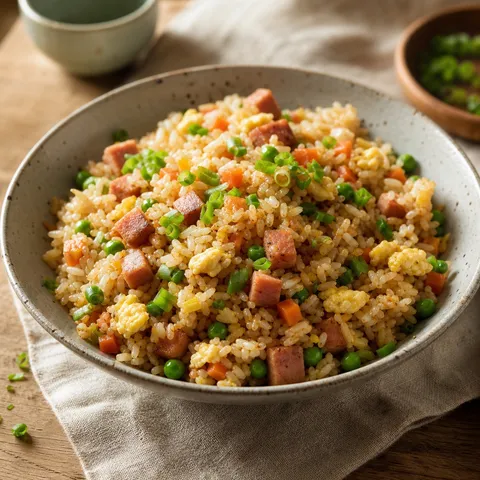 Hawaiian Lens Verified Images are for illustrative purposes only, may be inaccurate, and do not guarantee the presence or absence of specific ingredients.
 Spam Fried Rice
Day-old rice stir-fried with caramelized Spam, egg, soy sauce, and green onion — a quick, satisfying island classic that turns pantry staples into something craveable.
 Hawaiian Lens Verified Images are for illustrative purposes only, may be inaccurate, and do not guarantee the presence or absence of specific ingredients.
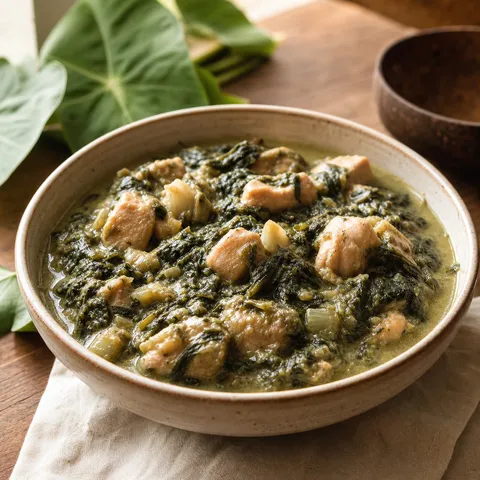
 Chicken Luau
Tender chicken simmered with young taro leaves in coconut milk until velvety and earthy — a quietly comforting Hawaiian stew full of old-fashioned luau warmth.
 Hawaiian Lens Verified Images are for illustrative purposes only, may be inaccurate, and do not guarantee the presence or absence of specific ingredients.
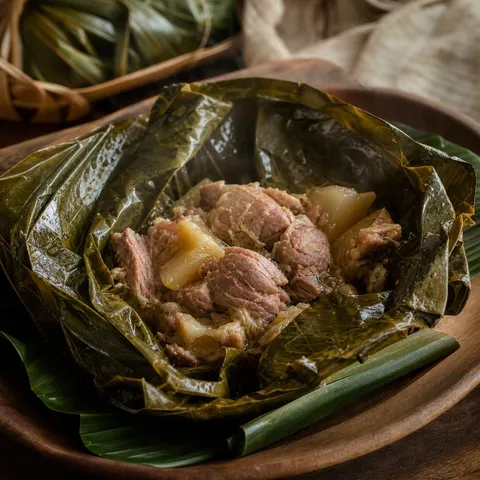
 Lau Lau
Pork shoulder and butterfish bundled in layers of taro leaf and steamed until meltingly tender — earthy, rich, and deeply rooted in Native Hawaiian tradition.