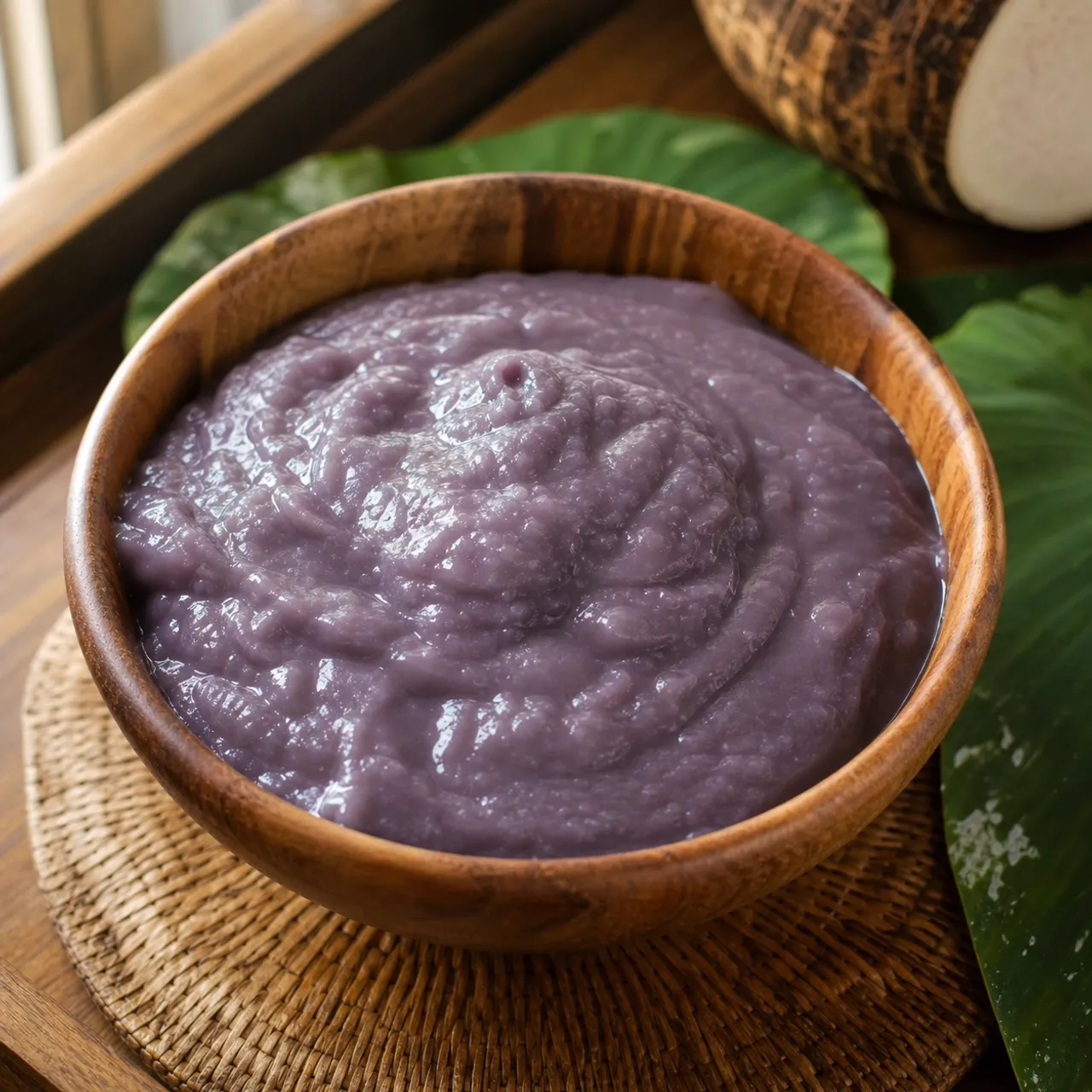
 Hawaiian Images are for illustrative purposes only, may be inaccurate, and do not guarantee the presence or absence of specific ingredients.
 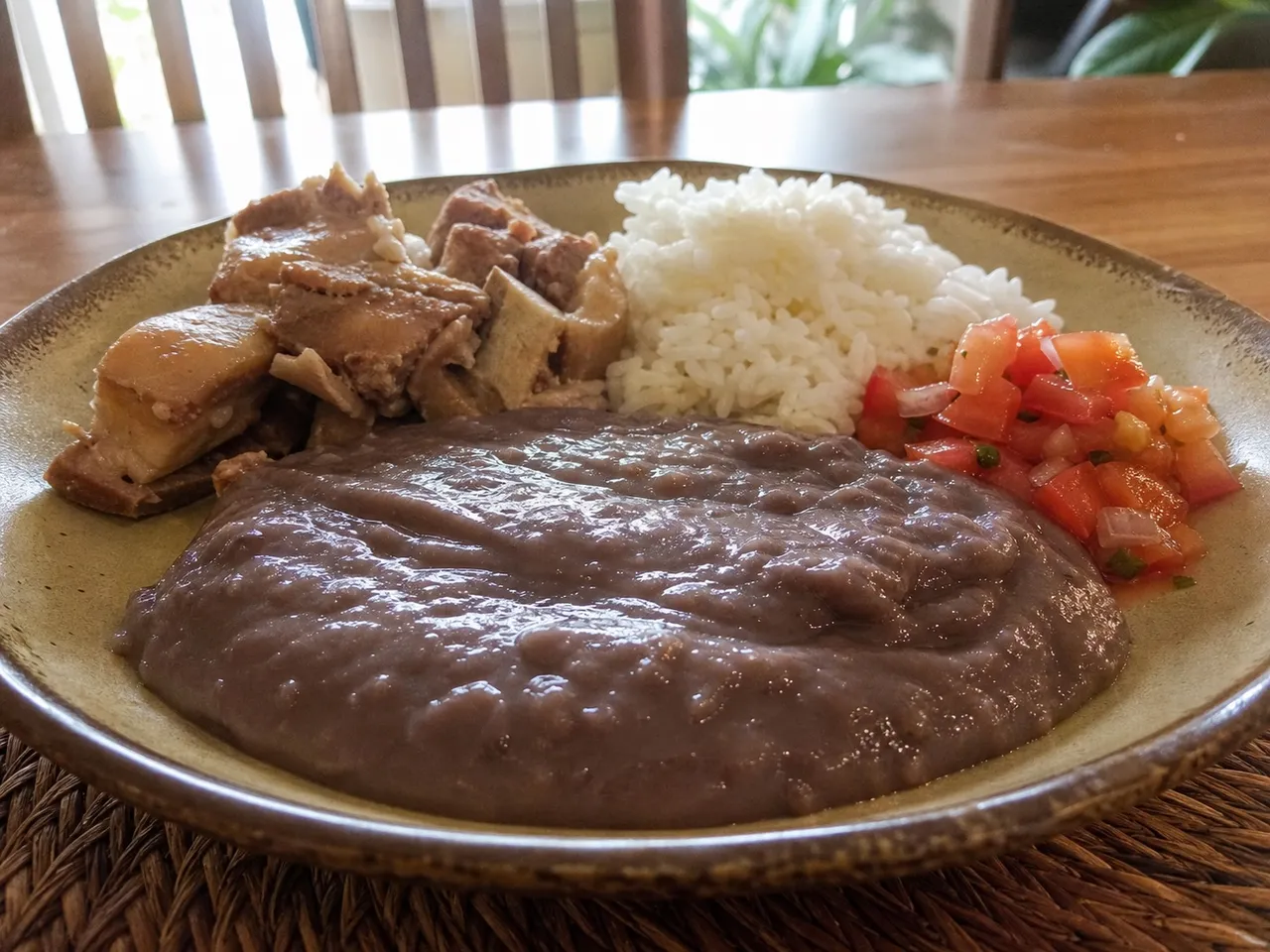 Serving Images are for illustrative purposes only, may be inaccurate, and do not guarantee the presence or absence of specific ingredients.
 Poi
Steamed taro root pounded into a smooth, subtly tangy paste — the starchy, earthy heart of Hawaiian cuisine and an essential luau accompaniment.
No common allergens detected
Based on this recipe's ingredient list. Always verify with your own brands and labels.
Good to know
- One-pot
- Ready in under 30 minutes
Matched from this dish's own ingredients and timing. Browse more: one-pot dinners30-minute meals
Instructions
8 steps- 1
Cut the peeled taro into large chunks and place in a pot, covering with water by a couple of inches.
- 2
Bring to a boil, then reduce to a simmer and cook, covered, for 40 to 50 minutes, until the taro is completely fork-tender all the way through, since undercooked taro will be gritty and can irritate the throat.
- 3
Drain the taro, reserving some of the cooking water, and let it cool just enough to handle safely.
- 4
While still warm, pound the taro in a large mortar (a traditional papa kui ai board and pohaku kui ai stone if available, or a sturdy bowl and heavy pestle otherwise), working it against the surface in a folding, mashing motion.
- 5
Gradually add the reserved cooking water, a few tablespoons at a time, continuing to pound and fold until the paste turns smooth and stretchy with no lumps.
- 6
Adjust the consistency with more water to taste, keeping in mind poi thickens as it sits.
- 7
Season with a pinch of Hawaiian salt if desired, though traditional poi is left unsalted and simply flavored by its own natural tang.
- 8
Serve fresh and mild the same day, or cover and let it sit at room temperature for a day or two to develop the sour flavor some prefer.
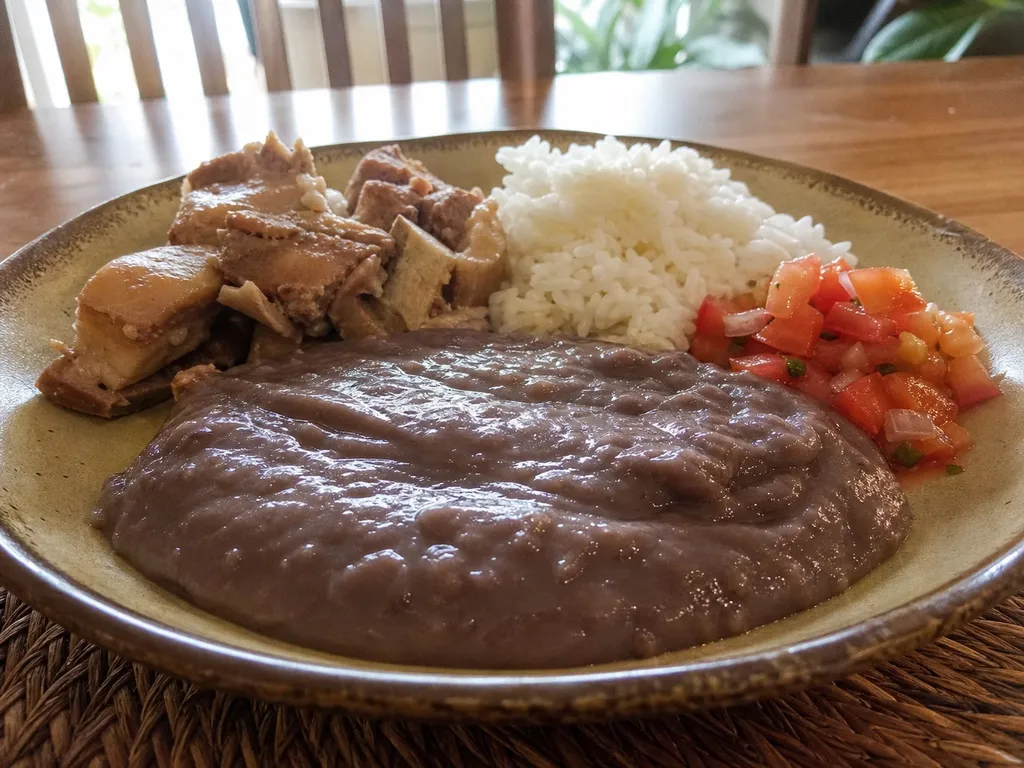 Images are for illustrative purposes only, may be inaccurate, and do not guarantee the presence or absence of specific ingredients.
 Listahan Family Score™
71/100
Good fit for most families
Score reflects how well this recipe fits a typical busy household. In the app, your Family Score is personalized to your household's allergens, kids, and pantry.
Nutrition
per serving45
Calories
2 g
Protein
9 g
Carbs
0 g
Fat
Estimated per serving. Actual values depend on the brands and portions you use.
Listahan cooking guide
Chef notes & practical guide
Technique notes, ingredient swaps, serve-alongside ideas, storage guidance, and equipment for this recipe.
Cultural context
Poi is the most sacred food in Native Hawaiian culture, made from the corm of the kalo (taro) plant, which Hawaiians believe is their ancestor in plant form — the elder sibling of humanity according to their creation narrative. For centuries it served as the caloric and cultural center of the Hawaiian diet, made by pounding steamed or boiled taro on a wooden board with a stone poi pounder until silky smooth, then thinned with water to varying consistencies. The thickness is described by how many fingers it takes to scoop and eat — 'two-finger poi' is thicker and richer, 'three-finger poi' is more liquid. Poi has a subtle, slightly sour, fermented flavor that becomes more pronounced over the days after it is made.
Listahan note
This version uses purple taro when available and a blender for accessible home preparation, focusing on getting the texture smooth and creamy rather than replicating the traditional stone-pounding method.
Technique cues
- Steam taro rather than boiling it — boiling leaches flavor and makes the corm waterlogged, producing a diluted, gummy poi; steaming preserves the earthy, starchy sweetness.
- Add water gradually while blending and stop to check consistency frequently — poi can go from thick and perfect to thin and soupy in seconds with too much water.
- Let freshly made poi sit at room temperature for 24 hours before serving if you want the characteristic mild tartness; the natural fermentation that develops is what gives poi its distinctive, slightly funky finish.
Kitchen flow
- Parallel prep
- Steam the taro while you set up the blender and gather other dishes; poi requires no active monitoring during the steam.
- Make-ahead
- Poi is traditionally made a day ahead to allow mild fermentation to develop its characteristic tang; store covered at room temperature for up to 24 hours, then refrigerate.
- Leftover move
- Leftover poi can be made into taro pancakes (poi pancakes) by mixing with egg, a touch of flour, and pan-frying — a popular Hawaiian breakfast adaptation.
- Cleanup rhythm
- Taro starch is very sticky; rinse the blender, gloves, and cutting surfaces with cold water immediately after prep before the starch sets and becomes difficult to remove.
Ingredient brief
Role, handling, and swap guidance for each key ingredient.
taro corm (kalo)
sole base ingredient
Purpose: Taro is the only ingredient with the right starch structure to produce poi's distinctive silky, paste-like texture when pounded or blended.
Handling: Always wear gloves when handling raw taro — the oxalic acid crystals in the raw corm cause intense skin irritation; cook thoroughly before handling with bare hands.
Adaptation: There is no substitute for taro in authentic poi; purple taro or Japanese satoimo (a related corm) approximate the color and starchiness but produce a different flavor.
water
consistency adjuster
Purpose: Water is added during blending to achieve the desired thickness; it is the only other ingredient in traditional poi.
Handling: Use cold water to prevent the blender from overheating the poi; add tablespoon by tablespoon to maintain control over the texture.
Adaptation: Coconut water adds a subtle tropical sweetness that, while non-traditional, pairs well with the taro's earthiness.
ti leaves or banana leaves (optional wrapping for steaming)
aromatic steam vessel
Purpose: Wrapping taro in ti leaves before steaming imparts a faint herbal note and is the traditional method used in imu cooking.
Handling: Soften ti leaves by passing briefly over a gas flame or rinsing with boiling water before wrapping the taro corm snugly.
Adaptation: Omit entirely for modern oven or steamer preparation; the flavor difference is minimal.
Hawaiian sea salt (optional, for finishing)
optional seasoning
Purpose: Some modern poi preparations finish with a tiny pinch of Hawaiian sea salt to heighten the taro's natural sweetness, though purists serve poi completely unseasoned.
Handling: Add only after blending and tasting; the mineral quality of Hawaiian salt is more compatible with the taro flavor than fine table salt.
Adaptation: Fleur de sel or any coarse sea salt; use sparingly.
Technique notes
- The sign of well-made poi is a completely smooth texture with no graininess — any grit means the taro was under-cooked or under-blended; return to the blender and process longer.
- Fresh poi is mild and slightly sweet; day-two or day-three poi develops a pleasantly sour, fermented edge that many people prefer and that pairs better with the rich luau proteins.
- Poi is traditionally eaten as a vehicle — scooped with fingers or a spoon and used to 'grab' bites of kalua pork or lomi lomi salmon rather than eaten alone.
Ingredient swaps
- Texture preference swap
- For a smoother, creamier result, substitute 2 tablespoons of coconut cream for some of the water — this is non-traditional but appealing for people trying poi for the first time.
- Accessibility swap
- Frozen taro corms, available in Asian grocery stores, work well here; steam from frozen (add 10 minutes to cook time) and the result is comparable to fresh.
Serve alongside
- Kalua pork
- Lomi lomi salmon
- Squid luau
- Chilled water
- Coconut water
Serving suggestions only — check pairings for your household's allergens.
Storage & reheating
- Store in an airtight container with a layer of water on the surface to prevent a skin from forming; refrigerate for up to 5 days, though the flavor becomes progressively more sour.
- Poi does not freeze well — the starch structure breaks down and it becomes grainy and unpleasant when thawed.
Equipment
- Steamer basket or steamer insert
- High-powered blender or food processor
- Rubber gloves for handling raw taro
Make this household-aware
Listahan Pro checks this recipe against your household's allergens, finds pantry-aware swaps, builds the shopping list, and helps you plan the week around it.
Plan it in Listahan
Add Poi to your week, check it against your household's allergens, and build the shopping list automatically.
More Hawaiian recipes
 Hawaiian Lens Verified Images are for illustrative purposes only, may be inaccurate, and do not guarantee the presence or absence of specific ingredients.
 Spam Fried Rice
Day-old rice stir-fried with caramelized Spam, egg, soy sauce, and green onion — a quick, satisfying island classic that turns pantry staples into something craveable.
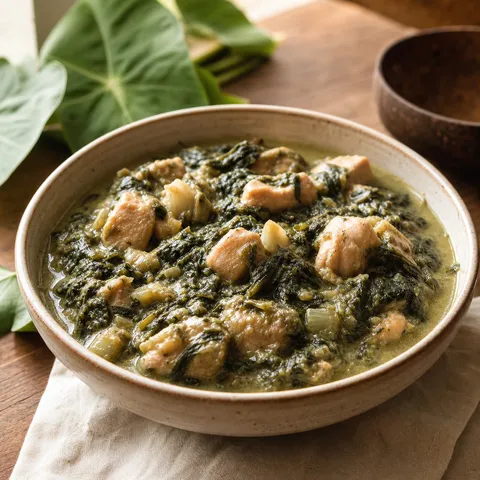 Hawaiian Lens Verified Images are for illustrative purposes only, may be inaccurate, and do not guarantee the presence or absence of specific ingredients.
 Chicken Luau
Tender chicken simmered with young taro leaves in coconut milk until velvety and earthy — a quietly comforting Hawaiian stew full of old-fashioned luau warmth.
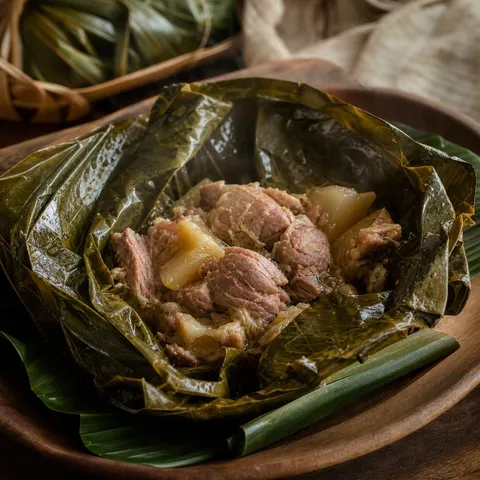 Hawaiian Lens Verified Images are for illustrative purposes only, may be inaccurate, and do not guarantee the presence or absence of specific ingredients.
 Lau Lau
Pork shoulder and butterfish bundled in layers of taro leaf and steamed until meltingly tender — earthy, rich, and deeply rooted in Native Hawaiian tradition.