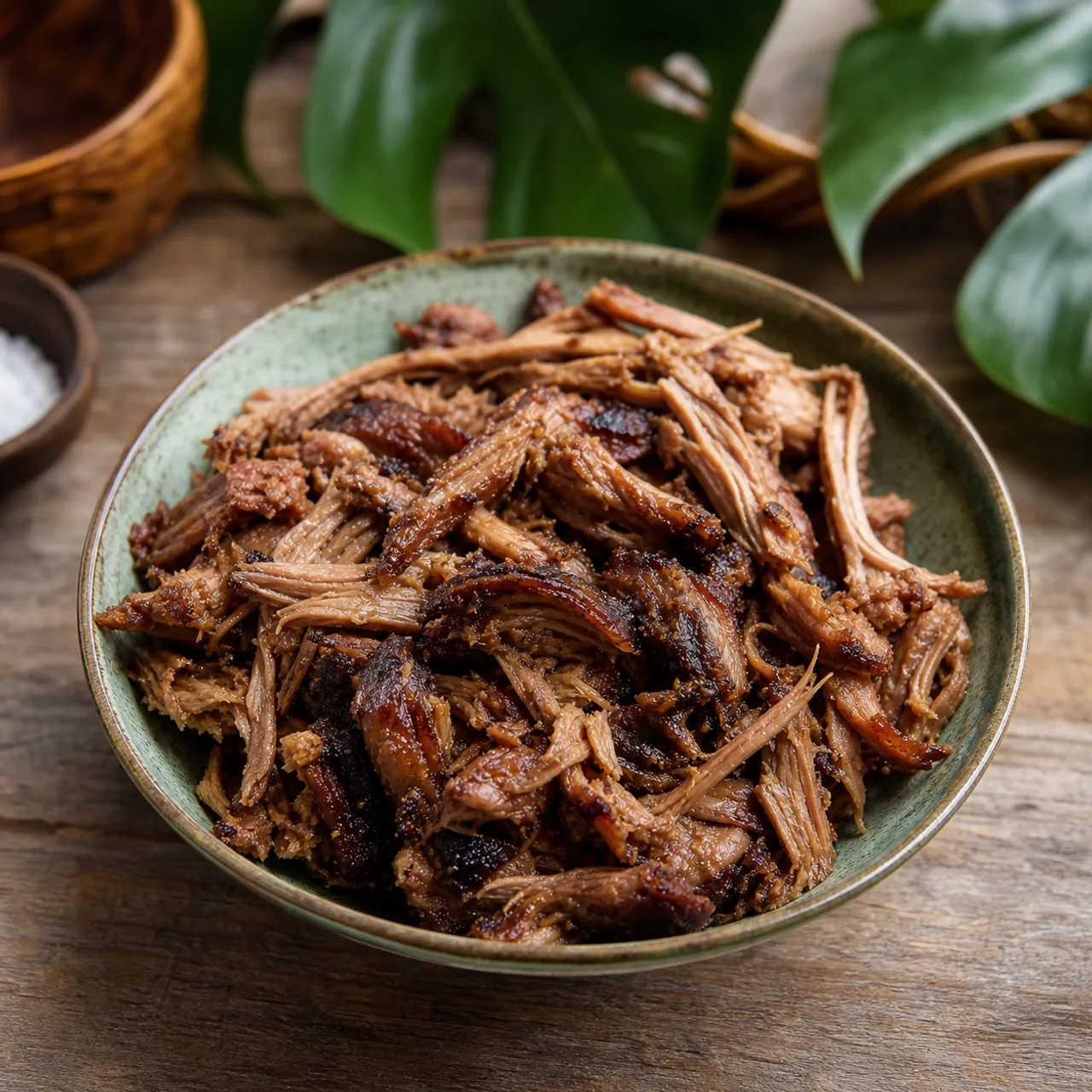
 Hawaiian Images are for illustrative purposes only, may be inaccurate, and do not guarantee the presence or absence of specific ingredients.
 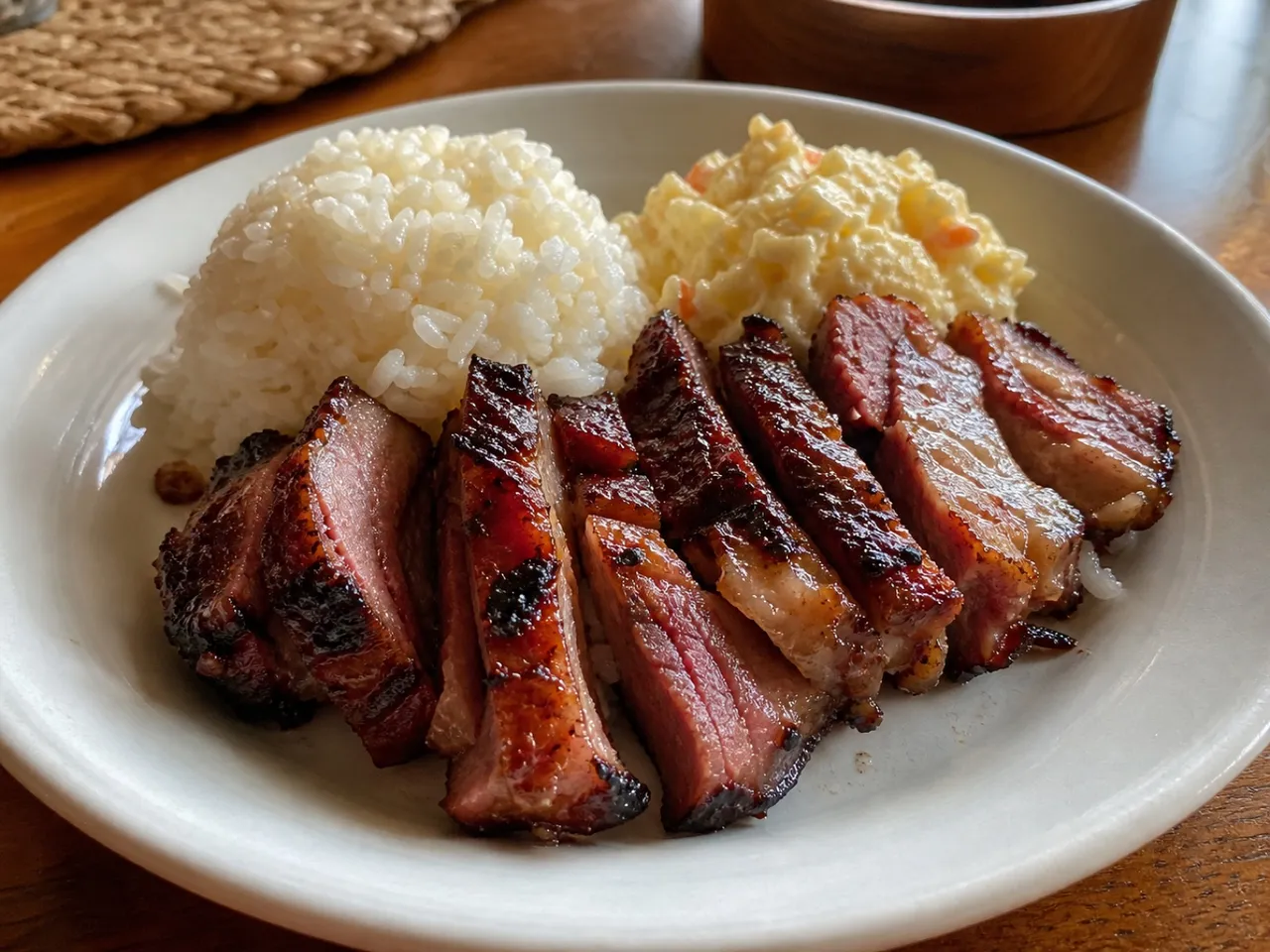 Serving Images are for illustrative purposes only, may be inaccurate, and do not guarantee the presence or absence of specific ingredients.
 Smoked Meat
Pork shoulder cured in soy, garlic, and Hawaiian salt, then slow-smoked until mahogany-dark and deeply flavorful — a local plate lunch staple with serious island character.
Contains common allergens
In the app, Listahan checks these against your household automatically.
Instructions
7 steps- 1
Combine shoyu, Hawaiian salt, crushed garlic, brown sugar, cracked pepper, liquid smoke, and water in a bowl to make the cure.
- 2
Rub the cure thoroughly over all sides of the pork shoulder slabs, working it into every crevice, then place in a large resealable bag or nonreactive container.
- 3
Refrigerate the pork for at least 8 hours or overnight, turning once, so the salt and shoyu penetrate deep into the meat.
- 4
Set up a smoker for indirect heat at 225F using kiawe or hickory wood chunks (mesquite is a reasonable substitute since kiawe is hard to find outside Hawaii).
- 5
Smoke the pork shoulder for 5 to 6 hours, maintaining steady low heat, until the internal temperature reaches 195F to 205F and the meat pulls apart easily with a fork.
- 6
Rest the meat for 20 minutes, then shred or slice thin against the grain.
- 7
Serve warm over rice with the smoky drippings spooned on top, or chill and slice cold for musubi and sandwiches.
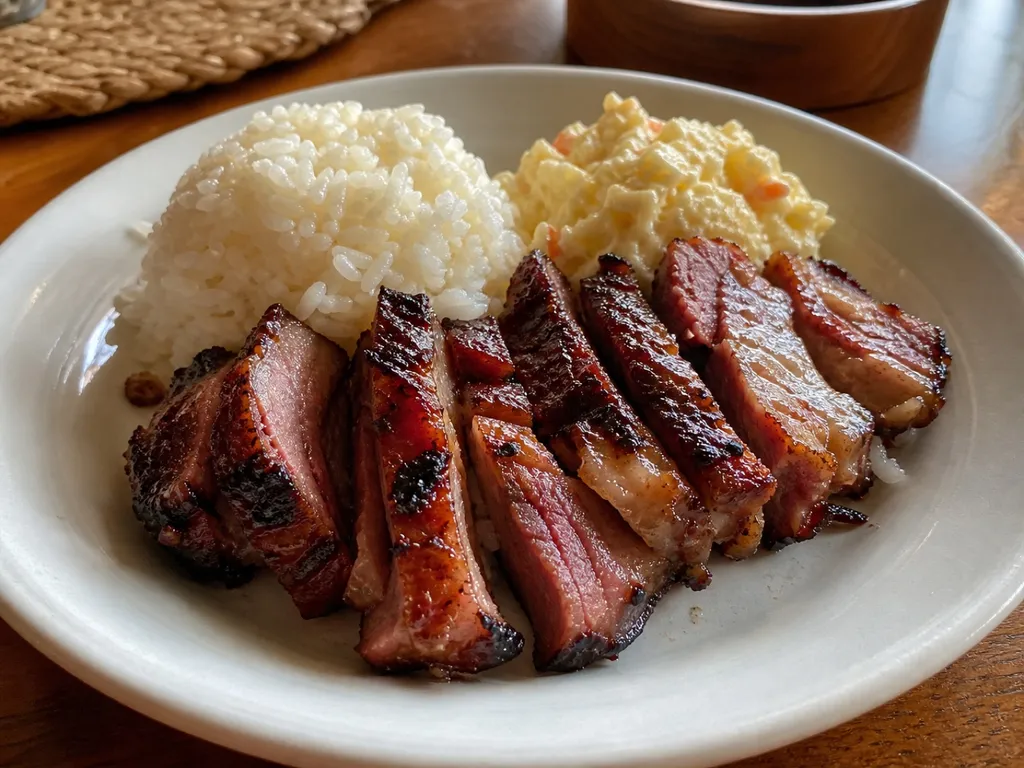 Images are for illustrative purposes only, may be inaccurate, and do not guarantee the presence or absence of specific ingredients.
 Listahan Family Score™
68/100
Works for many families
Score reflects how well this recipe fits a typical busy household. In the app, your Family Score is personalized to your household's allergens, kids, and pantry.
Nutrition
per serving445
Calories
47 g
Protein
7 g
Carbs
24 g
Fat
Estimated per serving. Actual values depend on the brands and portions you use.
Listahan cooking guide
Chef notes & practical guide
Technique notes, ingredient swaps, serve-alongside ideas, storage guidance, and equipment for this recipe.
Cultural context
Smoked meat in Hawaii is closely associated with the Portuguese tradition of linguica and chourico, brought to the islands in the late 19th and early 20th centuries by Portuguese laborers from the Azores and Madeira who came to work the sugar plantations. Over generations, the practice of smoke-curing pork was adapted using local flavors and techniques, and smoked meat evolved into a distinct island product — typically pork marinated in soy and salt, then dried and smoked over kiawe (Hawaiian mesquite) wood. It is sold at roadside stands, served in plate lunches, and eaten as a snack with rice.
Listahan note
This version prioritizes the kiawe-style char and the soy-salt marinade that distinguish Hawaiian smoked meat from mainland BBQ — the goal is intensely savory, chewy slices with a dark mahogany exterior.
Technique cues
- Marinate the pork in a high-sodium mixture of soy sauce, garlic, and sugar for at least 8 hours and preferably overnight — the salt penetrates the meat and helps preserve it during the long smoking process.
- Smoke at a lower temperature (around 225 degrees F) for a longer time rather than hot-smoking quickly; the extended time allows the fat to render gradually and the exterior to develop the characteristic dark, lacquered crust.
- Let the smoked meat rest for at least 15 minutes uncovered before slicing — the crust re-crisps slightly as moisture redistributes and the internal temperature evens out.
Kitchen flow
- Parallel prep
- Mix and apply the marinade the night before so the pork is fully cured and ready for the smoker first thing in the morning; no day-of prep needed beyond starting the smoke.
- Make-ahead
- Smoked meat is an ideal make-ahead dish — it keeps refrigerated for up to 1 week and the flavor deepens with each day. Slice as needed rather than all at once.
- Leftover move
- Chop leftover smoked meat fine and fold into fried rice with egg and scallions, or dice and serve alongside poi and rice as a traditional Hawaiian plate.
- Cleanup rhythm
- Line the smoker drip pan with foil before starting and dispose of it after; wipe the grates while still warm after the smoke finishes for easier cleaning.
Ingredient brief
Role, handling, and swap guidance for each key ingredient.
pork shoulder or pork butt
main protein
Purpose: The high fat content of pork shoulder keeps the meat moist during a long smoke and provides the rich chew that makes smoked meat satisfying.
Handling: Trim excess surface fat to about 1/4 inch so it renders without leaving a thick rubbery layer.
Adaptation: Pork belly produces an even richer, fattier smoked meat; pork loin is leaner but dries more easily and requires careful temperature monitoring.
soy sauce
marinade base and curing agent
Purpose: Soy sauce provides the salt for curing, the umami depth that makes Hawaiian smoked meat distinctive from continental BBQ, and it creates the dark mahogany color on the exterior.
Handling: Combine with garlic, sugar, and a little sesame oil to make the marinade, and submerge the pork fully for maximum penetration.
Adaptation: Tamari for a gluten-free marinade with the same flavor profile.
brown sugar
caramelized crust and balance
Purpose: Brown sugar counterbalances the soy sauce salt, encourages the dark caramelized exterior during smoking, and adds a subtle molasses note.
Handling: Dissolve into the soy marinade while still warm so it integrates fully rather than sitting as undissolved granules.
Adaptation: Honey or raw cane sugar produce similar results with slightly different flavor notes.
kiawe wood chips (or mesquite)
smoke flavor
Purpose: Kiawe is the Hawaiian relative of mesquite and delivers the defining earthy, slightly sweet smoke flavor that makes Hawaiian smoked meat taste of the islands.
Handling: Soak wood chips in water for 30 minutes before adding to the smoker to extend smoke time; drain before using.
Adaptation: Mesquite chips are the closest mainland substitute; hickory is slightly more intense but works well.
Technique notes
- Score the surface of the pork in a crosshatch pattern before marinating — the cuts allow the soy marinade to penetrate deeper and create more surface area for the smoke to interact with.
- Internal temperature should reach 195 to 205 degrees F for a shoulder or butt to render the collagen fully and produce the tender, pullable texture characteristic of properly smoked pork.
- Brush the exterior with a thin layer of the reserved marinade during the last 30 minutes of smoking to intensify the lacquered crust and add another layer of soy-caramel flavor.
Ingredient swaps
- Gluten-free direction
- Replace soy sauce with tamari in the marinade; all other ingredients are naturally gluten-free.
- Lower-sodium direction
- Use reduced-sodium soy sauce in the marinade and reduce marinating time to 4 hours to limit sodium absorption, then rely on the smoke to deliver flavor.
- Weeknight shortcut
- Marinate smaller pork steaks (1-inch thick) rather than a whole shoulder and hot-smoke or grill over indirect heat at 350 degrees F for about 1 hour for a fast weeknight version with a similar flavor.
Serve alongside
- Steamed white rice
- Poi or taro
- Hawaiian coleslaw with pineapple
- Cold Maui Brewing lager
- Guava juice over ice
- Iced hibiscus tea
Serving suggestions only — check pairings for your household's allergens.
Storage & reheating
- Refrigerate sliced or whole smoked meat wrapped tightly for up to 1 week; the flavor continues to develop. Reheat slices in a dry skillet over medium heat for 2 to 3 minutes per side to restore the exterior sear. Smoked meat freezes well for up to 3 months; thaw in the refrigerator overnight and reheat in a skillet.
Equipment
- Kettle grill, offset smoker, or pellet smoker for low-and-slow cooking
- Wood chips (kiawe or mesquite) for authentic smoke flavor
- Instant-read thermometer to monitor internal temperature
- Zip-lock bag or large container for overnight marinating
Make this household-aware
Listahan Pro checks this recipe against your household's allergens, finds pantry-aware swaps, builds the shopping list, and helps you plan the week around it.
Plan it in Listahan
Add Smoked Meat to your week, check it against your household's allergens, and build the shopping list automatically.
More Hawaiian recipes
 Hawaiian Lens Verified Images are for illustrative purposes only, may be inaccurate, and do not guarantee the presence or absence of specific ingredients.
 Spam Fried Rice
Day-old rice stir-fried with caramelized Spam, egg, soy sauce, and green onion — a quick, satisfying island classic that turns pantry staples into something craveable.
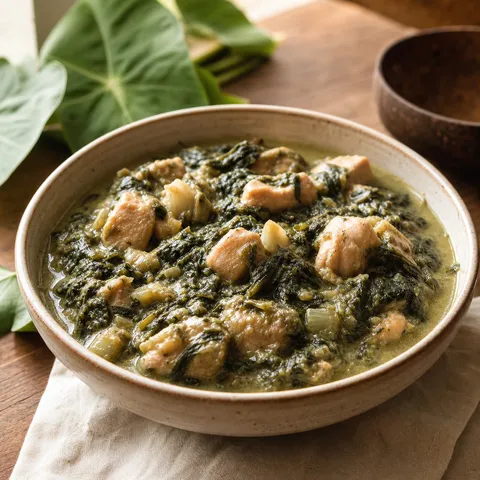 Hawaiian Lens Verified Images are for illustrative purposes only, may be inaccurate, and do not guarantee the presence or absence of specific ingredients.
 Chicken Luau
Tender chicken simmered with young taro leaves in coconut milk until velvety and earthy — a quietly comforting Hawaiian stew full of old-fashioned luau warmth.
 Hawaiian Lens Verified Images are for illustrative purposes only, may be inaccurate, and do not guarantee the presence or absence of specific ingredients.
 Lau Lau
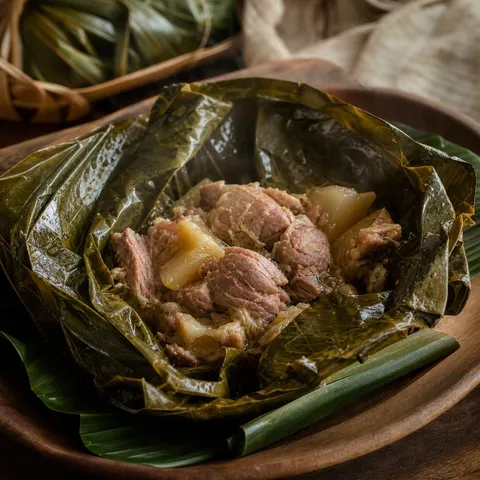
Pork shoulder and butterfish bundled in layers of taro leaf and steamed until meltingly tender — earthy, rich, and deeply rooted in Native Hawaiian tradition.