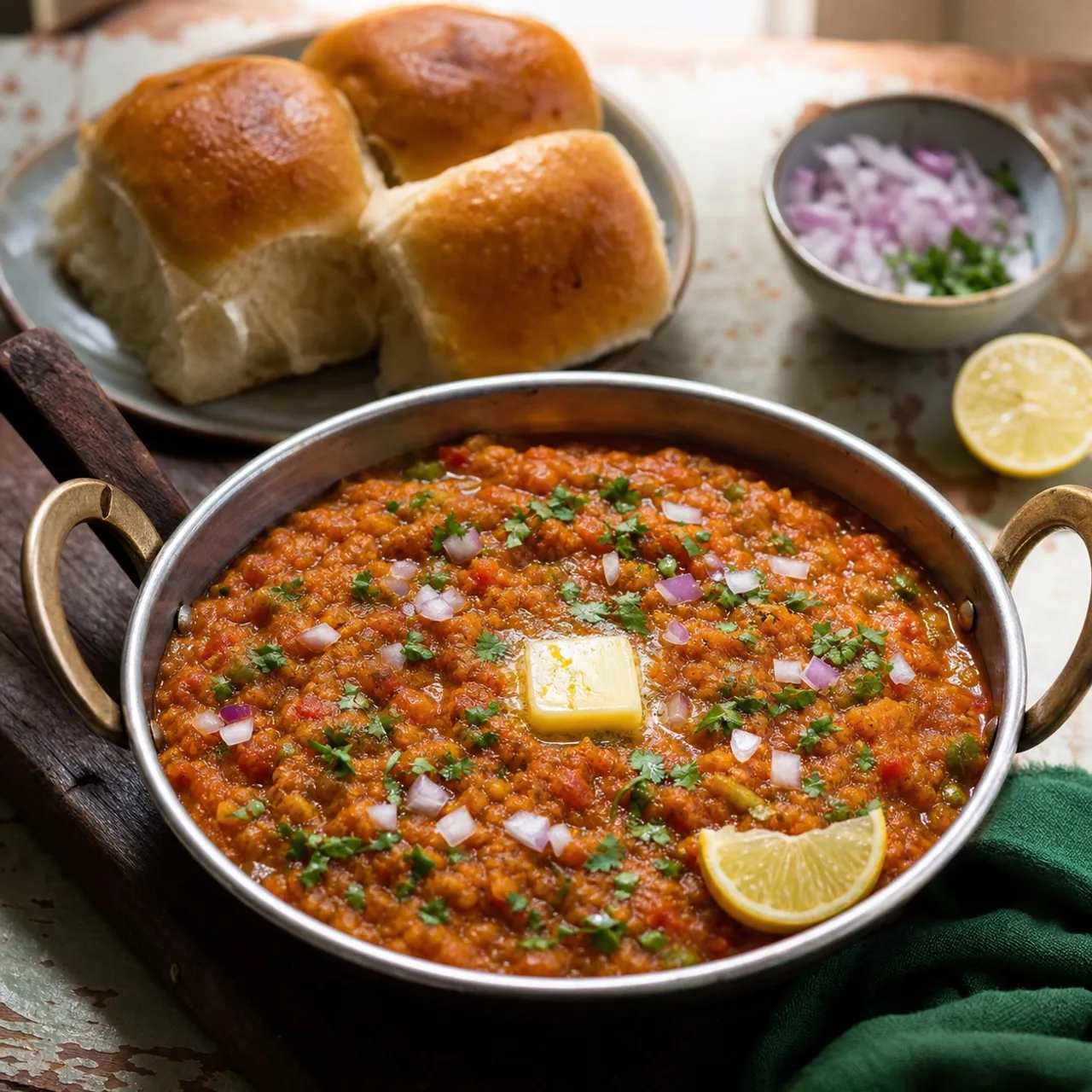
 Indian Images are for illustrative purposes only, may be inaccurate, and do not guarantee the presence or absence of specific ingredients.
 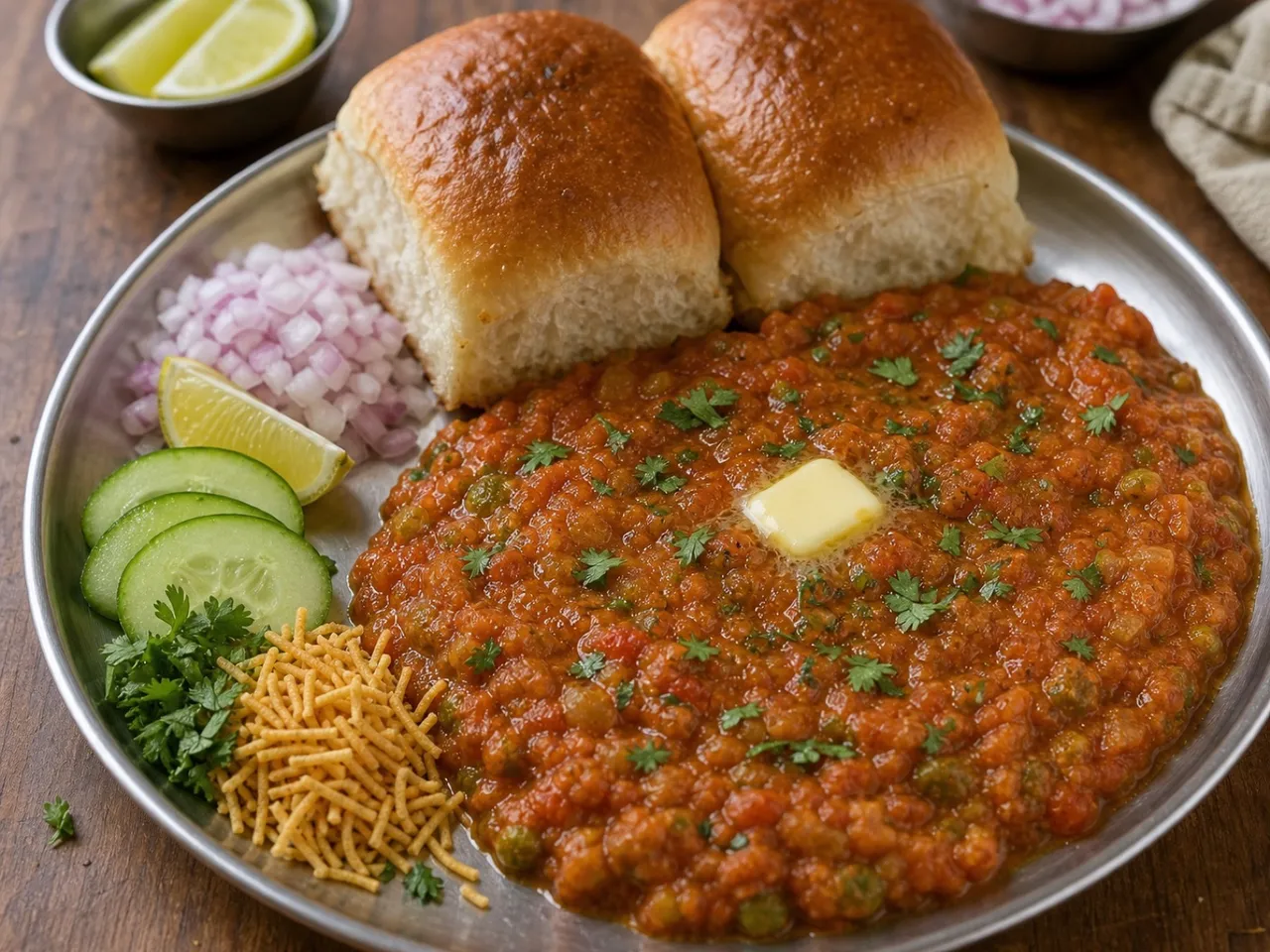 Serving Images are for illustrative purposes only, may be inaccurate, and do not guarantee the presence or absence of specific ingredients.
 Pav Bhaji
A fast food dish consisting of a thick vegetable curry served with a soft bread roll.
Contains common allergens
In the app, Listahan checks these against your household automatically.
Instructions
6 steps- 1
Cook the Vegetables: Boil the potatoes, peas, and cauliflower together until extremely soft. Drain well and use a potato masher to mash them thoroughly.
- 2
Sauté the Base: Heat 2 tbsp butter and 1 tbsp oil in a large, wide skillet over medium heat. Add the finely chopped onions and sauté until translucent. Stir in 1 tbsp ginger-garlic paste and cook for 1 minute.
- 3
Tomato Masala: Add the finely chopped tomatoes and a pinch of salt. Cook for 8-10 minutes until the tomatoes break down entirely and become a thick, oily paste.
- 4
Spice it Up: Stir in 3 tbsp of Pav Bhaji masala and 1 tsp Kashmiri red chili powder. Cook the spices in the tomato paste for 2 minutes to release their flavors.
- 5
Mix and Mash: Add the mashed vegetables to the skillet. Mix thoroughly with the masala. Pour in 1/2 cup of water and continue to mash the mixture in the pan with a potato masher while it simmers, achieving a smooth, thick consistency. Cook for 5 minutes.
- 6
Butter and Serve: Stir in another 1 tbsp of butter and fresh cilantro. Slit the pav (buns) and toast them on a separate hot griddle with plenty of butter. Serve the hot bhaji alongside the buttered pav, garnished with diced onions and a lemon wedge.
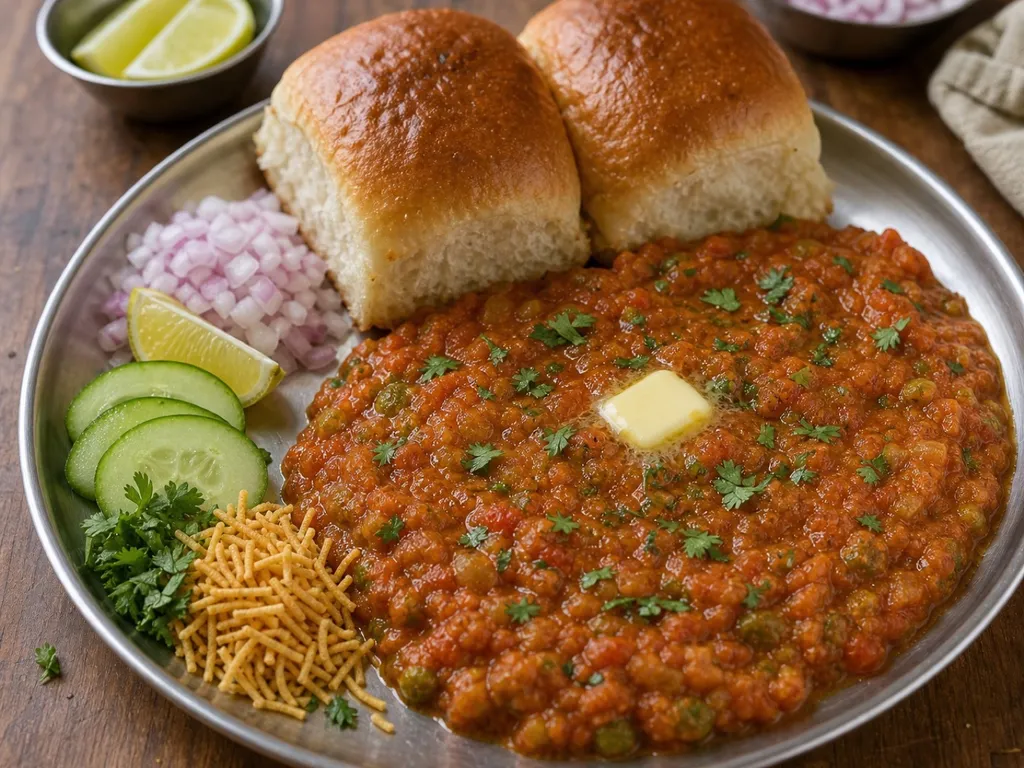 Images are for illustrative purposes only, may be inaccurate, and do not guarantee the presence or absence of specific ingredients.
 Listahan Family Score™
64/100
Works for many families
Score reflects how well this recipe fits a typical busy household. In the app, your Family Score is personalized to your household's allergens, kids, and pantry.
Nutrition
per serving290
Calories
7 g
Protein
40 g
Carbs
12 g
Fat
Estimated per serving. Actual values depend on the brands and portions you use.
Listahan cooking guide
Chef notes & practical guide
Technique notes, ingredient swaps, serve-alongside ideas, storage guidance, and equipment for this recipe.
Cultural context
Pav bhaji was invented in the 1850s by textile mill workers in Mumbai who needed a fast, filling meal during short breaks. Vendors would mix leftover vegetables, mash them together on a flat griddle with spices, and serve them with bread rolls. The dish became so popular it spread across Maharashtra and eventually across India, and today it is a fixture of street stalls, casual restaurants, and home kitchens. The name simply means 'bread and vegetables' in Marathi.
Listahan note
This version emphasizes the butter-rich, deeply spiced bhaji that clings to the back of a spoon; we use a blend of potatoes, cauliflower, and peas for texture and cook everything down slowly until the masala is properly caramelized.
Technique cues
- Use the back of a flat-headed spatula to continuously mash and fold the vegetables as they cook; the friction against the hot pan caramelizes the mixture and builds a depth of flavor that cannot come from stovetop simmering alone.
- Add butter generously and repeatedly during cooking rather than all at once at the end; butter incorporated in stages emulsifies into the vegetable masala and gives the bhaji its signature silky richness.
- Toast the pav until the cut surfaces develop a golden crust on both sides; a properly toasted pav holds up to the wet bhaji for several minutes without turning to mush.
Kitchen flow
- Parallel prep
- Pressure cook or steam all the vegetables in one batch while you make the tomato-onion masala base on the stovetop so both are ready to combine at the same time.
- Make-ahead
- The bhaji keeps and actually improves overnight in the fridge; reheat on a flat griddle or in a pan with an extra knob of butter, mashing again as it warms.
- Leftover move
- Stuff cold leftover bhaji into a toasted bun with shredded cheese for a fusion-style grilled sandwich, or thin it with water to use as a thick pasta sauce.
- Cleanup rhythm
- Deglaze the griddle or pan while still hot with a cup of water and let it simmer for 2 minutes to loosen the caramelized bits before wiping clean; the fond comes off easily when dissolved this way.
Ingredient brief
Role, handling, and swap guidance for each key ingredient.
potatoes
starchy base
Purpose: Potatoes provide the bulk and binding starch that holds the mashed vegetable mixture together into a thick, spreadable consistency.
Handling: Boil or pressure cook until completely soft, then add directly to the pan and mash them in so the starch mingles with the spiced tomato base.
Adaptation: Sweet potatoes add sweetness and color but change the flavor profile; keep at least half regular potato to maintain the classic texture.
pav bhaji masala
signature spice blend
Purpose: This pre-mixed spice blend that includes dried pomegranate seed, dried mango powder, and a combination of warm spices creates the distinctive tangy-savory flavor that separates pav bhaji from generic vegetable curry.
Handling: Add to the pan after the tomatoes have softened and cooked down, stirring to bloom the spices in the fat for about 60 seconds before adding any liquid.
Adaptation: A blend of cumin, coriander, red chili powder, and amchur (dry mango powder) approximates the effect but lacks some complexity.
butter
richness and flavor
Purpose: Butter is not optional in pav bhaji; it is the fat that carries all the spice flavor and gives the finished dish its glossy, restaurant-style appearance and richness.
Handling: Use at three stages: when cooking the onion-tomato base, when mashing and folding the vegetables, and as a finishing knob right before serving.
Adaptation: Vegan butter works well as a 1:1 substitute for a dairy-free version without sacrificing the richness.
mixed vegetables
body and nutrition
Purpose: Cauliflower, peas, carrots, and bell pepper add color, different textures, and nutrition to what would otherwise be a plain potato mash.
Handling: Steam or pressure cook separately until just tender so they mash evenly with the potatoes without leaving hard chunks.
Adaptation: Any soft vegetable works; canned corn, zucchini, and green beans are all acceptable additions or substitutions.
Technique notes
- A tiny amount of red food coloring or beet powder is the cheat restaurants use to get that vivid orange-red color; skip it entirely and use good-quality Kashmiri red chili powder instead, which colors naturally without heat.
- Finely mince the onion and allow it to cook until it is almost paste-like before adding the tomatoes; a properly cooked onion base prevents raw bite in the final bhaji.
- Squeeze fresh lime juice over individual servings at the table rather than into the pot, so each person can adjust the brightness and the acid does not make the bhaji taste flat if it sits.
Ingredient swaps
- Dairy-free option
- Replace butter with an equal amount of vegan butter or coconut oil; the flavor changes slightly but the richness is maintained.
- Gluten-free direction
- Serve over rice instead of pav rolls, or use certified gluten-free bread rolls. The bhaji is potato, peas, cauliflower, tomato, onion, butter and Pav Bhaji masala — check that masala blend, which sometimes carries wheat.
- Lower-fat direction
- Reduce butter to 1 tablespoon total and use a spray of oil on the pan; the bhaji will be less rich but still flavorful with good pav bhaji masala.
Serve alongside
- Finely diced raw onion with lemon
- Masala chai
- Plain salted crackers
- Cold mango lassi
- Nimbu pani (Indian lemonade)
Serving suggestions only — check pairings for your household's allergens.
Storage & reheating
- Store the bhaji in an airtight container in the refrigerator for up to 3 days; the flavor deepens as the spices bloom further.
- Reheat on a flat griddle or in a pan over medium heat with a knob of butter, mashing as it warms; do not microwave as it makes the texture gluey.
Equipment
- Large flat-bottomed griddle or cast-iron skillet for mashing and caramelizing the bhaji
- Potato masher for working the vegetables into the masala base
- Pressure cooker or Instant Pot for quickly cooking the vegetables
- Flat metal spatula for mashing and folding on the griddle
Make this household-aware
Listahan Pro checks this recipe against your household's allergens, finds pantry-aware swaps, builds the shopping list, and helps you plan the week around it.
Plan it in Listahan
Add Pav Bhaji to your week, check it against your household's allergens, and build the shopping list automatically.
More Indian recipes
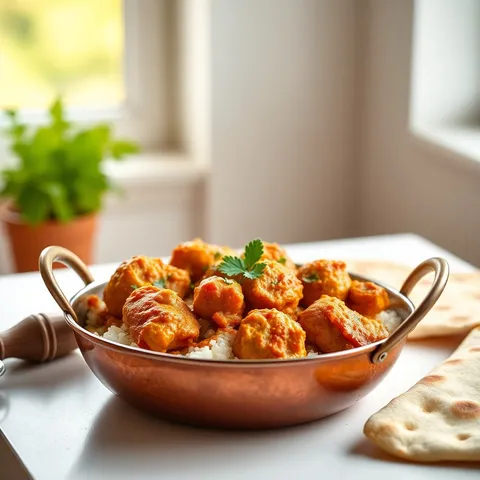 Indian Lens Verified Images are for illustrative purposes only, may be inaccurate, and do not guarantee the presence or absence of specific ingredients.
 Chicken Tikka Masala
Indulge in succulent, yogurt-marinated chicken chunks roasted to perfection and enveloped in a luscious, deeply spiced tomato-cream sauce.
 Indian Lens Verified Images are for illustrative purposes only, may be inaccurate, and do not guarantee the presence or absence of specific ingredients.
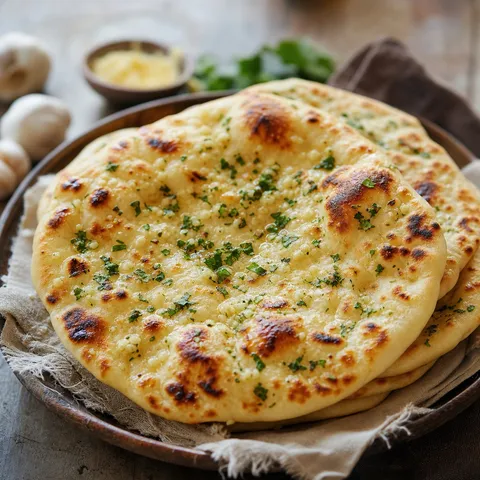
 Garlic Naan
Tear into this piping hot, blistered flatbread packed with aromatic garlic and brushed generously with irresistible melted butter.
 Indian Lens Verified Images are for illustrative purposes only, may be inaccurate, and do not guarantee the presence or absence of specific ingredients.
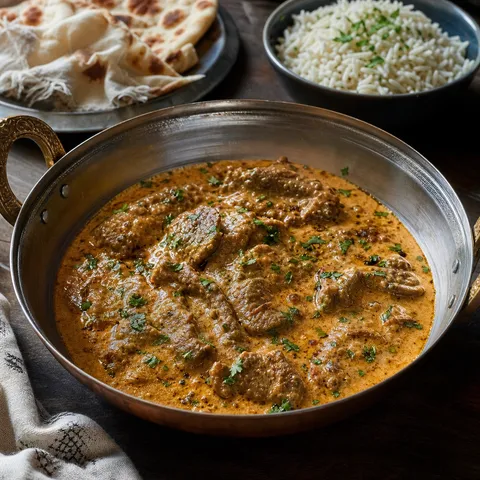
 Lamb Pasanda
A rich Mughlai dish made with flattened lamb steaks in a creamy almond sauce.