 Indonesian & Malaysian Images are for illustrative purposes only, may be inaccurate, and do not guarantee the presence or absence of specific ingredients.
  Serving Images are for illustrative purposes only, may be inaccurate, and do not guarantee the presence or absence of specific ingredients.
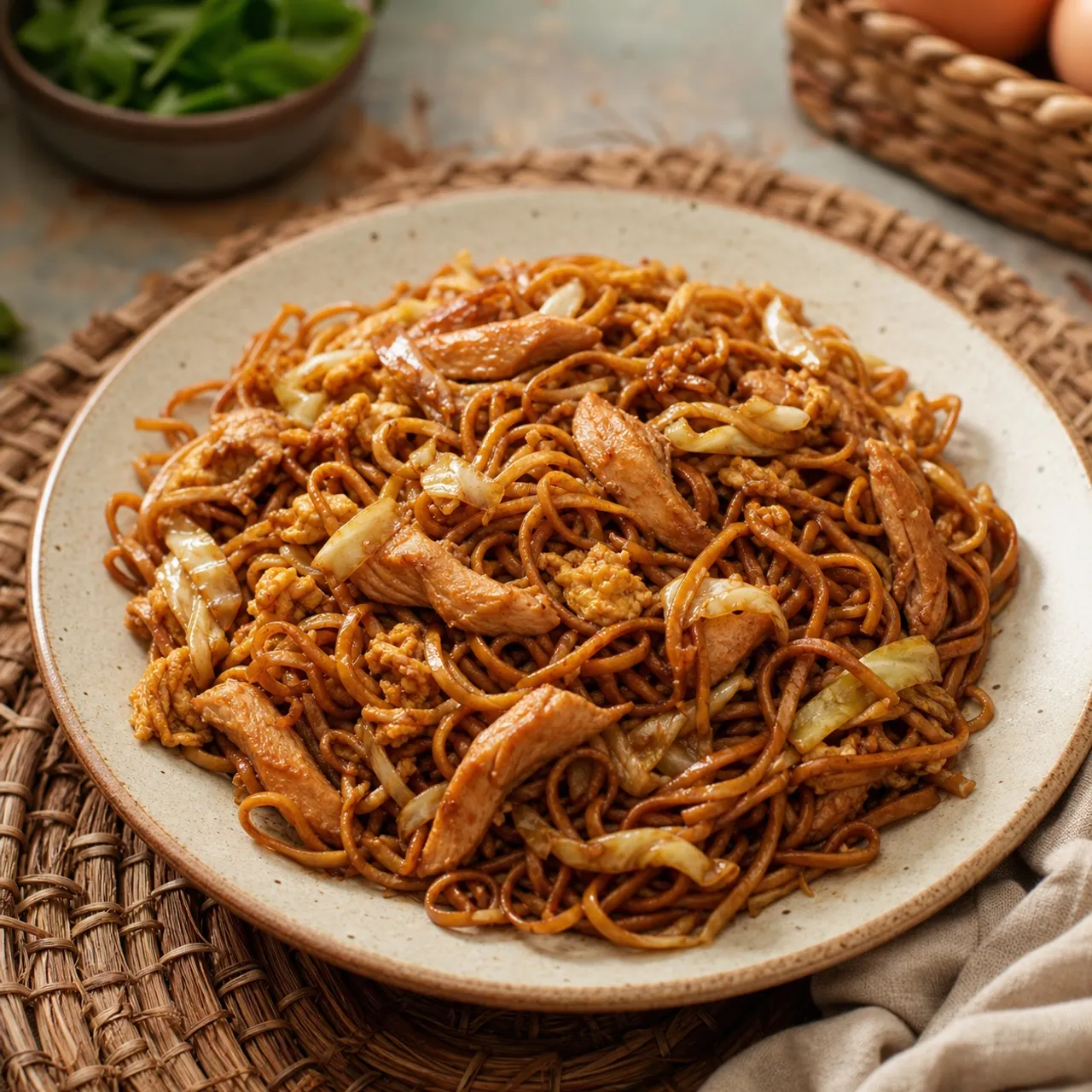
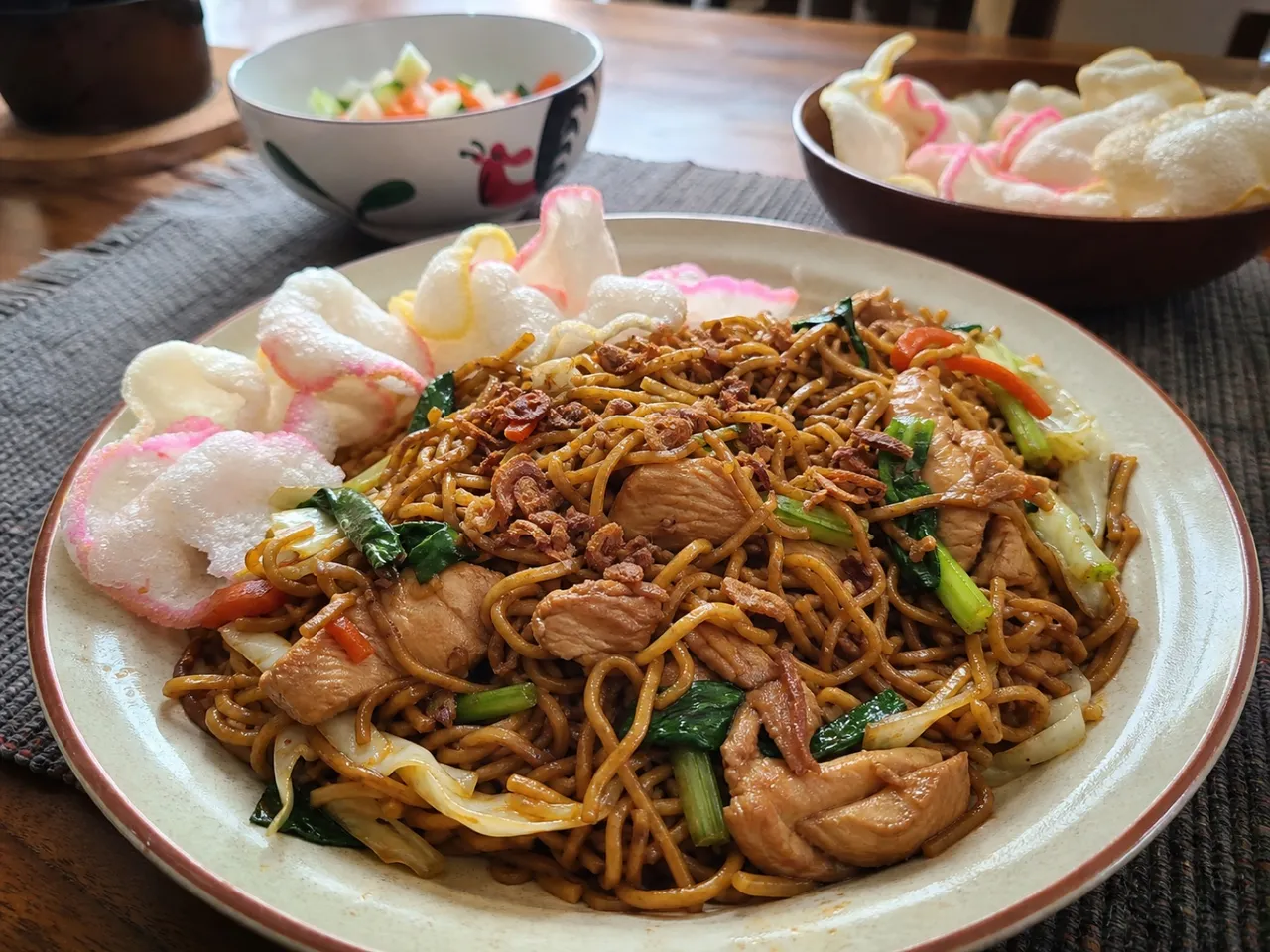
 Bakmi Goreng
Indonesian stir-fried egg noodles tossed with chicken, vegetables, and sweet soy sauce in a sizzling wok — a go-to weeknight dinner with bold flavor.
Contains common allergens
In the app, Listahan checks these against your household automatically.
Good to know
- Ready in under 30 minutes
Matched from this dish's own ingredients and timing. Browse more: 30-minute meals
Instructions
6 steps- 1
Blanch the egg noodles in boiling water for 1 minute just to loosen them, then drain and toss with 1 tbsp of oil.
- 2
Heat a wok until smoking, add oil, and quickly scramble the eggs. Push them to the side.
- 3
Add the minced garlic and sliced chicken, stir-frying until the chicken turns white.
- 4
Add the shredded cabbage and toss for 1 minute until it begins to wilt.
- 5
Add the noodles along with the sweet soy sauce, salt, and white pepper.
- 6
Toss vigorously for 3 minutes over high heat until everything is evenly coated and the noodles are slightly caramelized.
 Images are for illustrative purposes only, may be inaccurate, and do not guarantee the presence or absence of specific ingredients.
 Listahan Family Score™
78/100
Good fit for most families
Score reflects how well this recipe fits a typical busy household. In the app, your Family Score is personalized to your household's allergens, kids, and pantry.
Nutrition
per serving535
Calories
36 g
Protein
74 g
Carbs
10 g
Fat
Estimated per serving. Actual values depend on the brands and portions you use.
Listahan cooking guide
Chef notes & practical guide
Technique notes, ingredient swaps, serve-alongside ideas, storage guidance, and equipment for this recipe.
Cultural context
Bakmi Goreng is Indonesia's Chinese-Indonesian fried noodle, brought by Hokkien and Cantonese immigrants and shaped over generations into a distinctly Indonesian dish. The name combines the Chinese 'bak' (meat, particularly pork in its original context) with 'mi' (noodle) and the Malay 'goreng' (fried). Today it is made throughout Indonesia — including halal versions with chicken or shrimp — and is as close to a national fast food as Indonesia has, sold at warungs and street carts from Aceh to Papua. The Indonesian addition of kecap manis gives it a sweetness and dark color not found in Chinese-style fried noodles.
Listahan note
This version uses kecap manis as the flavor anchor and builds a quick stir-fry that stays dry and wok-charred rather than wet and saucy.
Technique cues
- The wok or pan must be smoking hot before any ingredients go in — a too-cool pan causes the noodles to steam and clump instead of frying individually, resulting in a soggy dish.
- Add kecap manis in the last 2 minutes of cooking rather than at the start; added too early, its sugars burn before the noodles are cooked through, creating bitter spots.
- Break up cold leftover rice or stir eggs through the noodles quickly so they coat the strands before they set into scrambled pieces — the goal is egg-coated noodles, not noodles with egg chunks.
Kitchen flow
- Parallel prep
- Blanch and drain noodles, dice protein, and crack eggs into a bowl before turning on the heat — high-heat stir-frying moves too fast for mid-cook prep.
- Make-ahead
- Day-old noodles (cooked and refrigerated) fry better than freshly blanched noodles; the lower moisture content reduces steaming and produces a drier, more charred result.
- Leftover move
- Cold Bakmi Goreng reheated in a hot wok with a splash of water and a drizzle of kecap manis refreshes well; eat within 2 days.
- Cleanup rhythm
- Deglaze the hot wok with a splash of water immediately after plating — kecap manis residue carbonizes quickly and is much harder to clean once the wok cools.
Ingredient brief
Role, handling, and swap guidance for each key ingredient.
fresh egg noodles
noodle base
Purpose: Fresh yellow egg noodles fry without sticking the way dried noodles do and have the right chew to hold up against high-heat stir-frying.
Handling: Blanch in boiling water for 1 minute only if fresh; drain, rinse briefly with cold water, and toss with a teaspoon of oil to prevent clumping.
Adaptation: Dried egg noodles or spaghetti cooked to just-done and tossed in oil are acceptable substitutes; cook them 1 minute less than the package suggests.
kecap manis
flavor glaze and color
Purpose: Kecap manis is what makes Bakmi Goreng Indonesian rather than generic Chinese fried noodles — its dark sweetness coats every strand and caramelizes slightly in the wok.
Handling: Measure into a small bowl before cooking — it pours slowly and hesitating over the wok wastes precious high-heat time.
Adaptation: Regular soy sauce mixed with a teaspoon of molasses approximates the flavor and color.
chicken or shrimp
main protein
Purpose: Diced chicken thigh or medium shrimp cook quickly over high heat and add the savory protein layer the dish needs to be a complete meal.
Handling: Dice chicken into 1/2-inch pieces; leave shrimp whole after peeling and deveining.
Adaptation: Sliced firm tofu or tempeh cubes work well for a vegetarian version.
eggs
binding and richness
Purpose: Scrambled eggs folded through the noodles in the wok add richness and a textural contrast to the chewy noodles.
Handling: Beat two eggs lightly and pour directly onto the noodles in the wok, pushing them around quickly before they fully set.
Adaptation: No direct substitute; simply omit if eggs are not desired.
sambal oelek
heat base
Purpose: A spoonful of sambal oelek added during cooking gives Bakmi Goreng its characteristic background heat that distinguishes it from mild Chinese-style fried noodles.
Handling: Stir into the wok with the aromatics at the start of cooking.
Adaptation: Sriracha at the same quantity works; dried chili flakes toasted in the oil is an alternative technique.
Technique notes
- Push all noodles to one side of the wok and let them sit undisturbed for 30 seconds to develop wok hei (the slight char from direct high heat); this is the flavor difference between wok-fried and pan-fried noodles.
- Season in layers: a splash of fish sauce when the protein is added, kecap manis when the noodles go in, and a final taste-and-adjust at the end — building salt gradually prevents over-salting.
- Serve with a fried egg on top if available; the broken yolk mixing into the noodles at the table is a beloved Indonesian way of finishing the dish.
Ingredient swaps
- Gluten-free direction
- Use rice noodles instead of egg noodles and switch to tamari-based kecap manis; fry separately to keep the noodles from sticking.
- Vegetarian direction
- Replace meat with sliced shiitake mushrooms and tempeh; substitute vegetarian oyster sauce for fish sauce.
- Allergen-direction swap
- For egg allergy, omit the scrambled egg step; the dish remains complete with just protein and vegetables.
Serve alongside
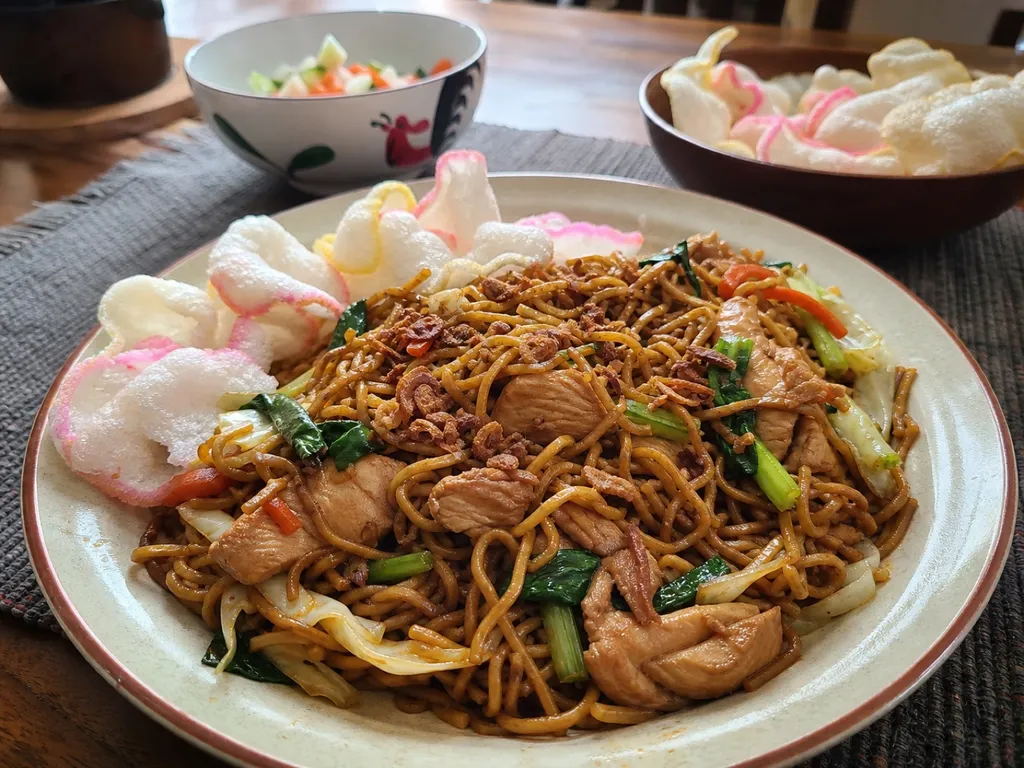
- Acar (sweet pickled cucumber and carrot)
- Emping crackers (melinjo nut crackers)
- Sliced tomatoes and cucumber
- Iced tea with lemon
- Teh botol (bottled sweet jasmine tea)
Serving suggestions only — check pairings for your household's allergens.
Storage & reheating
- Refrigerate in an airtight container for up to 2 days; the noodles will absorb more sauce and soften slightly.
- Reheat in a hot wok or skillet with a splash of water rather than microwave; the high heat restores some of the charred texture that microwaving cannot replicate.
Equipment
- Carbon steel wok or large cast-iron skillet for high-heat stir-frying
- High-heat cooking oil (avocado, peanut, or refined coconut)
- Wok spatula or large metal spoon for constant tossing
Make this household-aware
Listahan Pro checks this recipe against your household's allergens, finds pantry-aware swaps, builds the shopping list, and helps you plan the week around it.
Plan it in Listahan
Add Bakmi Goreng to your week, check it against your household's allergens, and build the shopping list automatically.
More Indonesian & Malaysian recipes
 Indonesian & Malaysian Lens Verified Images are for illustrative purposes only, may be inaccurate, and do not guarantee the presence or absence of specific ingredients.
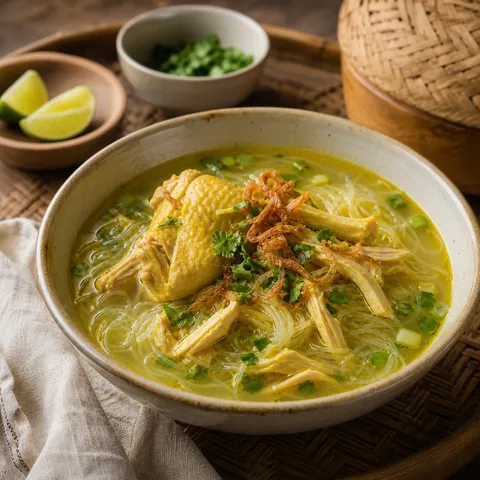
 Soto Ayam
A golden, turmeric-spiced Indonesian chicken soup with glass noodles, crispy shallots, and lime — light, herbal, and deeply comforting.
 Indonesian & Malaysian Lens Verified Images are for illustrative purposes only, may be inaccurate, and do not guarantee the presence or absence of specific ingredients.
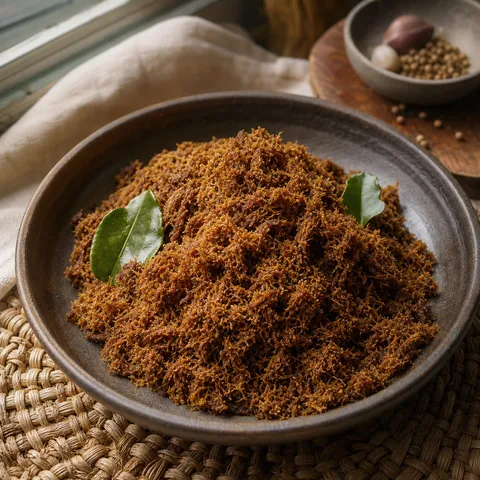
 Beef Serunding
Dry-fried spiced beef floss toasted with coconut and lemongrass until golden and fragrant — a rich, crumbly condiment that transforms plain rice.
 Indonesian & Malaysian Lens Verified Images are for illustrative purposes only, may be inaccurate, and do not guarantee the presence or absence of specific ingredients.
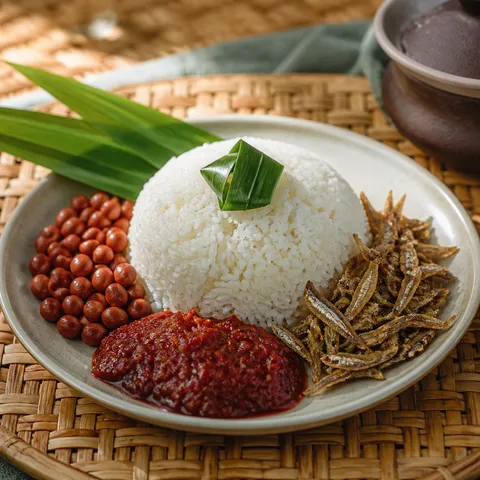
 Nasi Lemak
Malaysia's national comfort dish — fragrant coconut rice paired with sambal, crispy anchovies, roasted peanuts, and a soft-boiled egg.