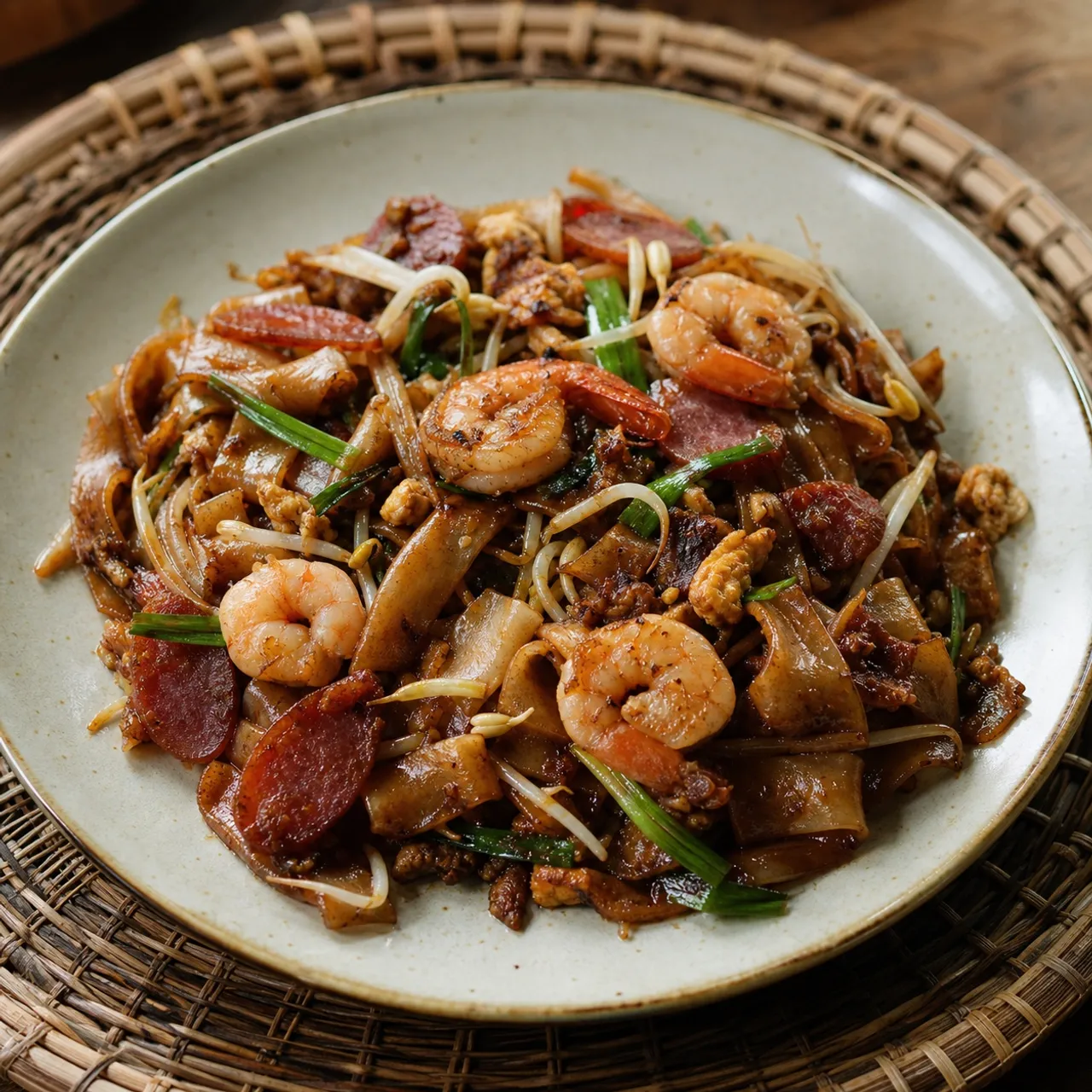
 Indonesian & Malaysian Images are for illustrative purposes only, may be inaccurate, and do not guarantee the presence or absence of specific ingredients.
 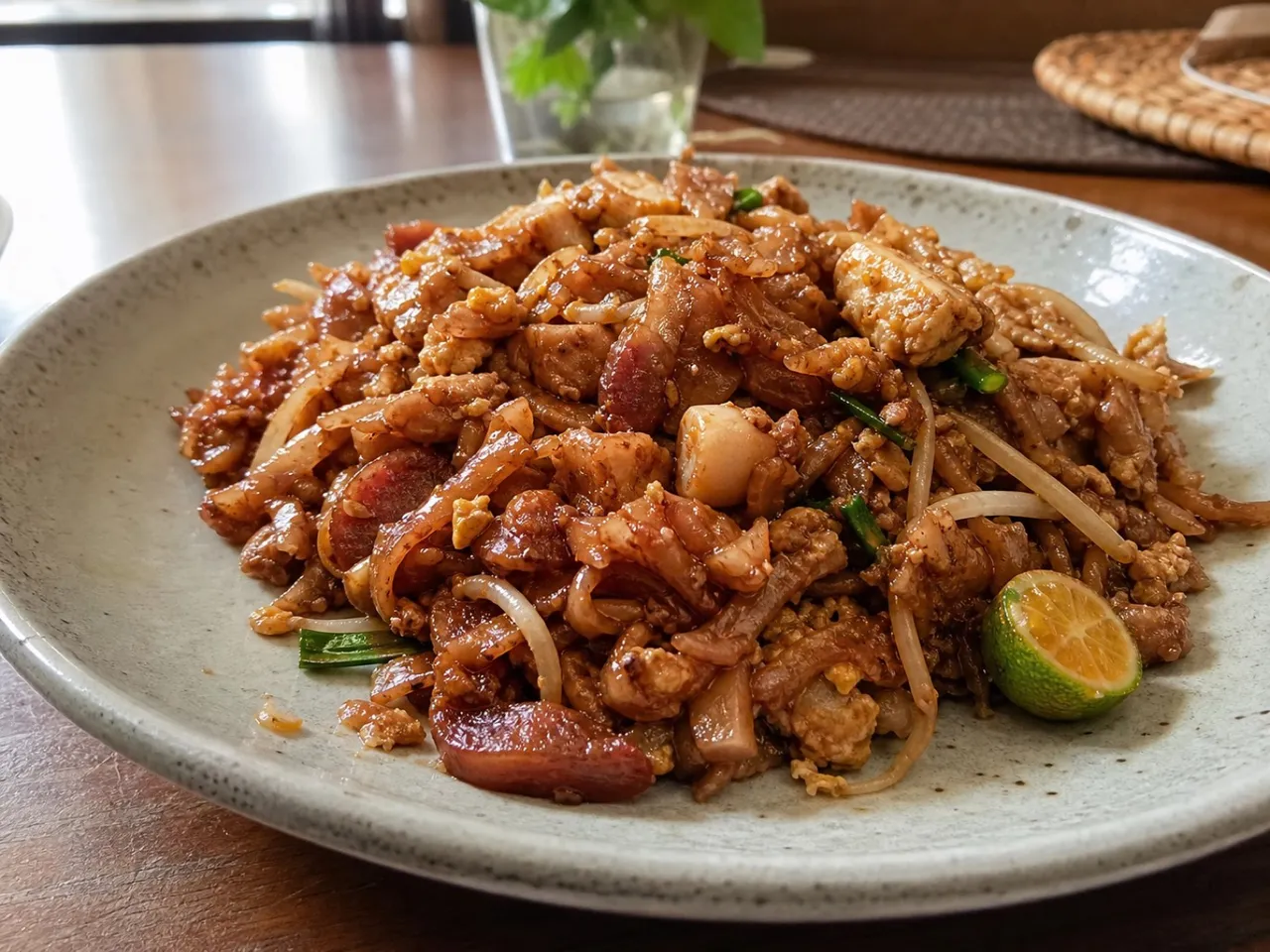 Serving Images are for illustrative purposes only, may be inaccurate, and do not guarantee the presence or absence of specific ingredients.
 Char Kway Teow
Flat rice noodles stir-fried over a blazing wok with lap cheong, prawns, bean sprouts, and egg — smoky wok hei in every bite.
Contains common allergens
In the app, Listahan checks these against your household automatically.
Good to know
- Ready in under 30 minutes
Matched from this dish's own ingredients and timing. Browse more: 30-minute meals
Instructions
6 steps- 1
Separate the flat rice noodles so they don't clump together in the wok.
- 2
Heat a wok over extremely high heat with 1 tbsp of oil or lard, then add the sliced Chinese sausage and shrimp. Stir-fry for 1 minute.
- 3
Push the ingredients aside, crack in an egg, and quickly scramble it.
- 4
Add the noodles and toss immediately to prevent sticking.
- 5
Pour in the dark and light soy sauces, tossing rapidly to distribute the color and achieve a smoky 'wok hei' flavor.
- 6
Throw in the bean sprouts and chives, stir-fry for 30 seconds to keep them crunchy, and serve hot.
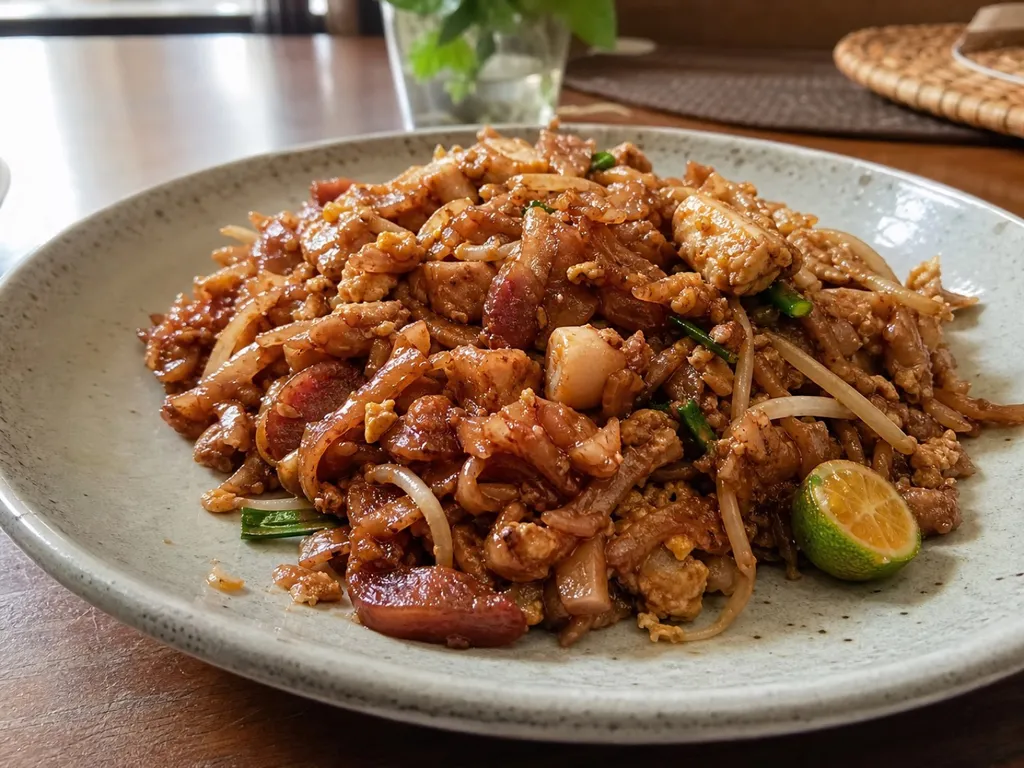 Images are for illustrative purposes only, may be inaccurate, and do not guarantee the presence or absence of specific ingredients.
 Listahan Family Score™
72/100
Good fit for most families
Score reflects how well this recipe fits a typical busy household. In the app, your Family Score is personalized to your household's allergens, kids, and pantry.
Nutrition
per serving465
Calories
17 g
Protein
85 g
Carbs
5 g
Fat
Estimated per serving. Actual values depend on the brands and portions you use.
Listahan cooking guide
Chef notes & practical guide
Technique notes, ingredient swaps, serve-alongside ideas, storage guidance, and equipment for this recipe.
Cultural context
Char kway teow originated with the Teochew Chinese immigrant communities of Penang, Malaysia, and Singapore, where hawkers would fry flat rice noodles over charcoal fires in large amounts of lard to produce the intense smoky char known as wok hei. The dish was historically a cheap, calorie-dense meal for laborers and fishermen — the generous amount of fat and the egg and cockle protein made it filling and affordable. Today Penang-style char kway teow is considered a benchmark test of any hawker's wok skill.
Listahan note
This version preserves the dark soy color and the critical high-heat technique that create authentic char while using vegetable oil as a more accessible alternative to traditional lard.
Technique cues
- Work in single portions even if cooking for a group: the high heat needed for wok hei can only be maintained over a small volume of noodles, so batch cooking one plate at a time is the correct approach.
- Dark soy sauce is not optional — it provides the deep mahogany color and slightly bitter depth that distinguishes char kway teow from plain stir-fried noodles; light soy alone will produce a pale and flat-tasting result.
- Introduce the egg when the noodles are already sizzling and press it under the noodles for 20 seconds to get light scrambled egg pieces rather than a wet omelette coating.
Kitchen flow
- Parallel prep
- Have all ingredients prepped and portioned in bowls before turning on the heat — once the wok is hot the entire dish takes under 4 minutes.
- Make-ahead
- The sauce can be mixed ahead and stored refrigerated for up to 1 week; noodles should not be separated or prepped more than 2 hours ahead or they dry out.
- Leftover move
- Reheat in a dry nonstick pan over medium-high heat with a little oil; add a splash of water to loosen, then cook until the pan is dry again to restore some char.
- Cleanup rhythm
- Deglaze the hot wok with a cup of water immediately after plating — the charred bits loosen while the wok is still hot and cleanup takes under a minute.
Ingredient brief
Role, handling, and swap guidance for each key ingredient.
fresh flat rice noodles (kway teow)
main carbohydrate
Purpose: Fresh flat rice noodles develop the right smoky edges under high heat and absorb the dark soy without becoming mushy.
Handling: Separate gently by hand before cooking — do not rinse, as the surface starch helps the sauce adhere.
Adaptation: Wide dried rice noodles soaked in warm water until pliable can work; expect a slightly firmer texture.
dark soy sauce
color and depth
Purpose: Dark soy provides the characteristic dark color and a caramel-molasses note that is the defining flavor of char kway teow.
Handling: Combine with regular soy sauce and oyster sauce in a small bowl ahead of cooking.
Adaptation: Kecap manis can substitute for a sweeter, less bitter version of the same deep color.
cockles or small clams
seafood protein
Purpose: Cockles are the traditional protein in Penang char kway teow and add a briny, mineral quality that is distinctive and hard to replicate.
Handling: Add in the very last 30 seconds of cooking — cockles are already partially cooked and need only enough heat to warm through.
Adaptation: Small shrimp or scallops can substitute with a similar cook time; omit entirely for a vegetarian version.
Chinese sausage (lap cheong)
sweet pork flavor
Purpose: Thinly sliced lap cheong renders its fat into the noodles and adds a signature sweet-savory pork note.
Handling: Slice on a diagonal and cook first in the wok so the fat renders before adding other ingredients.
Adaptation: Omit for a pescatarian version, or use diced char siu (BBQ pork) as a non-rendered substitute.
bean sprouts
crunch element
Purpose: Bean sprouts provide the essential fresh crunch that contrasts with the soft, sauced noodles.
Handling: Add in the final 30 seconds — they wilt very quickly and should still have a slight bite when served.
Adaptation: Thinly sliced Chinese chives or julienned cabbage work as crunchy substitutes.
Technique notes
- The wok must be smoking before you add the noodles — a test drop of water should evaporate in under a second; anything less and you will get steamed rather than char-fried noodles.
- Press the noodles flat against the wok surface for 30-second intervals rather than continuously tossing — this creates the signature charred patches on the noodle edges.
- A sprinkle of white pepper added at the very end, directly on the finished noodles before plating, is the traditional finish that adds heat and aroma without cooking off.
Ingredient swaps
- Gluten-free direction
- Use gluten-free tamari in place of soy sauce and ensure oyster sauce is gluten-free or substituted with a gluten-free hoisin; rice noodles are naturally wheat-free.
- Shellfish-free direction
- Omit cockles and double the shrimp, or use chicken thigh slices — the noodle and sauce flavors carry the dish without seafood.
Serve alongside
- Sliced fresh red chili in soy sauce
- Iced lime water
- Crispy fried shallots sprinkled on top
- Iced teh tarik
- Sour plum juice (asam boi)
Serving suggestions only — check pairings for your household's allergens.
Storage & reheating
- Char kway teow is best eaten immediately and loses quality quickly; the noodles absorb all the sauce and the wok hei dissipates within 30 minutes.
- Leftovers can be refrigerated for up to 1 day; expect significantly softer noodles and a muted flavor after reheating.
Equipment
- Carbon steel wok (at minimum 14 inches)
- Very high-heat gas burner
- Wide metal wok spatula
Make this household-aware
Listahan Pro checks this recipe against your household's allergens, finds pantry-aware swaps, builds the shopping list, and helps you plan the week around it.
Plan it in Listahan
Add Char Kway Teow to your week, check it against your household's allergens, and build the shopping list automatically.
More Indonesian & Malaysian recipes
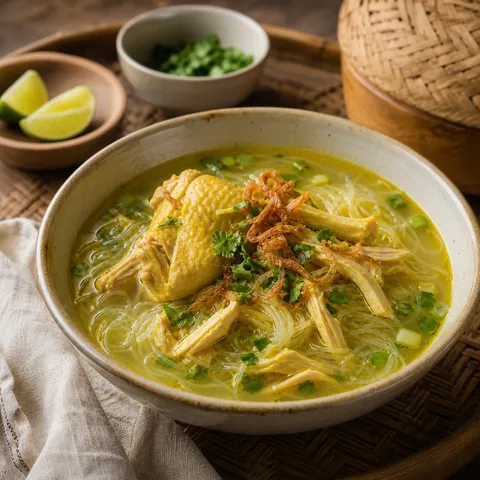 Indonesian & Malaysian Lens Verified Images are for illustrative purposes only, may be inaccurate, and do not guarantee the presence or absence of specific ingredients.
 Soto Ayam
A golden, turmeric-spiced Indonesian chicken soup with glass noodles, crispy shallots, and lime — light, herbal, and deeply comforting.
 Indonesian & Malaysian Lens Verified Images are for illustrative purposes only, may be inaccurate, and do not guarantee the presence or absence of specific ingredients.
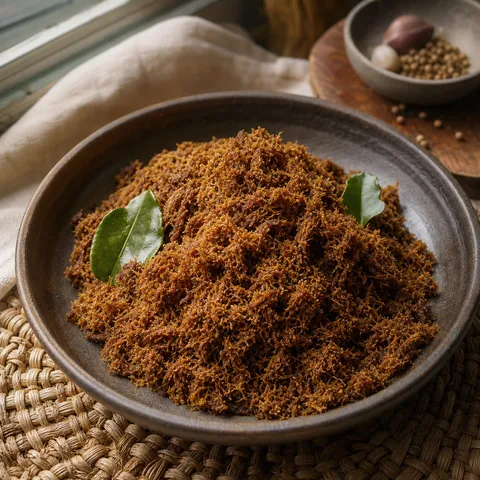
 Beef Serunding
Dry-fried spiced beef floss toasted with coconut and lemongrass until golden and fragrant — a rich, crumbly condiment that transforms plain rice.
 Indonesian & Malaysian Lens Verified Images are for illustrative purposes only, may be inaccurate, and do not guarantee the presence or absence of specific ingredients.
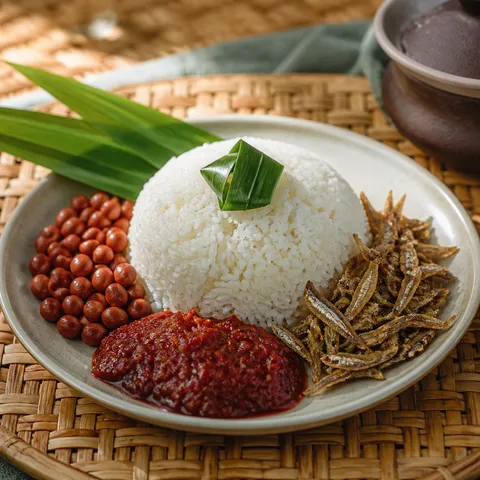
 Nasi Lemak
Malaysia's national comfort dish — fragrant coconut rice paired with sambal, crispy anchovies, roasted peanuts, and a soft-boiled egg.