 Indonesian & Malaysian Images are for illustrative purposes only, may be inaccurate, and do not guarantee the presence or absence of specific ingredients.
  Serving Images are for illustrative purposes only, may be inaccurate, and do not guarantee the presence or absence of specific ingredients.
 Popiah
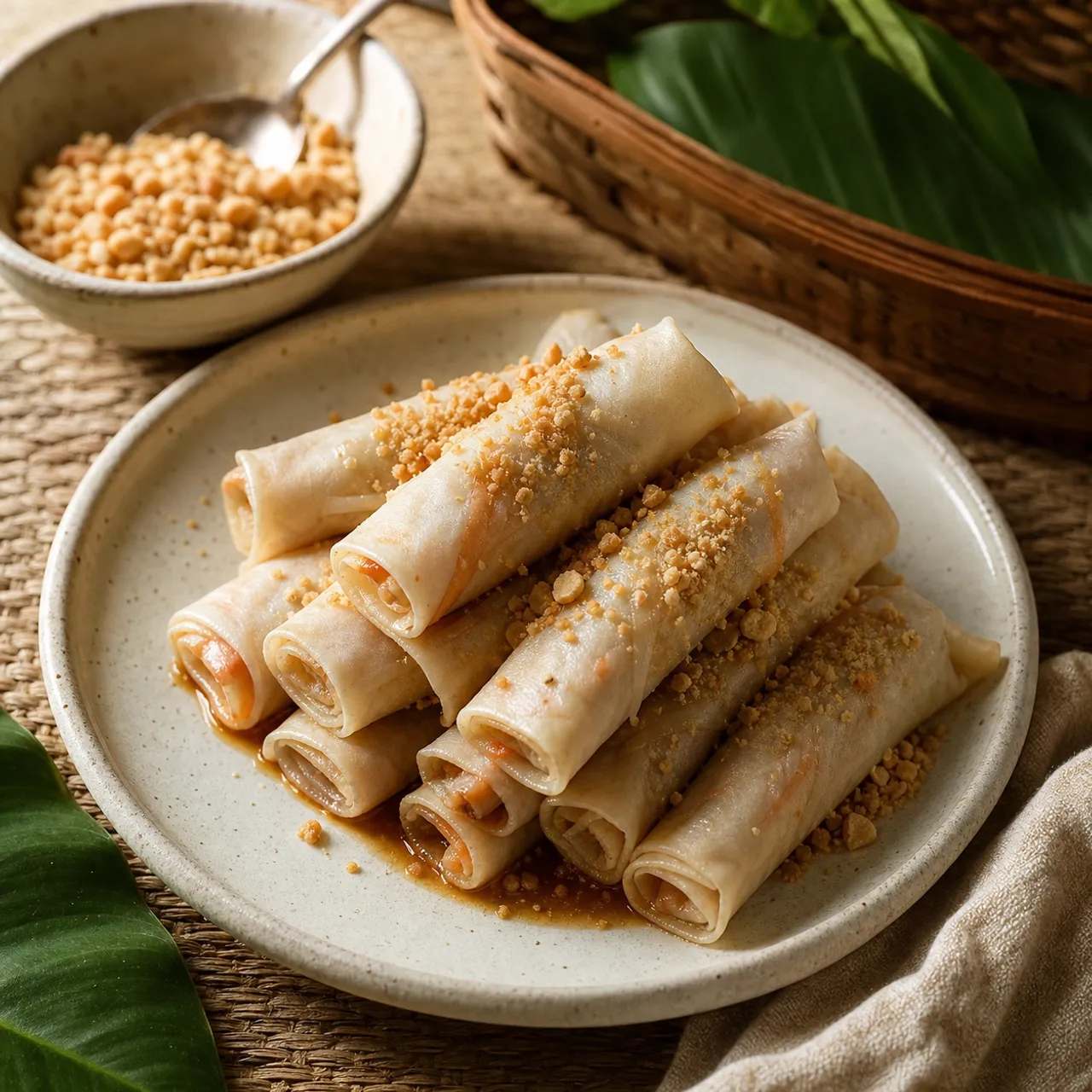
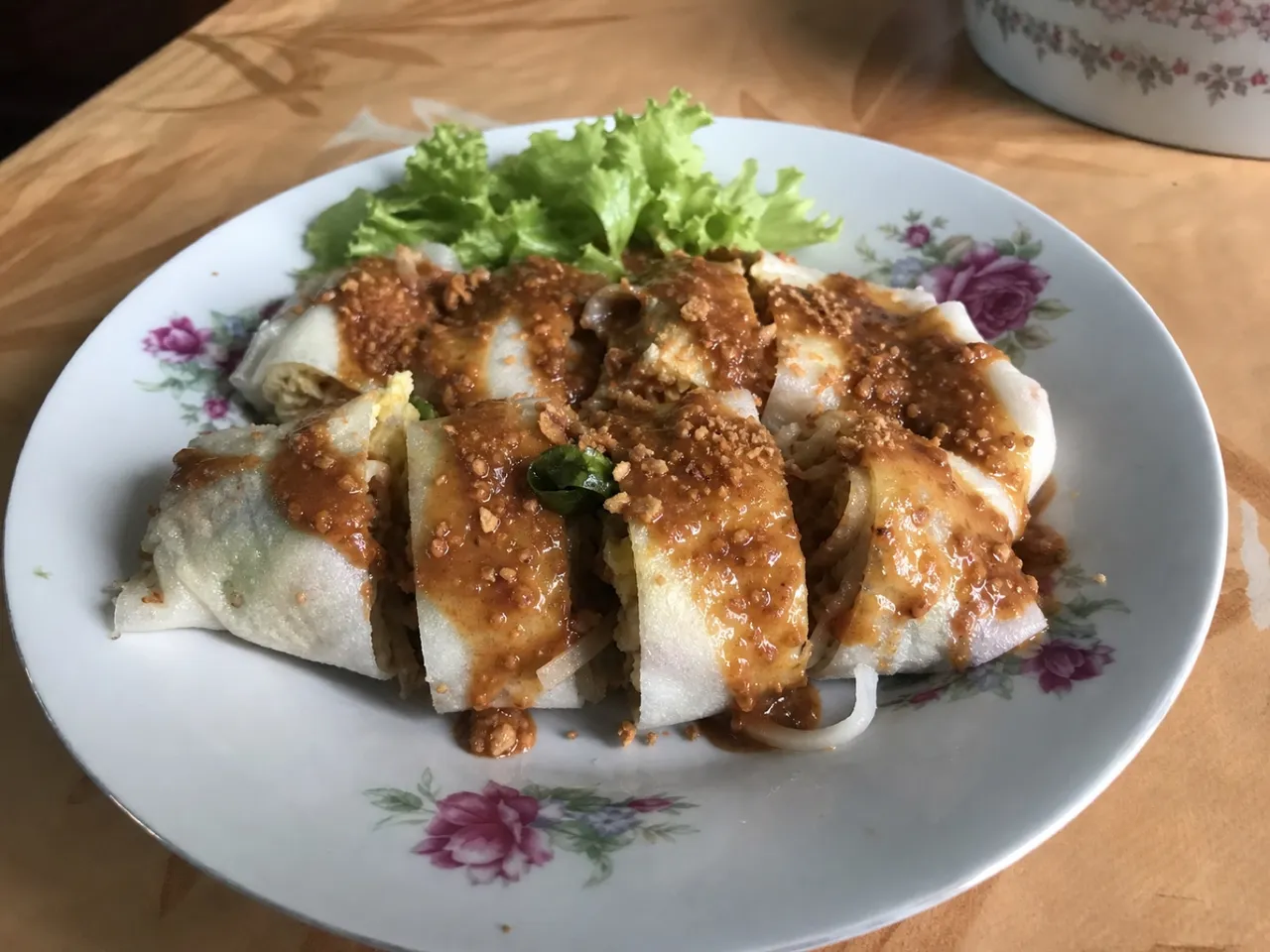
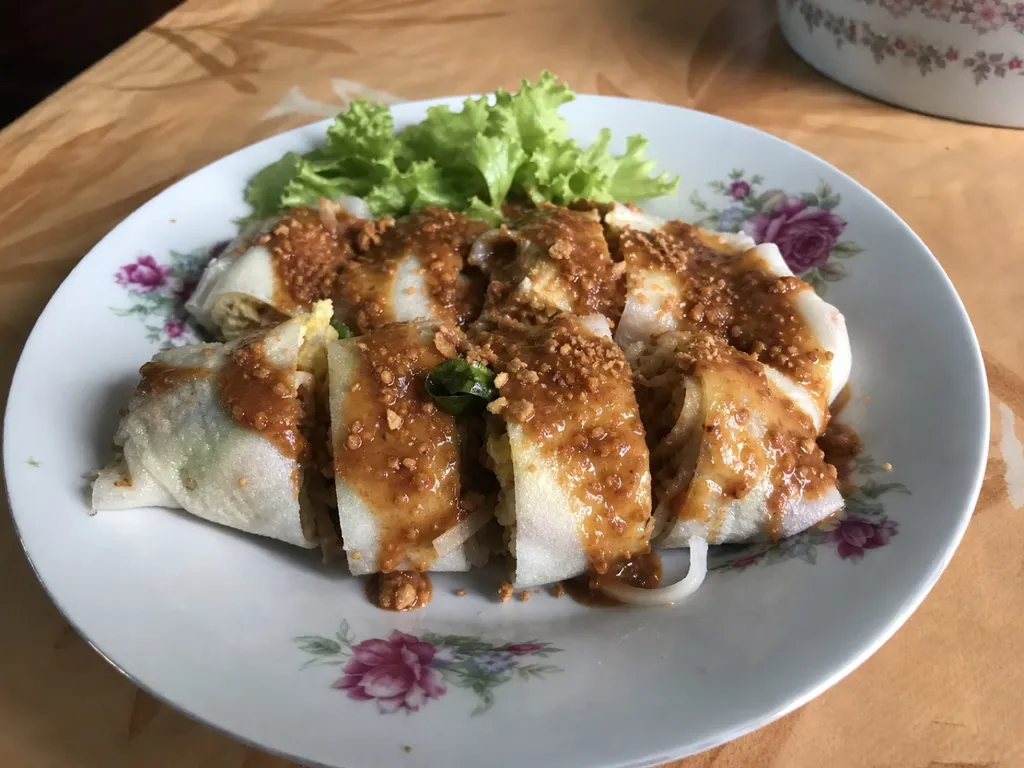
Fresh spring rolls stuffed with braised turnip, egg, and crunchy peanuts, wrapped in a thin crepe — light, textured, and full of contrasting flavors.
Contains common allergens
In the app, Listahan checks these against your household automatically.
Instructions
6 steps- 1
In a large pot, gently braise the shredded jicama and carrot with a little soy sauce and garlic until very soft (about 30 minutes). Drain any excess liquid.
- 2
Lay a popiah wrapper flat on a clean surface.
- 3
Spread a thin layer of hoisin sauce and a dab of chili paste in the center of the wrapper.
- 4
Layer a lettuce leaf, a spoonful of the braised jicama filling, crumbled egg, and crushed peanuts.
- 5
Fold the sides of the wrapper inward and roll it up tightly like a burrito.
- 6
Cut the roll into bite-sized pieces and serve immediately so the wrapper doesn't become soggy.
 Images are for illustrative purposes only, may be inaccurate, and do not guarantee the presence or absence of specific ingredients.
 Listahan Family Score™
58/100
Works for many families
Score reflects how well this recipe fits a typical busy household. In the app, your Family Score is personalized to your household's allergens, kids, and pantry.
Nutrition
per serving270
Calories
13 g
Protein
11 g
Carbs
21 g
Fat
Estimated per serving. Actual values depend on the brands and portions you use.
Listahan cooking guide
Chef notes & practical guide
Technique notes, ingredient swaps, serve-alongside ideas, storage guidance, and equipment for this recipe.
Cultural context
Popiah is the fresh spring roll of Southeast Asia — Hokkien in origin, carried by Chinese migrants to Penang, Singapore, and beyond, where it absorbed Malay and Peranakan influences. Unlike fried spring rolls, popiah is served fresh in a thin wheat crepe wrapped around a warm, slowly braised filling of jicama and sometimes turnip, layered with crispy shallots, bean sprouts, tofu, and shrimp. The Penang version is famously complex, with a dozen condiments assembled tableside; the simpler home-cooked version sacrifices none of the joy.
Listahan note
This version centers on the braised jicama filling — the heart of any good popiah — and walks through an efficient assembly so the crepes stay pliable and nothing gets soggy.
Technique cues
- Braise the jicama filling low and slow for at least 30 minutes until it is completely tender and the liquid has reduced to a sticky, concentrated sauce — a watery filling will soak through the crepe immediately.
- Cool the filling to just warm before assembling; piping-hot filling steams the crepe from the inside and makes it gummy and difficult to roll without tearing.
- Assemble and serve immediately after rolling — popiah does not hold well; even 10 minutes of sitting causes the crepe to absorb moisture from the filling and become soft.
Kitchen flow
- Parallel prep
- Braise the jicama filling (30-40 minutes) while frying shallots and setting up the assembly table with all condiments in small bowls.
- Make-ahead
- The braised jicama filling can be made up to 2 days ahead and refrigerated; warm it before assembling and drain any pooled liquid.
- Leftover move
- Extra braised jicama filling makes an excellent stuffing for fried spring rolls or a topping for steamed rice with a drizzle of soy sauce.
- Cleanup rhythm
- Set up a popiah bar style with condiments in small ramekins — this makes serving interactive and cuts plating time to zero; guests roll their own.
Ingredient brief
Role, handling, and swap guidance for each key ingredient.
jicama (bangkuang)
main filling body
Purpose: Jicama provides the crunchy-tender base of the filling, absorbing the savory braising liquid while retaining enough texture to give the popiah structure.
Handling: Peel and julienne into thin matchsticks; squeeze gently to release excess juice before braising.
Adaptation: Water chestnuts diced finely provide a similar crunch but will not absorb braising flavors as deeply as jicama.
popiah skins (fresh spring roll wrappers)
outer wrapper
Purpose: Fresh, thin wheat wrappers are supple and allow you to roll a tight, compact popiah without the filling breaking through.
Handling: Keep wrappers covered with a damp cloth while assembling so they do not dry out and crack.
Adaptation: Fresh rice paper rounds (used for Vietnamese spring rolls) are gluten-free and work structurally, though the flavor profile changes slightly.
dried shrimp
umami depth in the filling
Purpose: Small amounts of dried shrimp give the braised jicama filling a savory, briny backbone that elevates it above plain vegetable stew.
Handling: Rinse and roughly chop, then add at the start of the braise so they soften and meld into the filling.
Adaptation: Omit for a vegetarian version and add a tablespoon of soy sauce and a teaspoon of miso paste to compensate for the umami.
garlic
aromatic base
Purpose: Garlic is the primary savory note in the filling and is used generously in traditional Hokkien-style popiah.
Handling: Mince finely and fry in oil until golden before adding the jicama — golden garlic rather than raw gives a sweeter, deeper flavor.
Adaptation: Shallots can supplement or replace garlic for a milder, sweeter aromatic base.
fried shallot crisps
textural garnish
Purpose: Crispy shallots layered inside the popiah just before rolling provide the crunch that contrasts with the soft filling — they are not optional.
Handling: Buy pre-fried from an Asian grocery store or fry thinly sliced shallots in oil at 325 F until golden, then drain on paper towels.
Adaptation: Crispy fried onion (the kind sold in cans for green bean casserole) is a functional substitute with similar texture.
Technique notes
- The hoisin sauce spread on the crepe is the flavor anchor — use a generous layer but keep it in the center third of the wrapper so it does not make the edges sticky and difficult to seal.
- Layer the filling ingredients in order of moisture content: dry elements (crispy shallots, egg) first against the crepe, then the warm jicama filling, so the dry layer acts as a moisture barrier.
- A thin smear of sambal on the wrapper before the hoisin adds heat that cuts through the richness of the filling without making the whole roll uniformly spicy.
Ingredient swaps
- Gluten-free direction
- Use fresh rice paper rounds instead of wheat popiah skins and verify the hoisin sauce is gluten-free (most contain wheat).
- Vegetarian direction
- Omit dried shrimp and replace with diced firm tofu added to the braise; increase soy sauce by 1 tablespoon for the lost umami.
- Allergen-direction swap
- For shrimp allergy, ensure the filling contains no dried shrimp or shrimp paste in condiments, and verify hoisin sauce and sambal ingredients.
Serve alongside
- Clear Chinese-style chicken soup
- Char kway teow
- Sliced cucumber with chili vinegar dip
- Iced barley water
- Chrysanthemum tea
Serving suggestions only — check pairings for your household's allergens.
Storage & reheating
- Assembled popiah should be eaten immediately as they become soggy within 30 minutes.
- Store components separately: braised filling refrigerated for up to 3 days, wrappers sealed in their original packaging for up to a week; assemble only when ready to eat.
Equipment
- Large skillet or wok for braising the jicama filling
- Small ramekins or condiment bowls for assembly station setup
- Damp cloth or plastic wrap to keep popiah skins pliable
Make this household-aware
Listahan Pro checks this recipe against your household's allergens, finds pantry-aware swaps, builds the shopping list, and helps you plan the week around it.
Plan it in Listahan
Add Popiah to your week, check it against your household's allergens, and build the shopping list automatically.
More Indonesian & Malaysian recipes
 Indonesian & Malaysian Lens Verified Images are for illustrative purposes only, may be inaccurate, and do not guarantee the presence or absence of specific ingredients.
 Soto Ayam
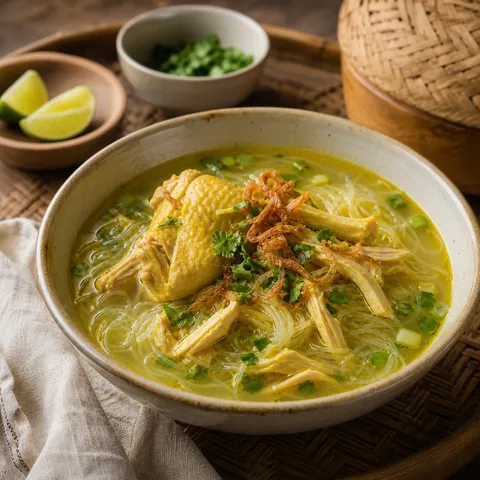
A golden, turmeric-spiced Indonesian chicken soup with glass noodles, crispy shallots, and lime — light, herbal, and deeply comforting.
 Indonesian & Malaysian Lens Verified Images are for illustrative purposes only, may be inaccurate, and do not guarantee the presence or absence of specific ingredients.
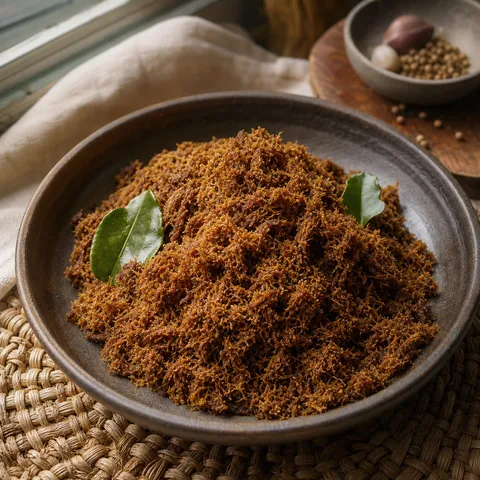
 Beef Serunding
Dry-fried spiced beef floss toasted with coconut and lemongrass until golden and fragrant — a rich, crumbly condiment that transforms plain rice.
 Indonesian & Malaysian Lens Verified Images are for illustrative purposes only, may be inaccurate, and do not guarantee the presence or absence of specific ingredients.
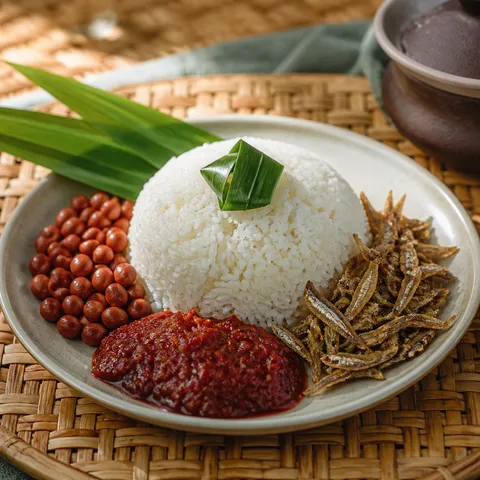
 Nasi Lemak
Malaysia's national comfort dish — fragrant coconut rice paired with sambal, crispy anchovies, roasted peanuts, and a soft-boiled egg.