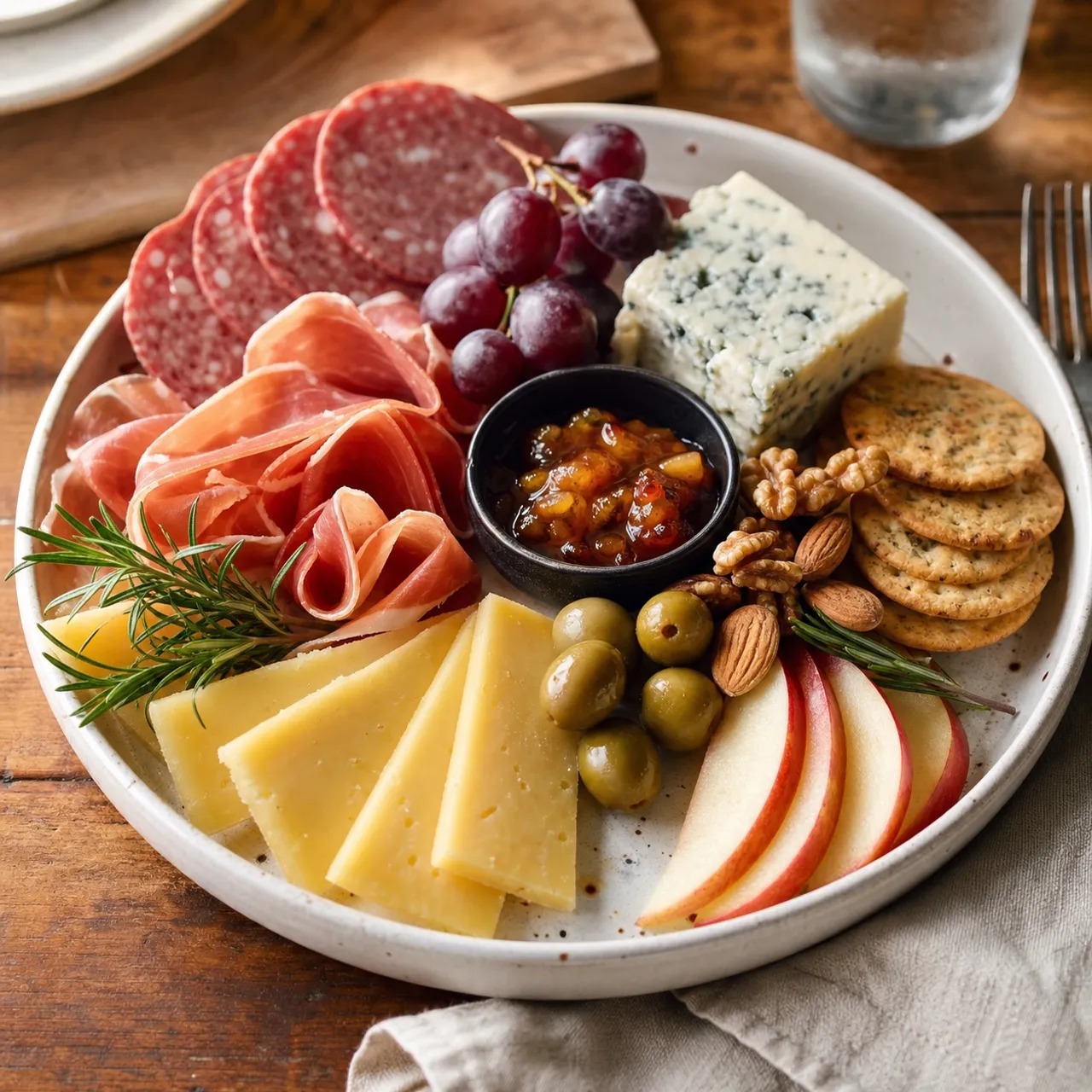
 Lunch & Snacks Images are for illustrative purposes only, may be inaccurate, and do not guarantee the presence or absence of specific ingredients.
 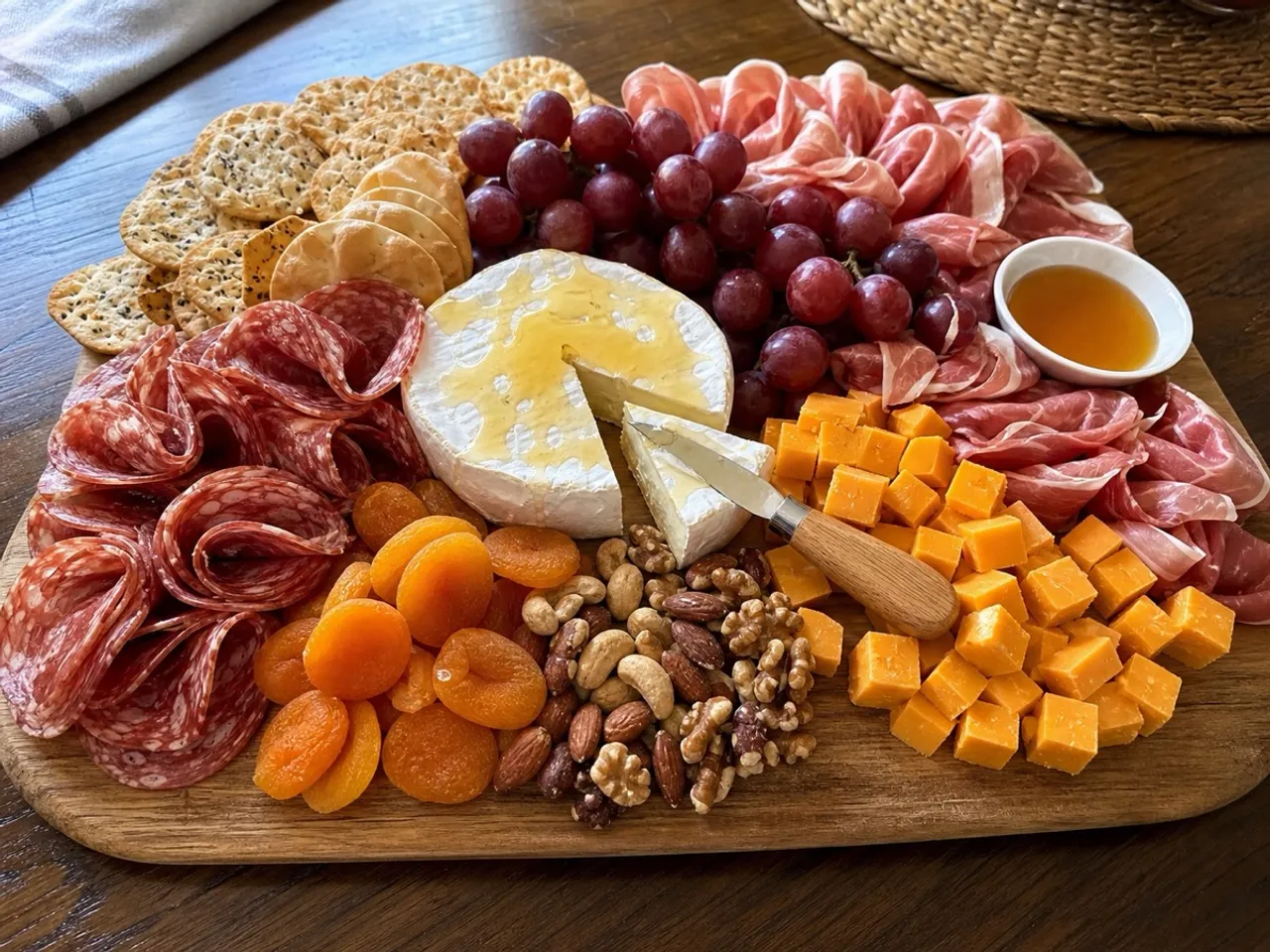 Serving Images are for illustrative purposes only, may be inaccurate, and do not guarantee the presence or absence of specific ingredients.
 Charcuterie Snack Board
An assembled board of cured meats, cheeses, crackers, and fruit for effortless grazing and sharing.
Contains common allergens
In the app, Listahan checks these against your household automatically.
Good to know
- Ready in under 30 minutes
Matched from this dish's own ingredients and timing. Browse more: 30-minute meals
Instructions
5 steps- 1
Arrange the salami and prosciutto in loose folds around a large board.
- 2
Place cheddar cubes and the brie wheel in separate sections of the board.
- 3
Fill in remaining space with crackers, grapes, nuts, and dried apricots.
- 4
Drizzle honey over the brie just before serving.
- 5
Serve at room temperature with small knives for the cheeses.
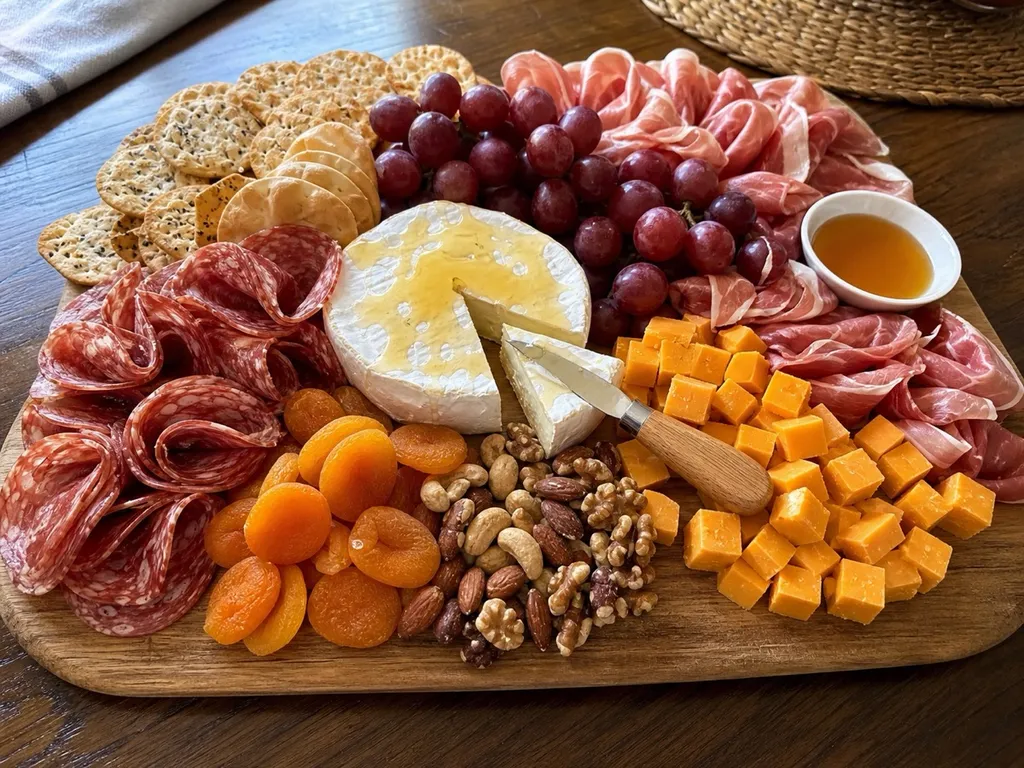 Images are for illustrative purposes only, may be inaccurate, and do not guarantee the presence or absence of specific ingredients.
 Listahan Family Score™
68/100
Works for many families
Score reflects how well this recipe fits a typical busy household. In the app, your Family Score is personalized to your household's allergens, kids, and pantry.
Nutrition
per serving560
Calories
32 g
Protein
26 g
Carbs
37 g
Fat
Estimated per serving. Actual values depend on the brands and portions you use.
Listahan cooking guide
Chef notes & practical guide
Technique notes, ingredient swaps, serve-alongside ideas, storage guidance, and equipment for this recipe.
Cultural context
Charcuterie started as a French craft of preserving pork, but the modern snack board is more of a practical hosting format than a single traditional dish. In North American kitchens, it often pulls from French charcuterie, Italian antipasto, and picnic-style cheese boards: salty cured meats, rich cheeses, crisp crackers, fruit, and something sweet to tie the bites together.
Listahan note
This version keeps the board familiar and low-effort, with enough contrast that each handful can feel different. It prioritizes easy assembly, room-temperature serving, and ingredients that fill the board without much knife work.
Technique cues
- Fold the salami and prosciutto loosely instead of laying them flat; the height makes the board easier to pick from and keeps the meats from sticking together.
- Place the brie and cheddar in separate areas so guests can build different bites instead of reaching into one crowded cheese pile.
- Add honey to the brie at the end, not before the board sits. It looks cleaner and keeps nearby crackers from softening too early.
Kitchen flow
- Parallel prep
- Pull the cheeses from the fridge first, then fold the meats while they lose their chill.
- Make-ahead
- Cut the cheddar and arrange the dry items a few hours ahead; add meats, brie, grapes, and honey closer to serving.
- Leftover move
- Turn extra salami, cheddar, crackers, and fruit into lunch boxes, or chop the meats and cheese into a quick snack plate.
- Cleanup rhythm
- Use small bowls for nuts, honey, and loose fruit so the board wipes clean instead of collecting sticky crumbs.
Ingredient brief
Role, handling, and swap guidance for each key ingredient.
Sliced salami
Savory cured meat
Purpose: Salami brings firm texture, salt, and a little spice that stands up well to cheddar and crackers.
Handling: Fold slices into loose quarters or small stacks so they are easy to grab.
Adaptation: Use another sliced cured sausage if you want a similar chewy, seasoned bite.
Sliced prosciutto
Delicate cured meat
Purpose: Prosciutto adds a softer, silkier texture that balances the firmer salami.
Handling: Separate the slices gently and drape them in ribbons so they do not clump.
Adaptation: Thin ham gives a milder, less salty board if prosciutto is hard to find.
Cubed cheddar cheese
Firm cheese anchor
Purpose: Cheddar gives the board a familiar sharp bite and holds its shape well at room temperature.
Handling: Cut into small cubes so guests can take one piece without using a knife.
Adaptation: Monterey Jack is softer and milder; aged Gouda is nuttier and sweeter.
Brie cheese
Soft cheese centerpiece
Purpose: Brie gives a creamy contrast to the crackers, cured meats, and firm cheddar.
Handling: Serve it at room temperature with a small knife, then drizzle honey over the top just before serving.
Adaptation: Camembert gives a similar soft texture with a slightly earthier flavor.
Mixed crackers
Crisp base
Purpose: Crackers give structure to the cheeses and make the board easier to eat by hand.
Handling: Place them in two small clusters so one section does not get buried under fruit or honey.
Adaptation: Sliced baguette or crisp flatbread changes the board from snacky to more substantial.
Red grapes and dried apricots
Sweet fruit contrast
Purpose: Fresh grapes add juiciness, while dried apricots add chew and concentrated sweetness next to salty meats.
Handling: Keep grapes in small clusters and scatter apricots near the cheeses for easy pairing.
Adaptation: Apple slices give crunch, while dried figs make the board taste deeper and less bright.
Technique notes
- Build from the biggest items outward: place the brie and cheddar first, then meats, then fill gaps with crackers, grapes, nuts, and apricots.
- Leave a little breathing room around the brie so the honey drizzle does not run into the crackers immediately.
- Repeat colors and textures in more than one spot. A few grapes near the cheddar and a few near the meats make the board easier to graze from every side.
Ingredient swaps
- Nut-free direction
- Replace mixed nuts with roasted chickpeas, pretzels, or extra crackers; the board loses some richness, so add more grapes or dried apricots for contrast.
- Cracker change
- Use rice crackers, seeded crisps, or sliced baguette depending on the texture you want: light and crisp, hearty and crunchy, or more bread-like.
- No-pork path
- Use sliced turkey, beef salami, or smoked chicken in place of salami and prosciutto; the board will taste milder, so keep the cheddar and apricots for contrast.
- Less-sweet finish
- Serve the honey in a small dish instead of drizzling it over the brie so each person can control the sweetness.
Serve alongside
- Tomato basil pasta salad
- Marinated olive and cucumber salad
- Roasted red pepper hummus with vegetables
- Lemon herb potato salad
- Sparkling lemonade
- Dry rose
- Iced black tea
Serving suggestions only — check pairings for your household's allergens.
Storage & reheating
- Refrigerate leftover meats, cheeses, grapes, and apricots in separate sealed containers for up to 3 days.
- Do not reheat the board; let chilled cheeses sit briefly at room temperature before serving again.
- Freezing is not useful for the assembled board because the cheeses, grapes, and cured meats lose their best texture after thawing.
Equipment
- Large wooden board or platter
- Small cheese knife
- Paring knife
- Small bowls for nuts and honey
Make this household-aware
Listahan Pro checks this recipe against your household's allergens, finds pantry-aware swaps, builds the shopping list, and helps you plan the week around it.
Plan it in Listahan
Add Charcuterie Snack Board to your week, check it against your household's allergens, and build the shopping list automatically.
More Lunch & Snacks recipes
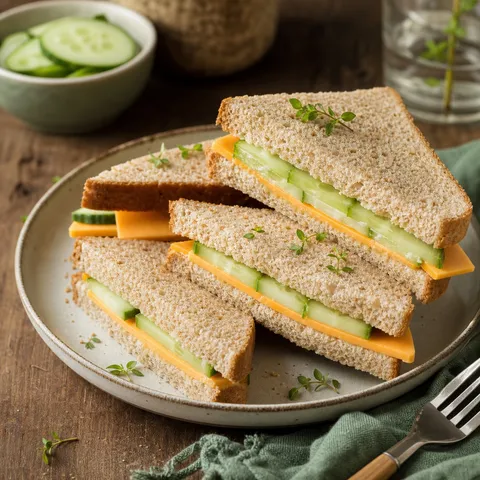 Lunch & Snacks Lens Verified Images are for illustrative purposes only, may be inaccurate, and do not guarantee the presence or absence of specific ingredients.
 Cucumber and Cheddar Cheese Sandwiches
A simple, refreshing sandwich of crisp cucumber and sharp white cheddar on buttered bread.
 Lunch & Snacks Lens Verified Images are for illustrative purposes only, may be inaccurate, and do not guarantee the presence or absence of specific ingredients.
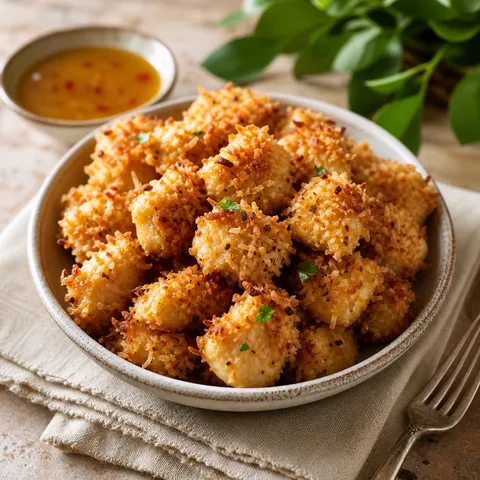
 Coconut Chicken Bites
Crispy oven-baked chicken bites coated in sweet shredded coconut, perfect for dipping in apricot or plum sauce.
 Lunch & Snacks Lens Verified Images are for illustrative purposes only, may be inaccurate, and do not guarantee the presence or absence of specific ingredients.
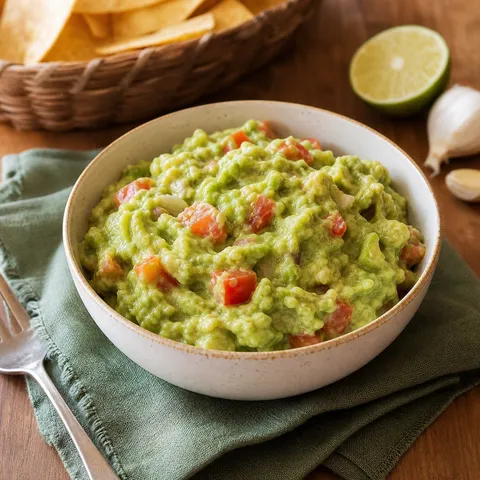
 Betty Crocker's Southwestern Guacamole Dip
A chunky, garlicky guacamole brightened with fresh tomato and lime, ideal for scooping with tortilla chips.