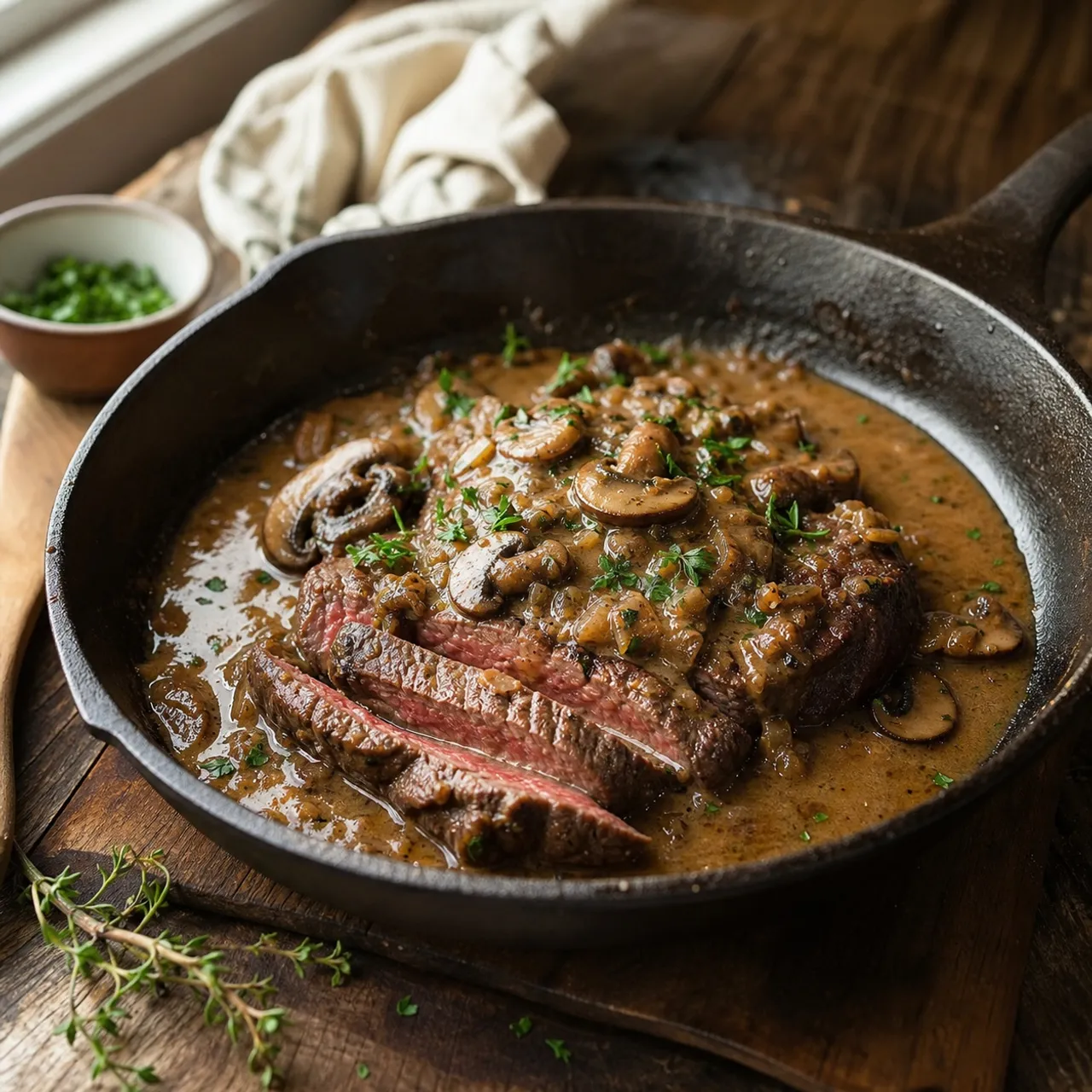
 Meat & Pork Images are for illustrative purposes only, may be inaccurate, and do not guarantee the presence or absence of specific ingredients.
 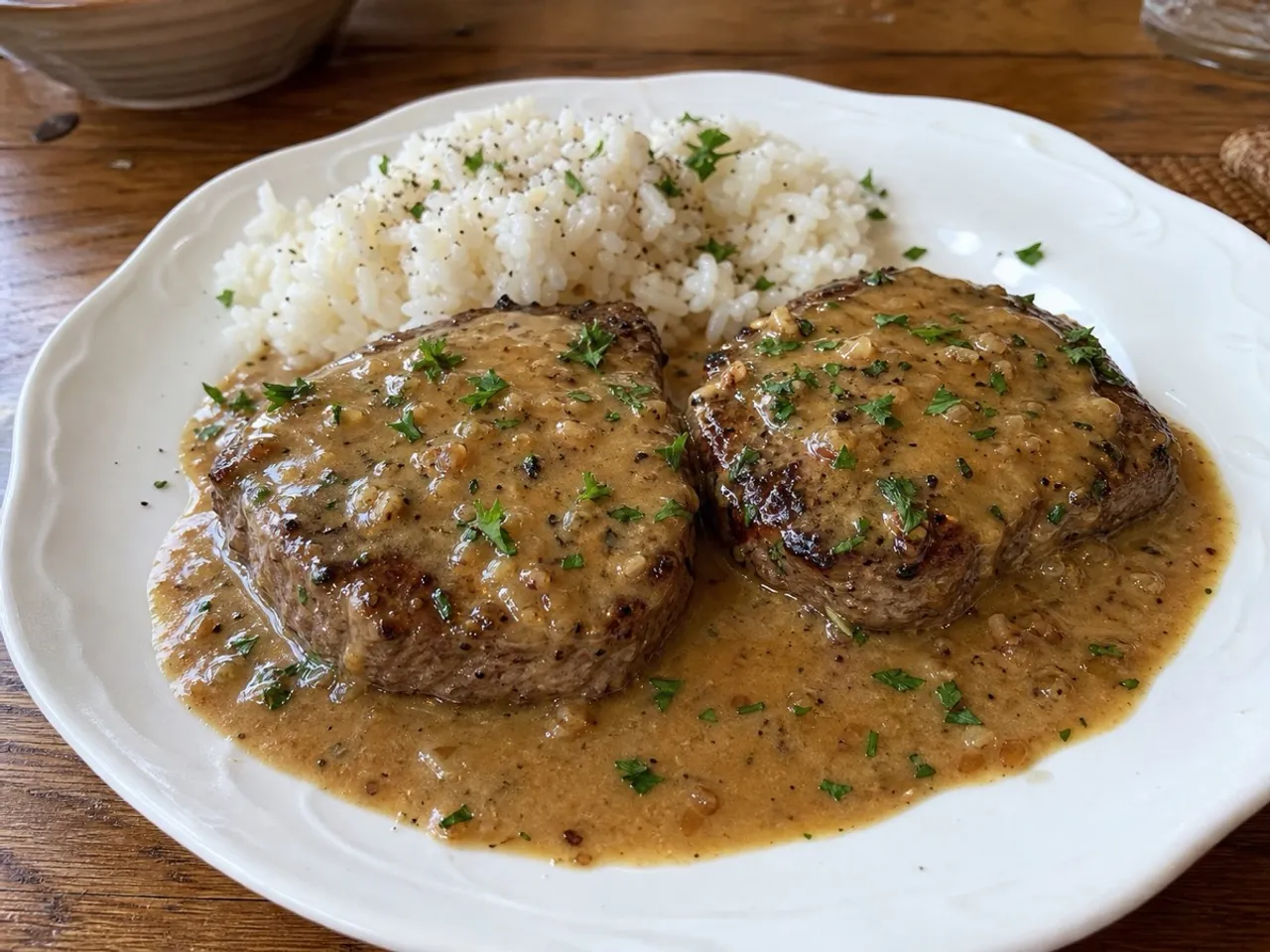 Serving Images are for illustrative purposes only, may be inaccurate, and do not guarantee the presence or absence of specific ingredients.
 Steak Diane
Pan-seared filets flambéed with brandy and finished in a rich mustard-cream pan sauce — a tableside classic simplified for home.
Contains common allergens
In the app, Listahan checks these against your household automatically.
Good to know
- Ready in under 30 minutes
Matched from this dish's own ingredients and timing. Browse more: 30-minute meals
Instructions
5 steps- 1
Season the pounded filets with salt and pepper. Heat 1 tbsp butter and olive oil in a skillet over high heat and sear the steaks 90 seconds per side for medium-rare; remove and set aside.
- 2
Add shallot and garlic to the skillet and cook 1 minute. Remove from heat, add the brandy, then carefully return to low heat and simmer 30 seconds to cook off the alcohol.
- 3
Stir in beef stock, Dijon mustard, and Worcestershire sauce, and simmer 2 minutes.
- 4
Stir in heavy cream and remaining butter and simmer until the sauce is glossy and slightly thickened, about 2 minutes.
- 5
Return the steaks to the skillet to warm through, spoon sauce over top, garnish with parsley, and serve immediately.
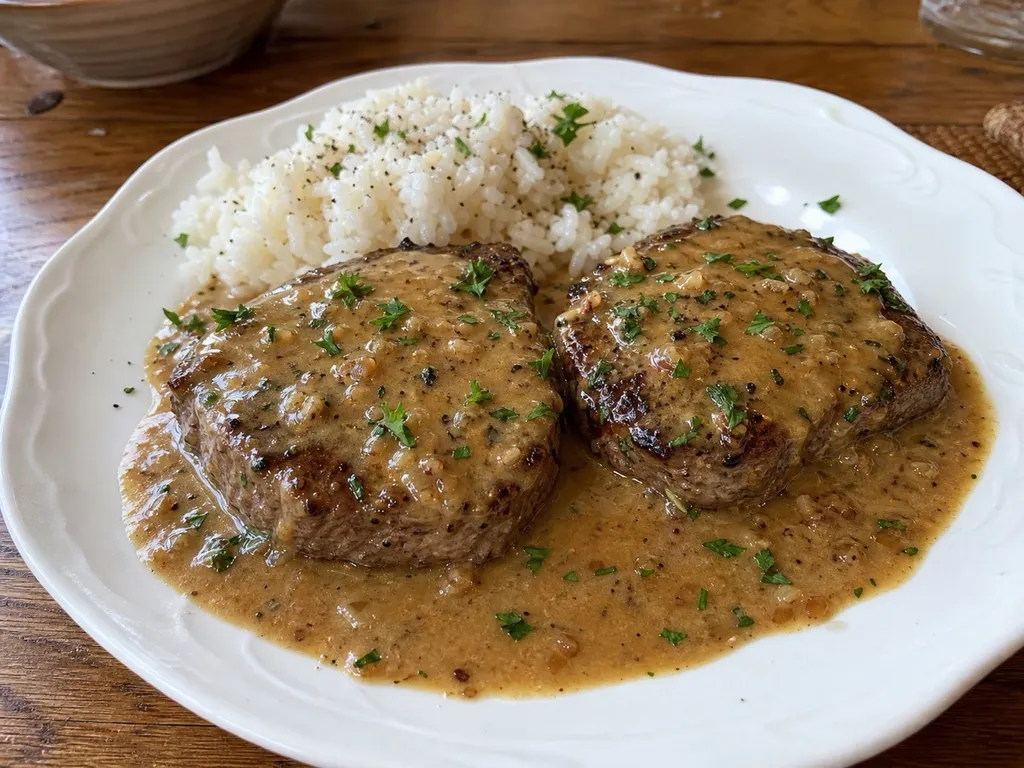 Images are for illustrative purposes only, may be inaccurate, and do not guarantee the presence or absence of specific ingredients.
 Listahan Family Score™
61/100
Works for many families
Score reflects how well this recipe fits a typical busy household. In the app, your Family Score is personalized to your household's allergens, kids, and pantry.
Nutrition
per serving330
Calories
3 g
Protein
7 g
Carbs
30 g
Fat
Estimated per serving. Actual values depend on the brands and portions you use.
Listahan cooking guide
Chef notes & practical guide
Technique notes, ingredient swaps, serve-alongside ideas, storage guidance, and equipment for this recipe.
Cultural context
Steak Diane belongs to the mid-20th-century steakhouse and hotel dining room, when quick pan sauces and tableside flame were part of the show. The name likely nods to Diana, the Roman goddess associated with the hunt, which fits the older habit of pairing meat with sharp, savory sauces. At home, the useful part is not the performance but the tight sequence: sear thin filets, build a pan sauce in the same skillet, and serve before the sauce loses its gloss.
Listahan note
This version keeps the classic brandy-mustard-cream profile but reins in the restaurant theater for a two-person skillet dinner. The priority is timing: the steaks cook fast because they are pounded thin, and the sauce comes together while they rest.
Technique cues
- Pounding the filets to 1/2 inch makes this a quick-sear dish, not a slow steakhouse cook. Have the sauce ingredients measured before the steaks hit the pan.
- Remove the skillet from the burner before adding brandy or cognac. You still get the pan-sauce flavor without needing a dramatic flame.
- Dijon mustard and Worcestershire sauce are small amounts, but they keep the cream sauce from tasting flat. Stir them into the stock before the cream so the sauce base is smooth.
Kitchen flow
- Parallel prep
- Measure the brandy, stock, mustard, Worcestershire, and cream before searing; there is no good pause once the steaks come out.
- Make-ahead
- Mince the shallot and garlic, pound the filets, and portion the sauce ingredients earlier in the day; cook the steaks and sauce right before serving.
- Leftover move
- Slice leftover steak thinly and warm it briefly in the sauce, then tuck into a toasted roll with parsley and a spoonful of pan sauce.
- Cleanup rhythm
- Wipe splattered oil from the stovetop while the steaks rest, then soak the skillet after serving so the cream sauce residue releases.
Ingredient brief
Role, handling, and swap guidance for each key ingredient.
Beef tenderloin filets
Main cut
Purpose: Tenderloin cooks quickly and stays delicate enough for a rich pan sauce instead of fighting it.
Handling: Pound each filet evenly to 1/2 inch so both steaks cook at the same pace.
Adaptation: Strip steak medallions can work, but they will taste beefier and may need a touch more time in the pan.
Brandy or cognac
Pan deglazer
Purpose: It lifts browned bits from the skillet and gives the sauce its warm, classic Steak Diane note.
Handling: Take the pan off the heat before adding it, then return to low heat and simmer briefly.
Adaptation: Use extra beef stock with a small splash of sherry vinegar for a less rounded but still lively sauce.
Dijon mustard
Sharp sauce binder
Purpose: Dijon cuts through the butter and cream while helping the sauce taste focused.
Handling: Whisk or stir it into the beef stock before the cream goes in to avoid streaks.
Adaptation: Whole-grain mustard gives more texture and a slightly milder bite.
Worcestershire sauce
Savory depth
Purpose: A teaspoon adds the dark, tangy background note that makes the sauce taste steakhouse-style.
Handling: Measure it before cooking because the sauce stage moves quickly.
Adaptation: A small splash of soy sauce gives saltier depth, but it will shift the sauce away from the classic profile.
Heavy cream
Sauce finisher
Purpose: Cream rounds the mustard and brandy into a glossy sauce that coats the steak.
Handling: Add it after the stock has simmered so the sauce does not thin out too much.
Adaptation: Half-and-half makes a lighter sauce, but reduce gently and expect a looser finish.
Shallot and garlic
Aromatic base
Purpose: They give the pan sauce sweetness and a little bite without taking over the tenderloin.
Handling: Mince finely so they soften in the brief one-minute cook time.
Adaptation: A small amount of minced yellow onion can stand in for shallot, though it will taste less delicate.
Technique notes
- Use high heat for the initial sear, but lower the heat once the aromatics go in. Burnt garlic will make the whole sauce taste harsh.
- Do not over-reduce the sauce before returning the steaks. It should coat a spoon but still move easily around the pan.
- Warm the steaks in the sauce only briefly at the end. They are thin, so a long simmer will push them past the intended doneness.
Ingredient swaps
- No-flame path
- Skip any ignition and simply simmer the brandy or cognac after adding it off heat; the sauce will still taste like Steak Diane.
- Lighter sauce direction
- Use half-and-half instead of heavy cream and reduce the sauce gently, knowing it will be thinner and less glossy.
- Stock adjustment
- Use unsalted beef stock if your Worcestershire sauce is assertive, then season the finished sauce only after it reduces.
- Mustard variation
- Use whole-grain mustard for a speckled sauce with softer sharpness and a little texture.
Serve alongside
- Pommes puree
- Roasted asparagus with lemon
- Butter-sauteed mushrooms
- Watercress and radish salad
- Dry martini
- Cabernet Franc
- Sparkling water with lemon
Serving suggestions only — check pairings for your household's allergens.
Storage & reheating
- Refrigerate leftover steak and sauce together in a sealed container once the meal is cleared.
- Reheat gently in a small skillet over low heat with a splash of beef stock or water to loosen the sauce.
- Freeze only the sauce if needed; thaw overnight and whisk while reheating, then cook fresh steak for the best texture.
Equipment
- Heavy stainless steel or cast-iron skillet
- Meat mallet or rolling pin
- Tongs
- Small whisk
Make this household-aware
Listahan Pro checks this recipe against your household's allergens, finds pantry-aware swaps, builds the shopping list, and helps you plan the week around it.
Plan it in Listahan
Add Steak Diane to your week, check it against your household's allergens, and build the shopping list automatically.
More Meat & Pork recipes
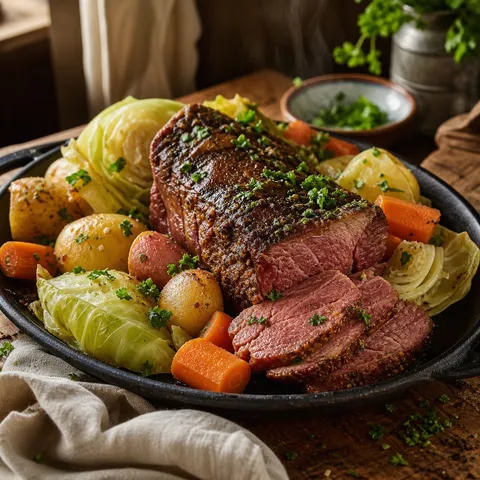 Meat & Pork Lens Verified Images are for illustrative purposes only, may be inaccurate, and do not guarantee the presence or absence of specific ingredients.
 Corned Beef and Cabbage
A classic Irish-American simmer of brined corned beef brisket with cabbage, carrots, and potatoes, served with mustard.
 Meat & Pork Lens Verified Images are for illustrative purposes only, may be inaccurate, and do not guarantee the presence or absence of specific ingredients.
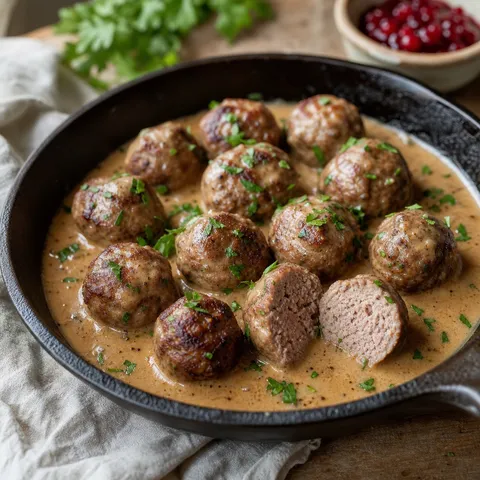
 Swedish Meatballs
Warmly spiced beef and pork meatballs in a velvety sour cream gravy, served over egg noodles with a spoonful of lingonberry jam.
 Meat & Pork Lens Verified Images are for illustrative purposes only, may be inaccurate, and do not guarantee the presence or absence of specific ingredients.
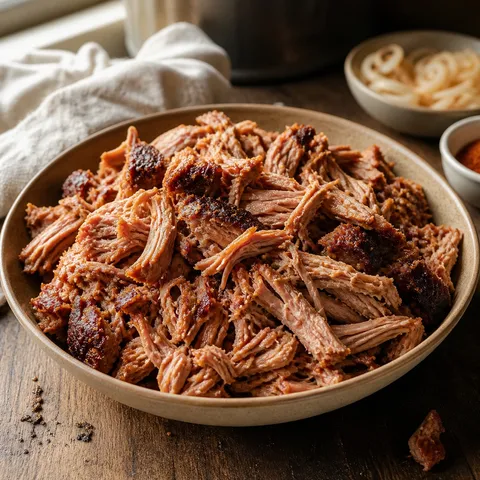
 Slow Cooker Pulled Pork
Fork-tender pork shoulder slow-cooked with a smoky-sweet spice rub until it shreds effortlessly, perfect piled on buns with barbecue sauce.