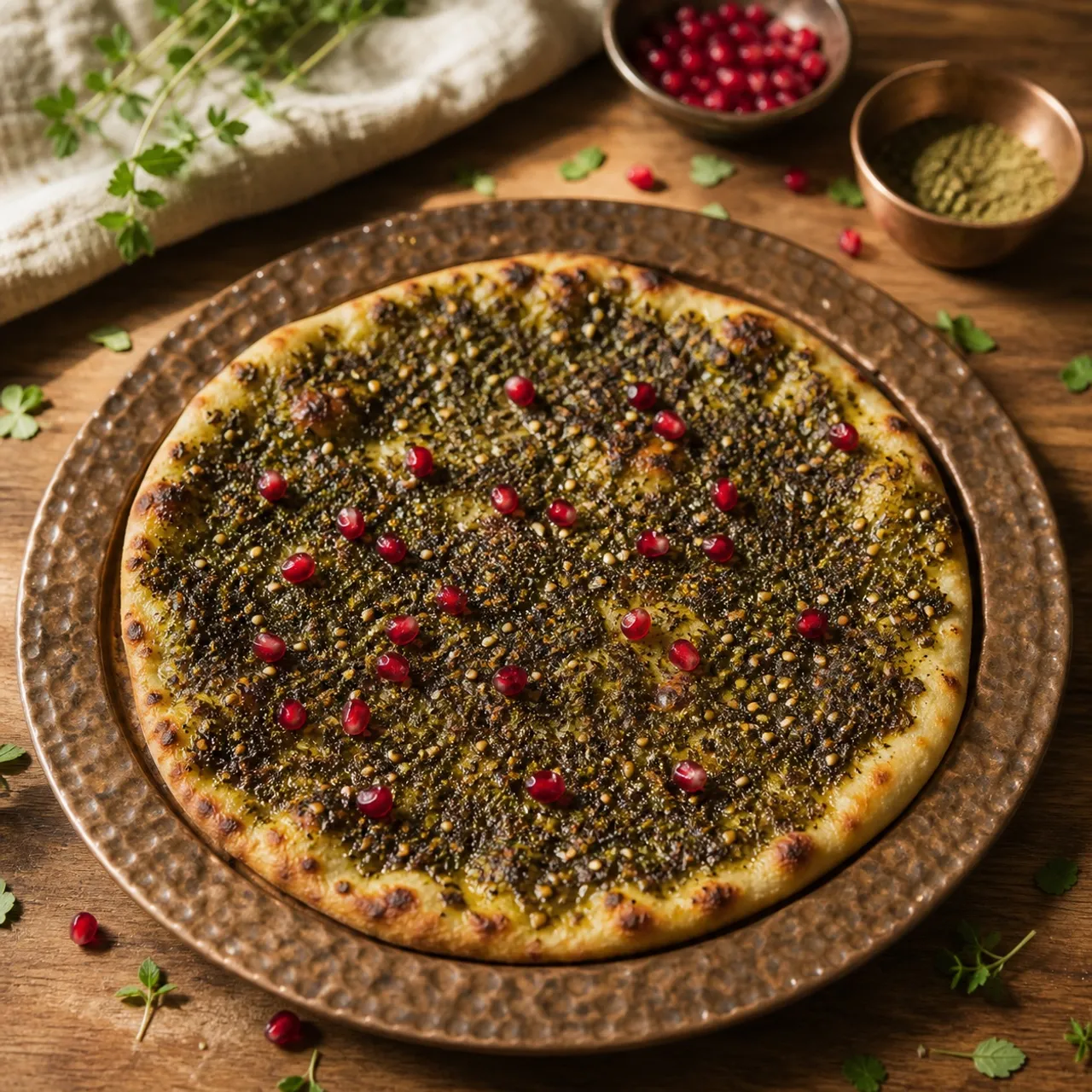
 Middle Eastern Images are for illustrative purposes only, may be inaccurate, and do not guarantee the presence or absence of specific ingredients.
 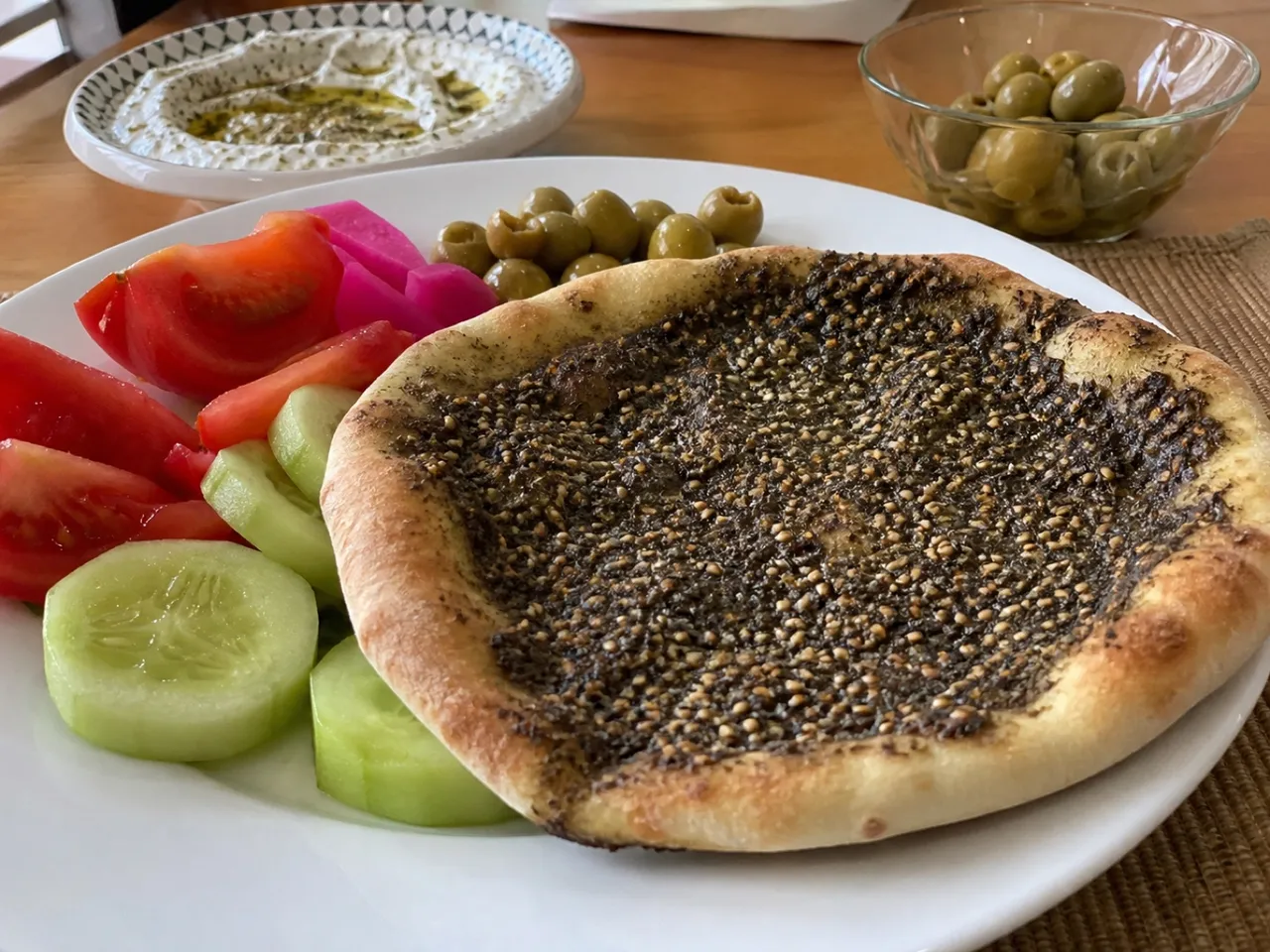 Serving Images are for illustrative purposes only, may be inaccurate, and do not guarantee the presence or absence of specific ingredients.
 Za'atar Bread
Soft bread baked with a thick topping of za'atar and olive oil.
Contains common allergens
In the app, Listahan checks these against your household automatically.
Instructions
6 steps- 1
In a large bowl, whisk the warm water, sugar, and yeast. Let it sit for 5 minutes until frothy.
- 2
Add the flour, salt, and 3 tbsp olive oil. Knead for 5-7 minutes until the dough is smooth and elastic. Cover and let it rise in a warm place for 45 minutes until doubled in size.
- 3
Preheat the oven to 400°F (200°C) with a baking stone or inverted baking sheet inside.
- 4
In a small bowl, mix the za'atar blend and 1/2 cup olive oil to create a thick paste.
- 5
Punch down the dough and divide it into 6 equal balls. Roll each ball into a 6-inch flat circle. Use your fingertips to press dimples into the surface.
- 6
Spread 2 tablespoons of the za'atar paste evenly over each dough circle. Bake on the hot stone for 8-10 minutes until the edges are golden and the bottom is crisp. Serve warm.
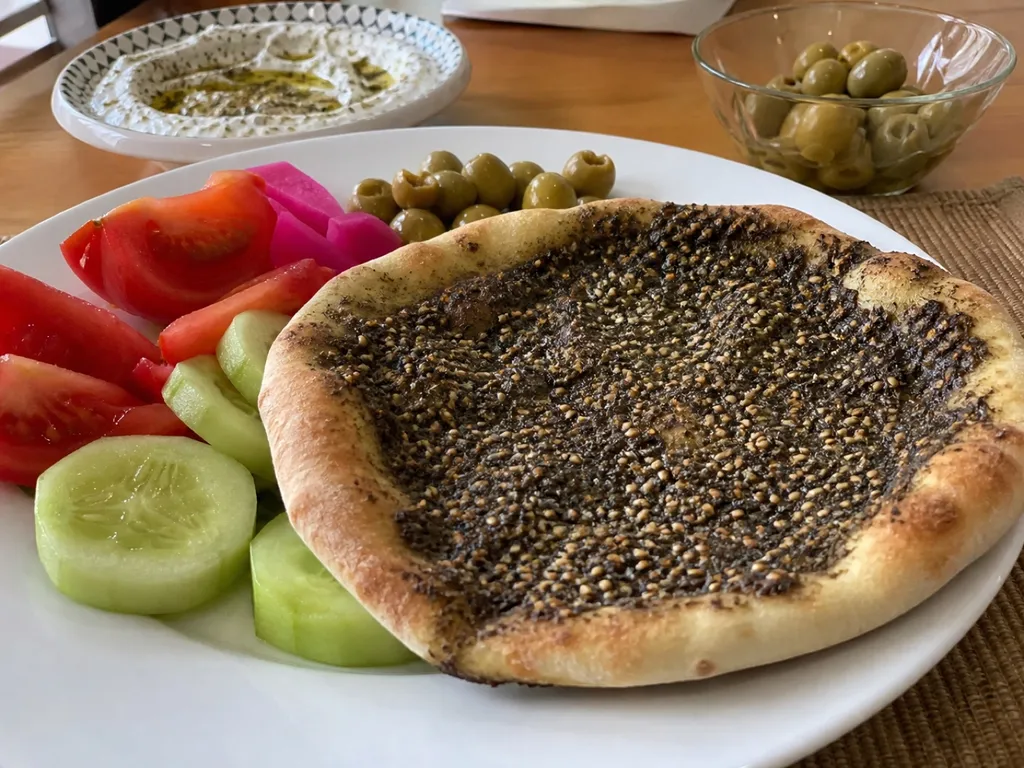 Images are for illustrative purposes only, may be inaccurate, and do not guarantee the presence or absence of specific ingredients.
 Listahan Family Score™
69/100
Works for many families
Score reflects how well this recipe fits a typical busy household. In the app, your Family Score is personalized to your household's allergens, kids, and pantry.
Nutrition
per serving675
Calories
9 g
Protein
72 g
Carbs
38 g
Fat
Estimated per serving. Actual values depend on the brands and portions you use.
Listahan cooking guide
Chef notes & practical guide
Technique notes, ingredient swaps, serve-alongside ideas, storage guidance, and equipment for this recipe.
Cultural context
Za'atar bread is the herb-topped flatbread of the Levant, the za'atar manakish that anchors morning bakeries from Beirut to Amman. The za'atar blend itself, dried wild thyme with sumac and toasted sesame, is so woven into the culture that the herb and the bread share a name. It is the everyday breakfast bread, baked fresh and eaten warm.
Listahan note
This version is the pure za'atar flatbread, no cheese or meat, so the herb-and-oil topping is the whole experience. The key is a generous, oily topping that bakes into the dough rather than a dry dusting.
Technique cues
- Mix the za'atar with enough olive oil to spread like a loose paste so it melts into the crumb.
- Dimple the dough with your fingers so the oily topping pools and stays put while baking.
- Bake hot and fast on a preheated surface so the bottom crisps before the herbs scorch.
Kitchen flow
- Parallel prep
- Stir the za'atar paste and preheat the oven and stone while the dough proofs.
- Make-ahead
- Make the dough the night before and refrigerate; let it warm up before shaping.
- Leftover move
- Re-crisp a cooled round and fold it around labneh, cucumber, and tomato for lunch.
- Cleanup rhythm
- Flour the surface lightly and scrape with a bench knife so dough does not cake on.
Ingredient brief
Role, handling, and swap guidance for each key ingredient.
All-purpose flour
dough base
Purpose: Forms the soft, chewy flatbread that carries the topping.
Handling: Whisk with yeast and salt before adding the warm liquid.
Adaptation: Swap part for whole wheat for a sturdier, nuttier bread.
Za'atar blend
the topping
Purpose: The thyme, sumac, and sesame mix is the entire identity of the bread.
Handling: Loosen with olive oil into a spreadable paste right before topping.
Adaptation: Mix dried thyme, sumac, toasted sesame, and salt if no blend is available.
Olive oil
topping binder
Purpose: Carries the za'atar into the dough and keeps the surface moist.
Handling: Use a fruity oil generously; a dry topping bakes harsh.
Adaptation: Any mild quality oil works if olive oil is unavailable.
Yeast
leavening
Purpose: Gives the flatbread its light, soft lift.
Handling: Bloom active dry yeast in warm water until foamy, or use instant in the flour.
Adaptation: Instant yeast goes straight into the dry mix.
Technique notes
- Let the shaped dough rest before baking so it does not shrink back and tighten.
- Pull the bread the instant the za'atar smells toasty; a moment too long turns the herbs bitter.
- Brush the bare rim with a little oil so the edge browns to match the topped center.
Ingredient swaps
- Whole-grain direction
- Use half whole wheat flour for more fiber and a heartier chew.
- Sesame-free direction
- Use a sesame-free za'atar blend of thyme and sumac only.
- Weeknight shortcut
- Spread the za'atar paste on store-bought flatbread or naan and toast.
Serve alongside
- Labneh with olive oil
- Sliced cucumbers and tomatoes
- Olives and white cheese
- Soft-boiled eggs
- Hot mint tea
- Arabic coffee
- Fresh orange juice
Serving suggestions only — check pairings for your household's allergens.
Storage & reheating
- Keep cooled za'atar bread in an airtight bag at room temperature for up to two days. Re-crisp in a dry skillet or low oven rather than the microwave. Baked rounds freeze well wrapped tightly; reheat from frozen in a hot oven.
Equipment
- Baking stone or steel
- Rolling pin
- Bench scraper
- Pastry brush
Make this household-aware
Listahan Pro checks this recipe against your household's allergens, finds pantry-aware swaps, builds the shopping list, and helps you plan the week around it.
Plan it in Listahan
Add Za'atar Bread to your week, check it against your household's allergens, and build the shopping list automatically.
More Middle Eastern recipes
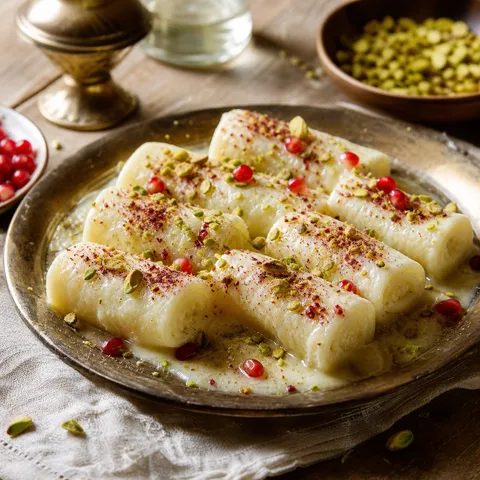 Middle Eastern Lens Verified Images are for illustrative purposes only, may be inaccurate, and do not guarantee the presence or absence of specific ingredients.
 Halawet El Jibn
A Levantine sweet cheese roll of stretched mozzarella and semolina dough wrapped around rose-scented clotted cream, topped with crushed pistachios and sugar syrup.
 Middle Eastern Lens Verified Images are for illustrative purposes only, may be inaccurate, and do not guarantee the presence or absence of specific ingredients.
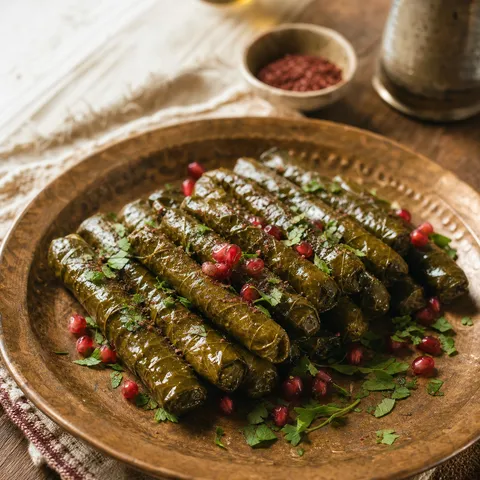
 Dolma (Warak Enab)
Grape leaves stuffed with a mixture of rice, meat, and herbs.
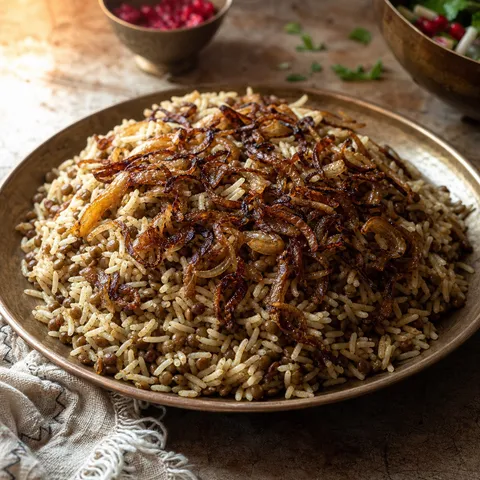 Middle Eastern Lens Verified Images are for illustrative purposes only, may be inaccurate, and do not guarantee the presence or absence of specific ingredients.
 Mujadara
A comforting dish of cooked lentils together with groats or rice, garnished with sautéed onions.