 North African Images are for illustrative purposes only, may be inaccurate, and do not guarantee the presence or absence of specific ingredients.
  Serving Images are for illustrative purposes only, may be inaccurate, and do not guarantee the presence or absence of specific ingredients.
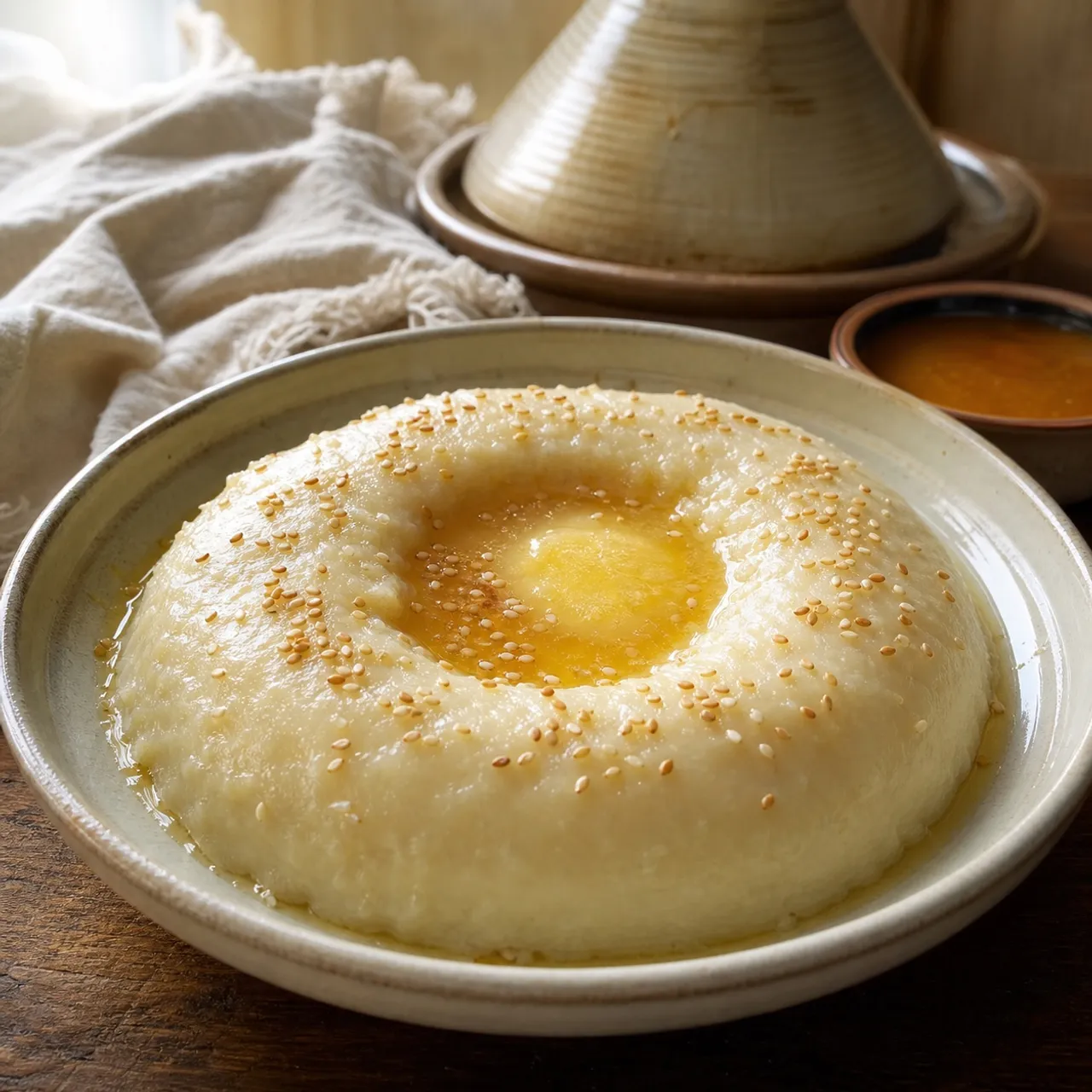
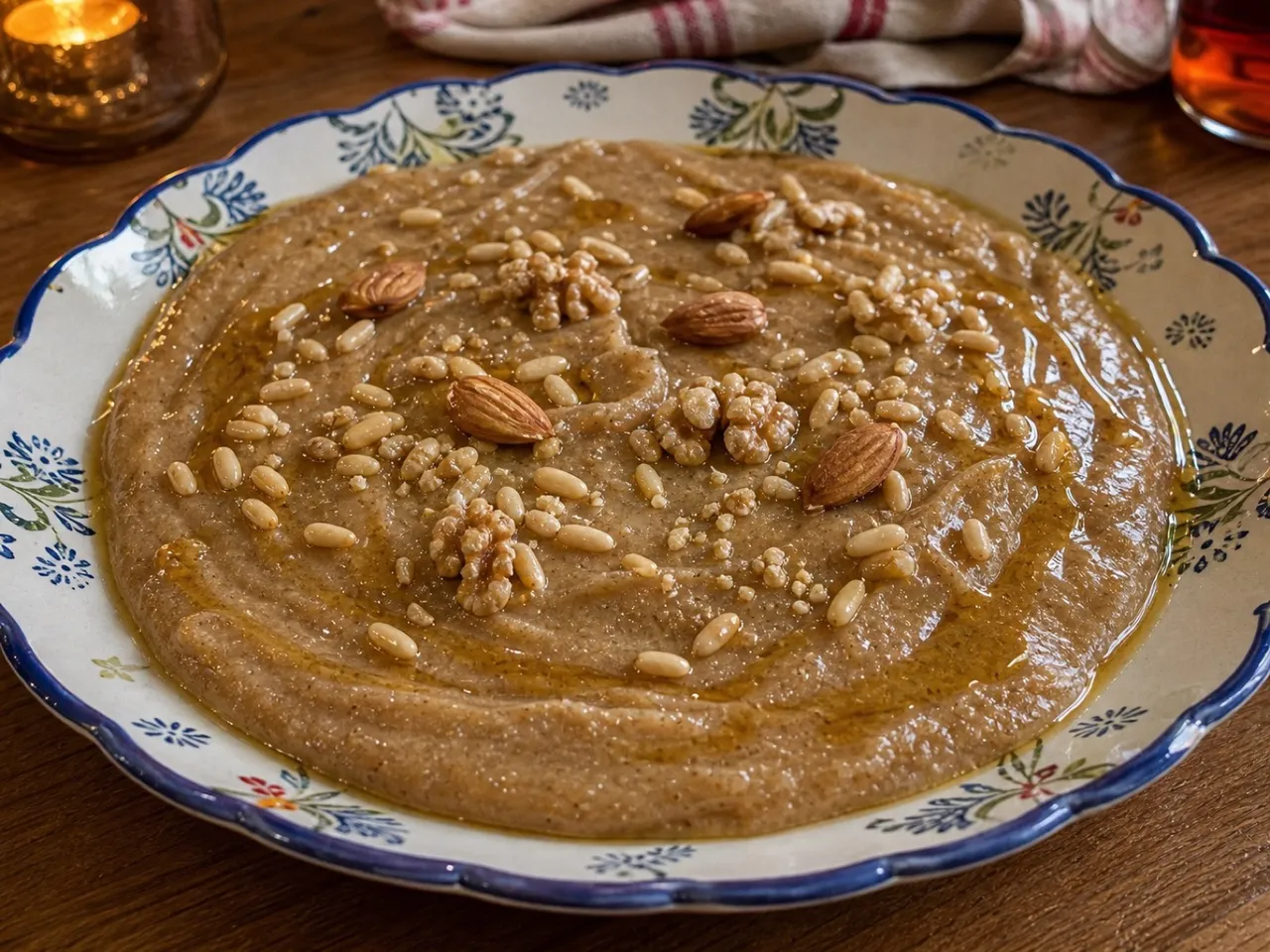
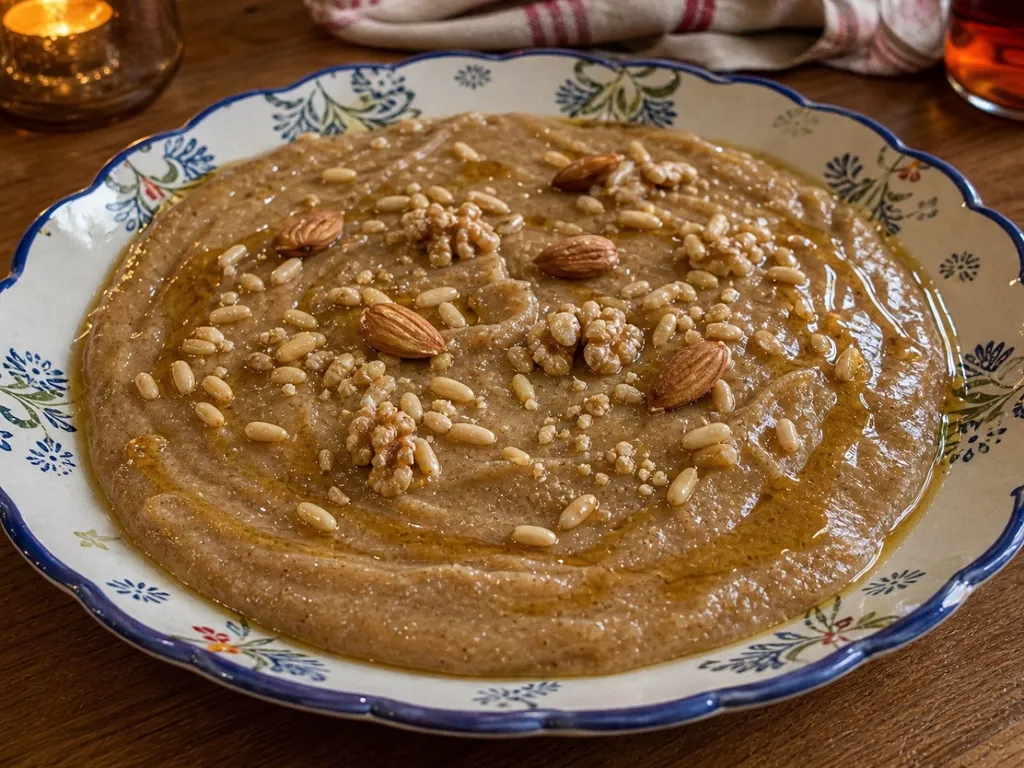
 Asida
North Africa's ancient slow-stirred porridge of flour or semolina — dense, warming, and drizzled with butter and honey for a deeply comforting meal.
Contains common allergens
In the app, Listahan checks these against your household automatically.
Good to know
- Ready in under 30 minutes
Matched from this dish's own ingredients and timing. Browse more: 30-minute meals
Instructions
8 steps- 1
Bring the water to a boil in a heavy pot with the salt.
- 2
Toast the semolina or flour in a dry skillet over medium heat, stirring constantly, until it turns a light golden color and smells nutty, this deepens the final flavor.
- 3
Reduce the boiling water to a simmer and sprinkle in the toasted flour gradually while whisking constantly to prevent lumps.
- 4
Switch to a sturdy wooden spoon as the mixture thickens, and keep stirring vigorously and continuously over low heat, the dough will become very stiff and elastic, this slow stirring is the defining step of asida and typically takes 15 to 20 minutes.
- 5
Continue stirring and folding the dough onto itself, pressing out any lumps, until it is completely smooth, glossy, and pulls cleanly away from the sides of the pot.
- 6
Wet a serving bowl and press the hot dough into it to shape it into a smooth dome, then invert onto a plate.
- 7
Make a well in the center of the dome and pour the melted butter into it, followed by a generous pour of honey or date syrup.
- 8
Serve warm, with diners tearing off pieces and dipping them into the butter and honey pooled in the center.
 Images are for illustrative purposes only, may be inaccurate, and do not guarantee the presence or absence of specific ingredients.
 Listahan Family Score™
76/100
Good fit for most families
Score reflects how well this recipe fits a typical busy household. In the app, your Family Score is personalized to your household's allergens, kids, and pantry.
Nutrition
per serving215
Calories
3 g
Protein
24 g
Carbs
12 g
Fat
Estimated per serving. Actual values depend on the brands and portions you use.
Listahan cooking guide
Chef notes & practical guide
Technique notes, ingredient swaps, serve-alongside ideas, storage guidance, and equipment for this recipe.
Cultural context
Asida is one of the oldest cooked grain preparations in North Africa and the Arab world, a thick semolina or flour porridge that predates the widespread use of bread ovens across the Maghreb. It appears in medieval Arab culinary manuscripts and remains a staple celebratory dish across Libya, Tunisia, Algeria, and the broader Arab-speaking world, served at births, religious occasions, and family breakfasts. In Libya in particular, asida topped with butter and honey is the traditional first food given to a newborn's mother after delivery, making it as culturally significant as a dish can be.
Listahan note
This version cooks the semolina slowly in salted water with constant stirring until it pulls away from the sides of the pot, which is the sign that it has fully hydrated and will not be grainy in the finished bowl.
Technique cues
- Whisk the semolina into boiling salted water in a slow, steady stream while stirring constantly to prevent lumps from forming; if the mixture is poured in all at once, it seizes into clumps that are impossible to smooth out later.
- The finished asida is ready when it is very thick, smooth, and pulls away from the sides of the pot when stirred; this takes 15 to 20 minutes of continuous stirring over medium heat and cannot be rushed by raising the temperature.
- Serve immediately after finishing; asida firms up very quickly as it cools and cannot be reheated to the same smooth, lava-like consistency it has just out of the pot.
Kitchen flow
- Parallel prep
- Toast the sesame seeds and warm the honey while bringing the salted water to a boil; the porridge itself requires both hands once it starts cooking.
- Make-ahead
- Asida does not make ahead well in finished form; prepare all toppings in advance and make the porridge to order, which takes only 20 minutes from start to table.
- Leftover move
- Cold asida firms into a sliceable mass; pan-fry slices in butter over medium heat until crispy on the outside and serve with honey for a different but equally good result.
- Cleanup rhythm
- Soak the stirring pot and whisk immediately in hot water after serving; cooked semolina sets hard as it cools and requires scrubbing if allowed to dry.
Ingredient brief
Role, handling, and swap guidance for each key ingredient.
1 cup fine semolina (or all-purpose flour)
porridge base
Purpose: Fine semolina absorbs the water evenly and produces a smooth, slightly grainy texture that is the hallmark of asida; coarse semolina produces a rougher result.
Handling: No advance prep needed; add directly to the boiling salted water in a thin, steady stream while whisking.
Adaptation: All-purpose flour produces a smoother, stickier asida closer to a thick polenta; the flavor is milder and the texture more uniform.
1/4 cup butter (melted)
richness and flavor
Purpose: Butter poured over the finished asida pools in the well made in the center and provides the fat that makes the dish feel nourishing and celebratory.
Handling: Melt just before serving and pour over the plated asida while both the porridge and the butter are hot so the butter stays liquid.
Adaptation: Smen (fermented North African butter) is the traditional topping and adds a funky, aged depth; olive oil is a lighter alternative for those avoiding dairy.
1/4 cup honey
primary sweetener
Purpose: Honey drizzled over butter and asida is the classic North African combination, lending a floral sweetness that makes the plain porridge feel complete.
Handling: Warm slightly in a small pot or the microwave for 20 seconds so it pours easily and spreads across the butter pool.
Adaptation: Date syrup (dibs al-tamr) is a traditional alternative with a deeper, more caramelized sweetness; maple syrup works as a pantry substitute.
1/4 cup toasted sesame seeds (optional garnish)
nutty crunch
Purpose: Toasted sesame seeds add visual contrast and a nutty crunch that cuts through the dense, smooth porridge.
Handling: Toast in a dry skillet over medium heat for 2 to 3 minutes, shaking constantly, until golden and fragrant; cool before scattering.
Adaptation: Crushed toasted almonds or crushed pistachios are common regional garnish alternatives.
Technique notes
- Use a heavy-bottomed pot with a long wooden spoon or heat-resistant silicone spatula; thin pots cause the semolina to scorch on the bottom before the interior has fully cooked, creating a bitter note in the finished dish.
- The ratio of liquid to semolina determines the final texture: 3:1 (cups water to cups semolina) produces a thick, spoonable asida that holds a well for the toppings; for a looser, porridge-like consistency add an extra 1/2 cup water.
- Create a shallow well in the center of the mounded asida before pouring on the butter and honey so the toppings pool rather than running off the sides.
Ingredient swaps
- Dairy-free option
- Replace butter with good extra-virgin olive oil for a savory-sweet result that is traditional in some Libyan households.
- Gluten-free direction
- Use fine white corn flour (masa harina) or finely milled rice flour in the same quantity and ratio; the texture is slightly different but cooks the same way and is naturally gluten-free.
- Savory version
- Omit honey and butter; top instead with a ladle of lamb or vegetable stew poured over the asida for the savory version common at Libyan family lunches.
Serve alongside
- warm sweet mint tea
- dates stuffed with almond paste
- fresh orange segments with cinnamon
- hot cardamom-spiced coffee
- warm milk with honey
- mint tea
Serving suggestions only — check pairings for your household's allergens.
Storage & reheating
- Best eaten immediately; if necessary, press plastic wrap directly onto the surface of leftover asida and refrigerate for up to 1 day.
- Reheat in a pot over low heat with a splash of water, stirring constantly; the texture will not return to its original silky state.
- Pan-frying cold sliced asida in butter is the preferred leftover method and produces a different but excellent result.
Equipment
- heavy-bottomed medium saucepan (3-quart)
- long wooden spoon or heat-resistant silicone spatula
- whisk for adding semolina to water
- small dry skillet for toasting sesame seeds
Make this household-aware
Listahan Pro checks this recipe against your household's allergens, finds pantry-aware swaps, builds the shopping list, and helps you plan the week around it.
Plan it in Listahan
Add Asida to your week, check it against your household's allergens, and build the shopping list automatically.
More North African recipes
 North African Lens Verified Images are for illustrative purposes only, may be inaccurate, and do not guarantee the presence or absence of specific ingredients.
 Msemmen
Layered and folded semolina flatbread cooked on a griddle until the outside crisps and the inside stays wonderfully chewy — perfect with honey or harissa.
 North African Lens Verified Images are for illustrative purposes only, may be inaccurate, and do not guarantee the presence or absence of specific ingredients.
 Brik
Crispy paper-thin pastry folded around a whole egg, tuna, and parsley then flash-fried until golden — Tunisia's beloved street snack, eaten fast before the yolk escapes.
 North African Lens Verified Images are for illustrative purposes only, may be inaccurate, and do not guarantee the presence or absence of specific ingredients.
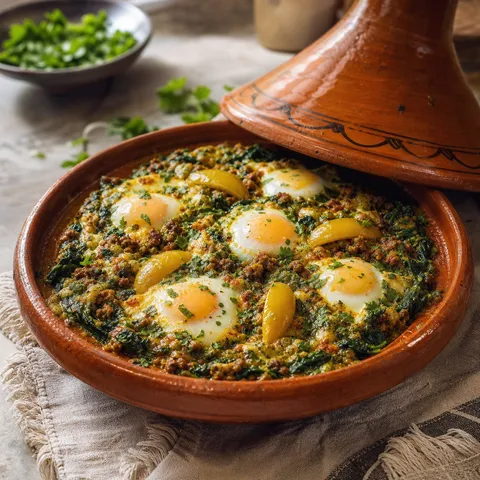
 Tajine El Bey
Tunisia's grand layered bake of spiced lamb, eggs, and cheese baked in a deep crust — a celebration dish with silky, complex layers in every slice.