 North African Images are for illustrative purposes only, may be inaccurate, and do not guarantee the presence or absence of specific ingredients.
  Serving Images are for illustrative purposes only, may be inaccurate, and do not guarantee the presence or absence of specific ingredients.
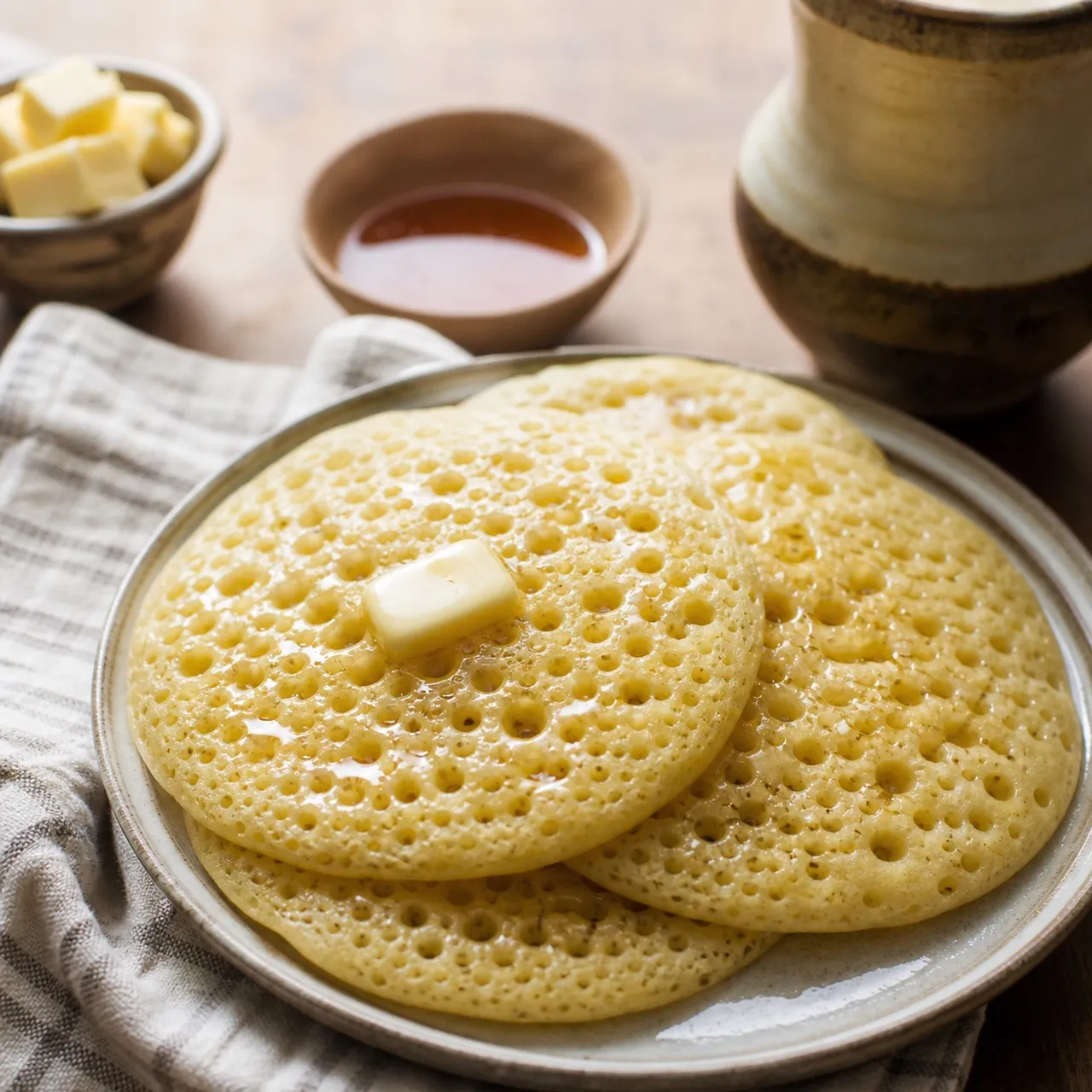
 Baghrir
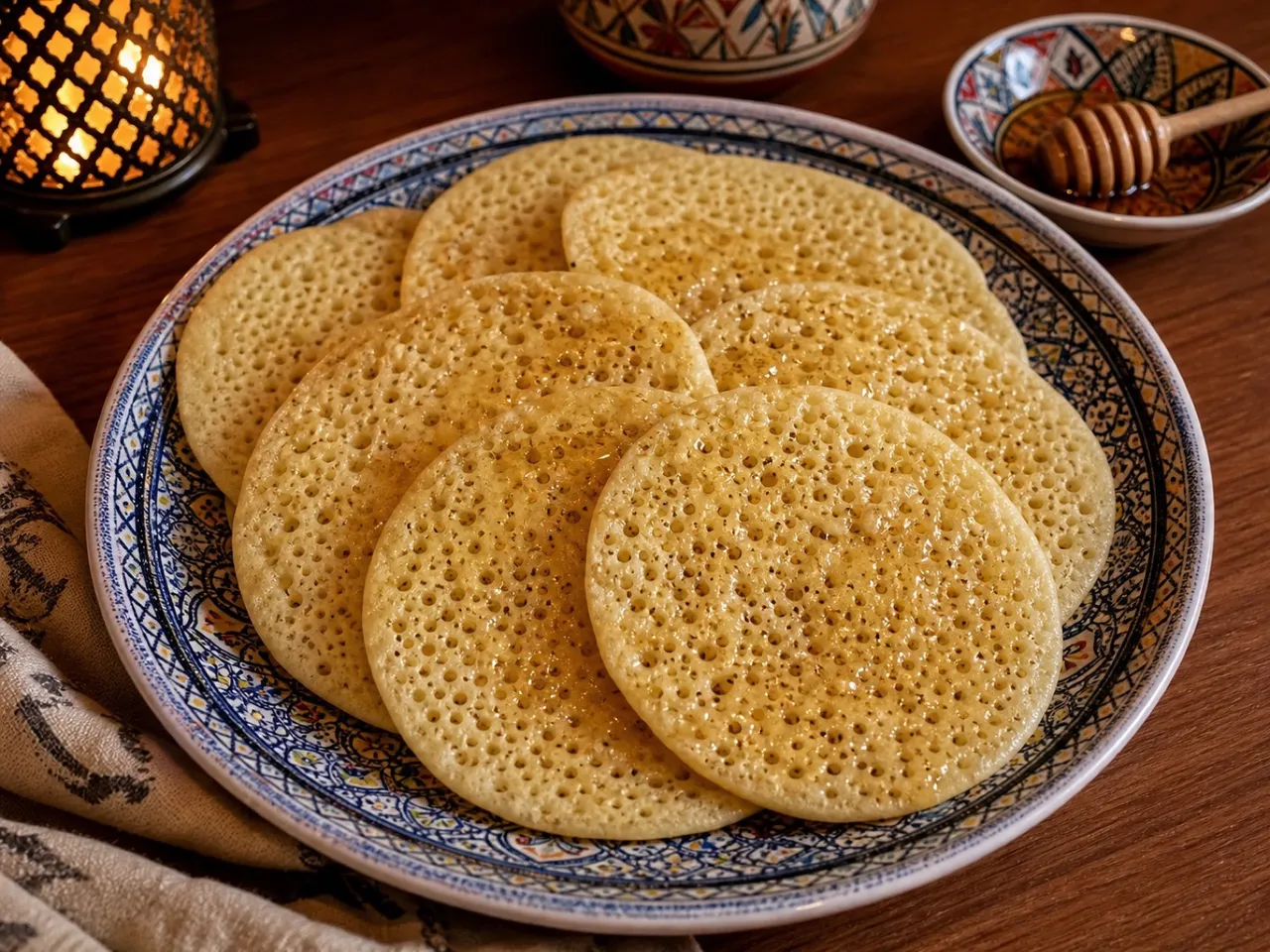
Morocco's thousand-hole sponge pancakes, light as a cloud and lacy with tiny bubbles, served warm with a golden river of butter and honey.
Contains common allergens
In the app, Listahan checks these against your household automatically.
Good to know
- Ready in under 30 minutes
Matched from this dish's own ingredients and timing. Browse more: 30-minute meals
Instructions
5 steps- 1
Blend Batter: In a blender, combine the warm water, semolina, flour, yeast, baking powder, sugar, and salt. Blend on high for 2-3 minutes until very smooth and bubbly.
- 2
Rest Batter: Pour the batter into a bowl, cover with a towel, and let it rest in a warm place for 15-20 minutes until it foams.
- 3
Cook: Heat a non-stick skillet over medium heat (do not add oil). Pour a ladle of batter into the center of the pan (do not spread it).
- 4
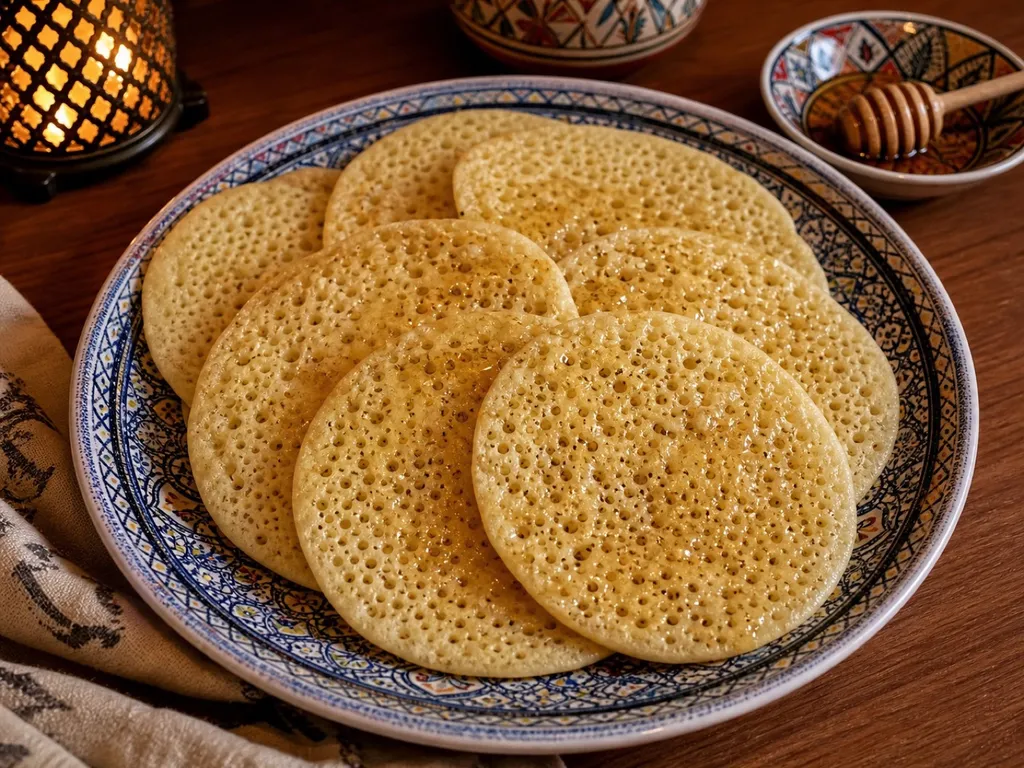
Watch the Bubbles: Cook on one side only. Hundreds of tiny holes will appear on the surface. Cook until the top is completely dry and set (about 2 minutes).
- 5
Serve: Remove carefully. Do not stack them while hot or they will stick. Serve warm, drizzled with a hot syrup made of equal parts melted butter and honey.
 Images are for illustrative purposes only, may be inaccurate, and do not guarantee the presence or absence of specific ingredients.
 Listahan Family Score™
73/100
Good fit for most families
Score reflects how well this recipe fits a typical busy household. In the app, your Family Score is personalized to your household's allergens, kids, and pantry.
Nutrition
per serving365
Calories
13 g
Protein
75 g
Carbs
1 g
Fat
Estimated per serving. Actual values depend on the brands and portions you use.
Listahan cooking guide
Chef notes & practical guide
Technique notes, ingredient swaps, serve-alongside ideas, storage guidance, and equipment for this recipe.
Cultural context
Baghrir, called the thousand-hole pancake, is a Moroccan and Algerian breakfast specialty made from fine semolina and leavened with both yeast and baking powder, which together create its signature spongy surface riddled with tiny pores. The batter is never flipped; the crepe cooks only on one side so the holes that form as the batter bubbles remain open and ready to absorb melted butter and honey. They are eaten at morning gatherings during Ramadan as well as on ordinary weekday breakfasts across the Maghreb.
Listahan note
This version blends semolina and all-purpose flour for structure and relies on a fully rested, aerated batter to produce the maximum number of holes; rushing the rest time results in a dense, hole-poor crepe.
Technique cues
- The double leavening system, yeast plus baking powder, is what produces the characteristic porous surface: the yeast provides fermentation flavor and initial lift over 20-30 minutes of rest, while the baking powder gives a fast second rise the moment the batter hits a hot pan.
- Baghrir batter must be blended until very smooth, then left undisturbed to rest; stirring it again after the rest collapses the bubbles that form at the surface and reduces the hole count.
- The pan must be fully hot before the batter is poured and must not be greased; a lightly oiled or wet pan causes the baghrir to stick, tears holes, and produces steam that interferes with the characteristic open-pore surface.
Kitchen flow
- Parallel prep
- While the batter rests for 20-30 minutes, prepare the dipping sauce by melting butter with honey in a small saucepan and keeping it warm on low heat.
- Make-ahead
- Blend the dry ingredients and store them mixed in a sealed bag or jar; add warm water, yeast-proof mixture, and baking powder the morning of cooking for a quick setup.
- Leftover move
- Cooked baghrir reheat well in a dry skillet for 30 seconds per side; they can also be stacked with honey between layers and served as a layered sweet stack.
- Cleanup rhythm
- Blend the batter in a jug or blender for easy pour and wash; the ungreased skillet wipes clean between crepes with a dry cloth.
Ingredient brief
Role, handling, and swap guidance for each key ingredient.
2 cups fine semolina
primary structure and texture
Purpose: Fine semolina gives baghrir its slightly grainy, pleasantly chewy bite and allows the batter to thin enough to spread without losing structure.
Handling: Blend with flour and liquid until completely smooth; visible semolina lumps in the batter result in a rougher surface with fewer clean holes.
Adaptation: Use all fine semolina and no flour for a slightly denser, more traditional baghrir; coarse semolina produces a grainy result.
1/2 cup all-purpose flour
binder and smoothness
Purpose: Flour adds enough gluten to help the baghrir hold its shape as it cooks, preventing it from tearing when lifted and keeping the thin surface intact.
Handling: Combine dry with semolina and yeast before adding water so there are no dry pockets.
Adaptation: Omit for a more authentic all-semolina version; the result will be slightly more fragile.
1 tbsp active dry yeast
leavening and fermentation flavor
Purpose: Yeast provides a mild, slightly tangy fermented note and the gradual gas production that aerates the batter during resting.
Handling: Proof in a few tablespoons of warm water with the sugar for 5 minutes before blending into the rest of the batter to confirm the yeast is active.
Adaptation: Instant yeast can be added dry directly to the batter without proofing; use the same quantity.
1 tsp baking powder
fast lift
Purpose: Baking powder creates rapid gas the moment the batter hits the hot surface, forming the characteristic bubble structure before the crepe sets.
Handling: Add with the dry ingredients; do not mix into the batter and then let it sit for hours, as baking powder is single-use once wet.
Adaptation: A combination of 1/4 tsp baking soda and 1/2 tsp cream of tartar can replace 1 tsp baking powder.
Technique notes
- Pour a ladleful of batter into the center of a hot pan and do not spread it; swirling or spreading disrupts the bubbling action that forms the holes.
- Watch for the surface: once no wet spots remain and the holes are dry around their edges, the baghrir is done; lifting to check the bottom is the only test needed.
- If the first baghrir has no holes, the pan is not hot enough or the batter is too thick; thin with 2 tablespoons of water and increase the heat slightly.
Ingredient swaps
- Gluten-free direction
- Replace all-purpose flour with a GF blend; results will vary by brand, but the semolina carries the structure and most GF blends work adequately in this application.
- Dairy-free topping
- Serve with warm pure honey and a drizzle of argan oil instead of the classic butter-honey combination.
- Savory direction
- Skip sugar and serve baghrir with harissa and a fried egg instead of honey for a savory breakfast plate.
Serve alongside
- warm honey and melted butter dipping sauce
- amlou (argan oil and almond paste)
- fresh-squeezed orange juice
- sweet Moroccan mint tea
- warm milk with a drop of orange blossom water
Serving suggestions only — check pairings for your household's allergens.
Storage & reheating
- Stack cooled baghrir between parchment layers and refrigerate for up to 2 days.
- Reheat in a dry non-stick pan for 30 seconds per side; they will lose some hole structure but remain tender.
- Baghrir do not freeze well as the porous surface collapses when thawed; make fresh on the day of serving.
Equipment
- blender or immersion blender for lump-free batter
- small non-stick or seasoned cast-iron skillet (7-8 inch)
- ladle for consistent pour
- small saucepan for honey-butter dipping sauce
Make this household-aware
Listahan Pro checks this recipe against your household's allergens, finds pantry-aware swaps, builds the shopping list, and helps you plan the week around it.
Plan it in Listahan
Add Baghrir to your week, check it against your household's allergens, and build the shopping list automatically.
More North African recipes
 North African Lens Verified Images are for illustrative purposes only, may be inaccurate, and do not guarantee the presence or absence of specific ingredients.
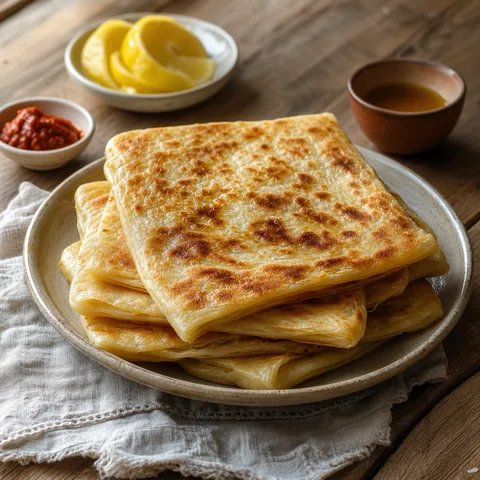
 Msemmen
Layered and folded semolina flatbread cooked on a griddle until the outside crisps and the inside stays wonderfully chewy — perfect with honey or harissa.
 North African Lens Verified Images are for illustrative purposes only, may be inaccurate, and do not guarantee the presence or absence of specific ingredients.
 Brik
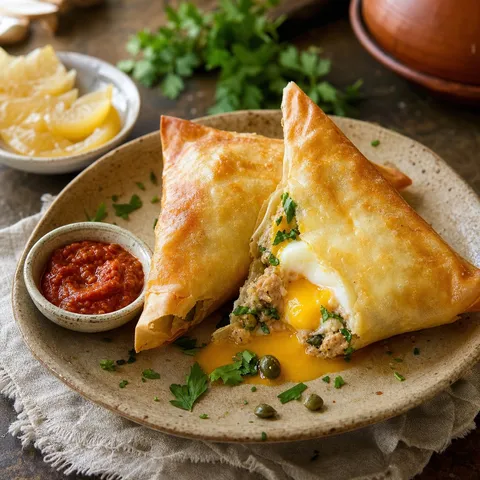
Crispy paper-thin pastry folded around a whole egg, tuna, and parsley then flash-fried until golden — Tunisia's beloved street snack, eaten fast before the yolk escapes.
 North African Lens Verified Images are for illustrative purposes only, may be inaccurate, and do not guarantee the presence or absence of specific ingredients.
 Tajine El Bey
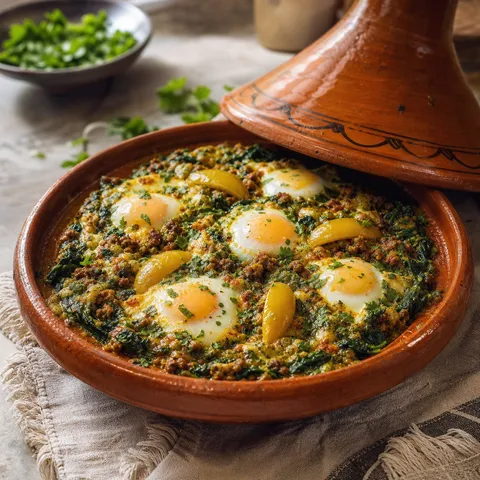
Tunisia's grand layered bake of spiced lamb, eggs, and cheese baked in a deep crust — a celebration dish with silky, complex layers in every slice.