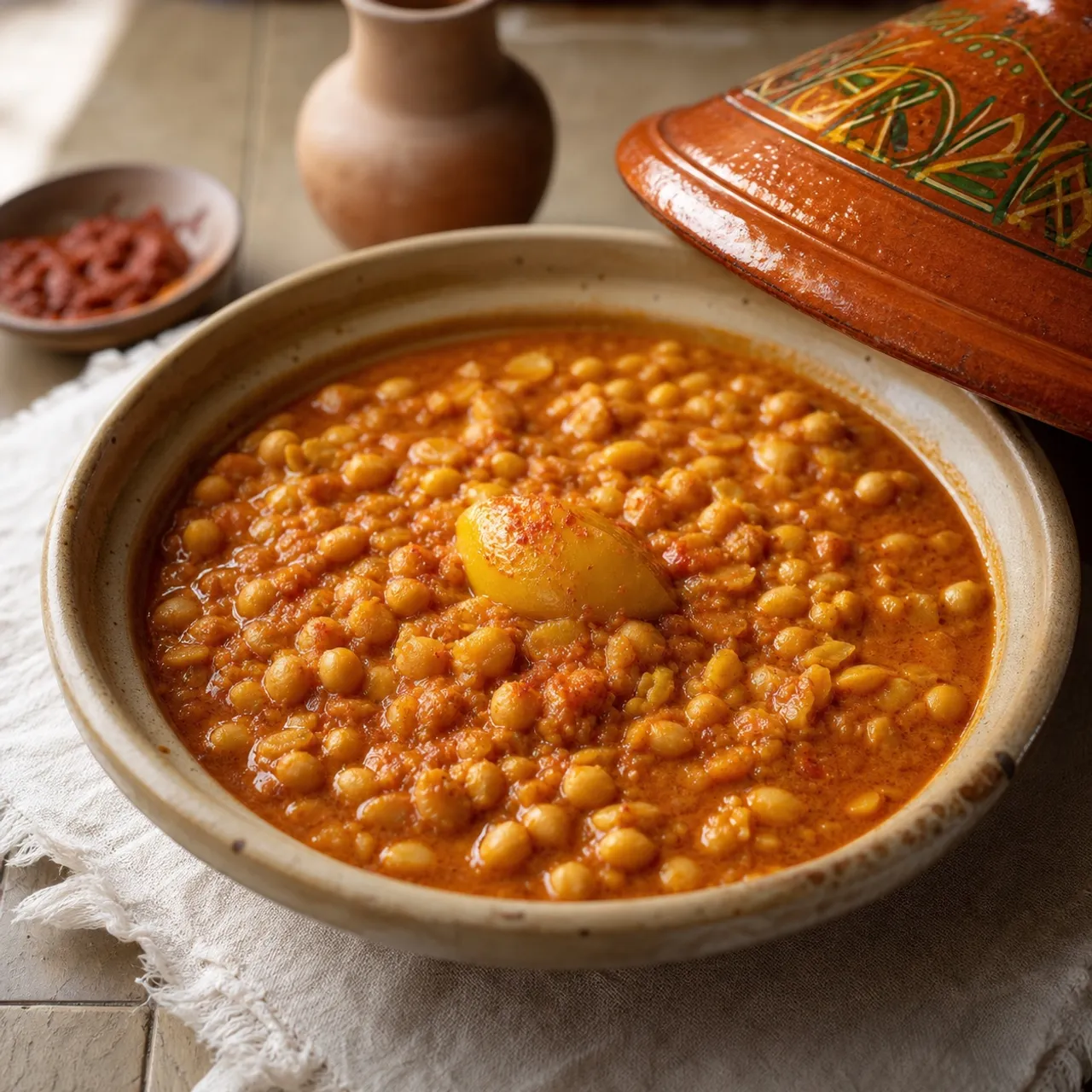
 North African Images are for illustrative purposes only, may be inaccurate, and do not guarantee the presence or absence of specific ingredients.
 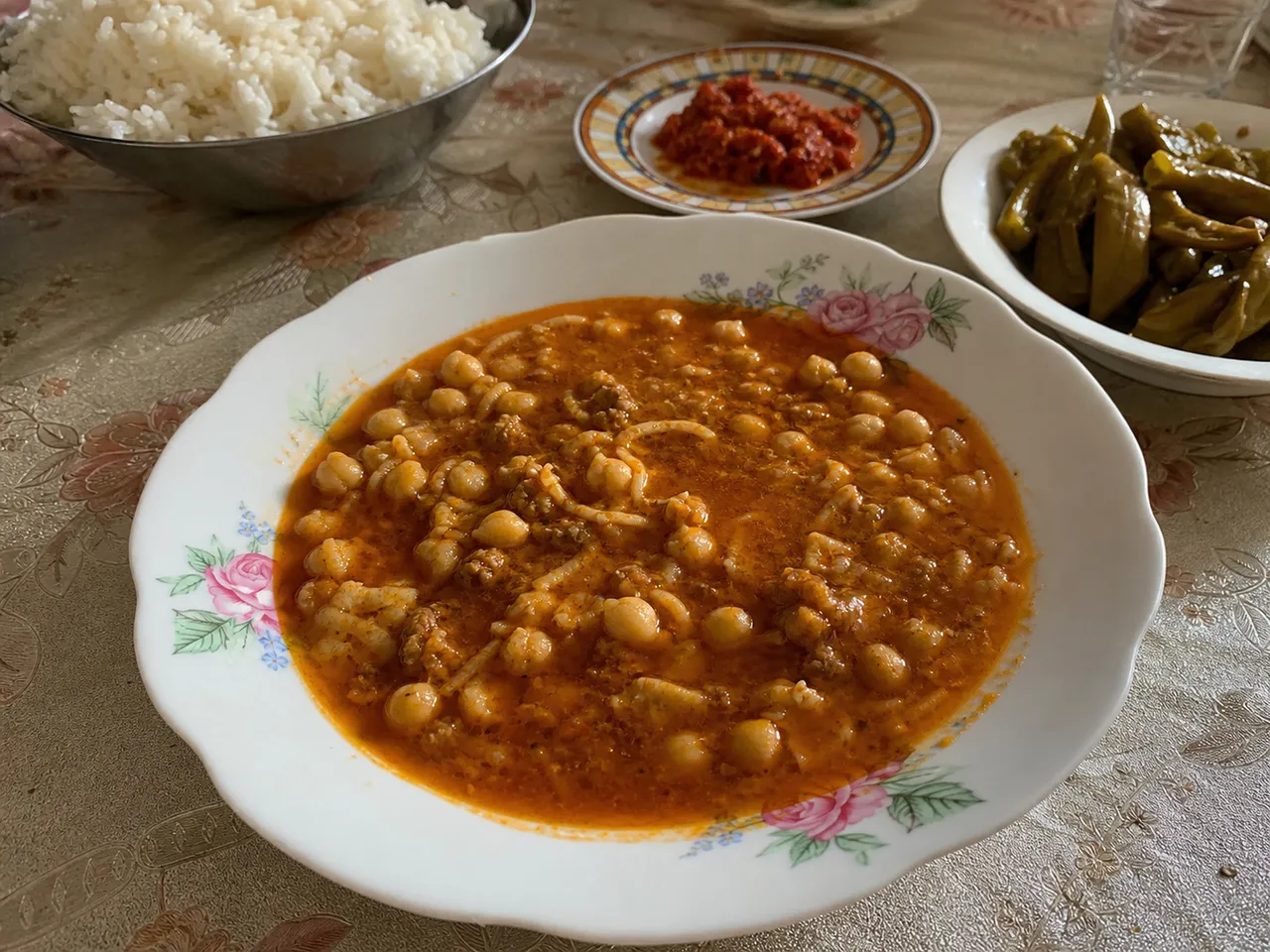 Serving Images are for illustrative purposes only, may be inaccurate, and do not guarantee the presence or absence of specific ingredients.
 Dobara
A bold Algerian chickpea soup built with dried fava beans, tomatoes, and a generous hand of spices — hearty, warming, and made to feed a hungry table.
No common allergens detected
Based on this recipe's ingredient list. Always verify with your own brands and labels.
Good to know
- One-pot
Matched from this dish's own ingredients and timing. Browse more: one-pot dinners
Instructions
7 steps- 1
Drain the soaked fava beans and rinse well.
- 2
Heat the olive oil in a large pot and cook the onion until softened, then add the garlic and cook until fragrant.
- 3
Stir in the tomato paste, caraway, paprika, cumin, and cayenne, and cook a minute until the spices darken slightly.
- 4
Add the drained fava beans and the water, bring to a boil, then reduce heat, cover partially, and simmer until the beans are completely soft and beginning to break apart, about 60 to 75 minutes, topping up water as needed.
- 5
Season with salt toward the end of cooking, once the beans are tender.
- 6
For a thicker soup, mash some of the beans against the side of the pot with a spoon.
- 7
Ladle into bowls and serve hot with crusty bread, extra harissa on the side for those who want more heat.
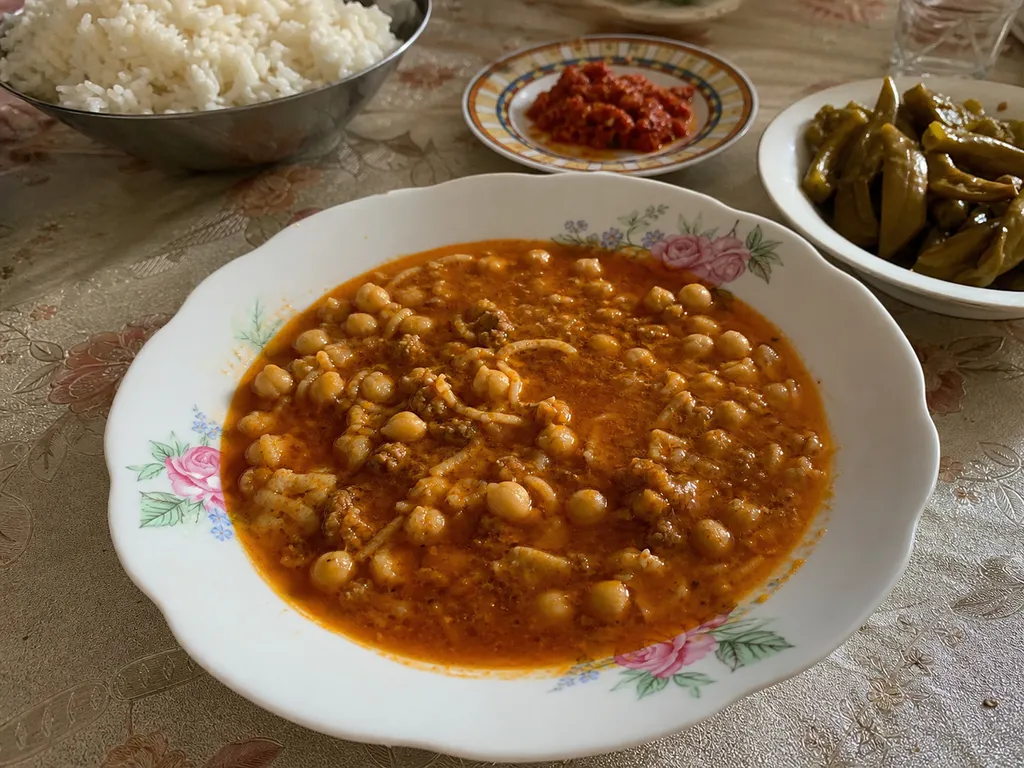 Images are for illustrative purposes only, may be inaccurate, and do not guarantee the presence or absence of specific ingredients.
 Listahan Family Score™
68/100
Works for many families
Score reflects how well this recipe fits a typical busy household. In the app, your Family Score is personalized to your household's allergens, kids, and pantry.
Nutrition
per serving175
Calories
10 g
Protein
29 g
Carbs
3 g
Fat
Estimated per serving. Actual values depend on the brands and portions you use.
Listahan cooking guide
Chef notes & practical guide
Technique notes, ingredient swaps, serve-alongside ideas, storage guidance, and equipment for this recipe.
Cultural context
Dobara is a Tunisian legume stew built from the combination of chickpeas and split fava beans — a pairing that reflects Tunisia's long agricultural tradition of cultivating both pulses in its fertile northern regions. The dish appears on Tunisian tables most often during the cooler months, sold from street carts in cities like Tunis and Sfax, where vendors stir it in large copper pots and serve it ladled into bowls with a drizzle of olive oil and a pinch of cumin. Harissa is not an afterthought here but a foundational ingredient that provides the dish's characteristic brick-red color and slow, building heat.
Listahan note
This version requires soaking both legumes overnight to achieve the right creamy texture — split fava beans break down partially during cooking, thickening the stew naturally without any added starch.
Technique cues
- Fava beans and chickpeas have different cooking times — fava beans cook faster and will begin to break down and thicken the stew while chickpeas finish cooking, which is exactly what you want; add the favas and chickpeas to the pot at the same time only if the chickpeas are pre-soaked for a full 12 hours.
- Grating the tomatoes on a box grater rather than chopping them produces a liquid pulp that integrates seamlessly into the stew, delivering fresh tomato flavor without chunks that would need a long simmer to break down.
- The finishing drizzle of olive oil is structural, not decorative — adding raw olive oil just before serving rounds out the sharpness of the harissa and the earthiness of the beans, and is worth using the best quality oil you have.
Kitchen flow
- Parallel prep
- While soaked legumes begin their initial boil, grate the tomatoes, crush the garlic, and measure out the spices so the aromatics are ready to add without delay.
- Make-ahead
- Dobara keeps and improves over 2-3 days in the refrigerator; make a full batch on Sunday for weekday lunches.
- Leftover move
- Thickened leftover dobara can be served at room temperature as a dip with flatbread, drizzled with olive oil and a pinch of cumin — it functions like a spiced hummus.
- Cleanup rhythm
- Soak the pot immediately after serving — dried legume stew bonds strongly to pot surfaces; a 15-minute soak makes cleanup a 2-minute job.
Ingredient brief
Role, handling, and swap guidance for each key ingredient.
1 cup dried chickpeas (soaked overnight)
primary protein and body
Purpose: Dried chickpeas soaked overnight cook to a creamy, toothsome texture that holds its shape better than canned, providing structural contrast to the partially dissolved favas.
Handling: Drain the soaking water, rinse well, and cook in fresh water — soaking water contains indigestible sugars that cause bloating.
Adaptation: Two 15-oz cans of drained, rinsed chickpeas can substitute; add them for the last 20 minutes of cooking only so they do not become mushy.
1 cup dried split fava beans (soaked overnight)
natural thickener and base
Purpose: Split fava beans break down during cooking and dissolve into the stew, creating the thick, porridge-like consistency that distinguishes dobara from a thinner legume soup.
Handling: Soak overnight and peel off any remaining skins after soaking for a smoother final texture.
Adaptation: Yellow split peas are a widely available substitute and behave similarly, breaking down into a comparable creamy base; red lentils also work but cook much faster.
1 tbsp harissa
heat and color foundation
Purpose: Harissa in dobara is not a condiment added at the table but a structural ingredient that provides the stew's brick-red color, its building chile heat, and the complexity of toasted pepper and spice.
Handling: Stir directly into the oil with the garlic at the start of cooking so the chile paste blooms and mellows rather than staying raw.
Adaptation: A mixture of tomato paste, a pinch of cayenne, and 1/2 teaspoon smoked paprika mimics harissa if it is unavailable; chipotle paste in adobo gives a different but compelling smoky heat.
6 cloves garlic (crushed)
aromatic backbone
Purpose: Crushed garlic added at the beginning of cooking mellows into a sweet, rounded note that permeates the entire stew without the sharpness of raw garlic.
Handling: Crush rather than mince for slower, more even release during the long simmer.
Adaptation: Garlic powder (1/2 teaspoon) works if fresh is unavailable, but add it with the spices rather than the oil.
1 tbsp ground cumin
earthy, warm spice
Purpose: Cumin is the dominant spice of Tunisian dobara, providing the earthy warmth that ties together the legumes, harissa, and tomato into a coherent dish.
Handling: Add with the harissa and garlic at the beginning so it toasts briefly in the oil before liquid is added.
Adaptation: Ras el hanout (same quantity) adds additional spice complexity for a less cumin-dominant but still North African character.
Technique notes
- Do not add salt until the legumes are fully tender — salt added to dried beans and chickpeas before they are cooked toughens the skins and significantly extends the cooking time.
- The stew should be thick enough to hold a spoon upright; if it is still too thin after the favas have broken down, remove the lid and reduce uncovered over medium heat for 15-20 minutes.
- Taste the dobara for spice balance at the end of cooking — the harissa sharpness mellows significantly during the long simmer, so you may need to add more harissa or a pinch of cayenne to restore the heat level.
Ingredient swaps
- Vegan direction
- The dish is naturally vegan as written; it needs no adjustment for a plant-based diet.
- Gluten-free direction
- Dobara is naturally gluten-free; ensure your harissa brand contains no added flour or starch.
- Canned legume shortcut
- Use two 15-oz cans each of chickpeas and butter beans (in place of favas); skip the soaking and reduce cook time to about 30 minutes — mash some of the butter beans to thicken.
Serve alongside
- Khobz (Tunisian semolina bread) for scooping
- sliced radishes and raw carrots for crunch
- soft-boiled egg halved on top as in the Tunisian street version
- simple green salad with olive oil and lemon
- strong mint tea
- still water with a squeeze of lemon
- Tunisian boukha fig spirit for an authentic pairing
Serving suggestions only — check pairings for your household's allergens.
Storage & reheating
- Refrigerate in a sealed container up to 4 days; the stew thickens considerably when cold and needs a splash of water when reheating.
- Reheat over medium-low heat, stirring frequently, with 2-3 tablespoons of water to restore the original consistency.
- Freeze well-cooled dobara in individual portions up to 3 months; thaw overnight in the refrigerator.
Equipment
- large Dutch oven or heavy-bottomed pot
- box grater for the fresh tomatoes
- wooden spoon for stirring during reduction
- ladle for serving
Make this household-aware
Listahan Pro checks this recipe against your household's allergens, finds pantry-aware swaps, builds the shopping list, and helps you plan the week around it.
Plan it in Listahan
Add Dobara to your week, check it against your household's allergens, and build the shopping list automatically.
More North African recipes
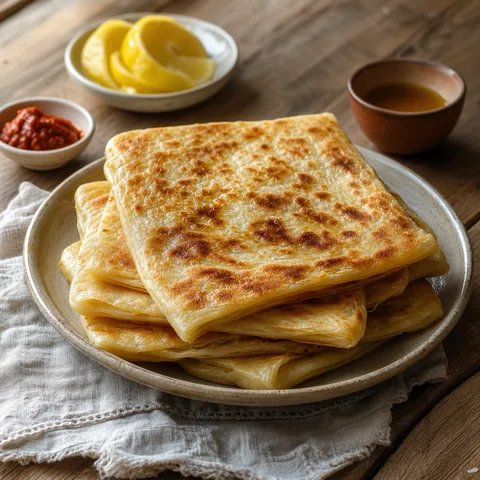 North African Lens Verified Images are for illustrative purposes only, may be inaccurate, and do not guarantee the presence or absence of specific ingredients.
 Msemmen
Layered and folded semolina flatbread cooked on a griddle until the outside crisps and the inside stays wonderfully chewy — perfect with honey or harissa.
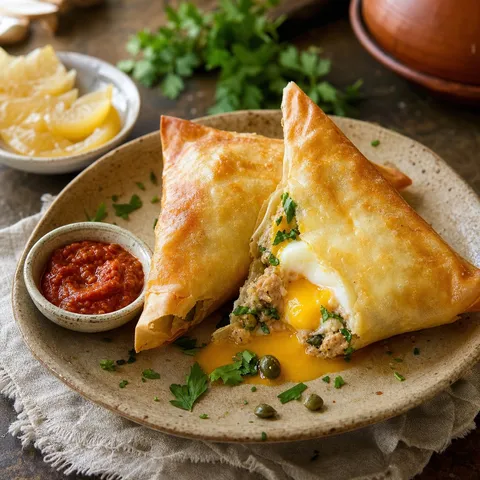 North African Lens Verified Images are for illustrative purposes only, may be inaccurate, and do not guarantee the presence or absence of specific ingredients.
 Brik
Crispy paper-thin pastry folded around a whole egg, tuna, and parsley then flash-fried until golden — Tunisia's beloved street snack, eaten fast before the yolk escapes.
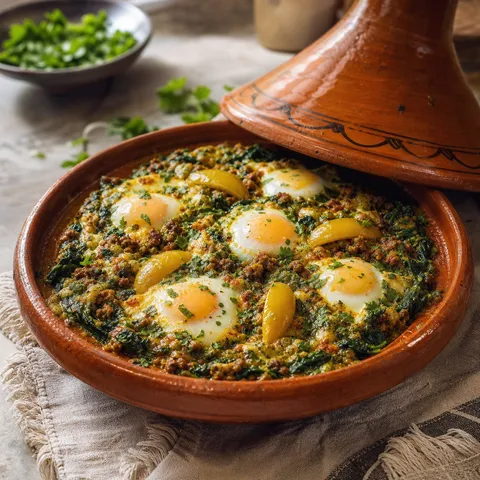 North African Lens Verified Images are for illustrative purposes only, may be inaccurate, and do not guarantee the presence or absence of specific ingredients.
 Tajine El Bey
Tunisia's grand layered bake of spiced lamb, eggs, and cheese baked in a deep crust — a celebration dish with silky, complex layers in every slice.