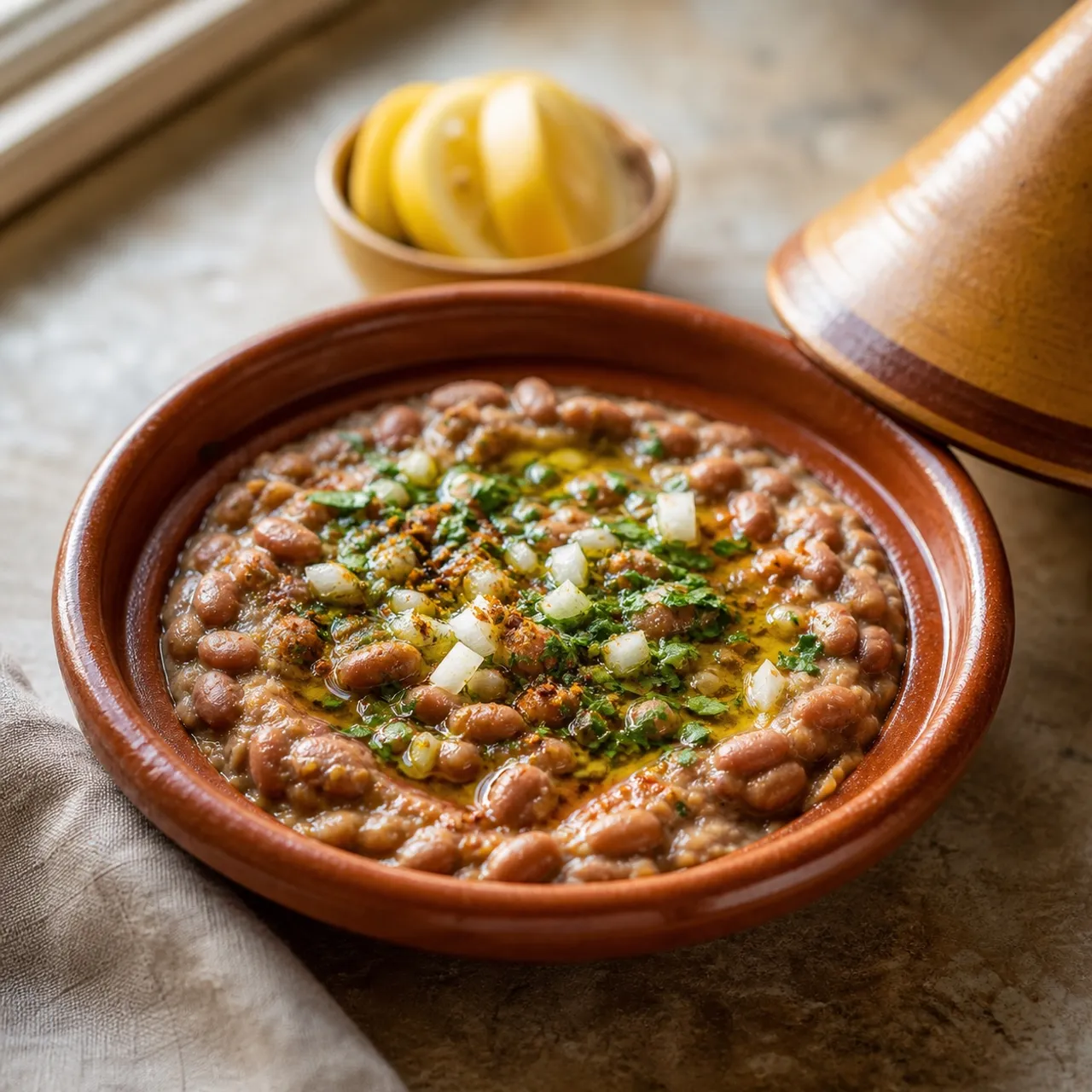
 North African Images are for illustrative purposes only, may be inaccurate, and do not guarantee the presence or absence of specific ingredients.
 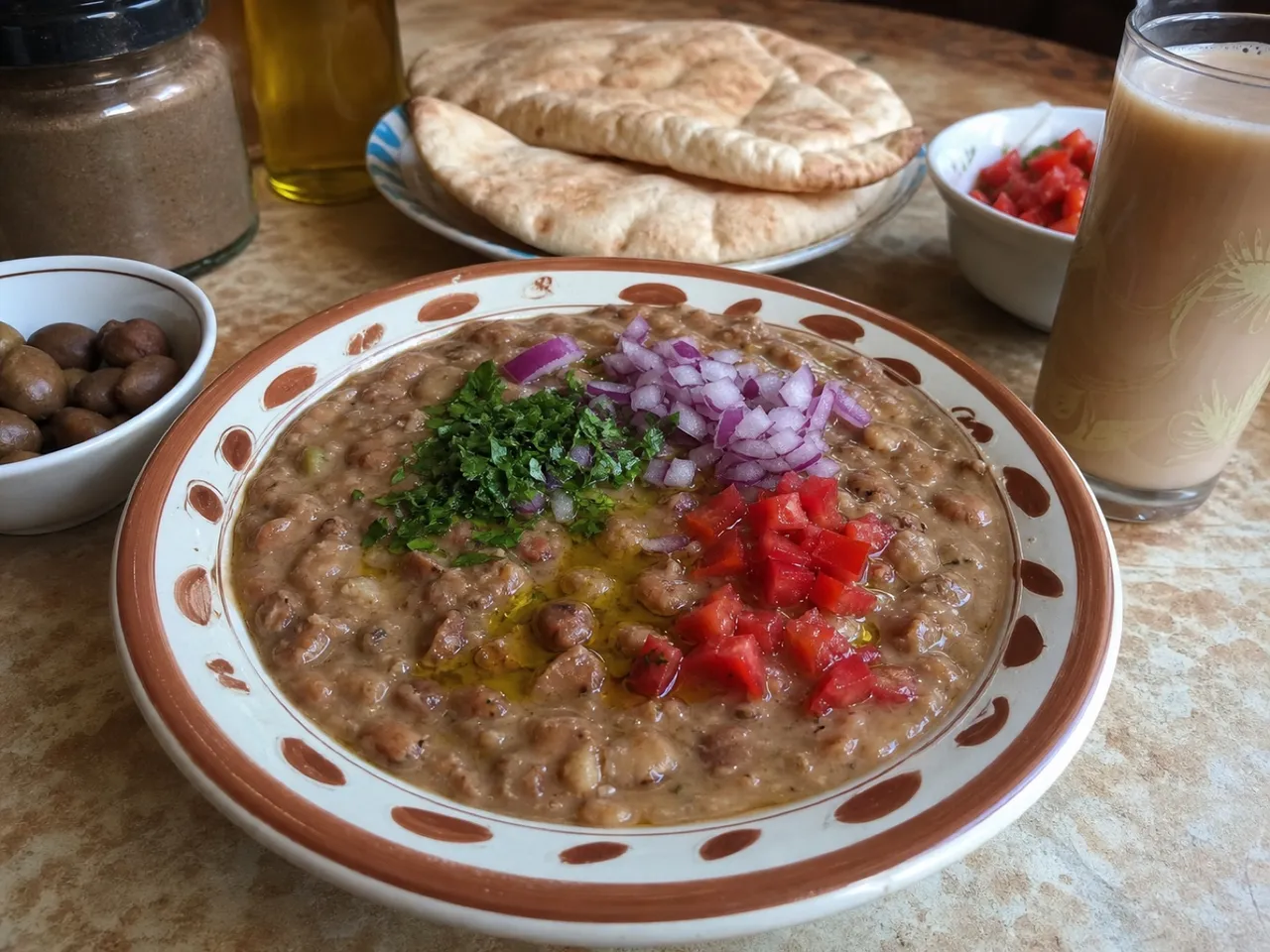 Serving Images are for illustrative purposes only, may be inaccurate, and do not guarantee the presence or absence of specific ingredients.
 Ful Medames
Egypt's ancient breakfast of fava beans simmered until creamy and dressed with lemon, garlic, and olive oil — simple, sustaining, and beloved for millennia.
Contains common allergens
In the app, Listahan checks these against your household automatically.
Good to know
- One-pot
Matched from this dish's own ingredients and timing. Browse more: one-pot dinners
Instructions
7 steps- 1
Pour the fava beans with their liquid into a saucepan and add half the minced garlic and the cumin.
- 2
Simmer gently over low heat for 20 to 25 minutes, mashing some of the beans against the side of the pot with a spoon to thicken the liquid while leaving others whole.
- 3
Stir in the remaining raw garlic, olive oil, and most of the lemon juice, then season with salt and simmer five more minutes.
- 4
Adjust the consistency with a splash of water if the beans seem too thick, they should be creamy but not soupy.
- 5
Spoon into a shallow serving dish and drizzle generously with more olive oil and the rest of the lemon juice.
- 6
Scatter the diced tomato and chopped onion over the top and nestle the halved hard-boiled eggs into the beans.
- 7
Finish with chopped parsley and serve hot with warm pita bread for scooping.
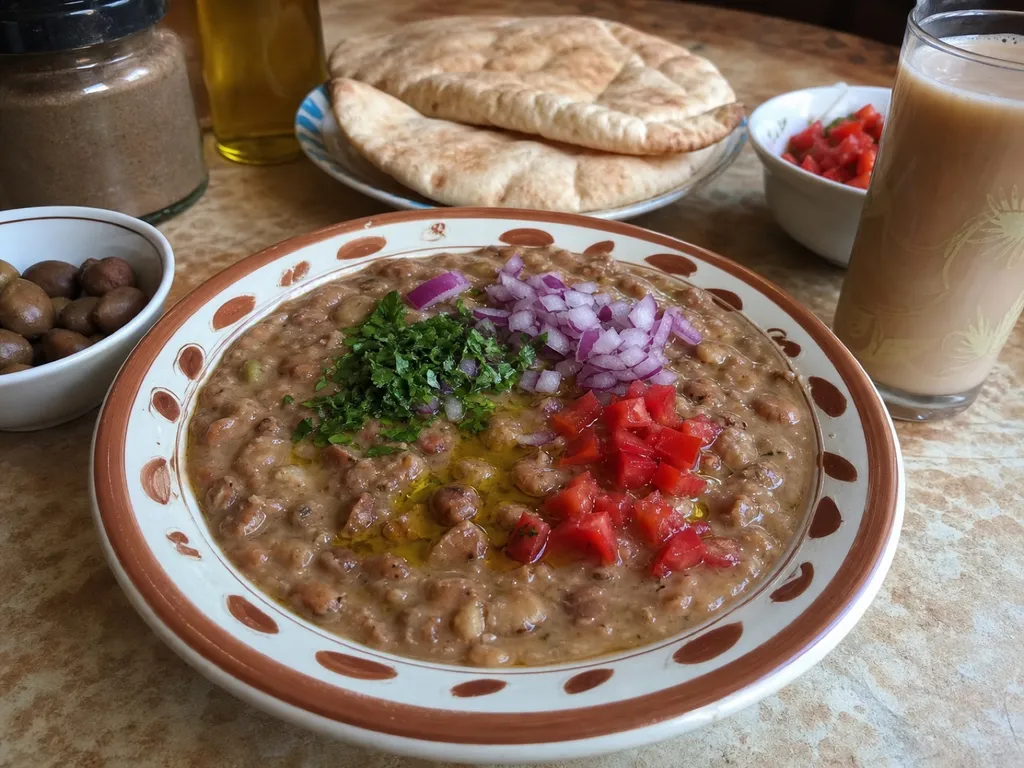 Images are for illustrative purposes only, may be inaccurate, and do not guarantee the presence or absence of specific ingredients.
 Listahan Family Score™
69/100
Works for many families
Score reflects how well this recipe fits a typical busy household. In the app, your Family Score is personalized to your household's allergens, kids, and pantry.
Nutrition
per serving5
Calories
0 g
Protein
1 g
Carbs
0 g
Fat
Estimated per serving. Actual values depend on the brands and portions you use.
Listahan cooking guide
Chef notes & practical guide
Technique notes, ingredient swaps, serve-alongside ideas, storage guidance, and equipment for this recipe.
Cultural context
Ful medames is one of the world's oldest continuously prepared dishes — archaeobotanists have found fava beans at ancient Egyptian sites dating back more than 8,000 years, and the combination of cooked favas with olive oil and lemon is documented in medieval Arabic cookbooks. In Egypt, it is the quintessential breakfast, sold from brass pots called qidras by street vendors who cook the beans overnight and serve them at dawn. The dish spread across the Arab world and East Africa during centuries of trade and migration, and today it appears on breakfast tables from Cairo to Addis Ababa with regional variations in spice and topping.
Listahan note
This version cooks dried fava beans low and slow until they are tender enough to mash partially with a fork — the combination of whole and mashed beans gives ful its characteristic thick, protein-rich consistency that makes it genuinely filling.
Technique cues
- Fava beans must be soaked overnight and the skins removed before cooking — unskinned favas remain tough regardless of cooking time, and the skins create a bitter, papery texture in the finished dish.
- The lemon is not a garnish but a structural acid that brightens the earthy, dense fava flavor and makes the dish taste alive rather than heavy; add it at the end off the heat so the volatile aromatics survive.
- Traditional ful is finished with a generous pour of raw olive oil directly into the bowl — not cooked into the beans — which provides a fruity, grassy counterpoint to the lemon and cumin and is the finishing element that makes ful taste complete.
Kitchen flow
- Parallel prep
- While beans cook, prepare all the toppings — chopped parsley, sliced hard-boiled eggs, diced tomato, onion — so assembly is immediate when the beans are ready.
- Make-ahead
- Cooked ful keeps in the refrigerator up to 5 days and is typically better the next day when the olive oil and spices have had time to integrate; add lemon and fresh olive oil when reheating.
- Leftover move
- Leftover ful makes an excellent flatbread sandwich filling with sliced cucumbers, tomatoes, and tahini — the Egyptian falafel shop equivalent of a bean burrito.
- Cleanup rhythm
- A single pot for the beans is the main item; soak it immediately after serving so the starch does not bond to the sides.
Ingredient brief
Role, handling, and swap guidance for each key ingredient.
Fava beans
primary protein and body
Purpose: Dried fava beans, soaked and cooked until very tender, are the dish in its entirety — their earthy, buttery flavor and dense, creamy texture are irreplaceable and cannot be replicated with other legumes.
Handling: Soak overnight in cold water, drain, and remove the outer skin by pinching each bean between your fingers before cooking for a smoother, less bitter result.
Adaptation: Canned fava beans (ful medames from Egyptian brands) are an excellent time-saving substitute and produce nearly identical flavor; drain and rinse, then warm gently with olive oil and spices.
Lemon
brightening acid
Purpose: Fresh lemon juice is the essential counterbalance to the dense, earthy beans — without it the dish tastes flat and heavy; it also enhances the absorption of iron from the favas.
Handling: Juice just before serving and add off the heat to preserve the bright, fresh flavor.
Adaptation: White wine vinegar (half the quantity) works in an emergency; bottled lemon juice is acceptable but noticeably less fresh in flavor.
Cumin
Primary spice
Purpose: Ground cumin is the defining spice of North African ful — its earthy, slightly smoky warmth is the seasoning backbone that elevates the beans from plain to characteristic.
Handling: Add cumin both during cooking and as a finishing sprinkle on top; the double application creates depth (cooked) and brightness (raw) in the final bowl.
Adaptation: Toasted whole cumin seeds ground fresh are noticeably more aromatic; caraway seeds add a similar warmth with a slightly anise-forward note used in some Tunisian versions.
Technique notes
- Mash roughly one-third to half the beans against the side of the pot with a wooden spoon or the back of a ladle — this releases starch that thickens the remaining liquid into a sauce that coats every bean.
- The final consistency should be thick and spoonable, not watery or soup-like; if there is too much liquid, increase heat and simmer uncovered for 10-15 minutes, stirring to prevent the bottom from scorching.
- Serve ful at the center of the table with toppings in separate small dishes so each person customizes their bowl — cumin, hot sauce, hard-boiled eggs, fresh herbs, olive oil, and warm pita are the traditional accompaniments.
Ingredient swaps
- Vegan direction
- Ful medames is naturally vegan; skip the hard-boiled egg topping and add extra olive oil and herbs.
- Gluten-free direction
- Serve with gluten-free flatbread or on its own as a bowl. The dish itself is fava beans, lemon, olive oil, garlic, cumin and parsley.
- Canned shortcut
- Use two 15-oz cans of ful medames (Egyptian-style fava bean paste available at Middle Eastern grocery stores); warm with olive oil, garlic, and cumin for a 10-minute version.
Serve alongside
- warm pita or Egyptian baladi bread for scooping
- hard-boiled eggs halved on top
- chopped fresh tomato and cucumber salad
- tahini drizzle and hot sauce on the side
- strong Egyptian black tea with sugar
- fresh-squeezed orange juice
- mint lemonade
Serving suggestions only — check pairings for your household's allergens.
Storage & reheating
- Refrigerate cooked ful in a sealed container up to 5 days; add a splash of water when reheating as the beans absorb liquid overnight.
- Reheat gently over low heat, stirring frequently; finish with fresh lemon juice and a drizzle of raw olive oil after reheating.
- Freeze well-drained, cooked beans without the lemon and olive oil dressing up to 3 months; add fresh lemon and oil after thawing and reheating.
Equipment
- large heavy-bottomed pot or Dutch oven for slow cooking
- wooden spoon or potato masher for partial mashing
- colander for draining soaked beans
- small serving bowls for toppings
Make this household-aware
Listahan Pro checks this recipe against your household's allergens, finds pantry-aware swaps, builds the shopping list, and helps you plan the week around it.
Plan it in Listahan
Add Ful Medames to your week, check it against your household's allergens, and build the shopping list automatically.
More North African recipes
 North African Lens Verified Images are for illustrative purposes only, may be inaccurate, and do not guarantee the presence or absence of specific ingredients.
 Msemmen
Layered and folded semolina flatbread cooked on a griddle until the outside crisps and the inside stays wonderfully chewy — perfect with honey or harissa.
 North African Lens Verified Images are for illustrative purposes only, may be inaccurate, and do not guarantee the presence or absence of specific ingredients.
 Brik
Crispy paper-thin pastry folded around a whole egg, tuna, and parsley then flash-fried until golden — Tunisia's beloved street snack, eaten fast before the yolk escapes.
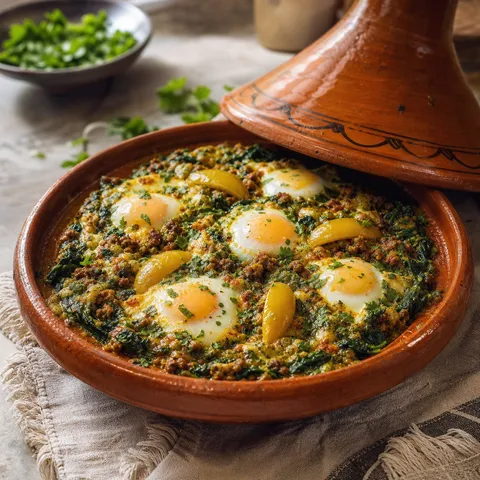 North African Lens Verified Images are for illustrative purposes only, may be inaccurate, and do not guarantee the presence or absence of specific ingredients.
 Tajine El Bey
Tunisia's grand layered bake of spiced lamb, eggs, and cheese baked in a deep crust — a celebration dish with silky, complex layers in every slice.