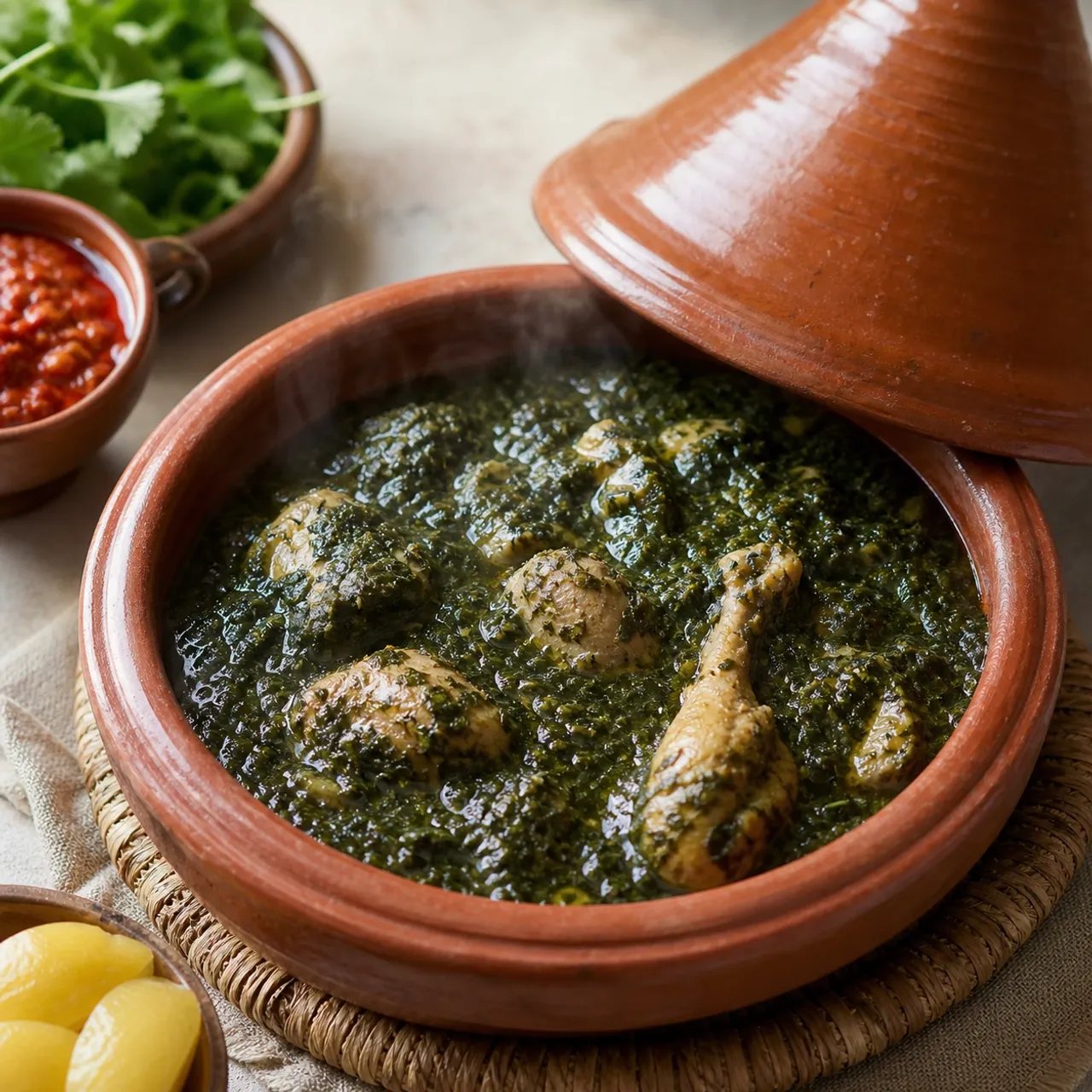
 North African Images are for illustrative purposes only, may be inaccurate, and do not guarantee the presence or absence of specific ingredients.
 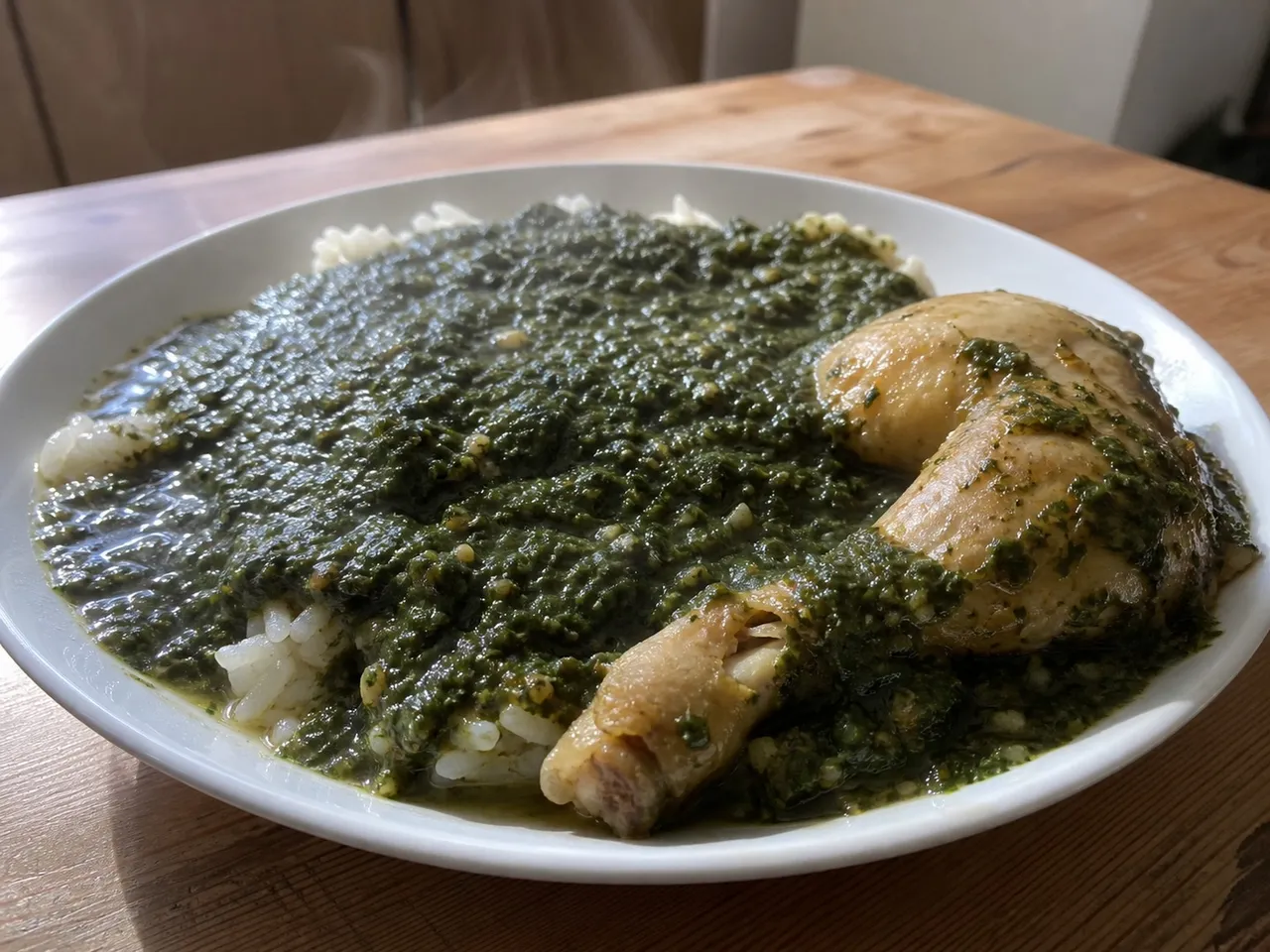 Serving Images are for illustrative purposes only, may be inaccurate, and do not guarantee the presence or absence of specific ingredients.
 Molokhia
Egypt's beloved green soup of finely chopped jute leaves cooked with garlic and coriander, poured over rice with chicken or rabbit for a deeply comforting bowl.
Contains common allergens
In the app, Listahan checks these against your household automatically.
Instructions
7 steps- 1
Bring the broth to a boil in a large pot.
- 2
Add the finely chopped molokhia leaves to the boiling broth and simmer gently, stirring occasionally, until the leaves are tender, about 10 to 15 minutes, taking care not to let it boil too hard or the leaves can become stringy.
- 3
Meanwhile, make the taqliya: melt the ghee in a small skillet, add the minced garlic and ground coriander, and fry over low heat, stirring constantly, until the garlic turns golden and very fragrant, being careful not to burn it.
- 4
Scrape the entire garlic-coriander taqliya into the simmering molokhia, this final step is what gives the soup its signature aroma.
- 5
Simmer a few more minutes to let the flavors meld, then season with salt and pepper.
- 6
Ladle the bright green soup over bowls of cooked white rice.
- 7
Top with pieces of cooked chicken or rabbit and serve immediately while hot, with lemon wedges and pickled vegetables alongside.
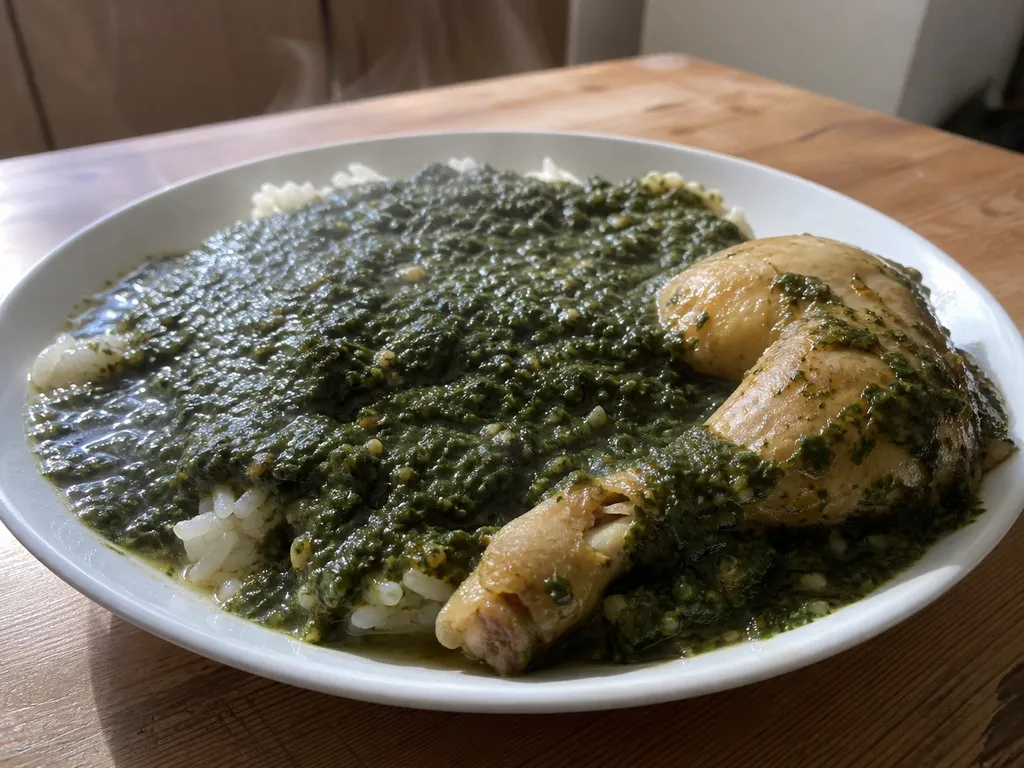 Images are for illustrative purposes only, may be inaccurate, and do not guarantee the presence or absence of specific ingredients.
 Listahan Family Score™
72/100
Good fit for most families
Score reflects how well this recipe fits a typical busy household. In the app, your Family Score is personalized to your household's allergens, kids, and pantry.
Nutrition
per serving365
Calories
43 g
Protein
0 g
Carbs
22 g
Fat
Estimated per serving. Actual values depend on the brands and portions you use.
Listahan cooking guide
Chef notes & practical guide
Technique notes, ingredient swaps, serve-alongside ideas, storage guidance, and equipment for this recipe.
Cultural context
Molokhia is one of Egypt's oldest dishes, with records tracing it to the era of the Pharaohs; the plant itself (Corchorus olitorius, or jute mallow) has been cultivated along the Nile for millennia. The name likely derives from the Arabic word for 'royal' or 'belonging to kings,' though legend holds it was banned by a Fatimid caliph who disliked it, making it briefly forbidden food. Today it is deeply embedded in Egyptian home cooking, typically made with chicken or rabbit broth and served over rice or with flatbread.
Listahan note
This version uses chicken to build a deeply flavored base broth first, then cooks the molokhia leaves briefly in that broth to preserve their vivid green color and silky texture.
Technique cues
- The signature texture of molokhia comes from its mucilaginous quality — similar to okra — which thickens the broth naturally as the leaves cook; overcooking destroys both the color and this desirable viscosity, so the leaves should simmer no more than 5 to 8 minutes.
- The ta'leya (the sizzled garlic and coriander finish poured over the pot just before serving) is not optional garnish — it is the flavor anchor of the dish, and the sizzle of the oil hitting the stew carries volatile aromatics into the sauce that would not develop through simmering alone.
- Fresh molokhia leaves produce the brightest result, but frozen chopped molokhia is the standard in most Egyptian households outside of summer; thaw completely and squeeze out excess moisture before adding to the broth to prevent the stew from becoming watery.
Kitchen flow
- Parallel prep
- While the chicken simmers for its broth, mince the garlic and measure the coriander for the ta'leya, and thaw frozen molokhia if using.
- Make-ahead
- The chicken broth can be made a day ahead and refrigerated; skim the solidified fat before reheating, then cook the molokhia leaves in the hot broth just before serving.
- Leftover move
- Leftover molokhia thickens further overnight and makes an excellent sauce for fried or poached eggs the next morning, or a quick dip for flatbread warmed in a dry pan.
- Cleanup rhythm
- Deglaze the ta'leya pan immediately with a splash of broth after pouring it over the stew; the garlic residue releases easily when hot and saves scrubbing later.
Ingredient brief
Role, handling, and swap guidance for each key ingredient.
Molokhia
primary vegetable and thickener
Purpose: The jute mallow leaves provide the stew's distinctive silky, slightly viscous body and its earthy, faintly grassy flavor that no other green replicates.
Handling: If using fresh leaves, strip them from the tough stems and chop finely; if frozen, thaw overnight in the fridge and press dry in a clean towel.
Adaptation: There is no true substitute for molokhia's texture; in a pinch, finely chopped spinach cooked with a small amount of okra can approximate the dish but will taste very different.
chicken
broth base and protein
Purpose: Bone-in chicken pieces simmered with aromatics produce the rich, golden broth that forms the liquid base of the stew — the molokhia is cooked directly in this broth rather than in water.
Handling: Use bone-in thighs and drumsticks; simmer with onion, bay leaf, and a cinnamon stick for 40 to 45 minutes until the meat is fully tender, then remove the chicken and strain the broth.
Adaptation: Rabbit is the traditional alternative in Egypt and the more authentically rustic choice; lamb or beef cubes work but require a longer simmer to achieve the same depth.
garlic
ta'leya aromatic
Purpose: A generous amount of garlic, fried until just golden in butter or oil with ground coriander, forms the ta'leya finish that defines molokhia's final flavor profile.
Handling: Mince or pound the garlic finely so it browns quickly and evenly in the fat; it should turn light golden, not dark brown, before hitting the stew.
Adaptation: Do not reduce the garlic quantity — its volume is intentional; if someone is garlic-sensitive, you can halve it but the dish will taste noticeably muted.
ground coriander
ta'leya spice
Purpose: Coriander fried with the garlic in the ta'leya creates a toasted, citrusy-earthy note that cuts through the richness of the broth and complements the grassy molokhia.
Handling: Add ground coriander to the pan after the garlic has colored, toast for 15 to 20 seconds, then immediately pour over the stew before it burns.
Adaptation: A small amount of cumin can be used alongside coriander, but coriander alone is the traditional choice for molokhia.
Technique notes
- Pour the ta'leya into the stew in a slow stream while stirring — this distributes the garlic and coriander evenly throughout rather than leaving a concentrated pocket on the surface.
- A small splash of white or cider vinegar added to the finished stew just before serving brightens the entire dish and is a common Egyptian home-cook trick, though purists omit it.
- Serve the chicken pieces separately on a platter rather than stirring them back into the stew; guests can pull meat as they like, and the stew stays a smooth, even consistency in the bowl.
Ingredient swaps
- Gluten-free direction
- Molokhia is naturally gluten-free; serve over plain rice rather than bread and verify that any store-bought chicken broth used is gluten-free certified.
- Dairy-free option
- Use a neutral vegetable oil or olive oil for the ta'leya instead of butter — the dish is traditionally made with either, so this is a seamless swap.
- Lower-sodium direction
- Build the chicken broth from scratch without added salt and season only at the end; most of the sodium in molokhia comes from pre-salted broths.
Serve alongside
- steamed Egyptian rice with vermicelli noodles
- warm baladi flatbread for scooping
- pickled turnips and cucumbers
- simple tomato and onion salad with cumin dressing
- fresh squeezed lemon water
- hot mint tea served after the meal
- cold tamarind juice
Serving suggestions only — check pairings for your household's allergens.
Storage & reheating
- Refrigerate the molokhia stew and chicken separately in airtight containers for up to 3 days; the stew will thicken significantly when cold.
- Reheat the stew gently on the stovetop over medium-low heat, adding a splash of chicken broth or water to loosen it to the right consistency.
- Molokhia freezes well for up to 2 months; freeze before adding the ta'leya and prepare a fresh ta'leya when reheating for the best flavor.
Equipment
- large heavy pot or Dutch oven for simmering the chicken
- fine mesh strainer for clarifying the broth
- small skillet for making the ta'leya
- sharp chef's knife or food processor for chopping fresh molokhia leaves
Make this household-aware
Listahan Pro checks this recipe against your household's allergens, finds pantry-aware swaps, builds the shopping list, and helps you plan the week around it.
Plan it in Listahan
Add Molokhia to your week, check it against your household's allergens, and build the shopping list automatically.
More North African recipes
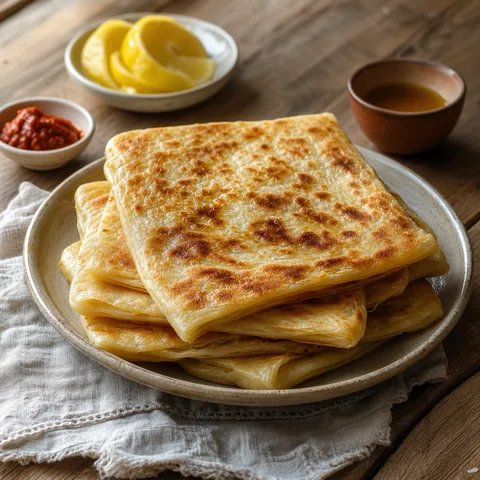 North African Lens Verified Images are for illustrative purposes only, may be inaccurate, and do not guarantee the presence or absence of specific ingredients.
 Msemmen
Layered and folded semolina flatbread cooked on a griddle until the outside crisps and the inside stays wonderfully chewy — perfect with honey or harissa.
 North African Lens Verified Images are for illustrative purposes only, may be inaccurate, and do not guarantee the presence or absence of specific ingredients.
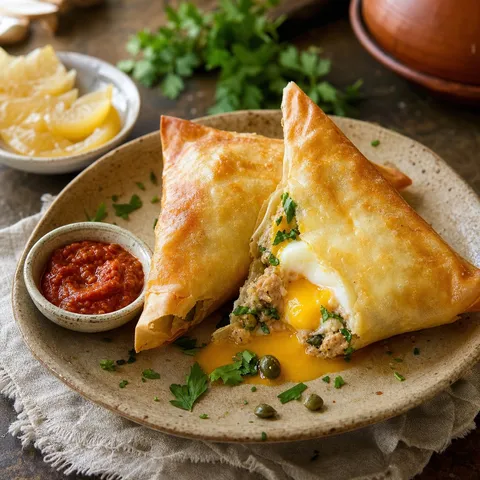
 Brik
Crispy paper-thin pastry folded around a whole egg, tuna, and parsley then flash-fried until golden — Tunisia's beloved street snack, eaten fast before the yolk escapes.
 North African Lens Verified Images are for illustrative purposes only, may be inaccurate, and do not guarantee the presence or absence of specific ingredients.
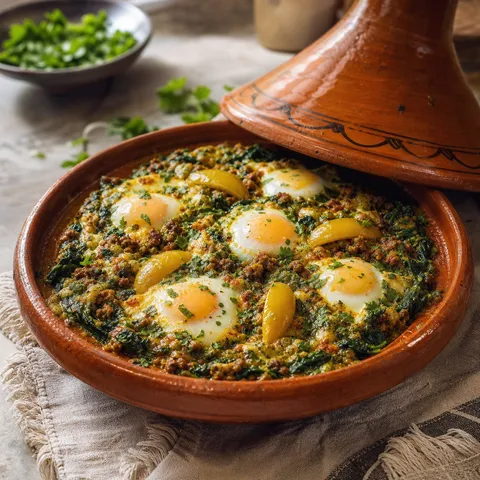
 Tajine El Bey
Tunisia's grand layered bake of spiced lamb, eggs, and cheese baked in a deep crust — a celebration dish with silky, complex layers in every slice.