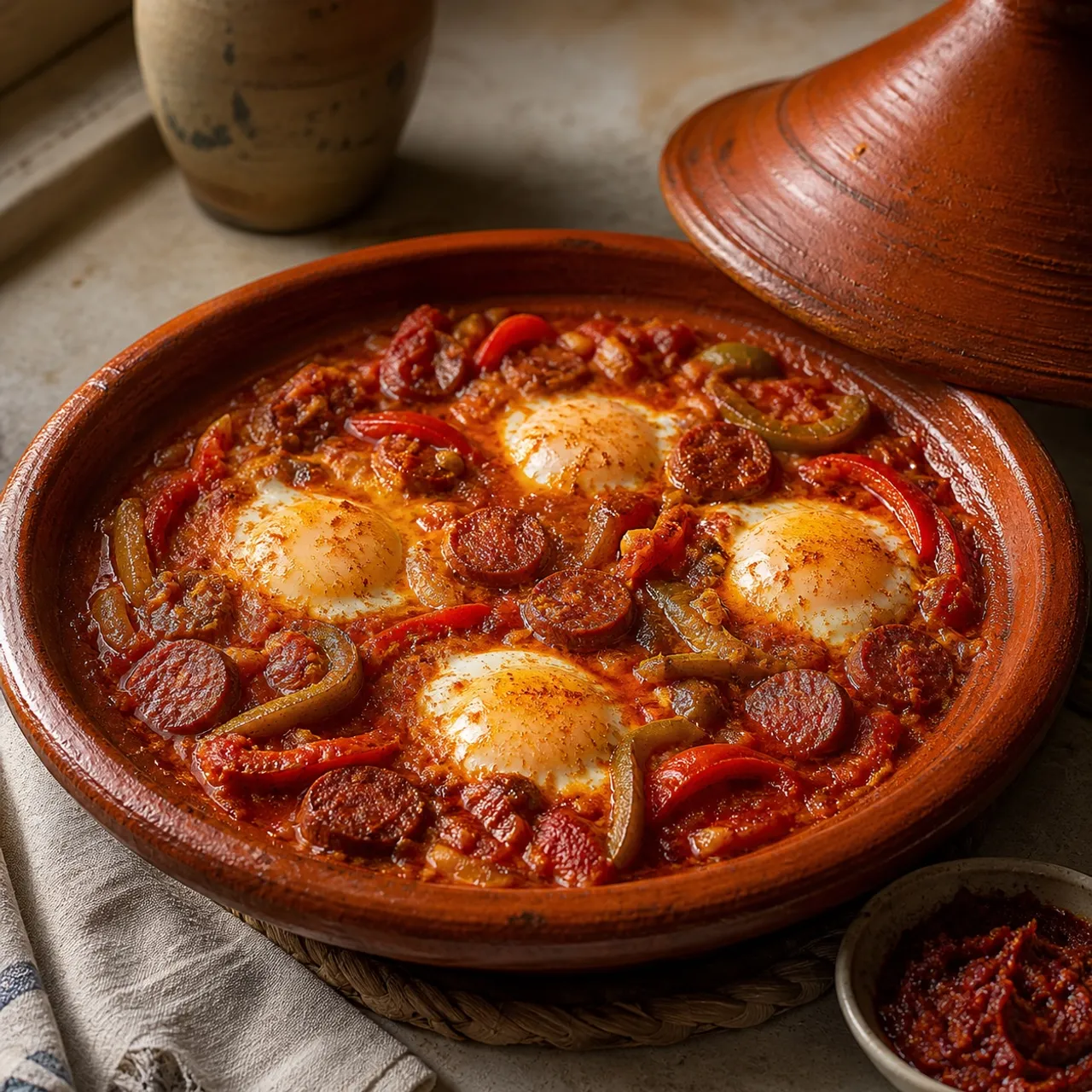
 North African Images are for illustrative purposes only, may be inaccurate, and do not guarantee the presence or absence of specific ingredients.
 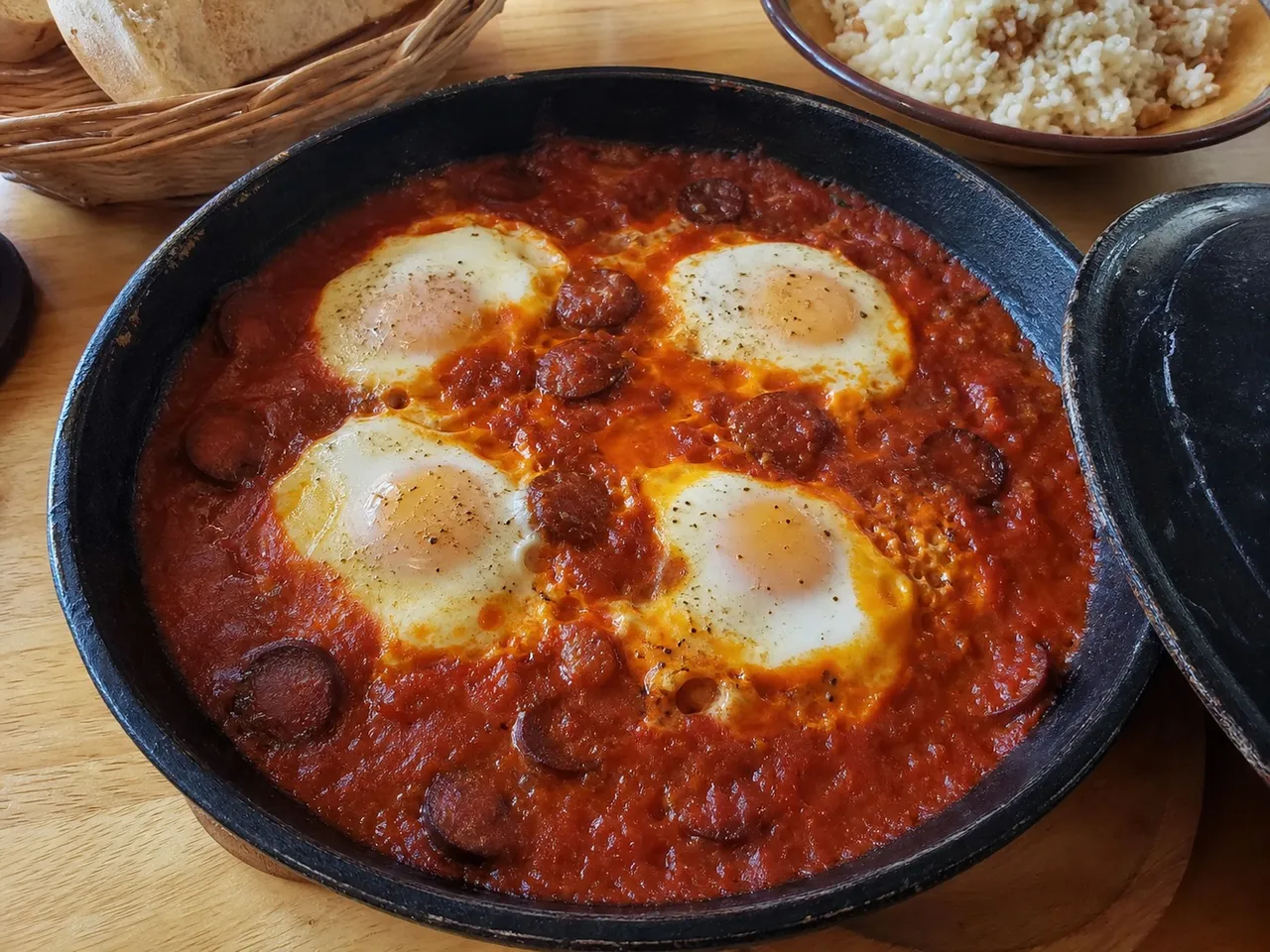 Serving Images are for illustrative purposes only, may be inaccurate, and do not guarantee the presence or absence of specific ingredients.
 Ojja
Eggs scrambled into a sizzling sauce of merguez, peppers, and tomatoes with a kick of harissa — Tunisia's fiery, satisfying pan dish for any time of day.
Contains common allergens
In the app, Listahan checks these against your household automatically.
Good to know
- Ready in under 30 minutes
Matched from this dish's own ingredients and timing. Browse more: 30-minute meals
Instructions
5 steps- 1
Cook Merguez: In a skillet over medium heat, fry the sliced merguez sausages until browned and their spiced oils are released.
- 2
Add Vegetables: Add the sliced bell pepper and minced garlic. Sauté for 3-4 minutes until the pepper softens.
- 3
Build Sauce: Stir in the diced tomatoes, harissa, and caraway powder. Reduce heat and simmer for 10 minutes until it forms a thick sauce.
- 4
Add Eggs: Create small pockets in the sauce and crack an egg into each one. Season eggs lightly with salt and pepper.
- 5
Simmer & Serve: Cover the skillet and let simmer for 5-6 minutes until the egg whites are cooked. Serve immediately right from the pan with crusty baguette.
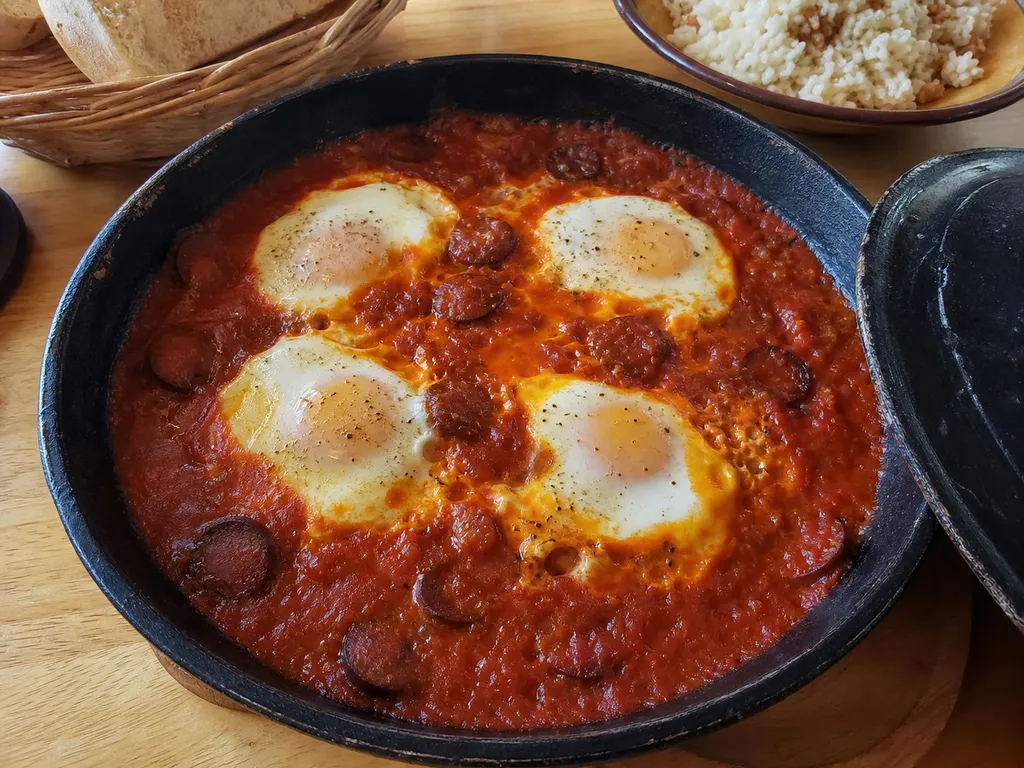 Images are for illustrative purposes only, may be inaccurate, and do not guarantee the presence or absence of specific ingredients.
 Listahan Family Score™
70/100
Good fit for most families
Score reflects how well this recipe fits a typical busy household. In the app, your Family Score is personalized to your household's allergens, kids, and pantry.
Nutrition
per serving320
Calories
20 g
Protein
7 g
Carbs
24 g
Fat
Estimated per serving. Actual values depend on the brands and portions you use.
Listahan cooking guide
Chef notes & practical guide
Technique notes, ingredient swaps, serve-alongside ideas, storage guidance, and equipment for this recipe.
Cultural context
Ojja is a Tunisian spiced tomato-and-egg skillet dish closely related to shakshuka but distinguished by the mandatory addition of merguez sausage and the seasoning of caraway, which is a cornerstone of Tunisian rather than Moroccan or Algerian cooking. It is a street-food staple in Tunis, cooked in small blackened skillets over gas burners and eaten directly from the pan with crusty bread. The word Ojja likely derives from an Arabic root meaning scrambled or stirred, though in practice the eggs are poached rather than broken up.
Listahan note
This version builds the sauce base from the merguez fat rendered out first, so the sausage flavor permeates the tomato sauce from the bottom up rather than sitting on top as an afterthought.
Technique cues
- Caraway is the spice that distinguishes Ojja from every other egg-in-tomato-sauce dish; use it whole or coarsely ground because the pre-ground powder sold as caraway can taste dusty and medicinal rather than the anise-adjacent warmth of freshly cracked seeds.
- Rendering the merguez slices cut-side-down in a dry pan before adding the vegetables extracts the spiced fat from the sausage into the pan, which then becomes the cooking fat for the tomatoes and peppers, layering flavor throughout.
- Cover the skillet once the eggs are added and cook on low heat; a lid traps steam that cooks the egg whites from above while leaving the yolks soft and runny, the ideal texture for dipping bread.
Kitchen flow
- Parallel prep
- Dice the tomatoes and slice the pepper while the merguez renders in the pan; everything goes in sequentially with very little wait time between steps.
- Make-ahead
- The tomato-pepper-merguez sauce base can be made up to 2 days ahead and refrigerated; reheat to a simmer and add fresh eggs just before eating.
- Leftover move
- Scramble leftover Ojja with the yolks broken for a quick reheated hash the next morning; serve over toast with a little extra harissa.
- Cleanup rhythm
- The dish is cooked and ideally eaten from one skillet; deglaze with a little water immediately after serving and the spiced tomato sauce lifts easily.
Ingredient brief
Role, handling, and swap guidance for each key ingredient.
4 merguez sausages (sliced)
protein and spiced fat source
Purpose: Merguez is a North African lamb-and-beef sausage heavily spiced with harissa, cumin, and coriander; it is not interchangeable with standard sausage because its seasoning level is what drives the dish.
Handling: Slice into half-inch coins and render fat-side-down in a dry skillet for 2-3 minutes before pushing to the edges to add vegetables.
Adaptation: Spanish chorizo slices (not Mexican) or a spiced lamb sausage approximate the flavor; for a halal swap, a beef sausage seasoned with harissa and cumin works.
4 eggs
protein and texture contrast
Purpose: The eggs are the dish's centerpiece; poaching them directly in the sauce rather than adding them scrambled gives distinct white-and-yolk pockets that contrast with the thick tomato base.
Handling: Crack into small cups first so you can add all four to the pan simultaneously and evenly space them in the sauce.
Adaptation: For a richer texture, stir the eggs in scrambled style at the very end; the dish becomes creamier but loses the shakshuka-style visual.
1 tbsp harissa
heat and depth
Purpose: Harissa adds a smoky, complex heat that the fresh tomatoes and bell peppers cannot provide on their own; it also deepens the red color of the sauce.
Handling: Stir into the tomatoes after they have cooked down slightly rather than adding at the very start, to prevent the dried chili from scorching.
Adaptation: Sriracha mixed with a pinch of smoked paprika is a rough equivalent; rose harissa adds floral notes for a milder, more fragrant version.
1 tsp caraway powder
signature Tunisian spice
Purpose: Caraway is what makes Ojja specifically Tunisian; its anise-like, slightly bitter warmth is distinctly different from the cumin-dominant profile of Moroccan dishes.
Handling: Toast whole seeds briefly in the dry skillet before grinding for the fullest flavor, then add to the sauce with the harissa.
Adaptation: There is no close substitute that delivers the same flavor; skip it for a more generic spiced egg dish, or use fennel seed for a milder version of the anise note.
2 large tomatoes (diced)
sauce body
Purpose: Fresh tomatoes provide the liquid base that the eggs poach in; their acidity balances the fat from the merguez.
Handling: Dice finely so they break down quickly over medium heat into a rough sauce; very firm winter tomatoes can be helped along with a tablespoon of tomato paste.
Adaptation: One 14-oz can of diced tomatoes, drained slightly, works equally well in any season.
Technique notes
- Do not move the eggs after adding them to the sauce; let them poach undisturbed so the whites set fully while the yolks stay runny and the bottom of the whites do not tear.
- Taste the sauce before adding salt; merguez and harissa both contain significant salt, and the dish can easily over-season.
- Serve directly from the skillet at the table; the dish cools rapidly once plated and the eggs continue to cook if left in the hot pan off heat, so eating immediately is not optional.
Ingredient swaps
- Dairy-free option
- The dish — merguez, eggs, tomato, harissa, and caraway — has no dairy ingredient in it.
- Vegetarian direction
- Replace merguez with 1 can of drained white beans plus 1 teaspoon of smoked paprika and a pinch of cumin; the dish will lose the sausage fat richness but the spice profile holds.
- Lower-heat option
- Use only 1 teaspoon of harissa in the base and serve extra harissa on the side so children and heat-sensitive diners can eat the same pan.
Serve alongside
- warm crusty baguette or khobz bread for dipping
- simple shredded green salad with lemon vinaigrette
- small bowl of extra harissa for the table
- fresh orange juice
- strong black tea with mint
Serving suggestions only — check pairings for your household's allergens.
Storage & reheating
- Refrigerate the sauce base (without eggs) for up to 3 days; add fresh eggs when reheating.
- Fully cooked Ojja with eggs does not reheat well; the yolks set hard and the whites toughen.
- Do not freeze Ojja with eggs; the sauce base alone can be frozen for up to 1 month.
Equipment
- 10-12 inch cast-iron or heavy non-stick skillet with a lid
- small cups for cracking eggs
- wooden spoon or silicone spatula
- ladle for sauce
Make this household-aware
Listahan Pro checks this recipe against your household's allergens, finds pantry-aware swaps, builds the shopping list, and helps you plan the week around it.
Plan it in Listahan
Add Ojja to your week, check it against your household's allergens, and build the shopping list automatically.
More North African recipes
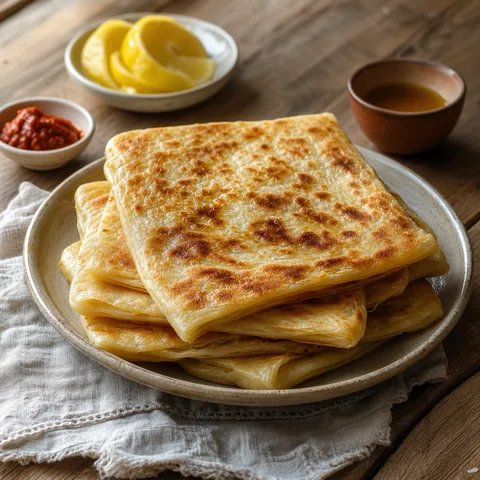 North African Lens Verified Images are for illustrative purposes only, may be inaccurate, and do not guarantee the presence or absence of specific ingredients.
 Msemmen
Layered and folded semolina flatbread cooked on a griddle until the outside crisps and the inside stays wonderfully chewy — perfect with honey or harissa.
 North African Lens Verified Images are for illustrative purposes only, may be inaccurate, and do not guarantee the presence or absence of specific ingredients.
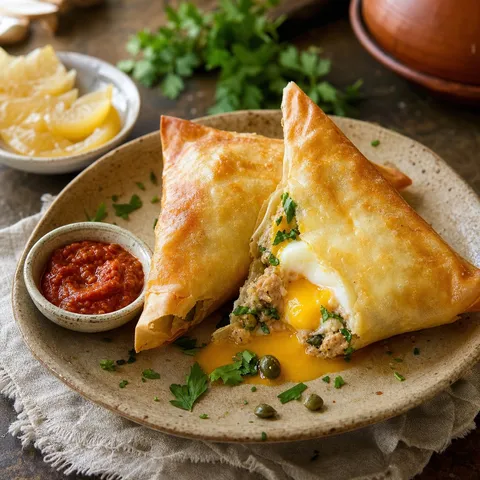
 Brik
Crispy paper-thin pastry folded around a whole egg, tuna, and parsley then flash-fried until golden — Tunisia's beloved street snack, eaten fast before the yolk escapes.
 North African Lens Verified Images are for illustrative purposes only, may be inaccurate, and do not guarantee the presence or absence of specific ingredients.
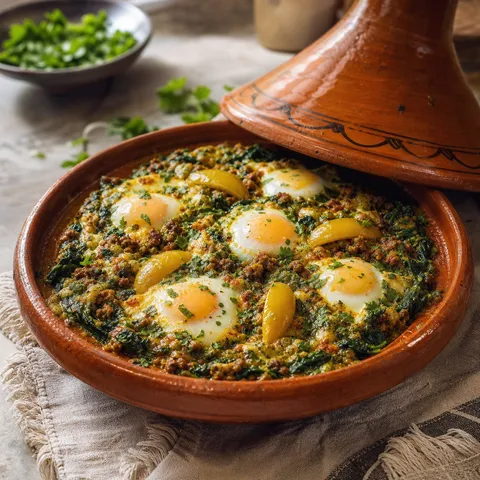
 Tajine El Bey
Tunisia's grand layered bake of spiced lamb, eggs, and cheese baked in a deep crust — a celebration dish with silky, complex layers in every slice.