 North African Images are for illustrative purposes only, may be inaccurate, and do not guarantee the presence or absence of specific ingredients.
  Serving Images are for illustrative purposes only, may be inaccurate, and do not guarantee the presence or absence of specific ingredients.
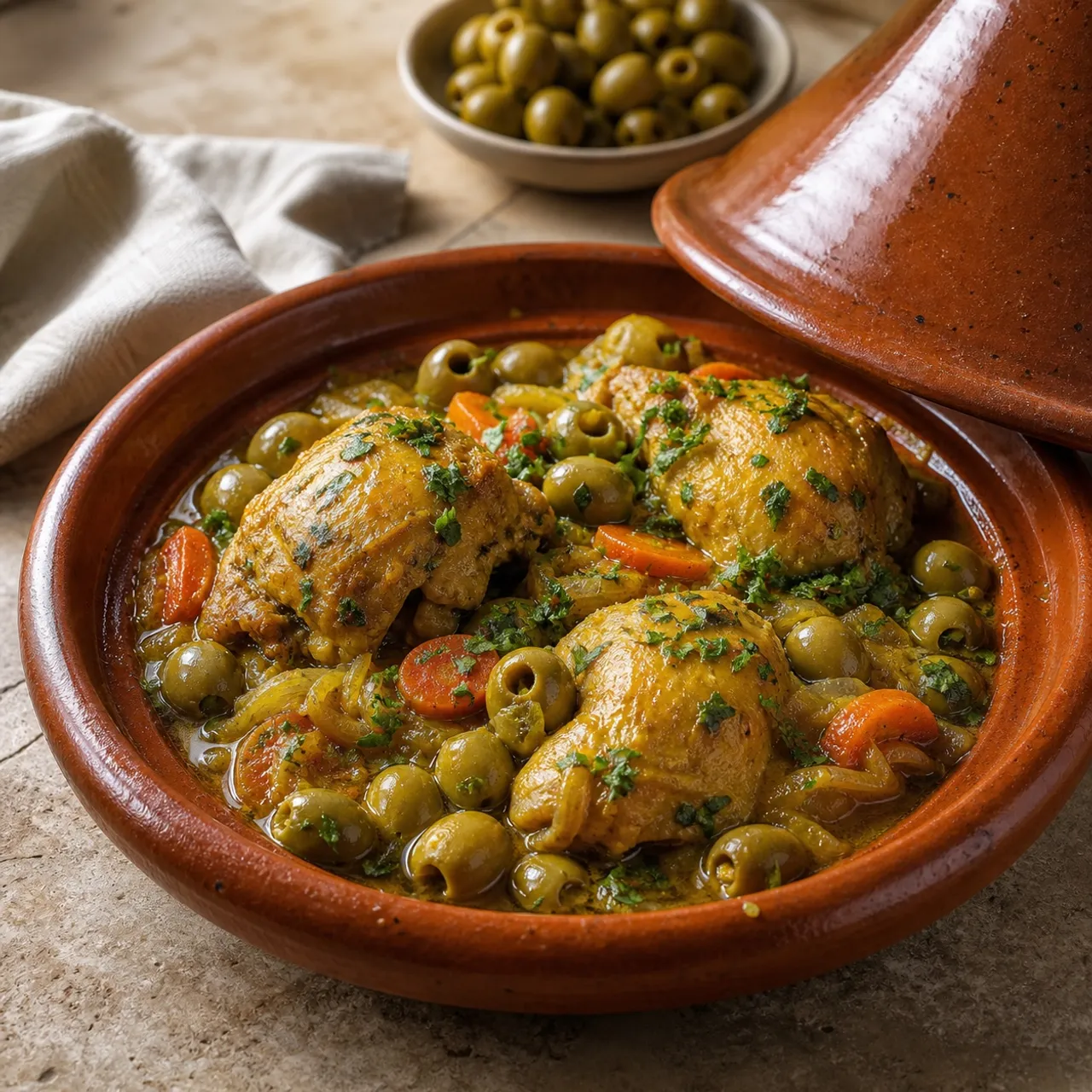
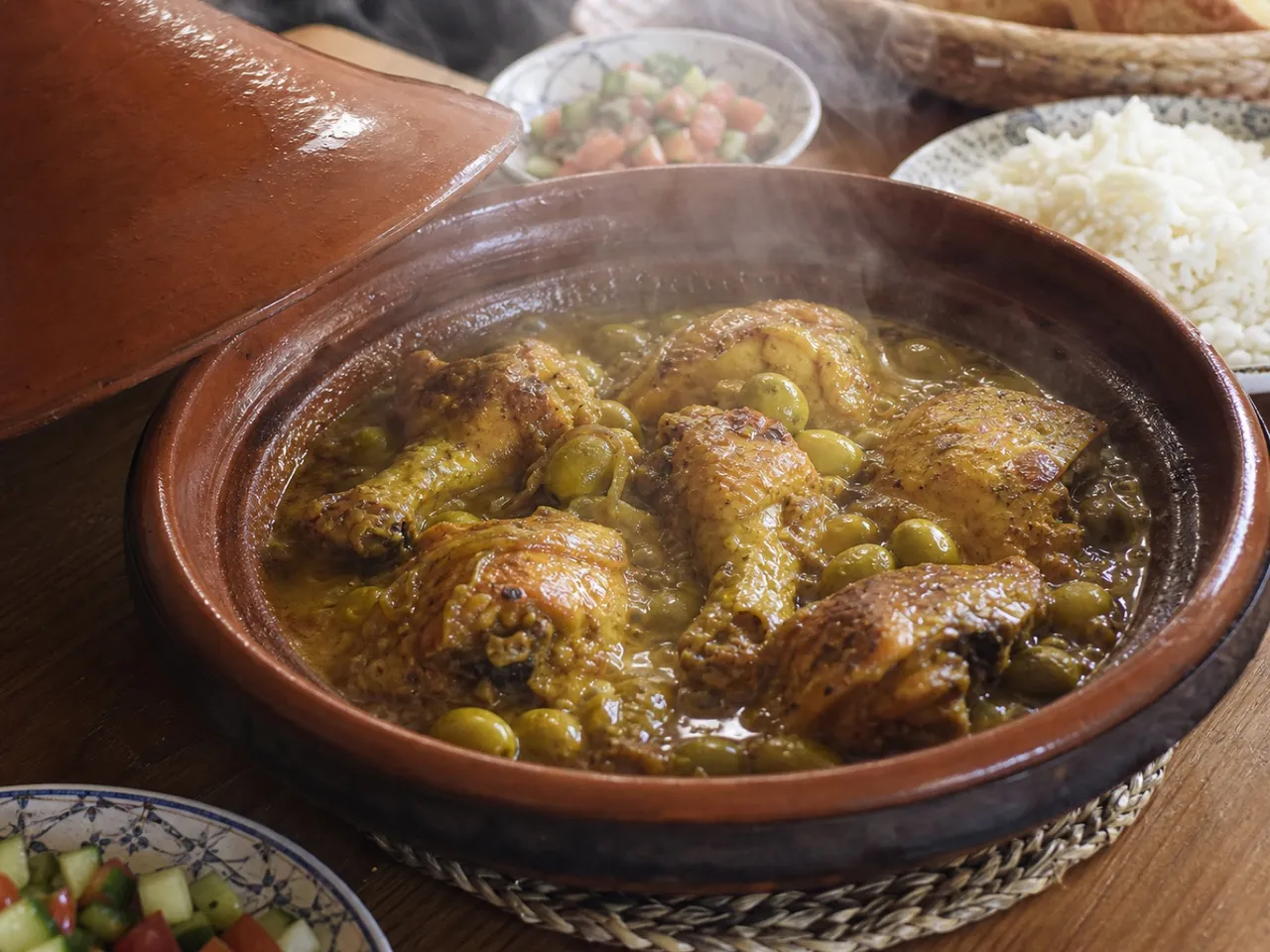
 Tajine Zitoune
Tender chicken braised with briny green olives, preserved lemon, and a whisper of saffron — a weeknight Moroccan tagine that tastes like a feast.
No common allergens detected
Based on this recipe's ingredient list. Always verify with your own brands and labels.
Instructions
5 steps- 1
Blanch Olives: Boil the olives in water for 10 minutes to remove excess salt and bitterness. Drain and set aside.
- 2
Brown Chicken: In a tagine or heavy pot, heat olive oil and brown the chicken pieces along with grated onion, ginger, turmeric, salt, and pepper.
- 3
Simmer: Add enough water to half-cover the chicken. Add the sliced carrots. Cover and simmer over medium-low heat for 35-40 minutes until chicken is mostly cooked.
- 4
Add Olives: Stir the blanched olives into the sauce. Simmer for another 15 minutes to marry the flavors and reduce the sauce.
- 5
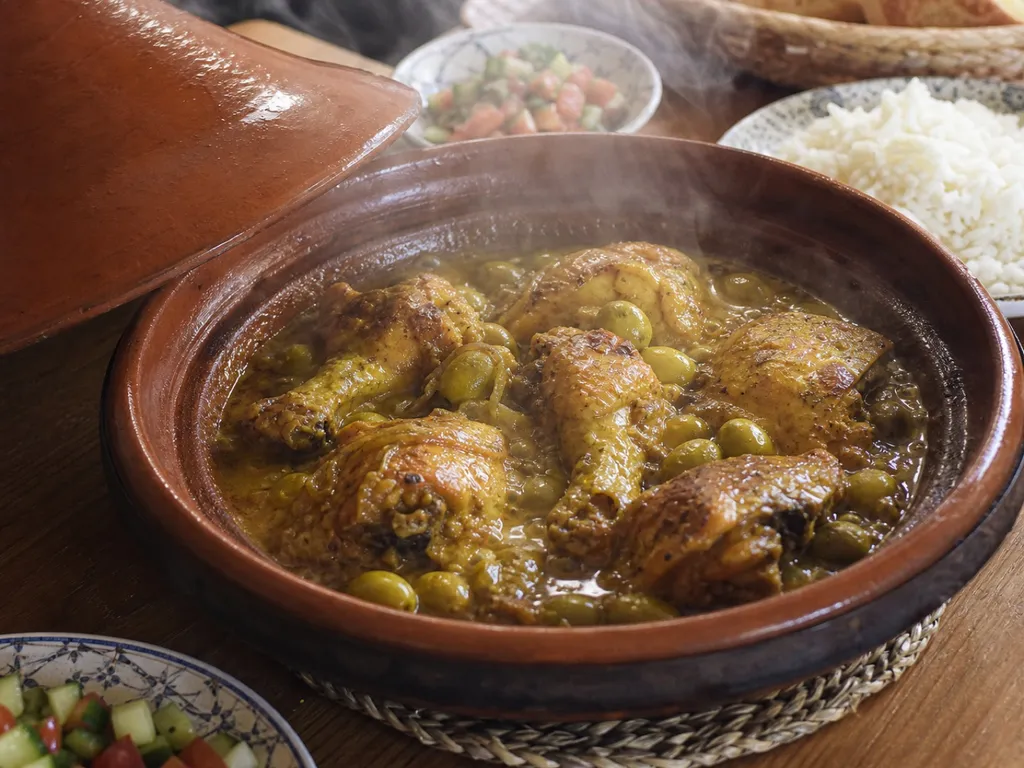
Garnish & Serve: Stir in fresh coriander just before serving. Serve hot with French fries or crusty bread to soak up the sauce.
 Images are for illustrative purposes only, may be inaccurate, and do not guarantee the presence or absence of specific ingredients.
 Listahan Family Score™
72/100
Good fit for most families
Score reflects how well this recipe fits a typical busy household. In the app, your Family Score is personalized to your household's allergens, kids, and pantry.
Nutrition
per serving110
Calories
2 g
Protein
12 g
Carbs
8 g
Fat
Estimated per serving. Actual values depend on the brands and portions you use.
Listahan cooking guide
Chef notes & practical guide
Technique notes, ingredient swaps, serve-alongside ideas, storage guidance, and equipment for this recipe.
Cultural context
Tajine Zitoune is an Algerian olive-and-chicken tagine deeply rooted in the cuisine of Kabylie and the broader western Maghreb. Olives have been central to North African cooking since Phoenician and Roman settlement, and the technique of simmering chicken low and slow in a clay tagine allows the fat from the bird and the brine of the olives to meld into a savory, golden sauce. It is a standard celebration and Friday-lunch dish across Algeria, often carried to the table in the conical vessel it was cooked in.
Listahan note
This version pre-boils the green olives to strip excess bitterness before they enter the braise, so the final sauce is rounded rather than sharp. The grated onion dissolves into the base, building body without visible chunks.
Technique cues
- Boiling the green olives for 10 minutes in unsalted water before adding them to the tagine removes the harsh, mouth-puckering tannins left from curing, leaving the olives pleasantly saline rather than aggressively bitter.
- Grating the onion rather than dicing it means the cell walls rupture fully and the onion liquefies into the braising liquid during cooking, thickening the sauce naturally without a flour or starch slurry.
- Turmeric stains and flavors best when it blooms briefly in the hot fat with ginger before the liquid is added; this 60-second bloom makes the sauce deeper gold and less raw-tasting than adding it with the water.
Kitchen flow
- Parallel prep
- While the chicken browns in batches, boil the olives in a small saucepan and slice the carrots; everything will be ready to go into the pot at the same time.
- Make-ahead
- The tagine tastes better the next day once the olives and spices have time to penetrate the chicken; refrigerate up to 2 days and reheat gently on the stovetop with a splash of water.
- Leftover move
- Shred leftover chicken off the bone, stir back into the sauce, and spoon over couscous or tuck into a warm flatbread with a squeeze of lemon.
- Cleanup rhythm
- If using a proper clay tagine, soak it in warm water after eating rather than scrubbing; a Dutch oven cleans faster and is a fine substitute for the stovetop.
Ingredient brief
Role, handling, and swap guidance for each key ingredient.
1 whole chicken (cut into pieces)
protein and braise base
Purpose: Bone-in pieces release gelatin as they simmer, giving the sauce its silky body; skin-on sections contribute fat that enriches the olive-infused liquid.
Handling: Pat pieces dry and season generously before browning so the skin crisps enough to hold its shape during the long braise.
Adaptation: Bone-in chicken thighs work perfectly and are more forgiving to cook than white meat; use 8 thighs for a similar yield.
2 cups green olives (pitted and boiled to remove bitterness)
flavor backbone and textural contrast
Purpose: Green olives provide the dish its name and its defining salty, fruity counterpoint to the rich chicken fat and warm spices.
Handling: Simmer in plain water for 10 minutes, drain, and add to the pot for the last 20 minutes of cooking so they soften slightly without turning mushy.
Adaptation: Castelvetrano olives need less pre-boiling since they are milder; Kalamata olives can substitute but will shift the sauce color to purple.
1 onion (grated)
sauce thickener and aromatic base
Purpose: A grated onion breaks down completely during braising, lending sweetness and body to the sauce without leaving stringy pieces.
Handling: Grate on the large holes of a box grater over a bowl to catch the juice, then add both solids and liquid to the pot.
Adaptation: Two shallots, finely minced, approximate the sweetness of a grated yellow onion if that is what you have on hand.
1 tsp turmeric
color and earthy warmth
Purpose: Turmeric gives the sauce its characteristic golden color and a mild, slightly peppery earthiness that ties together the ginger and coriander.
Handling: Stir into the hot oil or butter with the ginger for 60 seconds before adding any liquid to bloom the pigment and mellow the raw edge.
Adaptation: A small pinch of saffron steeped in warm water can replace turmeric for a more complex, floral note, though the color will be paler.
1/2 tsp ginger
warming spice accent
Purpose: Ground ginger adds a gentle, dry warmth that balances the brininess of the olives without the sharpness of fresh ginger.
Handling: Combine with turmeric and add to hot fat at the start so both spices toast lightly before the chicken goes in.
Adaptation: A 1-inch piece of fresh ginger, grated, adds more brightness; reduce to 1/4 tsp and expect a slightly livelier finish.
2 tbsp fresh coriander
finishing herb
Purpose: Stirred in off heat, fresh coriander lifts the rich sauce with a citrusy, green note that keeps the dish from feeling heavy.
Handling: Chop coarsely and scatter over the tagine just before serving rather than during cooking to preserve its bright color and aroma.
Adaptation: Flat-leaf parsley works for those who find coriander soapy, though it delivers a more neutral green flavor.
Technique notes
- Brown the chicken in batches without crowding the pan; steaming instead of searing loses the fond on the bottom, which is where half the sauce flavor comes from.
- Add the boiled olives in the last 15-20 minutes rather than at the start; a full hour of simmering turns them spongy and they lose their pleasant slight firmness.
- If the sauce looks thin at the end, remove the chicken, reduce the liquid over medium heat for 5 minutes, then return the pieces; do not add flour or cornstarch.
Ingredient swaps
- Gluten-free direction
- The dish is naturally gluten-free; serve over plain rice or certified GF couscous rather than bread.
- Lower-sodium olives
- Double the boiling step (two changes of water) and skip any added salt until tasting at the very end.
- Vegetarian direction
- Replace chicken with large chunks of butternut squash and 1 can of drained chickpeas; reduce braising time to 30 minutes.
Serve alongside
- plain steamed couscous with a knob of butter
- warm khobz (Moroccan round bread) for sauce-dipping
- simple shredded carrot salad with cumin and orange zest
- fresh-squeezed orange juice with a pinch of cinnamon
- mint tea served sweet after the meal
Serving suggestions only — check pairings for your household's allergens.
Storage & reheating
- Refrigerate in a covered container for up to 3 days; the olives continue to season the sauce overnight.
- Reheat on the stovetop over low heat with 2-3 tablespoons of water to loosen the sauce; avoid the microwave as it dries out the chicken.
- Freeze the shredded chicken and sauce (without carrot pieces) for up to 2 months; thaw overnight and reheat gently.
Equipment
- heavy-bottomed Dutch oven or traditional clay tagine
- box grater for the onion
- small saucepan for pre-boiling olives
- tongs for browning chicken
Make this household-aware
Listahan Pro checks this recipe against your household's allergens, finds pantry-aware swaps, builds the shopping list, and helps you plan the week around it.
Plan it in Listahan
Add Tajine Zitoune to your week, check it against your household's allergens, and build the shopping list automatically.
More North African recipes
 North African Lens Verified Images are for illustrative purposes only, may be inaccurate, and do not guarantee the presence or absence of specific ingredients.
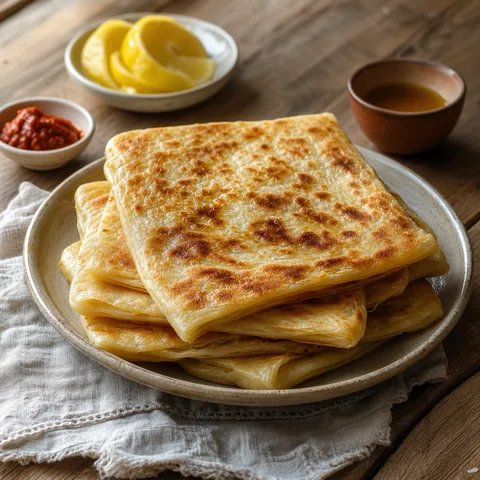
 Msemmen
Layered and folded semolina flatbread cooked on a griddle until the outside crisps and the inside stays wonderfully chewy — perfect with honey or harissa.
 North African Lens Verified Images are for illustrative purposes only, may be inaccurate, and do not guarantee the presence or absence of specific ingredients.
 Brik
Crispy paper-thin pastry folded around a whole egg, tuna, and parsley then flash-fried until golden — Tunisia's beloved street snack, eaten fast before the yolk escapes.
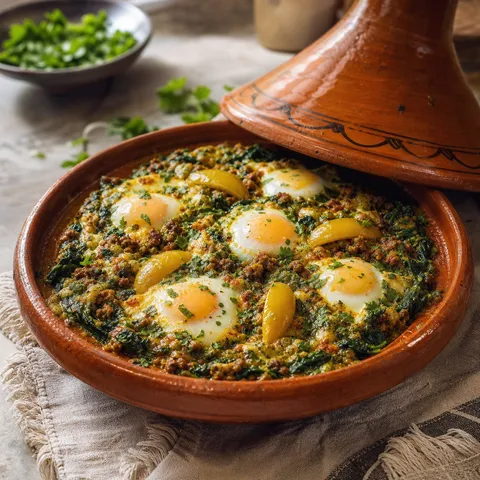 North African Lens Verified Images are for illustrative purposes only, may be inaccurate, and do not guarantee the presence or absence of specific ingredients.
 Tajine El Bey
Tunisia's grand layered bake of spiced lamb, eggs, and cheese baked in a deep crust — a celebration dish with silky, complex layers in every slice.