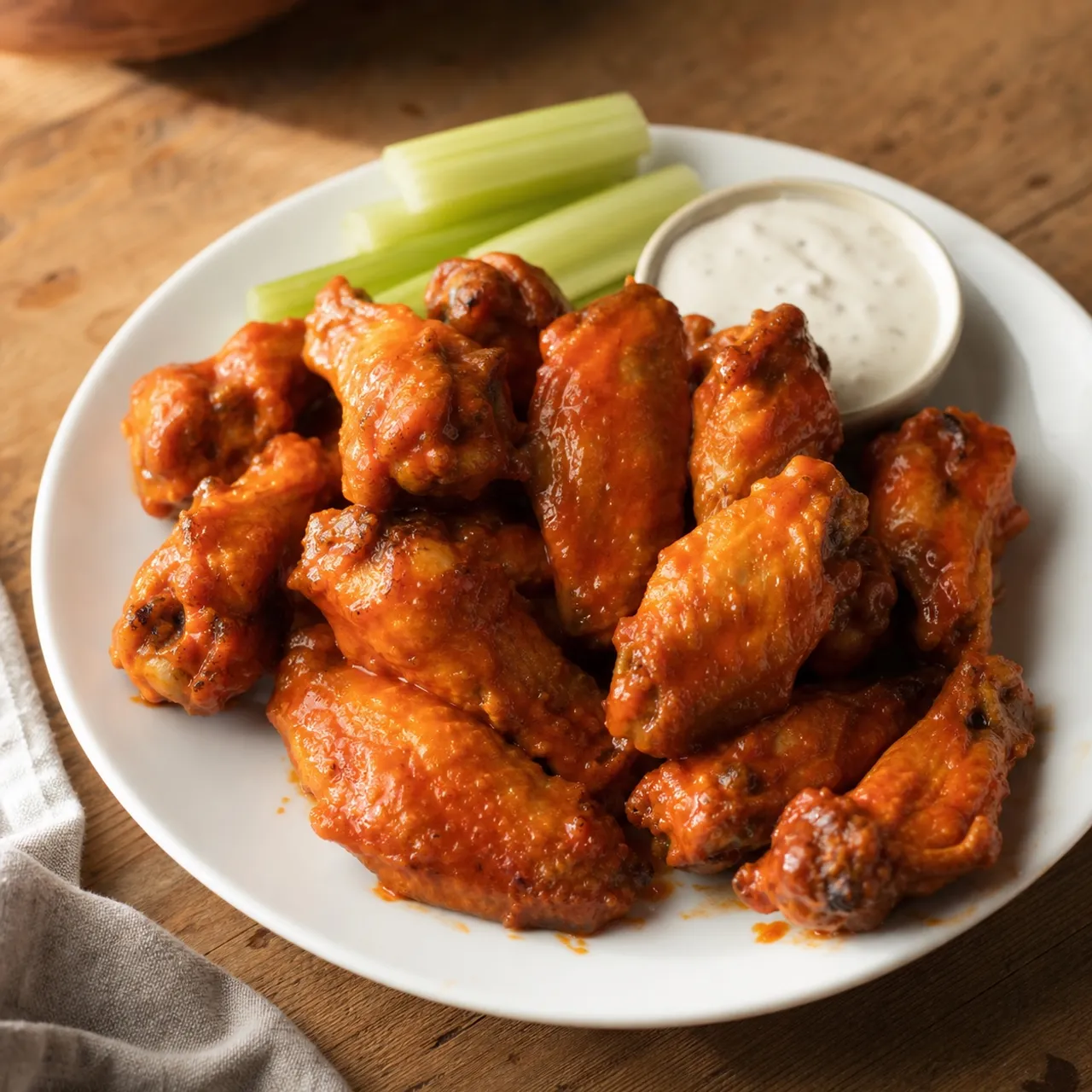
 North American Images are for illustrative purposes only, may be inaccurate, and do not guarantee the presence or absence of specific ingredients.
 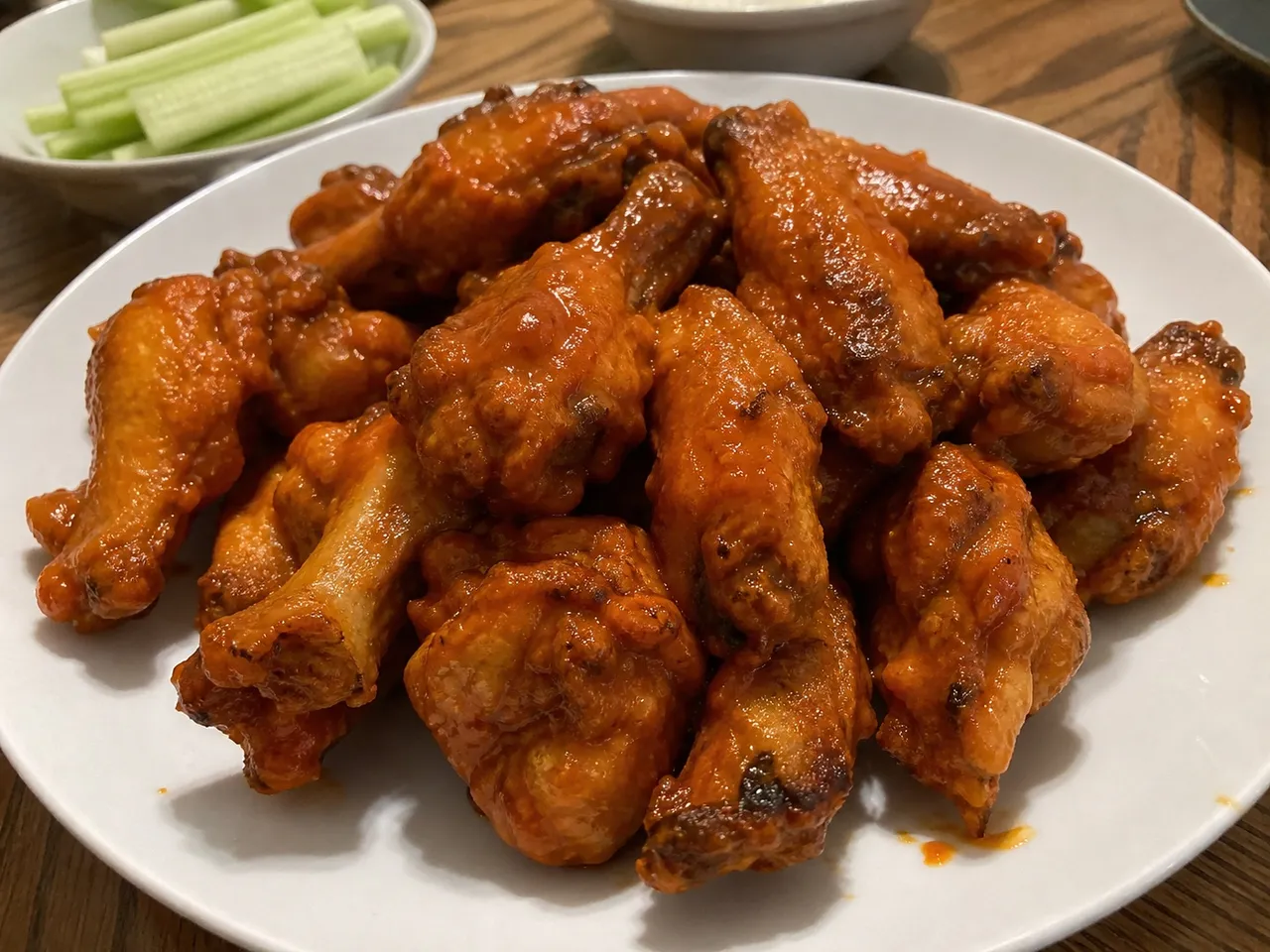 Serving Images are for illustrative purposes only, may be inaccurate, and do not guarantee the presence or absence of specific ingredients.
 Buffalo Wings
Deep-fried chicken wings coated in a spicy vinegar-based cayenne pepper sauce.
Contains common allergens
In the app, Listahan checks these against your household automatically.
Good to know
- Crispy
Matched from this dish's own ingredients and timing. Browse more: crispy recipes
Instructions
6 steps- 1
Pat the chicken wings completely dry with paper towels to ensure maximum crispiness. Let them sit at room temperature for 15 minutes.
- 2
Heat 3 inches of neutral oil in a large Dutch oven to a steady 375°F (190°C).
- 3
Carefully fry the wings in small batches for 10-12 minutes until they are deep golden brown and the skin is extremely crispy. Maintain oil temperature between batches.
- 4
While frying, melt the butter in a small saucepan over low heat. Whisk in the hot sauce, white vinegar, garlic powder, and celery salt until smooth and warm.
- 5
Transfer the hot, fried wings to a large bowl. Pour the warm buffalo sauce over them and toss vigorously to coat every crevice.
- 6
Serve immediately with a side of cold celery sticks, carrot sticks, and chunky blue cheese dressing for dipping.
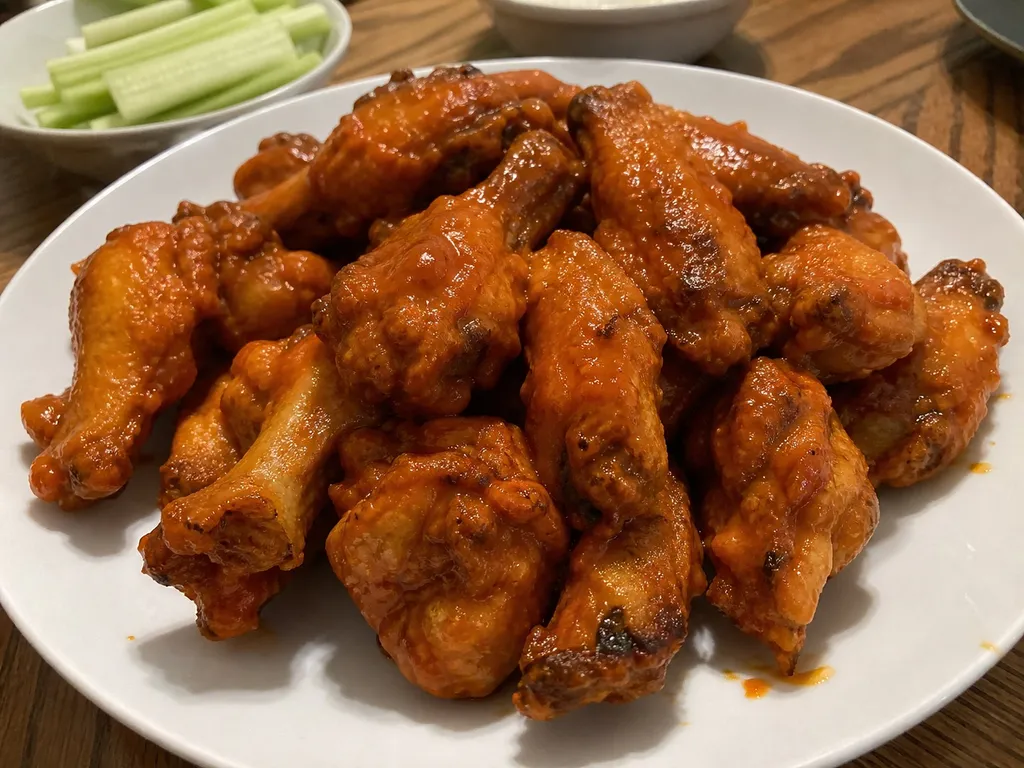 Images are for illustrative purposes only, may be inaccurate, and do not guarantee the presence or absence of specific ingredients.
 Listahan Family Score™
64/100
Works for many families
Score reflects how well this recipe fits a typical busy household. In the app, your Family Score is personalized to your household's allergens, kids, and pantry.
Nutrition
per serving530
Calories
46 g
Protein
3 g
Carbs
37 g
Fat
Estimated per serving. Actual values depend on the brands and portions you use.
Listahan cooking guide
Chef notes & practical guide
Technique notes, ingredient swaps, serve-alongside ideas, storage guidance, and equipment for this recipe.
Cultural context
Buffalo wings were invented in 1964 at the Anchor Bar in Buffalo, New York, when Teressa Bellissimo tossed leftover wings in hot sauce and butter as a late-night snack for her son and his friends. The combination of deep-fried chicken skin, cayenne-forward hot sauce, and cold blue cheese dressing became a bar-food template that spread nationwide through the 1970s and 1980s sports-bar boom. The Frank's RedHot brand became so synonymous with the style that many cooks treat it as the canonical ingredient rather than just one option.
Listahan note
This version puts the focus on truly dry wings before frying and on building the sauce separately so the butter-to-hot-sauce ratio can be adjusted to taste without guessing.
Technique cues
- Drying the wings thoroughly before frying is the single biggest factor in crispiness; even 30 minutes uncovered on a rack in the fridge makes a real difference.
- Frying in small batches keeps the oil temperature from dropping below 350 degrees F, which is where wings start absorbing oil instead of shedding it.
- Toss the wings in the sauce immediately off the fryer while the skin is still crackling hot; waiting even a few minutes lets steam soften the crust before the sauce hits.
Kitchen flow
- Parallel prep
- Mix the hot sauce and butter and keep it warm while the last batch of wings finishes frying.
- Make-ahead
- Wings can be fried ahead and held on a wire rack in a 200 degrees F oven for up to 30 minutes before saucing.
- Leftover move
- Reheat leftover wings on a wire rack in a 400 degrees F oven for 8 minutes to re-crisp the skin, then re-toss in fresh sauce.
- Cleanup rhythm
- Let the frying oil cool completely, then strain it through a fine-mesh sieve to reuse once more; wipe the sauce pot while still warm.
Ingredient brief
Role, handling, and swap guidance for each key ingredient.
chicken wings (split into flats and drumettes)
Main protein
Purpose: Splitting the wings exposes more surface area to the oil, which produces more crispy skin per bite.
Handling: Pat completely dry with paper towels and let rest uncovered at room temperature for 15 minutes before frying.
Adaptation: Boneless thigh pieces work for a boneless version; reduce fry time to 6-8 minutes and expect a denser texture.
Frank's RedHot original sauce
Heat and acid base
Purpose: Frank's has a vinegar-forward profile that keeps the sauce bright rather than just spicy, which is why it became the Anchor Bar's original choice.
Handling: Warm the sauce slightly before whisking in the butter so the emulsion holds longer.
Adaptation: Any cayenne-based Louisiana-style hot sauce works; avoid Tabasco-only blends, which are too vinegary and thin.
unsalted butter
Emulsifier and richness
Purpose: Butter transforms the hot sauce from a sharp acidic liquid into a glossy, clinging glaze that coats the skin evenly.
Handling: Cut into small pieces and whisk into warm hot sauce off the heat; high heat will break the emulsion.
Adaptation: Vegan butter works for a dairy-free version; the sauce will be slightly less glossy but still coats well.
celery salt
Background seasoning
Purpose: Celery salt echoes the celery sticks served alongside and adds depth without a distinct celery flavor.
Handling: Combine with garlic powder and toss with wings before frying for an even base seasoning.
Adaptation: Omit or replace with plain kosher salt if unavailable; the flavor difference is subtle.
Technique notes
- The standard Buffalo ratio is 1 part butter to 1.5 parts hot sauce; lean toward more butter for mild, more hot sauce for traditional heat.
- A wire rack set over a baking sheet under the fryer station catches drips and keeps the workspace cleaner during batch frying.
- Blue cheese dressing is the traditional accompaniment, not ranch; using ranch is a regional variation that purists in Buffalo will notice immediately.
Ingredient swaps
- Dairy-free option
- Use vegan butter in the sauce and serve with a dairy-free blue cheese or avocado-based dip instead of traditional dressing.
- Oven method
- Bake wings on a rack at 425 degrees F for 45-50 minutes, flipping once; not as crispy as fried but significantly less oil.
- Lower-heat option
- Use half the hot sauce and add 1 tablespoon honey to the butter for a mild sweet-heat glaze that works for spice-sensitive eaters.
Serve alongside
- Classic celery and carrot sticks with blue cheese dip
- Simple coleslaw with apple cider vinegar dressing
- Waffle fries or thick-cut potato wedges
- Pickled cucumber slices
- Ice-cold American lager or pale ale
- Lemonade or sparkling water with lime to cut the heat
Serving suggestions only — check pairings for your household's allergens.
Storage & reheating
- Refrigerate cooked wings without sauce in a sealed container for up to 3 days.
- Reheat on a wire rack at 400 degrees F for 8-10 minutes until the skin re-crisps, then toss in fresh sauce.
- Freeze unsauced fried wings up to 1 month; reheat from frozen at 400 degrees F for 15 minutes before saucing.
Equipment
- Large Dutch oven or deep, heavy-bottomed pot for frying
- Instant-read or clip-on oil thermometer
- Wire rack set over a rimmed baking sheet
- Spider strainer or slotted spoon for pulling wings from the oil
Make this household-aware
Listahan Pro checks this recipe against your household's allergens, finds pantry-aware swaps, builds the shopping list, and helps you plan the week around it.
Plan it in Listahan
Add Buffalo Wings to your week, check it against your household's allergens, and build the shopping list automatically.
More North American recipes
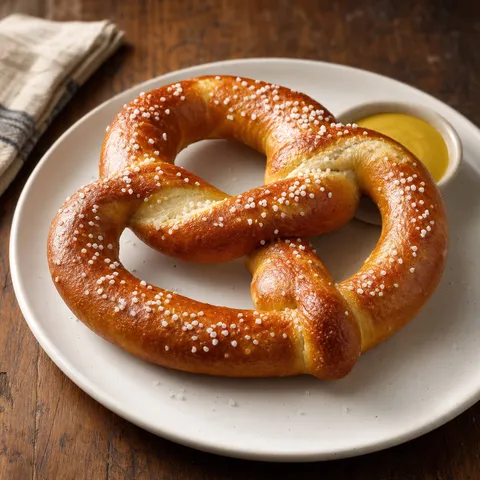 North American Lens Verified Images are for illustrative purposes only, may be inaccurate, and do not guarantee the presence or absence of specific ingredients.
 Soft Pretzels
Chewy golden mall-style pretzels with a salty crust, brushed in butter.
 North American Lens Verified Images are for illustrative purposes only, may be inaccurate, and do not guarantee the presence or absence of specific ingredients.
 Gumbo
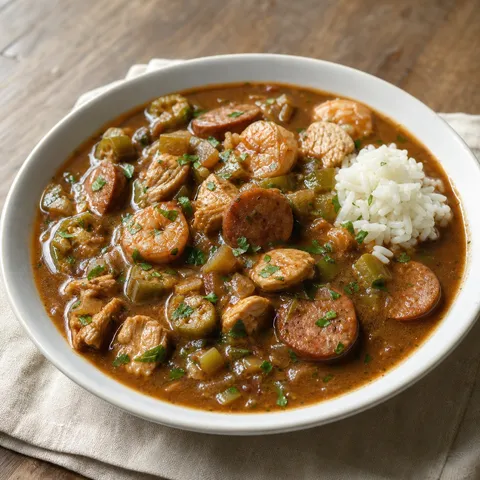
A Louisiana-style gumbo of chicken thighs and Andouille sausage simmered with okra, the Cajun holy trinity, and a dark roux, served over rice.
 North American Lens Verified Images are for illustrative purposes only, may be inaccurate, and do not guarantee the presence or absence of specific ingredients.
 New York Cheesecake
A dense, ultra-creamy baked cheesecake with a buttery graham cracker crust and a faintly tangy, melt-in-your-mouth filling.