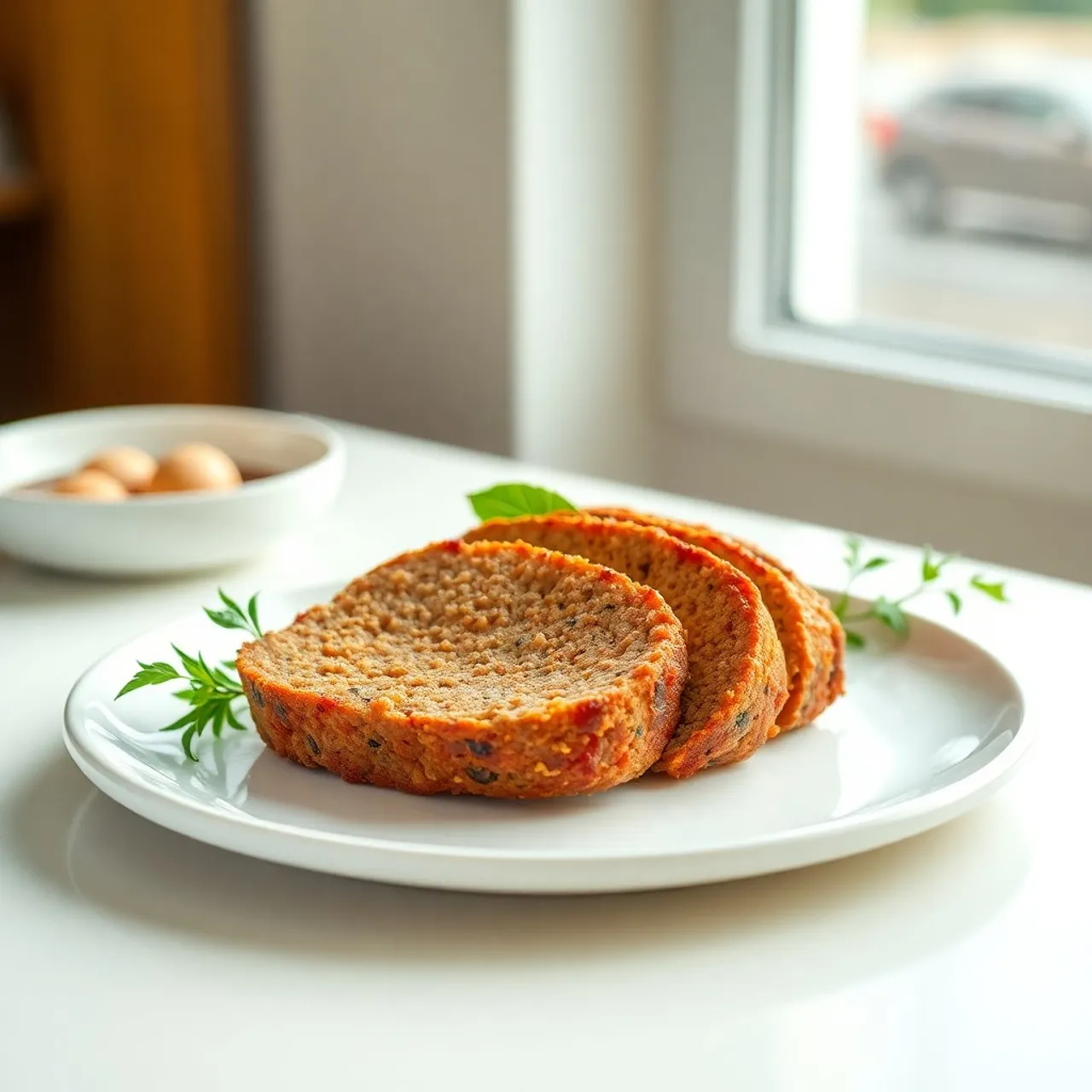
 North American Images are for illustrative purposes only, may be inaccurate, and do not guarantee the presence or absence of specific ingredients.
 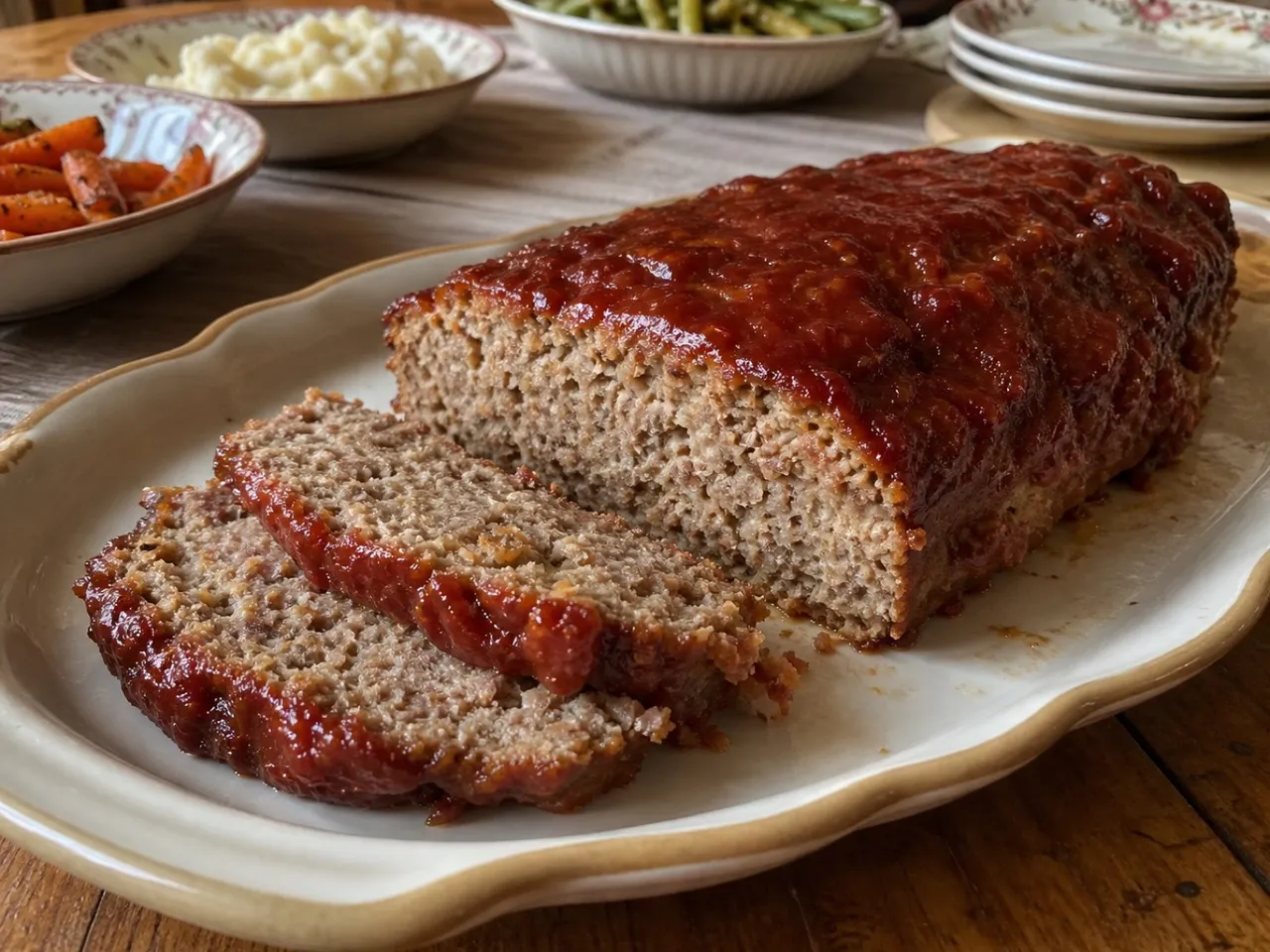 Serving Images are for illustrative purposes only, may be inaccurate, and do not guarantee the presence or absence of specific ingredients.
 Meatloaf
Ground meat mixed with other ingredients and shaped into a loaf, then baked.
Contains common allergens
In the app, Listahan checks these against your household automatically.
Instructions
6 steps- 1
Preheat the oven to 375°F (190°C) and line a rimmed baking sheet with aluminum foil or parchment paper.
- 2
In a small bowl, soak the breadcrumbs in the whole milk for 5 minutes. This creates a panade that keeps the meatloaf incredibly moist.
- 3
In a large mixing bowl, combine the ground beef, soaked breadcrumbs, eggs, grated onion, garlic powder, salt, and pepper. Use your hands to gently mix until just combined—overmixing will make the meatloaf tough.
- 4
Transfer the meat mixture to the prepared baking sheet and shape it into an even 9x5-inch free-form loaf. This allows the edges to caramelize better than using a loaf pan.
- 5
In a small bowl, whisk together the ketchup, brown sugar, and mustard. Brush half of this glaze evenly over the top and sides of the meatloaf.
- 6
Bake for 45 minutes, then brush with the remaining glaze. Bake for another 15 minutes until the internal temperature reaches 160°F. Let the meatloaf rest for 10 minutes before slicing.
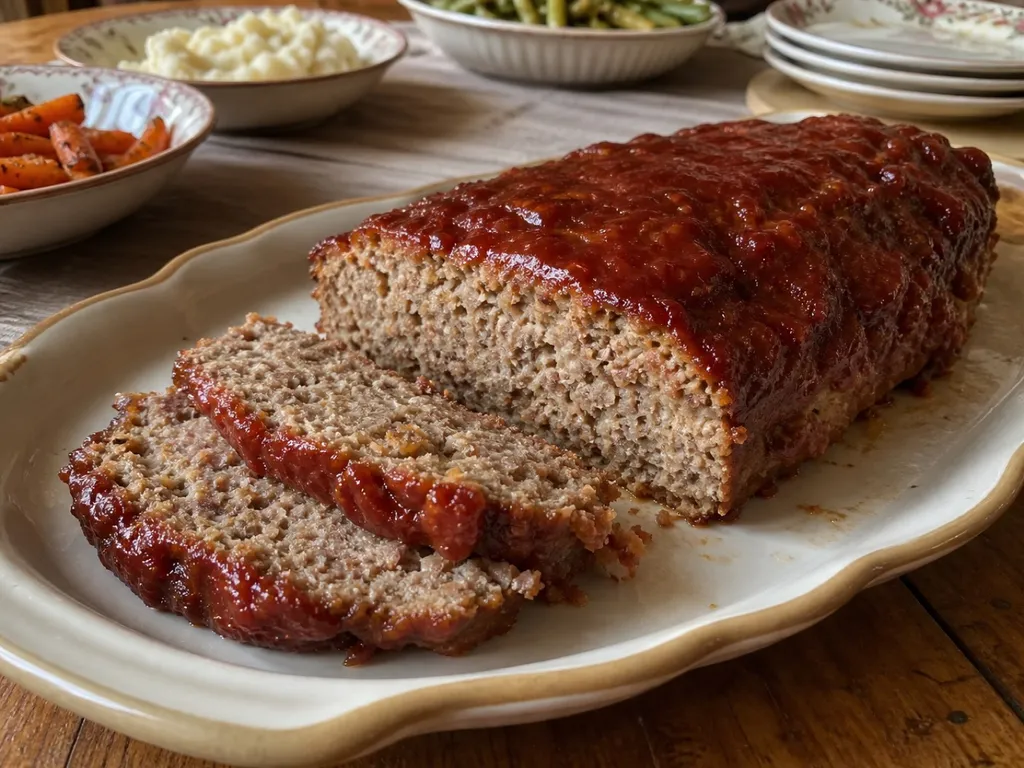 Images are for illustrative purposes only, may be inaccurate, and do not guarantee the presence or absence of specific ingredients.
 Listahan Family Score™
64/100
Works for many families
Score reflects how well this recipe fits a typical busy household. In the app, your Family Score is personalized to your household's allergens, kids, and pantry.
Nutrition
per serving660
Calories
53 g
Protein
39 g
Carbs
31 g
Fat
Estimated per serving. Actual values depend on the brands and portions you use.
Listahan cooking guide
Chef notes & practical guide
Technique notes, ingredient swaps, serve-alongside ideas, storage guidance, and equipment for this recipe.
Cultural context
Meatloaf as a formed, baked ground-meat dish has roots in 19th-century European immigrant cooking, where ground meat mixed with fillers was a practical way to stretch expensive protein. German-American and Scandinavian communities brought similar preparations to the American Midwest, and the dish became a Depression-era staple when ground beef was far cheaper than whole cuts. The ketchup-and-brown-sugar glaze became nearly universal in mid-20th-century American cookbooks, cementing meatloaf's identity as the definitive American diner and home-kitchen comfort food.
Listahan note
This version builds the panade by soaking breadcrumbs in milk before mixing, which keeps the finished loaf moist without relying on excess fat, and applies the ketchup glaze in two stages so it caramelizes without burning.
Technique cues
- The panade (soaked breadcrumbs and milk) is the structural reason this meatloaf stays moist; it holds moisture inside the protein matrix during baking and prevents the compacted texture of meatloaf made with dry breadcrumbs.
- Grating the onion rather than dicing it disperses the onion flavor and moisture throughout the loaf without creating large vegetable pockets that separate from the meat.
- Resting the finished loaf for at least 10 minutes before slicing lets the proteins relax and the internal juices redistribute; cutting it straight from the oven causes the loaf to crumble and lose those juices on the cutting board.
Kitchen flow
- Parallel prep
- Soak the breadcrumbs while grating the onion so both are ready when you open the ground beef package.
- Make-ahead
- The raw loaf can be formed, wrapped tightly, and refrigerated overnight; bring to room temperature for 20 minutes before baking.
- Leftover move
- Cold meatloaf sliced thin on white bread with ketchup is a legitimate next-day sandwich; pan-fry slices in a little butter for a crispy crust.
- Cleanup rhythm
- Line the baking sheet with foil before cooking so drippings do not bake onto the pan; the foil peels away cleanly once cool.
Ingredient brief
Role, handling, and swap guidance for each key ingredient.
ground beef (80/20)
Main protein
Purpose: The 20% fat keeps the loaf from drying out during the 45-55 minute bake; leaner beef without a compensating fat source often produces a dry, dense result.
Handling: Mix gently and minimally with your hands; overworking the beef develops myosin proteins that make the loaf rubbery.
Adaptation: A 50/50 mix of ground beef and ground pork adds flavor complexity and more fat coverage; ground turkey requires adding extra olive oil or egg yolk to compensate.
plain breadcrumbs
Binder and moisture reservoir (panade)
Purpose: Breadcrumbs soaked in milk absorb and retain moisture during baking, keeping the interior tender as the proteins tighten from heat.
Handling: Soak in the milk for at least 5 minutes until fully saturated before adding to the meat; dry breadcrumbs added directly draw moisture from the beef instead.
Adaptation: Crushed saltine crackers or rolled oats soaked in milk serve the same function; gluten-free breadcrumbs work in equal measure.
whole milk
Moisture carrier for panade
Purpose: Milk saturates the breadcrumbs and contributes fat and protein that help the loaf bind without becoming dry.
Handling: Use at room temperature so the mixture combines evenly; cold milk can cause the fat in the beef to seize slightly.
Adaptation: Unsweetened oat milk or almond milk can replace whole milk in the panade without significantly affecting the result.
ketchup
Glaze base
Purpose: Ketchup provides a combination of tomato acidity, sugar, and vinegar that caramelizes into a sticky, slightly sweet crust over the loaf.
Handling: Apply half the glaze 20 minutes before the end of baking and the remaining half in the last 10 minutes for a layered, caramelized finish.
Adaptation: Sriracha mixed with a tablespoon of honey creates a spicier glaze; barbecue sauce works directly as a swap for a smokier crust.
Technique notes
- Forming the loaf on a rimmed baking sheet rather than in a loaf pan allows the sides to brown and form a crust; a loaf pan produces a steamed, pale exterior.
- Press a small indent down the center of the formed loaf before baking; it fills in as the loaf rises and produces a more even top surface for the glaze.
- Check internal temperature with an instant-read thermometer rather than timing alone; 160 degrees F in the center means the loaf is fully cooked without being overdone.
Ingredient swaps
- Gluten-free direction
- Use gluten-free breadcrumbs or crushed gluten-free crackers soaked in milk for the panade; the method works identically.
- Dairy-free option
- Substitute unsweetened oat milk for the whole milk in the panade; the result is virtually indistinguishable.
- Lower-fat option
- Use 90/10 ground beef and add 2 tablespoons of olive oil to the mix to compensate; the loaf will be leaner but still moist if the panade is not skipped.
Serve alongside
- Creamy mashed potatoes with butter
- Roasted green beans or steamed broccoli
- Classic macaroni and cheese
- Simple garden salad with ranch dressing
- Whole milk for a diner-style pairing
- Iced tea with lemon
- Light red wine such as Merlot or Beaujolais
Serving suggestions only — check pairings for your household's allergens.
Storage & reheating
- Refrigerate sliced or whole leftover meatloaf in a sealed container for up to 4 days.
- Reheat individual slices in a skillet with a splash of water and a lid for 3-4 minutes, or in a 325 degrees F oven for 15 minutes wrapped in foil.
- Freeze cooked and cooled slices individually wrapped for up to 3 months; thaw overnight in the refrigerator before reheating.
Equipment
- Rimmed baking sheet with foil or parchment lining
- Instant-read thermometer for checking doneness at 160 degrees F
- Box grater for grating the onion
- Pastry brush for applying the glaze in stages
Make this household-aware
Listahan Pro checks this recipe against your household's allergens, finds pantry-aware swaps, builds the shopping list, and helps you plan the week around it.
Plan it in Listahan
Add Meatloaf to your week, check it against your household's allergens, and build the shopping list automatically.
More North American recipes
 North American Lens Verified Images are for illustrative purposes only, may be inaccurate, and do not guarantee the presence or absence of specific ingredients.
 Soft Pretzels
Chewy golden mall-style pretzels with a salty crust, brushed in butter.
 North American Lens Verified Images are for illustrative purposes only, may be inaccurate, and do not guarantee the presence or absence of specific ingredients.
 Gumbo
A Louisiana-style gumbo of chicken thighs and Andouille sausage simmered with okra, the Cajun holy trinity, and a dark roux, served over rice.
 North American Lens Verified Images are for illustrative purposes only, may be inaccurate, and do not guarantee the presence or absence of specific ingredients.
 New York Cheesecake
A dense, ultra-creamy baked cheesecake with a buttery graham cracker crust and a faintly tangy, melt-in-your-mouth filling.