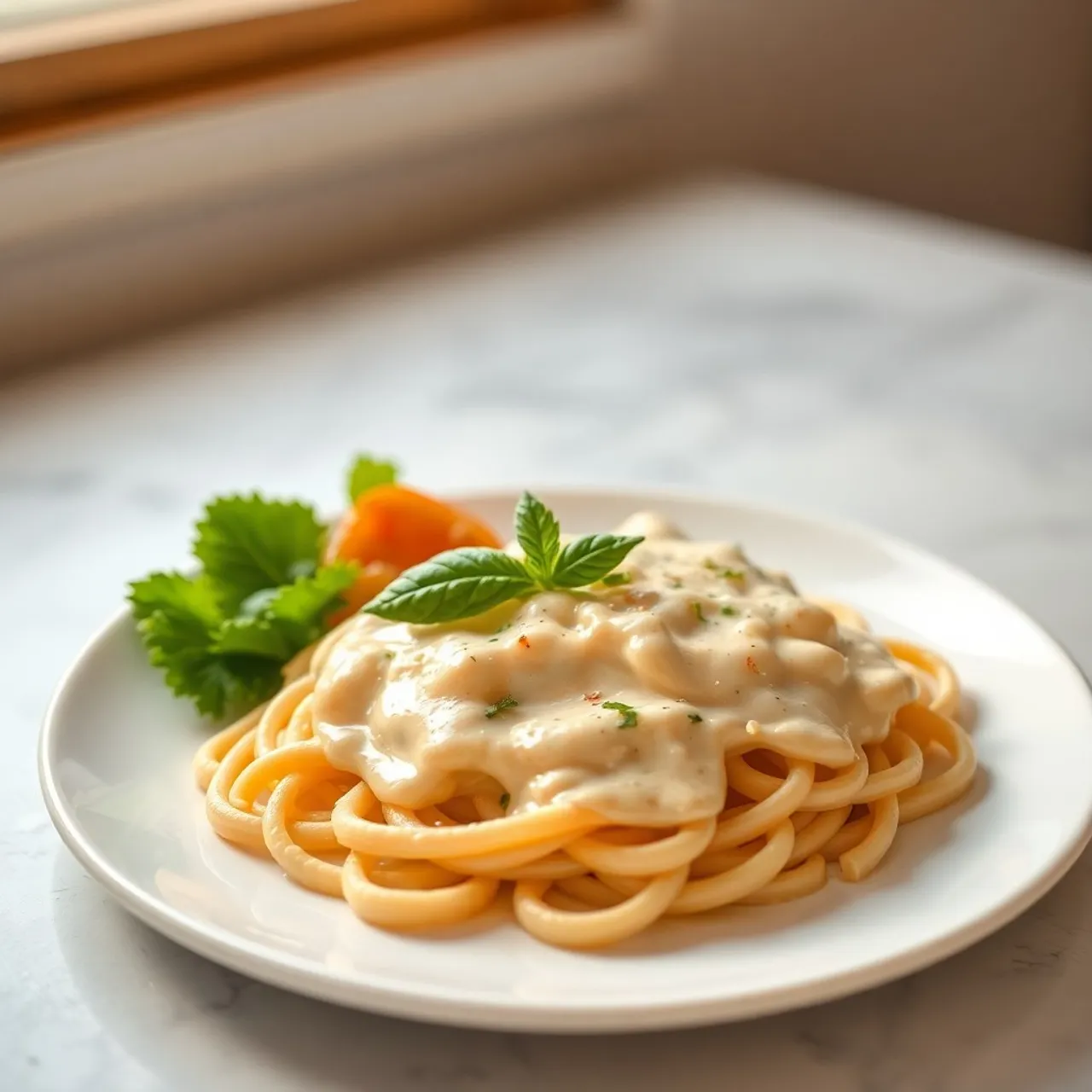
 Sauces & Dressings Images are for illustrative purposes only, may be inaccurate, and do not guarantee the presence or absence of specific ingredients.
 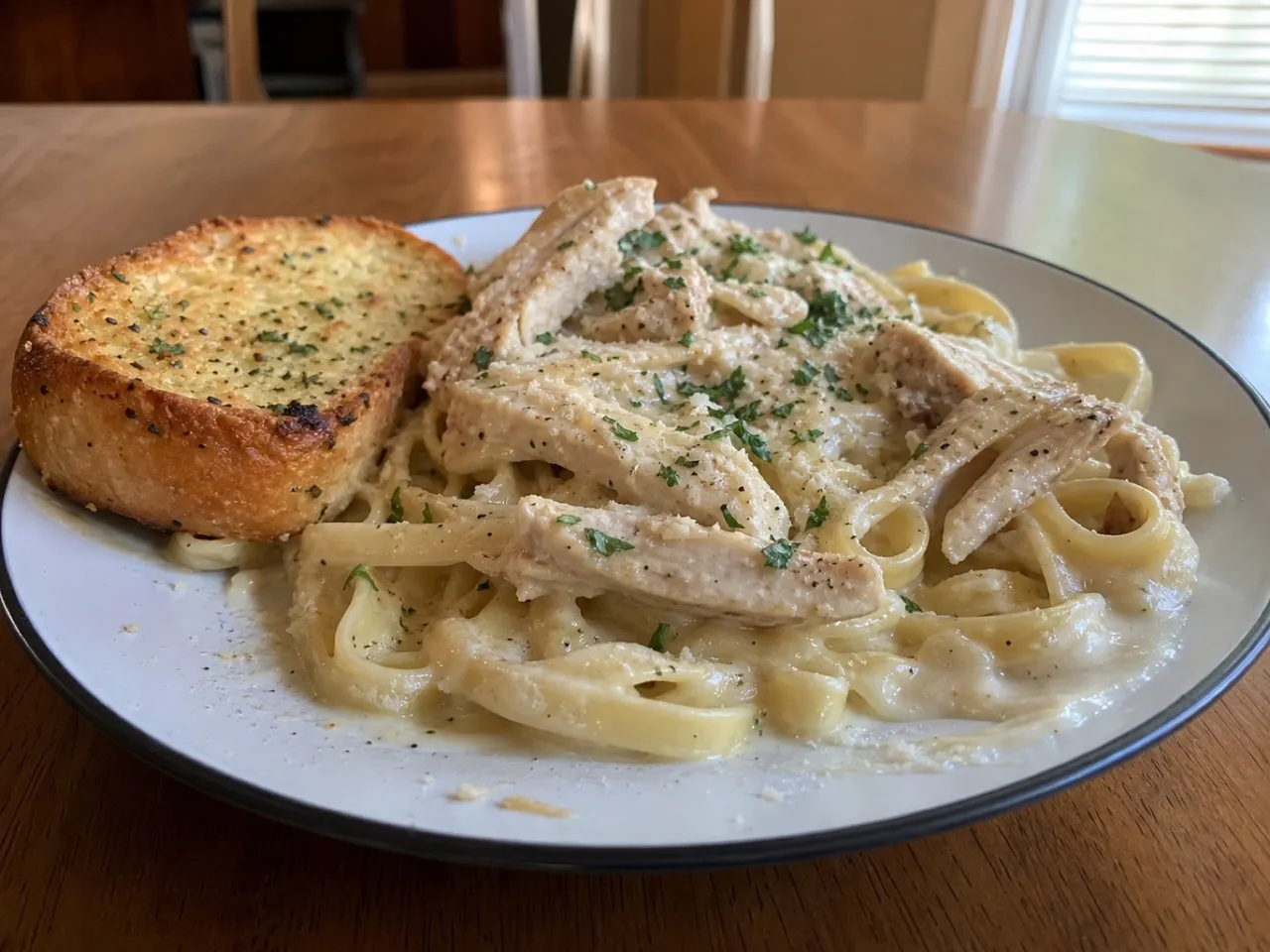 Serving Images are for illustrative purposes only, may be inaccurate, and do not guarantee the presence or absence of specific ingredients.
 Alfredo Sauce
A simple, authentic Alfredo sauce of butter, cream, and Parmesan to toss with warm pasta.
Contains common allergens
In the app, Listahan checks these against your household automatically.
Good to know
- Ready in under 30 minutes
Matched from this dish's own ingredients and timing. Browse more: 30-minute meals
Instructions
5 steps- 1
Place the butter in a microwave-safe bowl and heat on high for about 30 seconds, until melted.
- 2
Stir in the heavy cream and warm on high for about 1 minute, until hot.
- 3
Add the grated Parmesan cheese and warm in short bursts, stirring, until the cheese melts and the sauce is smooth.
- 4
Season with the salt and black pepper to taste; if serving with shrimp or other salty additions, use less salt.
- 5
Pour the sauce over about 4 servings of warm noodles (angel hair works well) and toss to coat. Serve immediately.
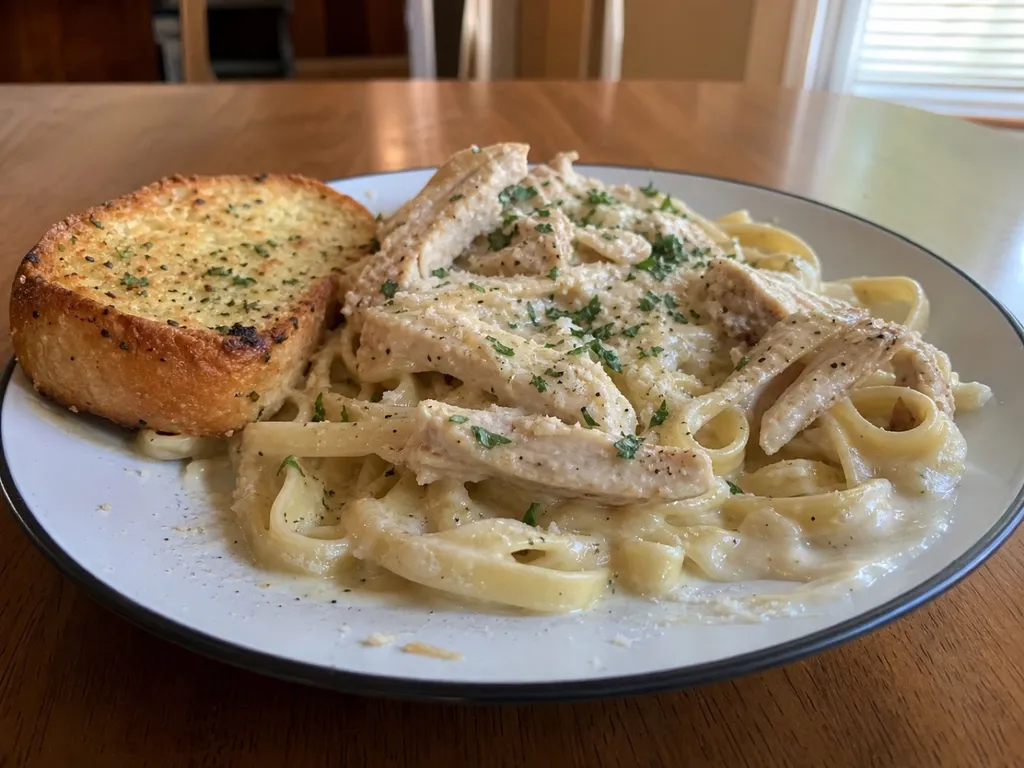 Images are for illustrative purposes only, may be inaccurate, and do not guarantee the presence or absence of specific ingredients.
 Listahan Family Score™
78/100
Good fit for most families
Score reflects how well this recipe fits a typical busy household. In the app, your Family Score is personalized to your household's allergens, kids, and pantry.
Nutrition
per serving385
Calories
9 g
Protein
2 g
Carbs
38 g
Fat
Estimated per serving. Actual values depend on the brands and portions you use.
Listahan cooking guide
Chef notes & practical guide
Technique notes, ingredient swaps, serve-alongside ideas, storage guidance, and equipment for this recipe.
Cultural context
Alfredo sauce began in early-1900s Rome as fettuccine al burro, simply butter and Parmigiano-Reggiano emulsified with pasta water by a restaurateur named Alfredo di Lelio, with no cream at all. American visitors loved it, brought it home, and added heavy cream and garlic to keep it stable for restaurant service, creating the rich sauce most North Americans now picture. The Italian original is leaner and depends entirely on technique rather than dairy volume.
Listahan note
This version uses cream for reliability but keeps it restrained, leaning on real parmesan and a splash of pasta water so the sauce tastes of cheese rather than just fat.
Technique cues
- Take the pan off the heat before adding the cheese, because parmesan added to a boiling sauce seizes into rubbery clumps instead of melting smoothly.
- Loosen the finished sauce with starchy pasta water rather than more cream, which keeps it glossy and helps it cling to the noodles.
- Grate the parmesan from a block yourself, since pre-shredded cheese is coated with anti-caking starch that makes the sauce grainy.
Kitchen flow
- Parallel prep
- Grate the cheese and reserve pasta water while the pasta finishes, so the sauce comes together the instant the noodles are done.
- Make-ahead
- Alfredo is best made fresh, but you can grate the cheese and measure the cream in advance to make assembly fast.
- Leftover move
- Loosen leftover sauce with a splash of milk and toss with vegetables, or use it as a base for a quick gratin.
- Cleanup rhythm
- Rinse the pan before the cheese sauce dries into a hard film on the bottom.
Ingredient brief
Role, handling, and swap guidance for each key ingredient.
butter
the original base
Purpose: Butter is the foundation of the true Roman sauce and carries the cheese into a silky emulsion.
Handling: Melt gently over low heat so it never browns.
Adaptation: A good olive oil works for a lighter, non-traditional version.
heavy cream
richness and stability
Purpose: Cream gives the American-style sauce its body and keeps it from breaking, the way pasta water does in the Roman original.
Handling: Warm it gently and do not let it boil hard, which can cause it to break.
Adaptation: Half-and-half makes a lighter sauce, though it is more prone to thinning.
parmesan cheese
the flavor
Purpose: Real Parmigiano-Reggiano is the entire point of the sauce, providing the salty, nutty depth.
Handling: Grate it fresh and fine, and add it off the heat.
Adaptation: Grana Padano is a milder, more affordable stand-in.
garlic
aromatic accent
Purpose: Garlic is a common American addition that adds savory depth, though the classic version omits it.
Handling: Soften in the butter without browning so it stays sweet.
Adaptation: Leave it out entirely for a more traditional, cheese-forward sauce.
pasta water
the emulsifier
Purpose: Starchy pasta water binds the butter and cheese into a smooth, clinging sauce rather than an oily one.
Handling: Reserve a cup before draining the pasta and add it a splash at a time.
Adaptation: A pinch of cornstarch dissolved in warm water mimics the starch if you forgot to save it.
Technique notes
- Work quickly once the cheese goes in and toss the pasta directly into the pan, since the sauce sets fast as it cools.
- Keep the heat low throughout; high heat is the single most common cause of a broken, oily Alfredo.
- A few gratings of fresh nutmeg deepen the sauce and balance the richness without reading as a distinct spice.
Ingredient swaps
- Gluten-free direction
- The sauce is naturally gluten-free; serve it over gluten-free pasta and check that your parmesan has no wheat-based anti-caking agents.
- Lighter direction
- Replace some cream with reserved pasta water and extra cheese for a lighter sauce that still clings.
- Dairy-free direction
- Build it from a cashew cream base with nutritional yeast; note this is a substantial flavor change from the original.
Serve alongside
- Fettuccine or tagliatelle
- Garlicky sauteed spinach
- Roasted broccoli
- Crusty garlic bread
- Pinot Grigio
- Chardonnay
- Sparkling water with lemon
Serving suggestions only — check pairings for your household's allergens.
Storage & reheating
- Refrigerate leftovers in a sealed container for up to three days; the sauce thickens and can separate when cold. Reheat gently over low heat with a splash of milk or pasta water, whisking until smooth. Freezing is not recommended, as cream-based sauces tend to break on thaw.
Equipment
- Wide skillet or saute pan
- Microplane or box grater
- Whisk
- Tongs for tossing pasta
Make this household-aware
Listahan Pro checks this recipe against your household's allergens, finds pantry-aware swaps, builds the shopping list, and helps you plan the week around it.
Plan it in Listahan
Add Alfredo Sauce to your week, check it against your household's allergens, and build the shopping list automatically.
More Sauces & Dressings recipes
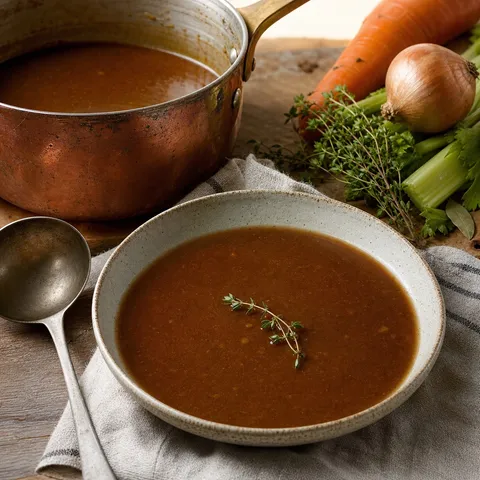 Sauces & Dressings Lens Verified Images are for illustrative purposes only, may be inaccurate, and do not guarantee the presence or absence of specific ingredients.
 Espagnole Sauce
A deep brown mother sauce of dark roux, mirepoix, and beef stock that forms the foundation for demi-glace and rich meat sauces.
 Sauces & Dressings Lens Verified Images are for illustrative purposes only, may be inaccurate, and do not guarantee the presence or absence of specific ingredients.
 Hollandaise Sauce
A silky, buttery emulsion brightened with lemon that crowns eggs Benedict, asparagus, and poached fish in golden luxury.
 Sauces & Dressings Lens Verified Images are for illustrative purposes only, may be inaccurate, and do not guarantee the presence or absence of specific ingredients.
 Peanut Satay Sauce
A rich, creamy Southeast Asian dipping sauce of peanut butter, coconut milk, and soy with a sweet-spicy lime finish for grilled skewers.