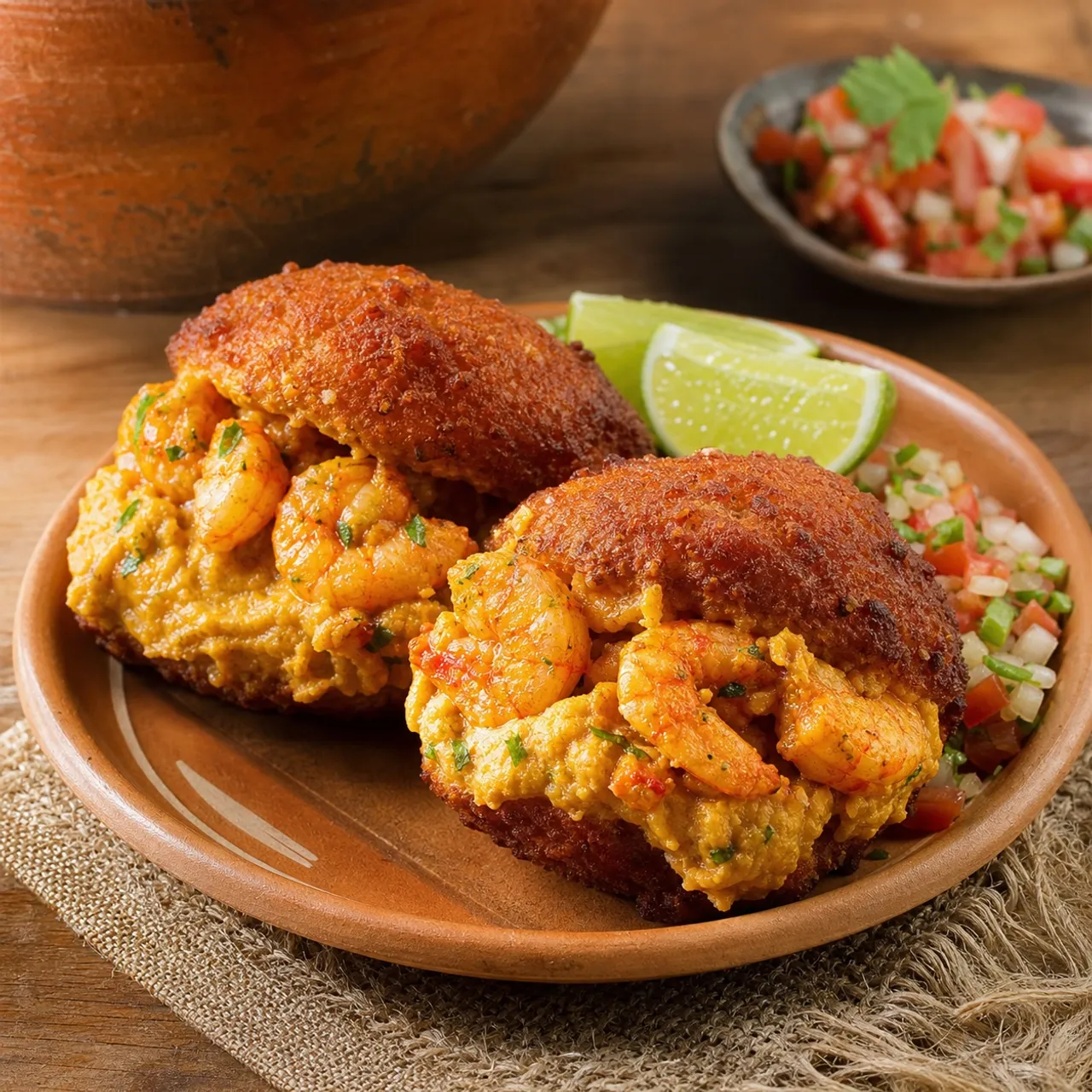
 South American Images are for illustrative purposes only, may be inaccurate, and do not guarantee the presence or absence of specific ingredients.
 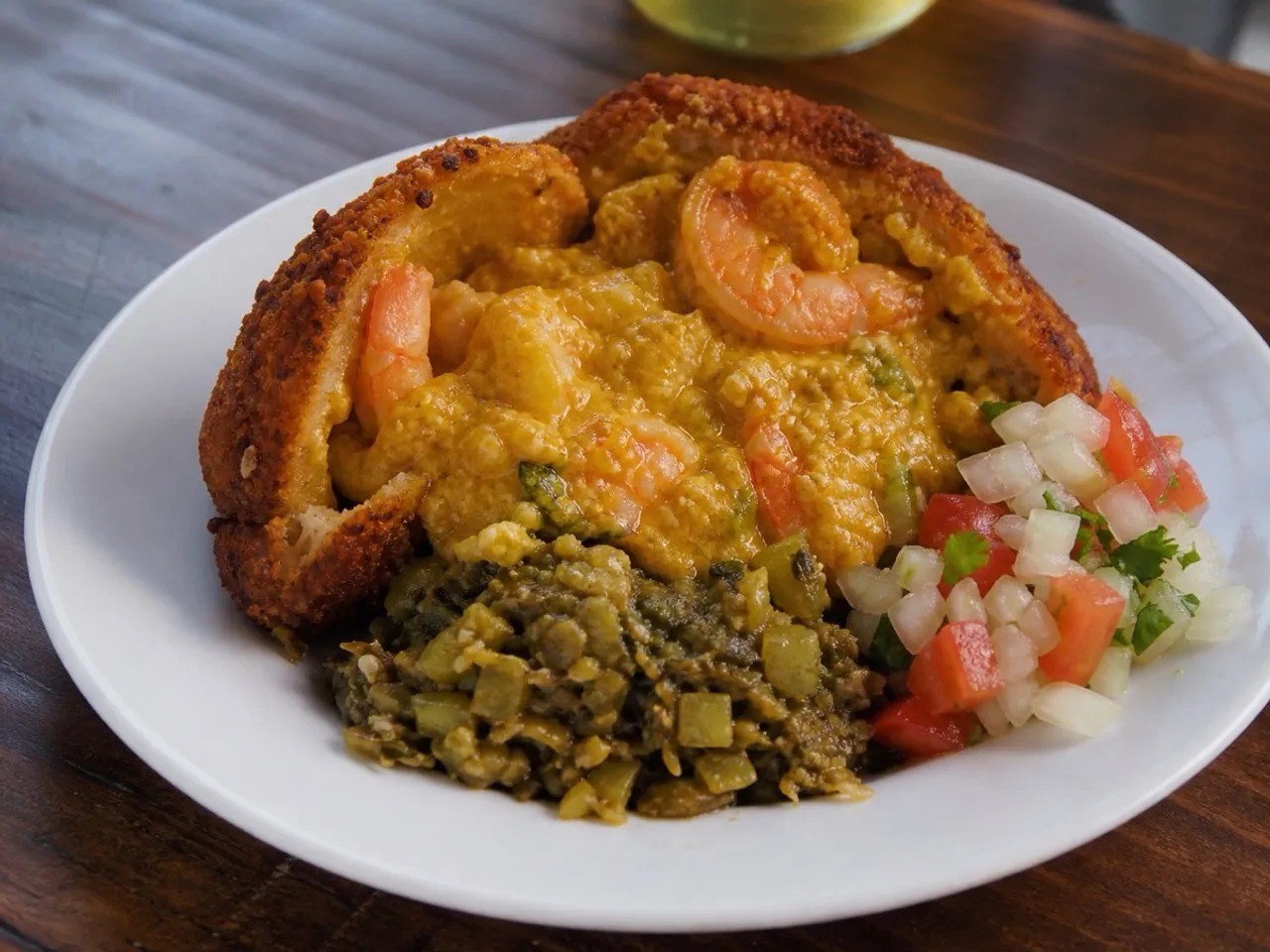 Serving Images are for illustrative purposes only, may be inaccurate, and do not guarantee the presence or absence of specific ingredients.
 Acarajé
Bahia's iconic street fritter — black-eyed peas ground and fried in dendê palm oil, split open and filled with vatapá, shrimp, and peppery caruru.
Contains common allergens
In the app, Listahan checks these against your household automatically.
Good to know
- Crispy
Matched from this dish's own ingredients and timing. Browse more: crispy recipes
Instructions
8 steps- 1
Drain the soaked black-eyed peas and rub them between your hands or in a towel to slip off and remove all the skins, then rinse well.
- 2
In a food processor, blend the peeled peas with the onion and salt, adding only a splash of water as needed, until the mixture forms a thick, fluffy, pale paste.
- 3
Beat the paste vigorously by hand or with a mixer for several minutes to incorporate air, until it becomes light and aerated.
- 4
Heat dende oil in a deep pot to 350F.
- 5
Scoop portions of the bean paste with two spoons, shaping them into oval fritters, and carefully slide them into the hot oil.
- 6
Fry for 4 to 5 minutes, turning once, until deeply golden orange-red and cooked through, then drain on paper towels.
- 7
Slice each acaraje open without cutting all the way through, and fill generously with vatapa, shrimp, and caruru.
- 8
Serve hot with hot pepper sauce on the side.
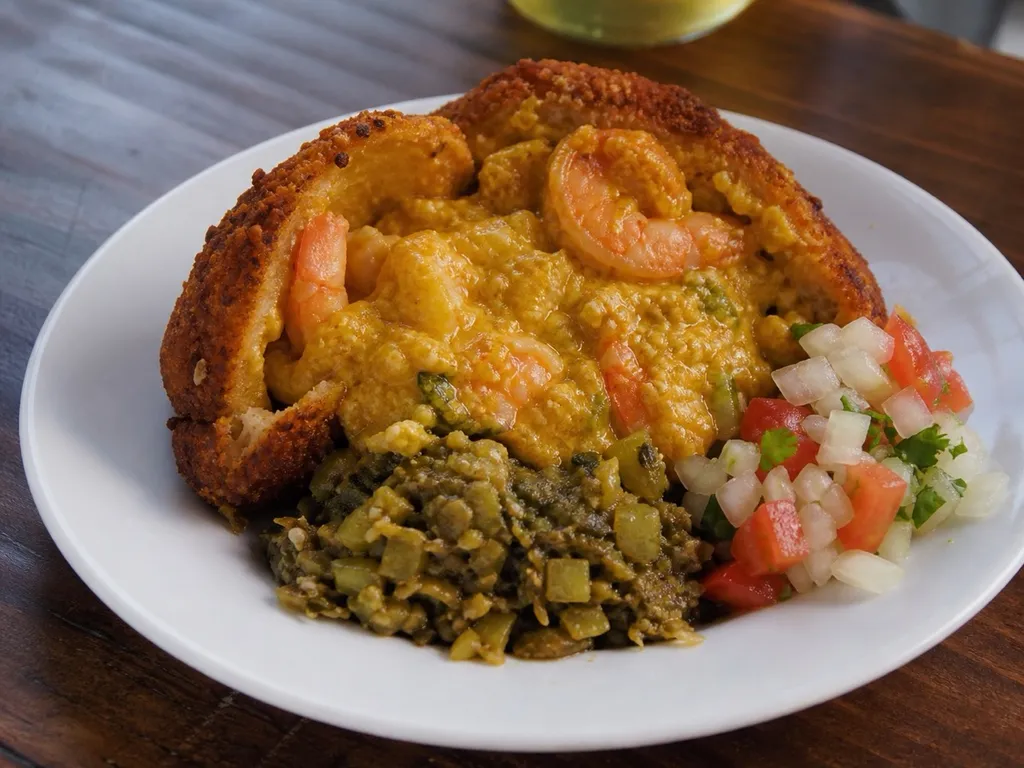 Images are for illustrative purposes only, may be inaccurate, and do not guarantee the presence or absence of specific ingredients.
 Listahan Family Score™
61/100
Works for many families
Score reflects how well this recipe fits a typical busy household. In the app, your Family Score is personalized to your household's allergens, kids, and pantry.
Nutrition
per serving160
Calories
26 g
Protein
14 g
Carbs
1 g
Fat
Estimated per serving. Actual values depend on the brands and portions you use.
Listahan cooking guide
Chef notes & practical guide
Technique notes, ingredient swaps, serve-alongside ideas, storage guidance, and equipment for this recipe.
Cultural context
Acarajé is closely tied to Bahia, especially Salvador, where it is sold by baianas in white dress from street stands and also carries meaning in Afro-Brazilian religious traditions. Its roots trace to West African akara, a black-eyed pea fritter, carried across the Atlantic and adapted in Brazil with dendê palm oil frying and, often, a shrimp filling tucked into the split fritter.
Listahan note
This version keeps to the fritter itself: soaked, blended black-eyed peas fried until the crust crackles, with shrimp as the filling. Full Bahian servings often add vatapá or caruru inside as well, but this version focuses on getting the bean batter and the fry right first.
Technique cues
- Rub the soaked black-eyed peas between your hands to loosen their skins before blending; fewer skins in the batter means a lighter, less grainy fritter.
- Blend with only a little water so the batter holds its shape on a spoon rather than spreading thin once it hits the oil.
- Beat the blended batter by hand for a few minutes before frying. Working air into it is what keeps the inside light instead of dense and heavy.
Kitchen flow
- Parallel prep
- Soak the black-eyed peas well ahead of time, then blend and beat the batter while the frying oil comes up to temperature.
- Make-ahead
- Blend and beat the batter a few hours ahead and keep it covered and chilled; fry close to serving so the crust stays crisp.
- Leftover move
- Reheat leftover fritters until the crust firms up again, then tuck in warmed cooked shrimp just before serving.
- Cleanup rhythm
- Rinse the blender right after the batter comes out, then strain and store the frying oil once it has cooled.
Ingredient brief
Role, handling, and swap guidance for each key ingredient.
Black-eyed peas
Fritter base
Purpose: They give acarajé its structure, pale interior, and slightly nutty bean flavor.
Handling: Soak well, rub off as many loose skins as you can, then blend until the batter can hold its shape on a spoon.
Adaptation: Cowpeas are the closest traditional relative; canned black-eyed peas make a softer, wetter batter and need careful draining.
Shrimp
Savory filling
Purpose: Shrimp brings the briny, concentrated bite that many Bahian acarajé servings are built around.
Handling: Use cooked shrimp for filling, or season and cook raw shrimp separately, then tuck it into the split fritter while it is still hot.
Adaptation: Leave the fritter unfilled, or split it and add a simple bean spread for a version without shellfish.
Frying oil
Frying medium
Purpose: Steady, hot oil is what makes the outside crisp and deep golden instead of pale and oil-soaked.
Handling: Heat the oil until it shimmers and holds a steady temperature, then fry in small batches so it does not cool down.
Adaptation: Traditional dendê palm oil gives acarajé its deep orange color and earthy flavor; a neutral oil fries just as well but with a paler color and milder taste.
Blender or food processor
Batter equipment
Purpose: Blending the soaked peas into a smooth, cohesive paste is what gives the fritter its light interior instead of a coarse, gritty one.
Handling: Blend with only a small amount of water, stopping once the mixture is thick and smooth rather than runny.
Adaptation: A mortar and pestle works with more effort, for cooks who want the traditional hand-pounded texture.
Beating the batter (aeration step)
Technique that lightens the fritter
Purpose: Vigorously beating or whipping air into the blended paste before frying is a big part of what keeps acarajé from tasting dense.
Handling: Whisk or beat the batter by hand for a few minutes until it looks slightly fluffier, then shape it right away.
Adaptation: There is no real substitute for this step; skipping it makes for a noticeably heavier fritter.
Technique notes
- Shape the batter by passing it between two spoons rather than trying to roll it by hand; it is too soft to hold a round shape otherwise.
- Fry in small batches so the oil temperature does not drop. Crowded batches make pale, oil-heavy fritters instead of crisp ones.
- Split the fritters right after draining, while they are still hot enough to crackle, then tuck in the shrimp so it warms through.
Ingredient swaps
- No-shrimp direction
- Split the fritter and season it plain, or fill it with a simple bean or vegetable spread instead of shrimp for a version without shellfish.
- Neutral oil swap
- Fry in a neutral oil if dendê palm oil is not available; the fritters cook the same way but come out with a paler color and milder flavor.
- Weeknight shortcut
- Use dried, peeled black-eyed peas if you can find them, since rubbing off the skins by hand is the slowest part of preparing the batter.
Serve alongside
- Fresh tomato and onion salad
- Pepper sauce (molho de pimenta)
- Sliced lime
- Coconut rice
- Guaraná
- Fresh lime soda
- Cold lager
Serving suggestions only — check pairings for your household's allergens.
Storage & reheating
- Refrigerate cooked fritters and shrimp separately in sealed containers for up to 2 days.
- Reheat fritters in a hot oven or air fryer until the crust firms up again, then add warm shrimp after reheating.
- Freeze unfilled fritters in a single layer, then thaw and re-crisp in the oven before filling and serving.
Equipment
- Blender or food processor
- Deep, heavy pot or skillet for frying
- Slotted spoon
- Two spoons for shaping
Make this household-aware
Listahan Pro checks this recipe against your household's allergens, finds pantry-aware swaps, builds the shopping list, and helps you plan the week around it.
Plan it in Listahan
Add Acarajé to your week, check it against your household's allergens, and build the shopping list automatically.
More South American recipes
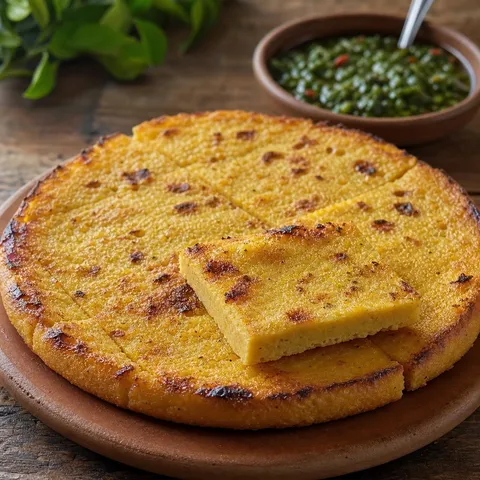 South American Lens Verified Images are for illustrative purposes only, may be inaccurate, and do not guarantee the presence or absence of specific ingredients.
 Fainá
Buenos Aires's thin chickpea flatbread, baked until golden and fragrant — simple, crispy-edged, and traditionally eaten layered right on top of a pizza slice.
 South American Lens Verified Images are for illustrative purposes only, may be inaccurate, and do not guarantee the presence or absence of specific ingredients.
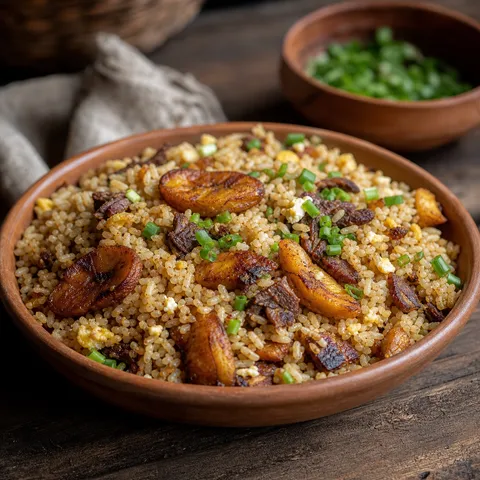
 Majadito
Bolivia's rustic one-pot comfort — dried charque beef simmered down with rice, tomato, and spices into a savory, fragrant dish topped with a fried egg.
 South American Lens Verified Images are for illustrative purposes only, may be inaccurate, and do not guarantee the presence or absence of specific ingredients.
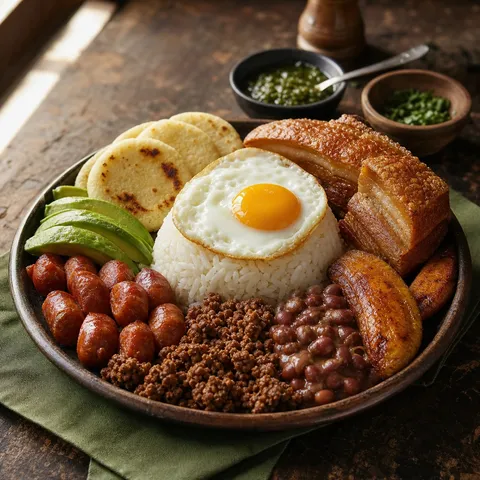
 Bandeja Paisa
Colombia's legendary tray of abundance — red beans, white rice, chicharrón, chorizo, fried egg, plantains, and avocado all piled high for a satisfying feast.