 Spanish Images are for illustrative purposes only, may be inaccurate, and do not guarantee the presence or absence of specific ingredients.
  Serving Images are for illustrative purposes only, may be inaccurate, and do not guarantee the presence or absence of specific ingredients.
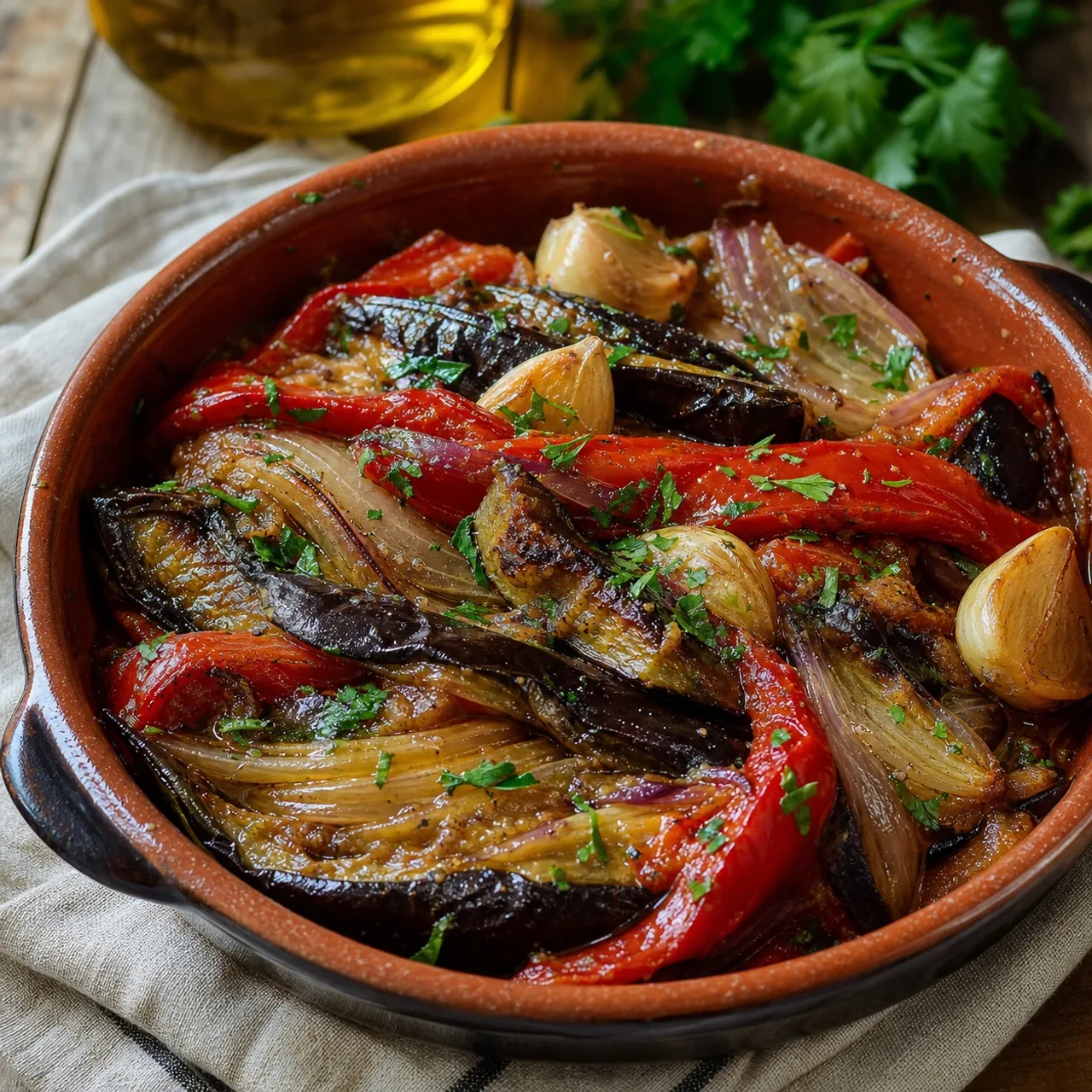
 Escalivada
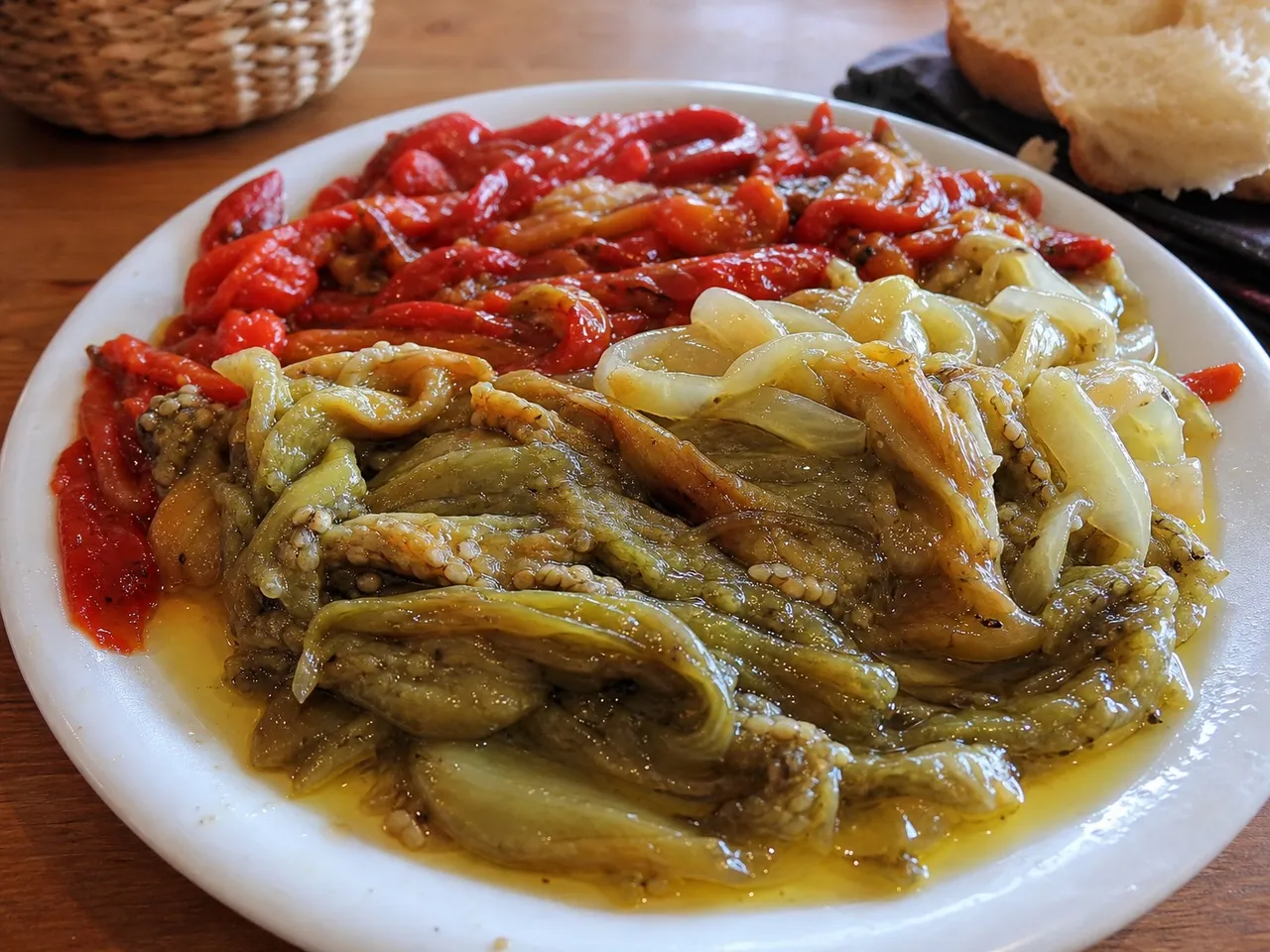
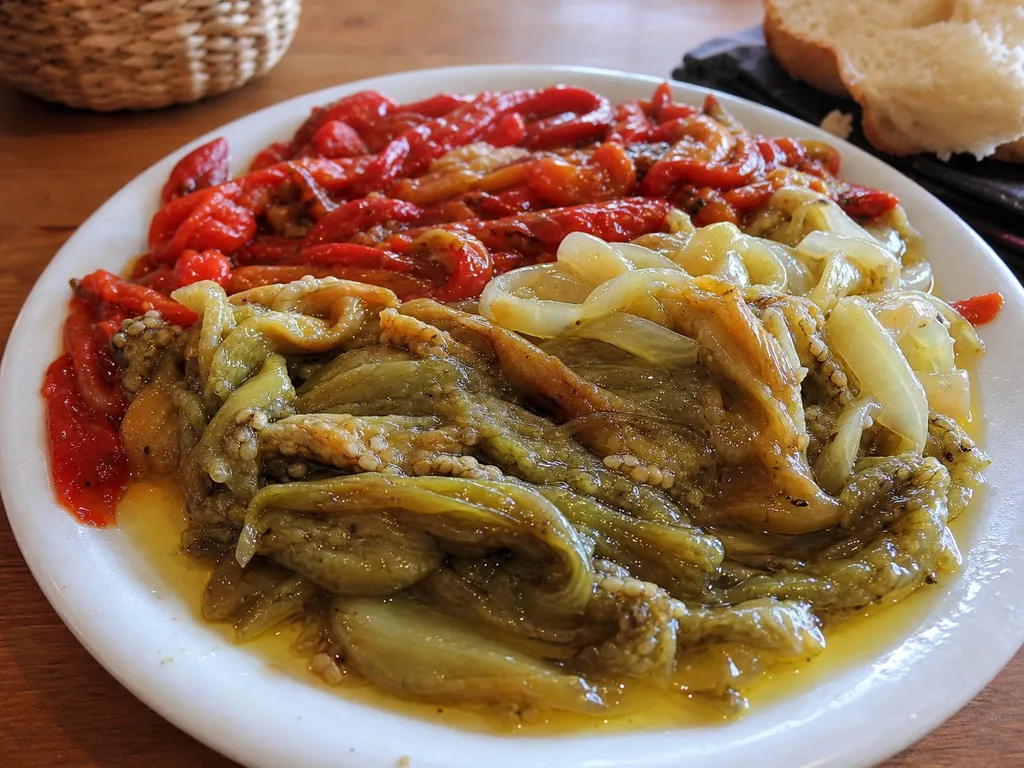
Charred aubergine, red peppers, and onion slow-roasted until silky, then dressed with olive oil — a smoky Catalan side that transforms any meal.
No common allergens detected
Based on this recipe's ingredient list. Always verify with your own brands and labels.
Instructions
8 steps- 1
Preheat the oven to 200C (400F), or prepare a charcoal grill for direct high heat if available.
- 2
Rub the whole aubergines, peppers, and onion lightly with olive oil.
- 3
Roast the vegetables directly on the oven rack or over open flame, turning occasionally, until the skins are completely charred and blackened and the flesh is soft, about 45-50 minutes for the aubergines and peppers and slightly longer for the onion.
- 4
Transfer the charred vegetables to a bowl and cover tightly to let them steam for 15 minutes, which loosens the skins.
- 5
Once cool enough to handle, peel off the blackened skins, remove the seeds from the peppers, and discard the stems, letting the juices collect in a bowl underneath.
- 6
Tear the aubergine, pepper, and onion flesh into long strips by hand, never with a knife, to keep the texture right.
- 7
Arrange the strips on a platter, season with salt, drizzle generously with good olive oil and a touch of vinegar if using, and scatter with minced garlic.
- 8
Let sit at room temperature for at least 30 minutes before serving to let the flavors meld.
 Images are for illustrative purposes only, may be inaccurate, and do not guarantee the presence or absence of specific ingredients.
 Listahan Family Score™
73/100
Good fit for most families
Score reflects how well this recipe fits a typical busy household. In the app, your Family Score is personalized to your household's allergens, kids, and pantry.
Nutrition
per serving190
Calories
3 g
Protein
16 g
Carbs
14 g
Fat
Estimated per serving. Actual values depend on the brands and portions you use.
Listahan cooking guide
Chef notes & practical guide
Technique notes, ingredient swaps, serve-alongside ideas, storage guidance, and equipment for this recipe.
Cultural context
Escalivada is a Catalan dish of vegetables, chiefly eggplant, peppers, and onions, roasted whole over embers until their skins char and the flesh turns smoky and sweet, then peeled and dressed simply with olive oil. The name comes from the Catalan word escalivar, to cook in ashes, pointing to its open-fire origins. It is a celebration of how fire transforms humble summer vegetables.
Listahan note
This version chars the vegetables whole under a broiler or over a flame to mimic the ember-roasted original, then peels and dresses them in good olive oil. It is built as a make-ahead vegetable dish that tastes even better the next day.
Technique cues
- Char the vegetable skins until genuinely blackened; the smoky flavor lives in that burnt exterior, which you then discard.
- Steam the charred peppers in a covered bowl for ten minutes so the skins loosen and peel away cleanly.
- Tear rather than cut the roasted vegetables into strips so they hold the dressing better and look rustic.
Kitchen flow
- Parallel prep
- Char all the vegetables together under the broiler at once, then peel them while a fresh batch roasts if you are scaling up.
- Make-ahead
- Escalivada keeps and improves for two to three days, so make it well ahead and let the vegetables soak up the oil.
- Leftover move
- Pile leftover escalivada onto toasted bread with anchovies or goat cheese for a quick tapa or sandwich.
- Cleanup rhythm
- Line the roasting tray with foil before charring so the blackened skins and juices lift away in one sheet.
Ingredient brief
Role, handling, and swap guidance for each key ingredient.
Eggplant
The smoky heart
Purpose: Charred and peeled, it turns silky and absorbs the smoke that defines escalivada.
Handling: Roast whole until the skin blackens and the flesh collapses, then peel and tear into strips.
Adaptation: It is central to the dish, but you can lean more on peppers if eggplant is unavailable.
Red bell peppers
Sweet smoky element
Purpose: Roasting concentrates their sweetness and the char adds depth alongside the eggplant.
Handling: Char whole, steam to loosen skins, then peel, seed, and tear into strips.
Adaptation: Any sweet pepper works; piquillo peppers add a more Spanish character.
Onions
Sweet aromatic
Purpose: Whole roasted onions turn jammy and sweet, balancing the smoke of the other vegetables.
Handling: Roast whole until soft, then peel and slice or tear.
Adaptation: Shallots roast similarly for a milder, sweeter note.
Extra virgin olive oil
The dressing
Purpose: A generous pour of good oil is the only dressing the dish needs and ties the smoky vegetables together.
Handling: Drizzle over the peeled, torn vegetables and let them marinate.
Adaptation: Any quality extra virgin oil works; this is where the flavor comes from, so use a good one.
Garlic and sherry vinegar
Brightening seasoning
Purpose: A touch of garlic and vinegar lifts the rich smoky vegetables without overpowering them.
Handling: Mince the garlic finely and whisk with the vinegar and oil into a light dressing.
Adaptation: Red wine vinegar for the sherry vinegar; garlic can be lightly roasted for a softer note.
Technique notes
- Save any roasting juices that collect under the vegetables and whisk them into the dressing for extra smoky flavor.
- Char the vegetables directly over a gas flame or grill if you can, which gives a deeper smoke than the broiler.
- Serve at room temperature rather than cold, since chilling mutes the smoky, oily richness.
Ingredient swaps
- Smoke-boost direction
- Add a pinch of smoked paprika to the dressing if you only have a broiler and want more ember character.
- Heartier meal direction
- Top with flaked tuna, anchovies, or a soft cheese to turn the side into a light main.
- Lower-oil direction
- Dress more lightly and add extra sherry vinegar and herbs so the dish stays bright with less oil.
Serve alongside
- Grilled crusty bread
- A bowl of olives
- Manchego cheese
- Anchovies or canned tuna
- A chilled Catalan white
- A glass of cava
- Sparkling water with lemon
Serving suggestions only — check pairings for your household's allergens.
Storage & reheating
- Store escalivada in its oil in an airtight container in the fridge for up to four days, where it continues to improve. Bring back to room temperature before serving so the olive oil and flavors loosen. It does not freeze well because the vegetables turn watery on thawing.
Equipment
- A broiler, grill, or gas flame
- A baking tray lined with foil
- A covered bowl for steaming peppers
- A small whisk for the dressing
Make this household-aware
Listahan Pro checks this recipe against your household's allergens, finds pantry-aware swaps, builds the shopping list, and helps you plan the week around it.
Plan it in Listahan
Add Escalivada to your week, check it against your household's allergens, and build the shopping list automatically.
More Spanish recipes
 Spanish Lens Verified Images are for illustrative purposes only, may be inaccurate, and do not guarantee the presence or absence of specific ingredients.
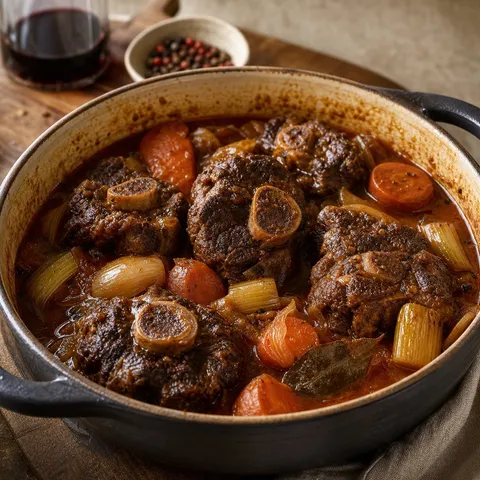
 Rabo de Toro
Oxtail slow-braised for hours with red wine, vegetables, and cloves until the meat falls from the bone in a deeply savoury, velvety Andalusian stew.
 Spanish Lens Verified Images are for illustrative purposes only, may be inaccurate, and do not guarantee the presence or absence of specific ingredients.
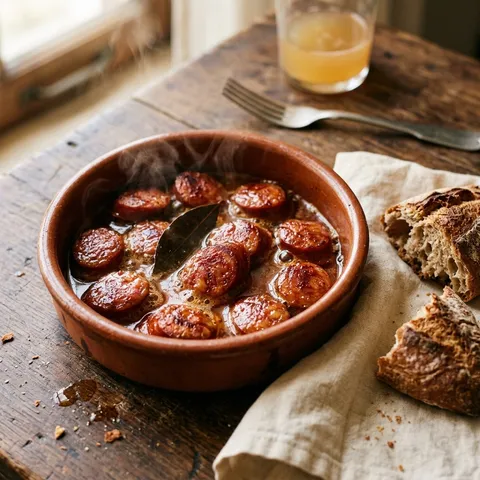
 Chorizo a la Sidra
Sliced Spanish chorizo simmered in dry Asturian cider until the sauce is tangy, smoky, and gloriously red — a quick tapas that pairs beautifully with beer.
 Spanish Lens Verified Images are for illustrative purposes only, may be inaccurate, and do not guarantee the presence or absence of specific ingredients.
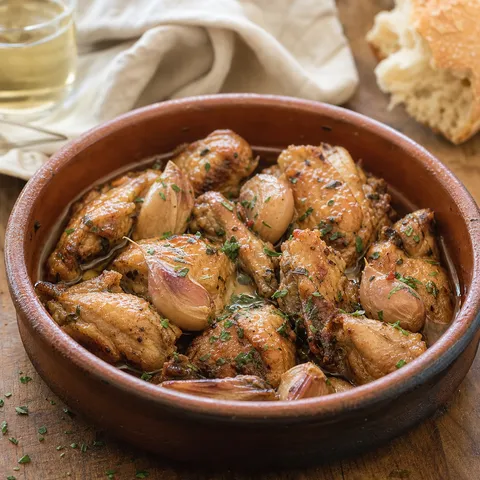
 Pollo al Ajillo
Chicken pieces braised in white wine and a generous amount of garlic until the sauce is sticky, fragrant, and impossible to resist mopping up.