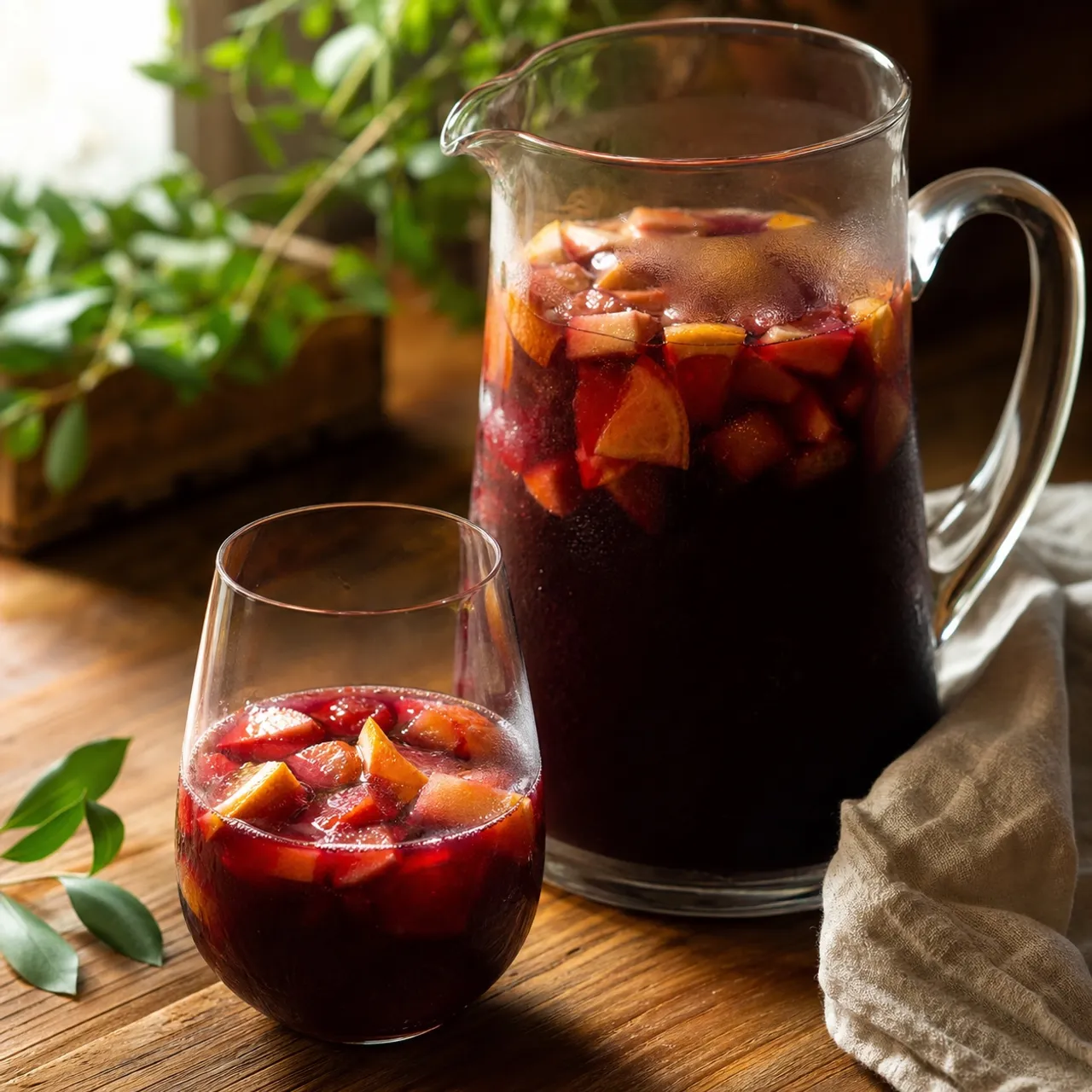
 Spanish Images are for illustrative purposes only, may be inaccurate, and do not guarantee the presence or absence of specific ingredients.
 Sangría
The quintessential Spanish red wine punch, brightened with brandy, citrus, and fresh fruit for a refreshing pitcher.
No common allergens detected
Based on this recipe's ingredient list. Always verify with your own brands and labels.
Instructions
5 steps- 1
In a large pitcher, combine the brandy and sugar, stirring vigorously until the sugar fully dissolves into a syrupy base.
- 2
Add the chopped orange, lemon, and apple, then muddle gently with a wooden spoon to release the citrus oils and juices without crushing the fruit to pulp.
- 3
Pour in the entire bottle of red wine, stir to combine, then cover and refrigerate for at least 4 hours (or overnight) so the fruit infuses the wine.
- 4
Just before serving, top with the chilled lemon-lime soda for fizz and stir once.
- 5
Pour over ice into wine glasses, spooning a little of the macerated fruit into each glass, and serve immediately.
Listahan Family Score™
70/100
Good fit for most families
Score reflects how well this recipe fits a typical busy household. In the app, your Family Score is personalized to your household's allergens, kids, and pantry.
Nutrition
per serving160
Calories
1 g
Protein
35 g
Carbs
0 g
Fat
Estimated per serving. Actual values depend on the brands and portions you use.
Listahan cooking guide
Chef notes & practical guide
Technique notes, ingredient swaps, serve-alongside ideas, storage guidance, and equipment for this recipe.
Cultural context
Sangría grew out of the practical habit of stretching everyday red wine with fruit, sugar, and a stronger pour for gatherings. In Spain it is more tied to warm-weather meals, parties, and tourist tables than to formal wine service, and the best versions taste like wine first, fruit second.
Listahan note
This version keeps the pitcher classic and small-batch: dry Spanish red wine, brandy, citrus, apple, and a fizzy finish added only at the end. The long chill is doing real work here, softening the fruit and letting the wine pick up citrus oils without turning flat.
Technique cues
- Dissolve the sugar in the brandy before adding wine so you do not end up with grains sitting at the bottom of the pitcher.
- Muddle the fruit lightly, especially the lemon. You want juice and fragrant peel oils, not bitter crushed pith.
- Add the soda just before pouring. If it sits in the pitcher for hours, the drink loses the lift that makes the first glass feel bright.
Kitchen flow
- Parallel prep
- Cut the fruit while the sugar dissolves in the brandy, then clear fridge space for the pitcher before the wine goes in.
- Make-ahead
- Mix the brandy, sugar, fruit, and wine several hours ahead or the night before; hold back the soda until serving.
- Leftover move
- Spoon the wine-soaked fruit over vanilla ice cream, pound cake, or plain yogurt for a quick dessert.
- Cleanup rhythm
- Rinse the pitcher right after serving so the wine tint and sticky fruit sugars do not dry onto the glass.
Ingredient brief
Role, handling, and swap guidance for each key ingredient.
Dry Spanish red wine (Tempranillo or Garnacha)
Wine base
Purpose: A dry, medium-bodied red gives the pitcher structure without making the fruit taste syrupy.
Handling: Chill the bottle before mixing if you want the sangría ready to serve soon after its infusion time.
Adaptation: Another dry red with moderate tannin can work, but very oaky or very heavy wines can make the pitcher taste harsh when chilled.
Brandy
Fortifier and sugar solvent
Purpose: Brandy adds warmth and helps the sugar dissolve into a smooth base before the wine goes in.
Handling: Stir it hard with the sugar until the mixture looks syrupy rather than sandy.
Adaptation: Orange liqueur gives a sweeter, more citrus-forward pitcher; use a lighter hand if you do not want it too sweet.
Granulated sugar
Sweetness balance
Purpose: Sugar rounds the wine's tannin and helps the citrus taste juicy instead of sharp.
Handling: Dissolve it fully in the brandy before adding fruit or wine.
Adaptation: Simple syrup blends even faster; start with a small amount and adjust after the sangría has chilled.
Orange, lemon, and apple
Fruit infusion
Purpose: Orange brings sweetness and peel aroma, lemon sharpens the wine, and apple soaks up the mixture while staying crisp.
Handling: Cut everything into bite-size pieces so each glass gets a little fruit without needing a spoonful of large wedges.
Adaptation: Peach, nectarine, or berries can replace the apple for a softer summer version, though they will break down more quickly.
Chilled lemon-lime soda or club soda
Fizzy finish
Purpose: The bubbles lighten the wine and make the pitcher feel lively right at serving.
Handling: Keep it cold and add it after the sangría has infused, just before pouring over ice.
Adaptation: Club soda keeps the drink drier, while lemon-lime soda makes it sweeter and more casual.
Technique notes
- Taste after chilling, not before. The fruit and sugar need time to settle into the wine before you decide whether it needs more sweetness or fizz.
- Keep the fruit pieces generous enough to hold their shape. Tiny dice can make the sangría look cloudy and are harder to portion into glasses.
- Pour over fresh ice in each glass instead of loading the pitcher with ice. The pitcher stays concentrated, and each serving stays cold without watering down the whole batch.
Ingredient swaps
- Drier pitcher
- Use club soda instead of lemon-lime soda and keep the sugar as written until after chilling, then adjust by the spoonful if needed.
- Sweeter party style
- Use lemon-lime soda and add a few extra orange pieces; the drink will taste rounder and less wine-forward.
- No-brandy path
- Skip the brandy and dissolve the sugar in a small splash of wine first; the pitcher will be lighter and less warming.
- Fruit-season shift
- Use peach or nectarine in place of apple when they are ripe, but add softer fruit closer to serving if you want cleaner-looking glasses.
Serve alongside
- Tortilla española
- Pan con tomate
- Patatas bravas
- Manchego with quince paste
- Sparkling water with lemon
- Cafe con hielo
- Cold mint tea
Serving suggestions only — check pairings for your household's allergens.
Storage & reheating
- Refrigerate the wine and fruit mixture covered, with the soda kept separate until serving.
- Do not reheat; serve cold over fresh ice and stir once after adding the soda.
- Freezing is not a good fit for the finished pitcher because the fruit softens and the bubbles disappear.
Equipment
- Large glass pitcher
- Wooden spoon
- Cutting board and sharp knife
- Wine glasses
Make this household-aware
Listahan Pro checks this recipe against your household's allergens, finds pantry-aware swaps, builds the shopping list, and helps you plan the week around it.
Plan it in Listahan
Add Sangría to your week, check it against your household's allergens, and build the shopping list automatically.
More Spanish recipes
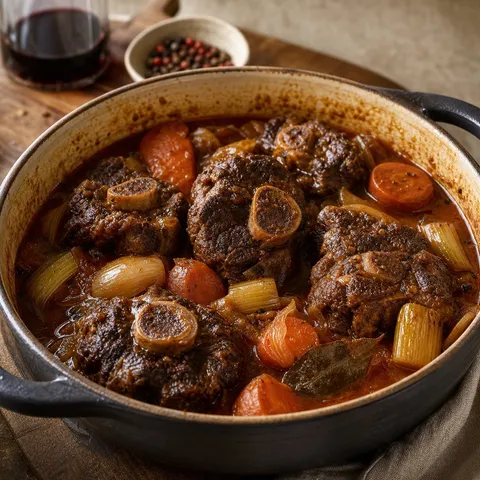 Spanish Lens Verified Images are for illustrative purposes only, may be inaccurate, and do not guarantee the presence or absence of specific ingredients.
 Rabo de Toro
Oxtail slow-braised for hours with red wine, vegetables, and cloves until the meat falls from the bone in a deeply savoury, velvety Andalusian stew.
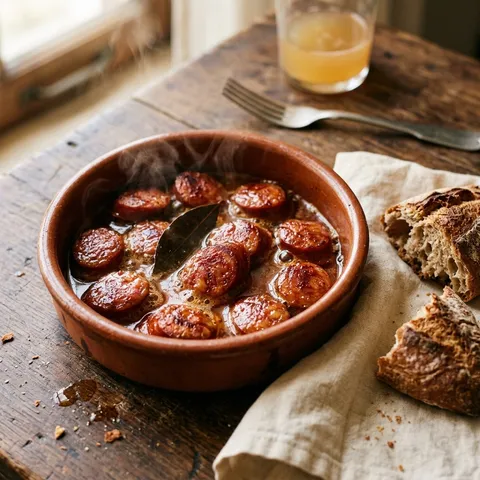 Spanish Lens Verified Images are for illustrative purposes only, may be inaccurate, and do not guarantee the presence or absence of specific ingredients.
 Chorizo a la Sidra
Sliced Spanish chorizo simmered in dry Asturian cider until the sauce is tangy, smoky, and gloriously red — a quick tapas that pairs beautifully with beer.
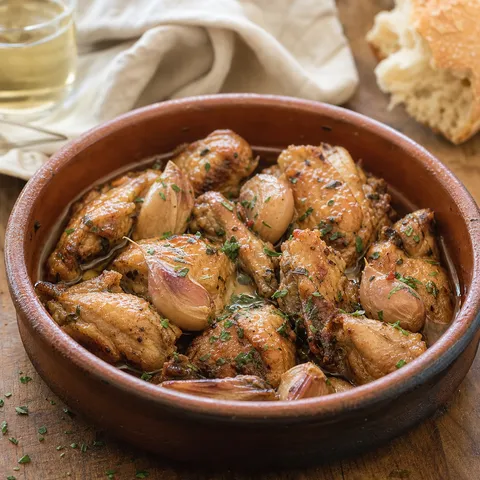 Spanish Lens Verified Images are for illustrative purposes only, may be inaccurate, and do not guarantee the presence or absence of specific ingredients.
 Pollo al Ajillo
Chicken pieces braised in white wine and a generous amount of garlic until the sauce is sticky, fragrant, and impossible to resist mopping up.