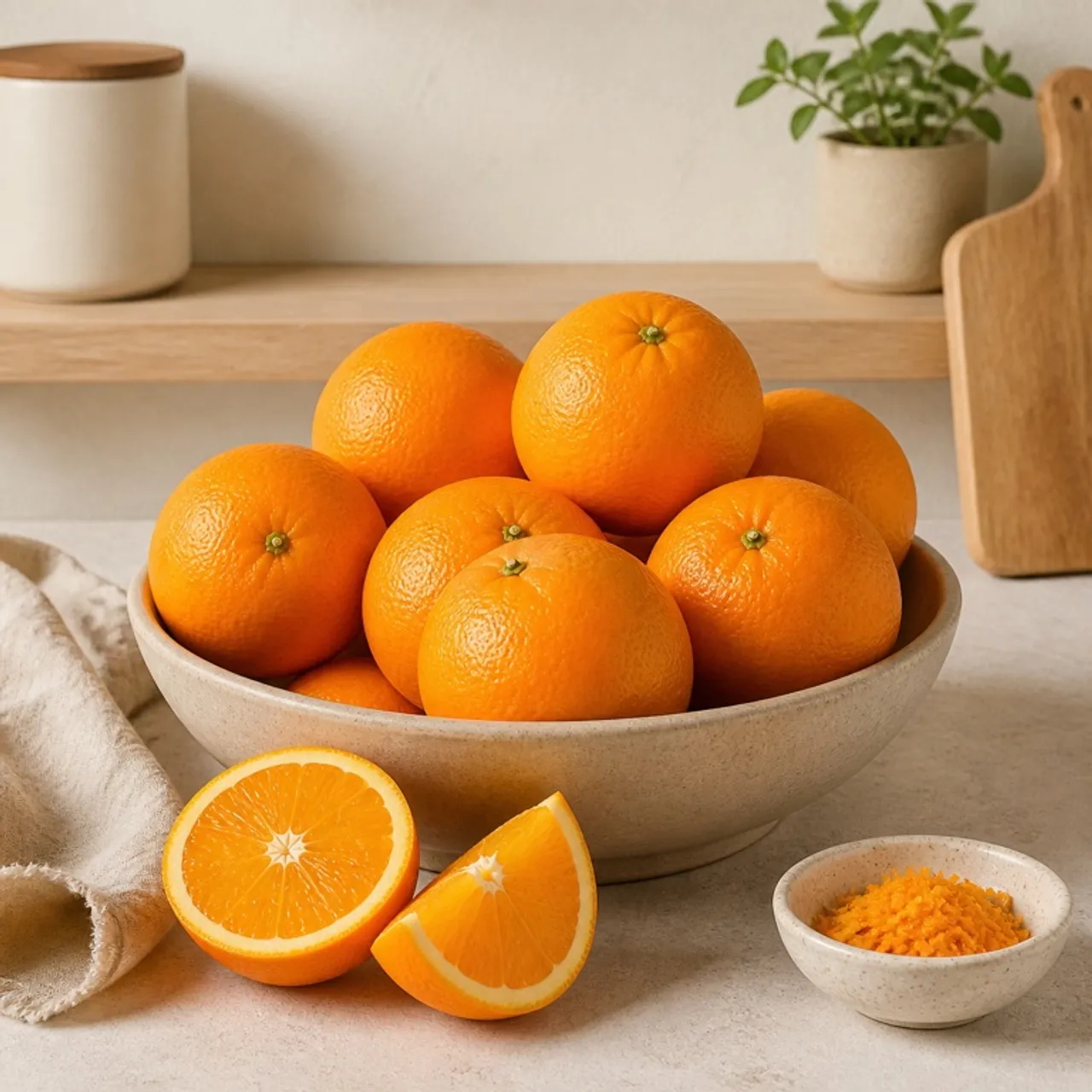
 Food Lens Images are for illustrative purposes only, may be inaccurate, and do not guarantee the presence or absence of specific ingredients.
 Food Lens · Produce
Oranges
Bright, sweet-tart, and floral with a clean acidic finish; zest is intensely aromatic and perfumed with citrus oils; flesh is juicy with varying sweetness depending on variety.
Lens VerifiedOranges are the world's most widely grown tree fruit — a sweet citrus whose juice, zest, flesh, and peel all have distinct culinary uses. The juice delivers bright acidity and sweetness; the zest (the outermost coloured layer of peel) carries concentrated aromatic oils that transform baked goods, marinades, and dressings; the flesh segments add texture to salads and desserts. With dozens of commercial varieties, oranges range from tart Navels and Valencias to sweet Cara Caras and dramatic Blood oranges.
Where it comes from
Cradled in the orchards of ancient China and carried west along spice routes, the orange arrived in the Mediterranean and made itself at home — eventually becoming the fruit that defines the colour of an entire morning.
Varieties — Navel oranges are seedless, easy to peel, and the standard eating orange across most of the world. Valencia oranges are juicier and preferred for commercial juice production. Blood oranges (Moro, Tarocco) have deep red flesh from anthocyanin pigments and a slight berry note. Cara Cara are pink-fleshed Navels with lower acidity. Seville (bitter) oranges are used for marmalade and liqueurs rather than fresh eating.
Oranges carry celebratory symbolism in Chinese New Year (gold colour, round shape = prosperity) and are exchanged as gifts across East Asia. In Spain, Seville's bitter orange trees line the streets as ornamentals, their fruit harvested for British marmalade — a centuries-old export trade.
In a modern kitchen — Microplane-zested orange peel added to a vinaigrette or cake batter at the last moment delivers a perfumed lift that pre-extracted juice cannot match.
Buying it
Choose oranges that feel heavy for their size — weight indicates juice content. Skin texture is unrelated to flavour or ripeness; rough-skinned oranges can be just as sweet as smooth ones. Avoid any with very soft spots or mould. For zesting, choose unwaxed organic oranges when possible, or scrub waxed skins thoroughly under hot water before zesting.
Storing it
Oranges keep longest in the fridge crisper drawer, where the cold slows moisture loss and mould growth; a few days on the counter is fine if you'll eat them soon. Soft spots or a fermented smell are signs they're past their best.
Keeps about 21 days in the fridge.
In season
Peak season is December–March, though it's available year-round.
Oranges are best in the winter citrus season, with varieties and imports supporting year-round supply.
Out of oranges? Good swaps
- Mandarin or clementine — Sweeter and less acidic; works in fresh applications but will shift the balance of a sauce or dressing.
- Blood orange — Direct variety swap; slightly berry-edged flavour and dramatic colour.
- Lemon (for zest) — Different aroma profile — floral vs. sharp; use where citrus brightness matters more than orange character.
General cooking guidance — always check the labels on the products you use. Listahan’s allergen checks run automatically when you plan a recipe in the app. Not medical advice.
Recipes that use oranges
Common questions about oranges
Is oranges vegan?
Oranges is generally plant-based and suitable for a vegan diet, but brands differ — confirm on the label.
What can I use instead of oranges?
Good swaps include Mandarin or clementine, Blood orange, Lemon (for zest). Each behaves a little differently — see the swaps above for notes, and always check labels for allergens.
How do I store oranges?
Oranges keep longest in the fridge crisper drawer, where the cold slows moisture loss and mould growth; a few days on the counter is fine if you'll eat them soon. Soft spots or a fermented smell are signs they're past their best. It keeps about 21 days in the fridge.
More produce
See all


Make oranges about your kitchen — with Listahan Pro
Everything above is free, forever. Pro adds the Household Lens — the same food, seen for your family:
-
Checked for each member
Flags oranges per person against your household's allergies and school rules — not just a generic "contains" tag.
-
Pantry-aware
Knows whether you already have it, what is running low, and the best swap from what is in your kitchen tonight.
-
What it costs near you
A real price from the Presyo community index, so you can plan the budget — not guess.
-
Your household memory
Who likes it, plus your own private notes — brand, where you keep it, who skips it.
Allergen safety is always free — Pro adds the automation, never the safety.
Cook with oranges — safely
Plan a recipe in Listahan and the household allergen check runs automatically — every plan, every swap, every lunchbox. Safety is never paywalled.