 Spanish Images are for illustrative purposes only, may be inaccurate, and do not guarantee the presence or absence of specific ingredients.
  Serving Images are for illustrative purposes only, may be inaccurate, and do not guarantee the presence or absence of specific ingredients.
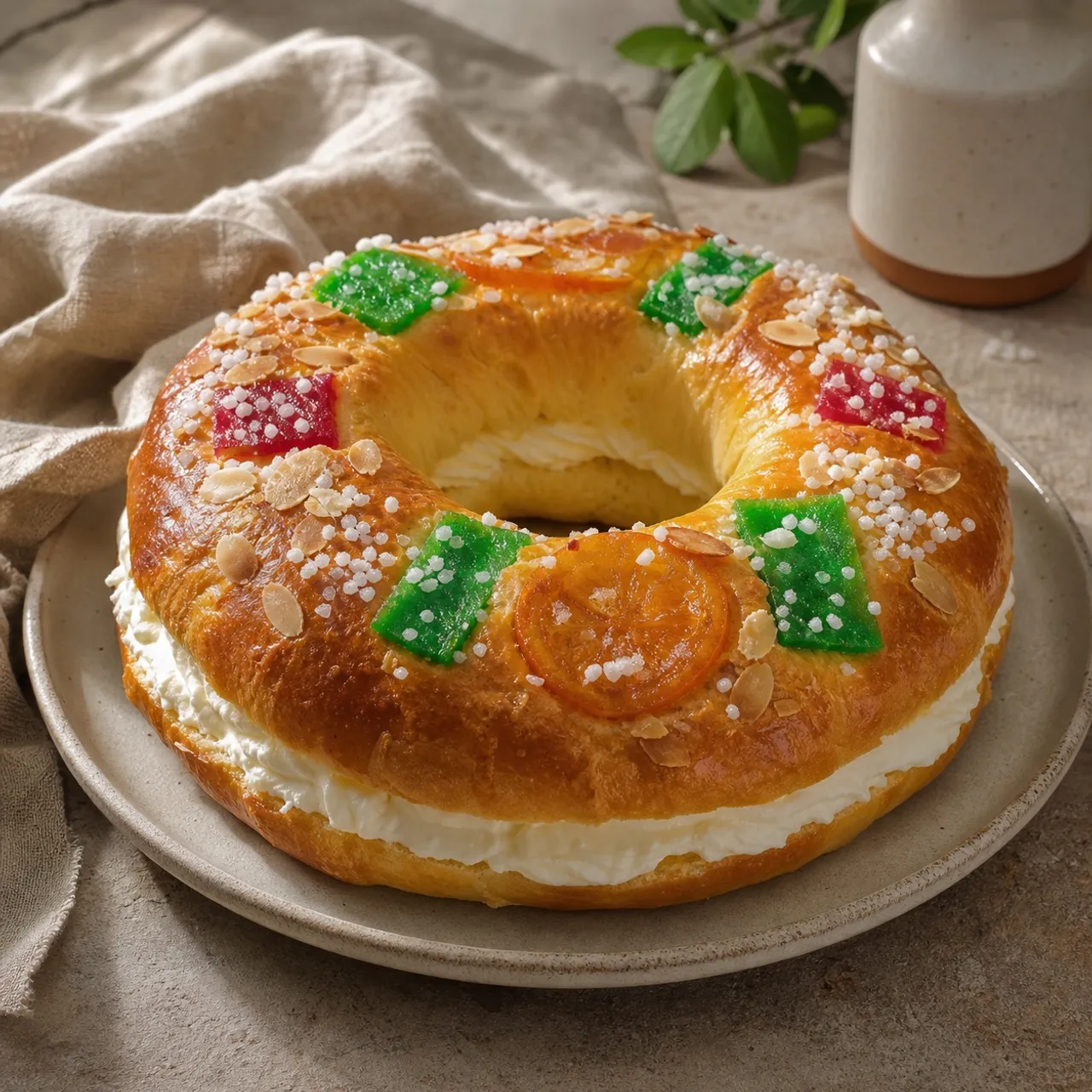
 Roscón de Reyes
Spain's Three Kings Day ring cake — soft, brioche-like dough perfumed with orange blossom, studded with candied fruit, and hiding a tiny surprise inside.
Contains common allergens
In the app, Listahan checks these against your household automatically.
Instructions
7 steps- 1
Dissolve the fresh yeast in the warm milk with a spoonful of the sugar and let stand 10 minutes until foamy.
- 2
In a large bowl, combine the flour, remaining sugar, and salt, then add the yeast mixture, eggs, orange and lemon zest, and orange blossom water, mixing to a shaggy dough.
- 3
Knead in the softened butter a little at a time until the dough is smooth, elastic, and slightly tacky, about 10 minutes by hand or 6 minutes in a stand mixer.
- 4
Cover and let rise in a warm place until doubled, about 2 hours.
- 5
Punch down the dough, shape it into a ring on a lined baking sheet, tuck in a small trinket if using the tradition, and let rise again, covered, for 45 minutes.
- 6
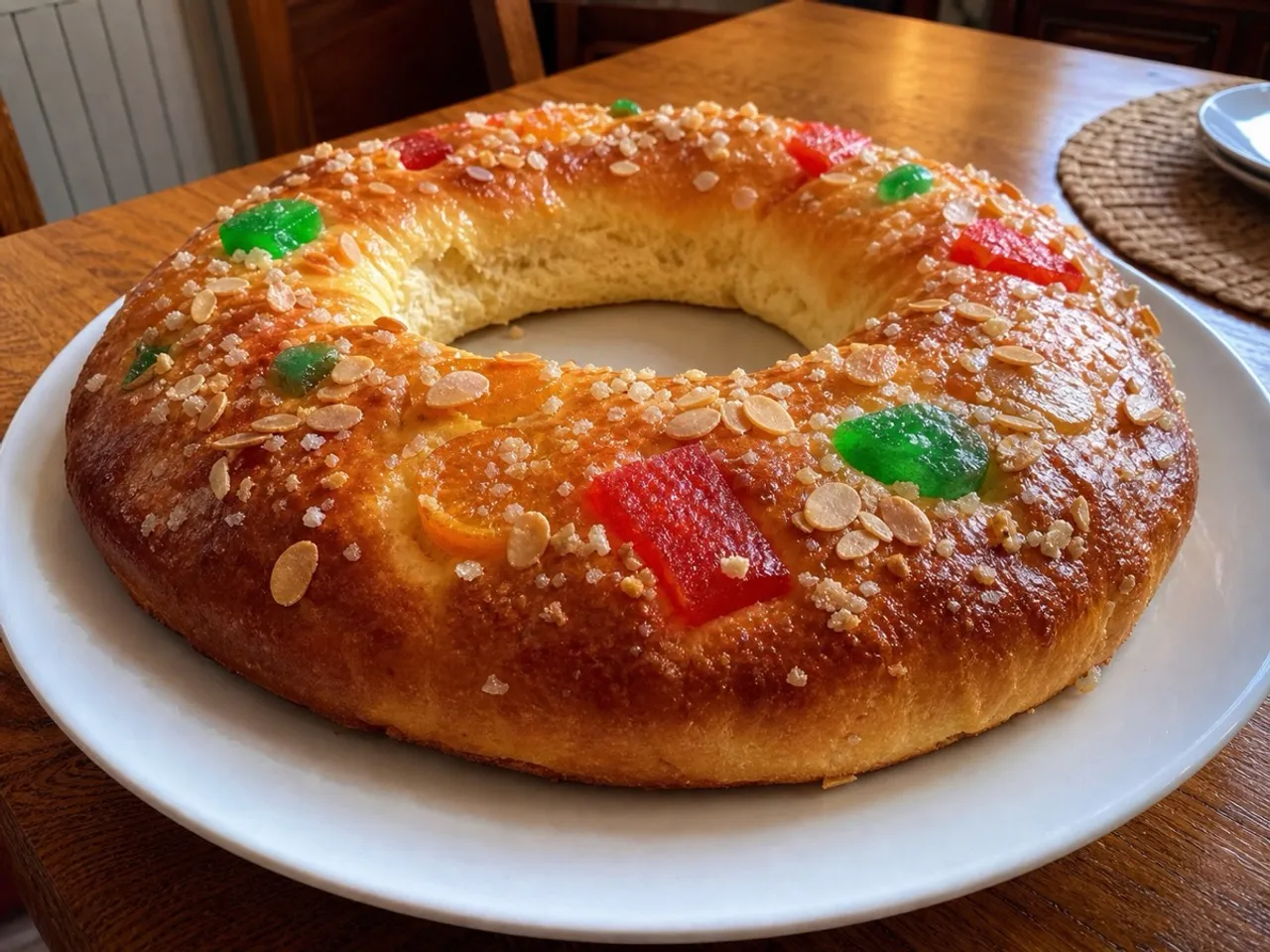
Brush the ring generously with beaten egg and decorate with candied fruit, pearl sugar, and sliced almonds.
- 7
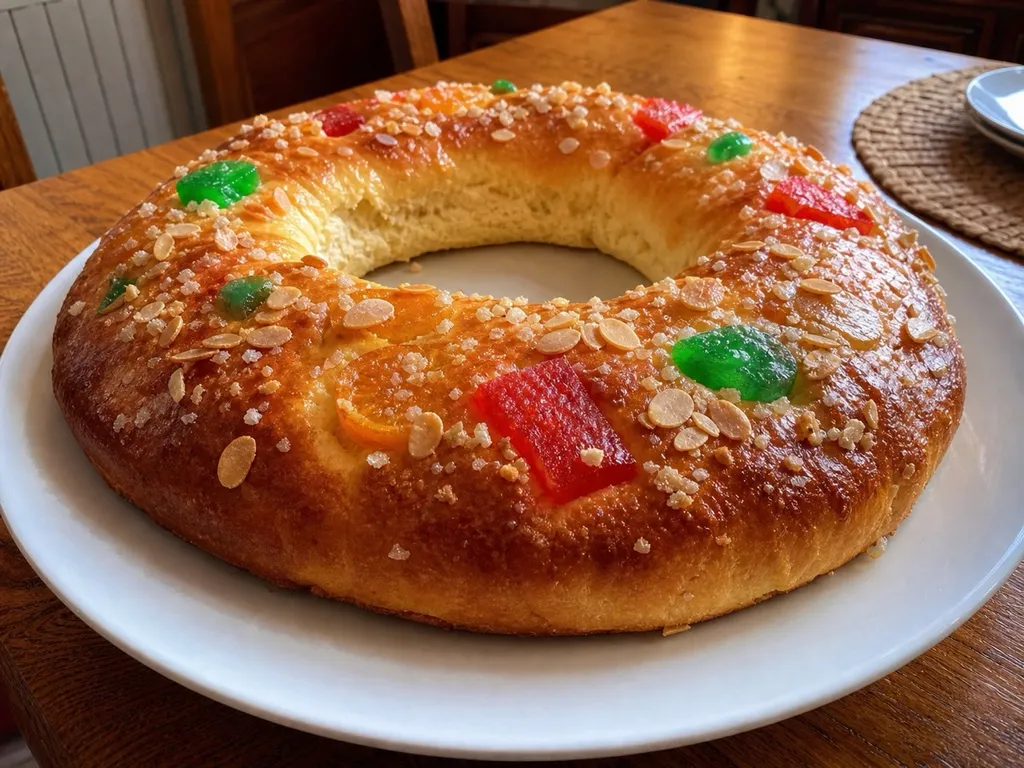
Bake at 180C (350F) for 18-20 minutes until deep golden brown and a skewer comes out clean, then cool completely on a rack before slicing.
 Images are for illustrative purposes only, may be inaccurate, and do not guarantee the presence or absence of specific ingredients.
 Listahan Family Score™
61/100
Works for many families
Score reflects how well this recipe fits a typical busy household. In the app, your Family Score is personalized to your household's allergens, kids, and pantry.
Nutrition
per serving305
Calories
9 g
Protein
60 g
Carbs
2 g
Fat
Estimated per serving. Actual values depend on the brands and portions you use.
Listahan cooking guide
Chef notes & practical guide
Technique notes, ingredient swaps, serve-alongside ideas, storage guidance, and equipment for this recipe.
Cultural context
Roscón de Reyes is Spain's Three Kings Day cake, eaten on January 6th to mark Epiphany. The soft, brioche-like ring is perfumed with orange blossom water, decorated with candied fruit meant to evoke jewels, and traditionally hides a small figurine and a dried bean — whoever finds the figurine is crowned, and whoever gets the bean buys next year's cake.
Listahan note
This version enriches the dough with butter and eggs and scents it with orange blossom water and citrus zest, then decorates the proofed ring with candied fruit, sliced almonds, and pearl sugar before baking.
Technique cues
- Knead the softened butter in gradually after the dough comes together — adding it too early keeps the gluten from developing and leaves a dense ring.
- Give the enriched dough two full proofs; the high butter and egg content slows the rise, and rushing it makes a tight, heavy crumb.
- Decorate after the second proof and just before baking, pressing the candied fruit and almonds in gently so they stay put as the ring expands.
Kitchen flow
- Parallel prep
- Activate the yeast and weigh out everything before mixing, since the dough needs attention through two proofs.
- Make-ahead
- The dough can do its first rise overnight in the fridge, making it easy to shape, decorate, and bake fresh the next day.
- Leftover move
- Day-old roscón is excellent split and lightly toasted with butter.
- Cleanup rhythm
- Scrape and soak the mixing bowl while the dough proofs so the sticky dough doesn't dry on.
Ingredient brief
Role, handling, and swap guidance for each key ingredient.
Bread flour
dough structure
Purpose: The higher protein of bread flour builds the gluten that gives the roscón its soft, stretchy, brioche-like crumb.
Handling: Knead well to develop the gluten before and after adding the butter.
Adaptation: All-purpose flour works but yields a slightly less chewy ring.
Eggs and butter
enrichment
Purpose: Eggs and butter make the dough rich and tender, giving the roscón its brioche character.
Handling: Have both at room temperature and knead the butter in gradually.
Adaptation: These are central to the texture; reducing them gives a plainer, breadier ring.
Orange blossom water
signature aroma
Purpose: Orange blossom water is the defining floral perfume of a roscón, instantly recognizable.
Handling: Add it with the wet ingredients; a little goes a long way.
Adaptation: If unavailable, extra citrus zest plus a drop of vanilla approximates the aroma, though it loses the floral note.
Citrus zest
aromatics
Purpose: Orange and lemon zest brighten the rich dough and complement the orange blossom water.
Handling: Zest only the colored part to avoid bitterness and add with the wet ingredients.
Adaptation: Either zest alone works if you only have one.
Candied fruit and sliced almonds
decoration
Purpose: The candied fruit evokes the jewels of the Three Kings and the almonds add crunch and a classic finish.
Handling: Press into the egg-washed surface after the final proof, just before baking.
Adaptation: Pearl sugar alone makes a simpler, less sweet topping.
Technique notes
- If you hide the traditional figurine and bean, wrap them in foil and push them in from underneath after baking so they're a surprise, not a baking hazard.
- The ring should sound hollow when tapped and reach about 190°F inside — underbaked roscón is gummy in the center.
- Brush with egg wash gently so you don't deflate the proofed ring before it goes in the oven.
Ingredient swaps
- Filled direction
- Split the cooled ring and fill with whipped cream, pastry cream, or dulce de leche for a richer roscón.
- Citrus-glaze direction
- Brush the warm baked ring with a light orange syrup for extra moisture and shine.
- Nut-free direction
- Skip the sliced almonds and decorate with candied fruit and pearl sugar only.
Serve alongside
- Fresh orange segments
- A bowl of thick hot chocolate for dipping
- Spanish hot chocolate
- Café con leche
- Cava
Serving suggestions only — check pairings for your household's allergens.
Storage & reheating
- Store airtight at room temperature up to 2 days; the enriched crumb stays soft.
- Freezes well up to 2 months, wrapped tightly; thaw at room temperature and warm briefly before serving.
- If filled with cream, refrigerate and eat within a day.
Equipment
- Stand mixer with dough hook (or a sturdy bowl for hand-kneading)
- Large baking sheet
- Parchment paper
- Pastry brush
Make this household-aware
Listahan Pro checks this recipe against your household's allergens, finds pantry-aware swaps, builds the shopping list, and helps you plan the week around it.
Plan it in Listahan
Add Roscón de Reyes to your week, check it against your household's allergens, and build the shopping list automatically.
More Spanish recipes
 Spanish Lens Verified Images are for illustrative purposes only, may be inaccurate, and do not guarantee the presence or absence of specific ingredients.
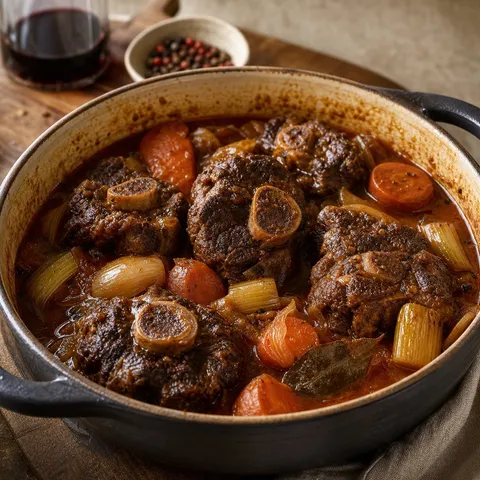
 Rabo de Toro
Oxtail slow-braised for hours with red wine, vegetables, and cloves until the meat falls from the bone in a deeply savoury, velvety Andalusian stew.
 Spanish Lens Verified Images are for illustrative purposes only, may be inaccurate, and do not guarantee the presence or absence of specific ingredients.
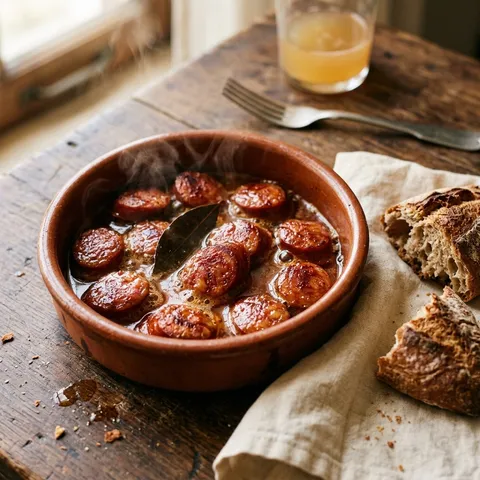
 Chorizo a la Sidra
Sliced Spanish chorizo simmered in dry Asturian cider until the sauce is tangy, smoky, and gloriously red — a quick tapas that pairs beautifully with beer.
 Spanish Lens Verified Images are for illustrative purposes only, may be inaccurate, and do not guarantee the presence or absence of specific ingredients.
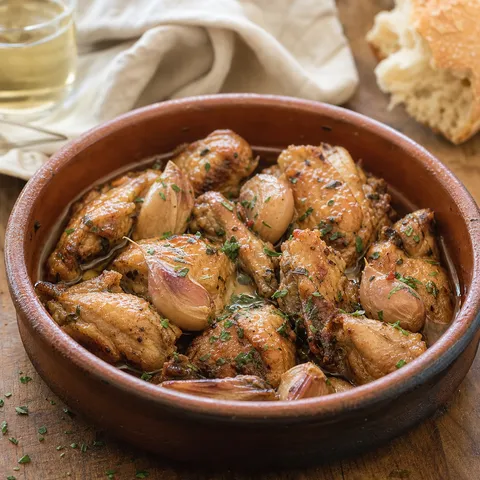
 Pollo al Ajillo
Chicken pieces braised in white wine and a generous amount of garlic until the sauce is sticky, fragrant, and impossible to resist mopping up.