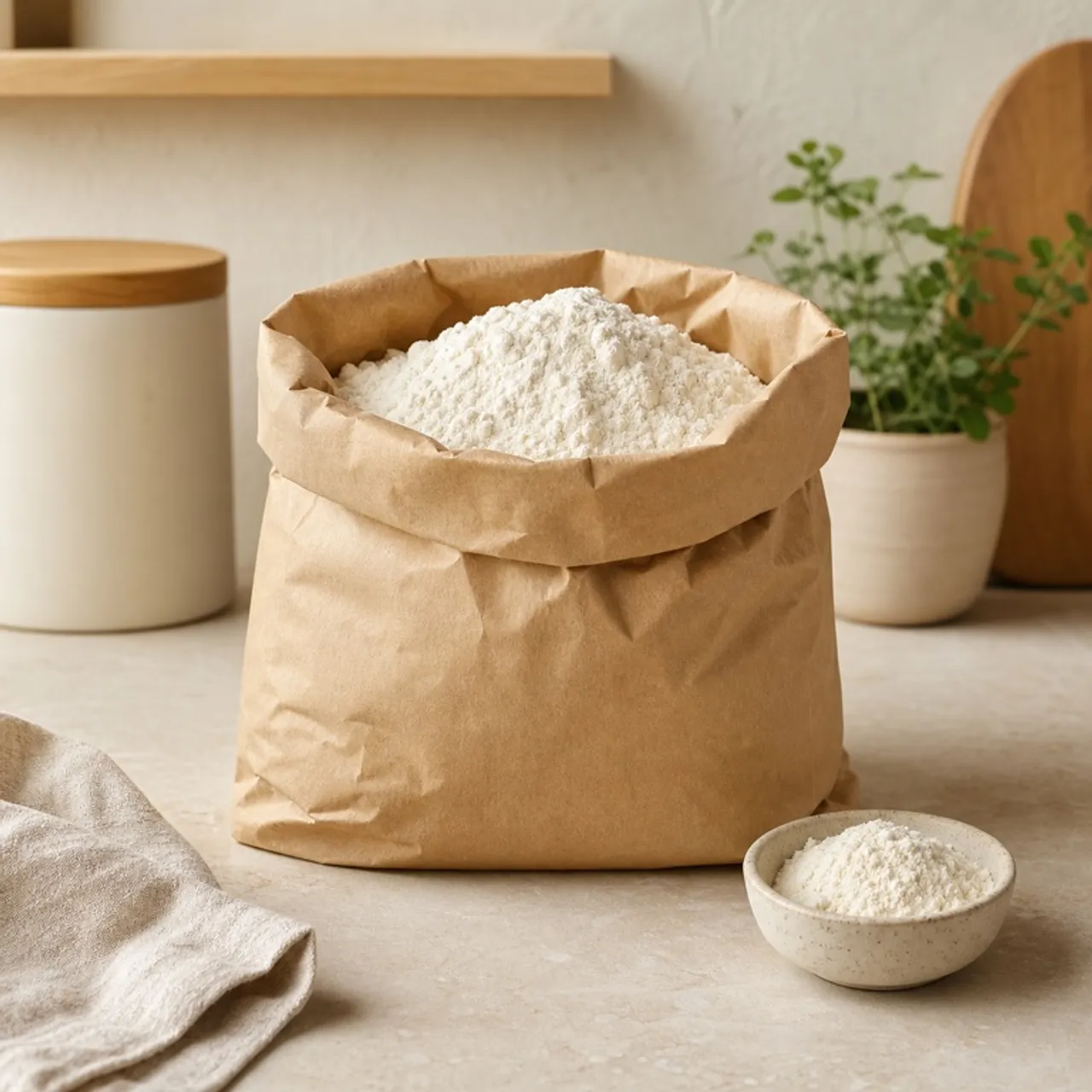
 Food Lens Images are for illustrative purposes only, may be inaccurate, and do not guarantee the presence or absence of specific ingredients.
 Food Lens · Recipe ingredients
Bread Flour
Neutral wheat flavor; doughs made with bread flour have a mild wheaty taste with a notably chewy, elastic crumb and satisfying crust when baked.
Lens VerifiedBread flour is a high-protein wheat flour (12–14% protein) that develops a strong gluten network, giving yeasted breads, pizza dough, and bagels their characteristic chew, rise, and structure.
Where it comes from
Bread flour emerged as a distinct milled product once millers understood that higher-protein wheat produced better-rising yeasted breads. The Great Plains wheat belt of North America — stretching from Kansas to Saskatchewan — produces the hard winter and spring wheats that yield the highest protein content, and much of the world's bread flour originates here. For home bakers, bread flour became widely available as artisan bread baking gained popularity in the late 20th century.
Varieties — Unbleached bread flour is the standard; some specialty versions are milled from specific wheat varieties for distinct flavor profiles. Bread flour is also sometimes labeled 'strong flour' in Canadian and UK markets.
The structural workhorse behind baguettes, New York-style pizza, Montreal bagels, and artisan sourdough boules.
In a modern kitchen — When substituting all-purpose flour for bread flour, expect a slightly less chewy, less open crumb — for most home recipes the difference is minor, but in bagels and pizza it is quite noticeable.
Buying it
Look for protein content of at least 12% on the nutrition label. Unbleached versions are preferred by most bakers for flavor. Standard 5 lb bags are common; avid bakers may buy 25 lb sacks. Store in an airtight container in a cool, dry place.
Storing it
Store in an airtight container in a cool, dry pantry to keep out moisture and pests. For long-term storage, the fridge or freezer slows it from turning rancid.
Keeps about 1 year in the pantry.
Out of bread flour? Good swaps
- All-purpose flour — 1:1 ratio; 10–12% protein — yields a slightly less chewy result, workable for most recipes
- Semolina flour (durum) — Up to 25% replacement; adds flavor and chew to pasta and some breads
General cooking guidance — always check the labels on the products you use. Listahan’s allergen checks run automatically when you plan a recipe in the app. Not medical advice.
Recipes that use bread flour
Common questions about bread flour
Is bread flour vegan?
Bread Flour is generally plant-based and suitable for a vegan diet, but brands differ — confirm on the label.
What can I use instead of bread flour?
Good swaps include All-purpose flour, Semolina flour (durum). Each behaves a little differently — see the swaps above for notes, and always check labels for allergens.
How do I store bread flour?
Store in an airtight container in a cool, dry pantry to keep out moisture and pests. For long-term storage, the fridge or freezer slows it from turning rancid. It keeps about 1 year in the pantry.
More recipe ingredients
See all


Make bread flour about your kitchen — with Listahan Pro
Everything above is free, forever. Pro adds the Household Lens — the same food, seen for your family:
-
Checked for each member
Flags bread flour per person against your household's allergies and school rules — not just a generic "contains" tag.
-
Pantry-aware
Knows whether you already have it, what is running low, and the best swap from what is in your kitchen tonight.
-
What it costs near you
A real price from the Presyo community index, so you can plan the budget — not guess.
-
Your household memory
Who likes it, plus your own private notes — brand, where you keep it, who skips it.
Allergen safety is always free — Pro adds the automation, never the safety.
Cook with bread flour — safely
Plan a recipe in Listahan and the household allergen check runs automatically — every plan, every swap, every lunchbox. Safety is never paywalled.