 North African Images are for illustrative purposes only, may be inaccurate, and do not guarantee the presence or absence of specific ingredients.
  Serving Images are for illustrative purposes only, may be inaccurate, and do not guarantee the presence or absence of specific ingredients.
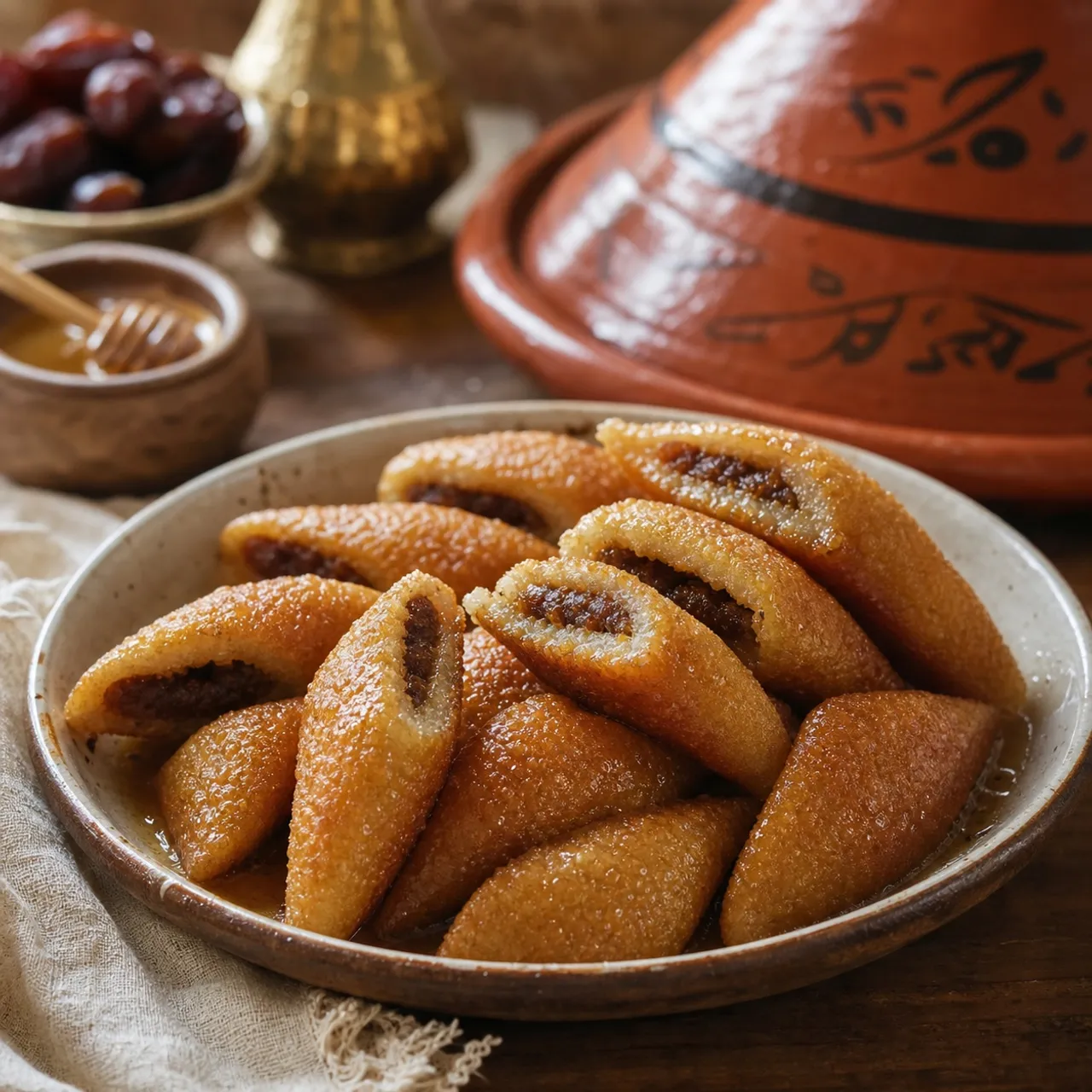
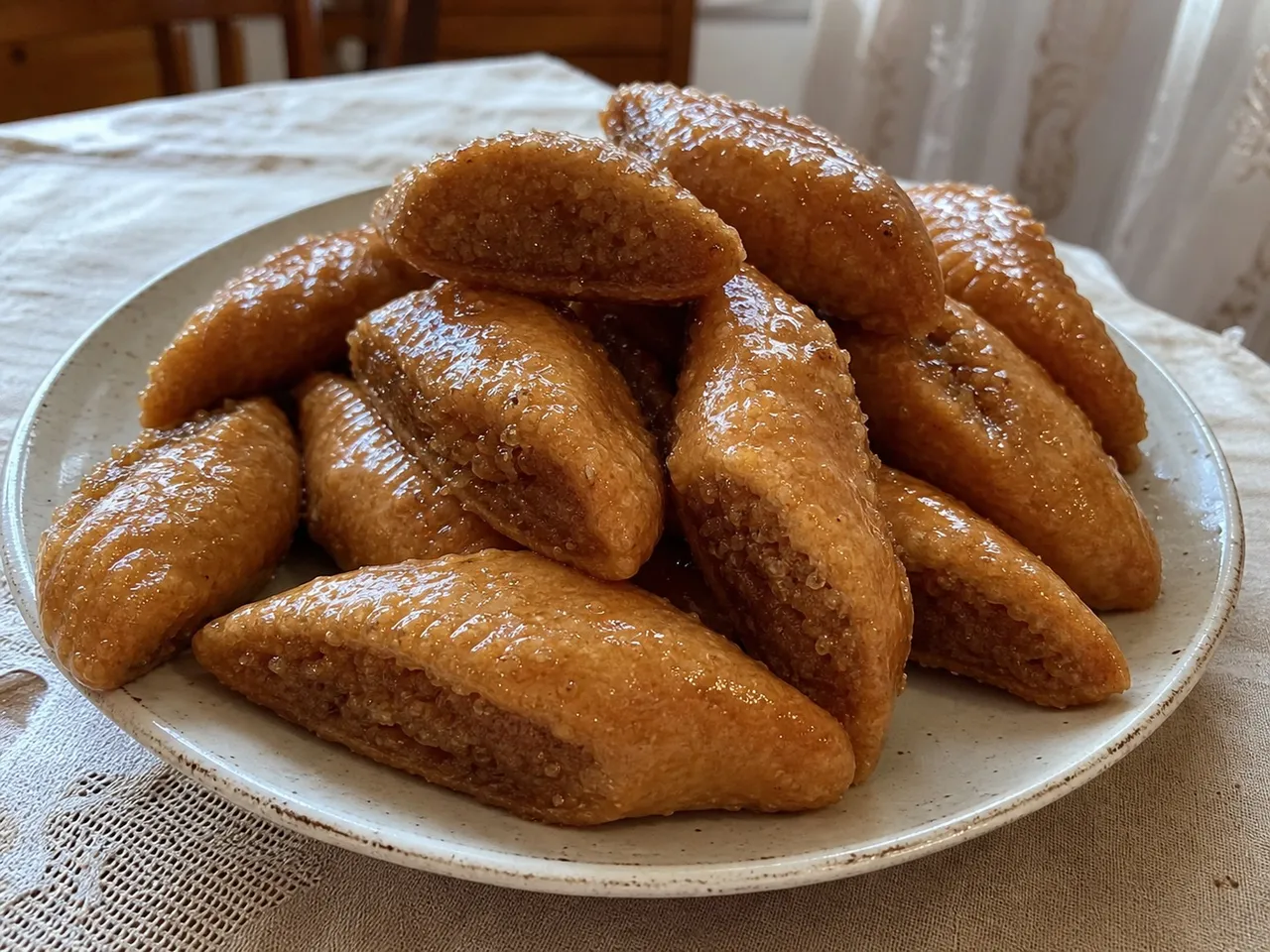
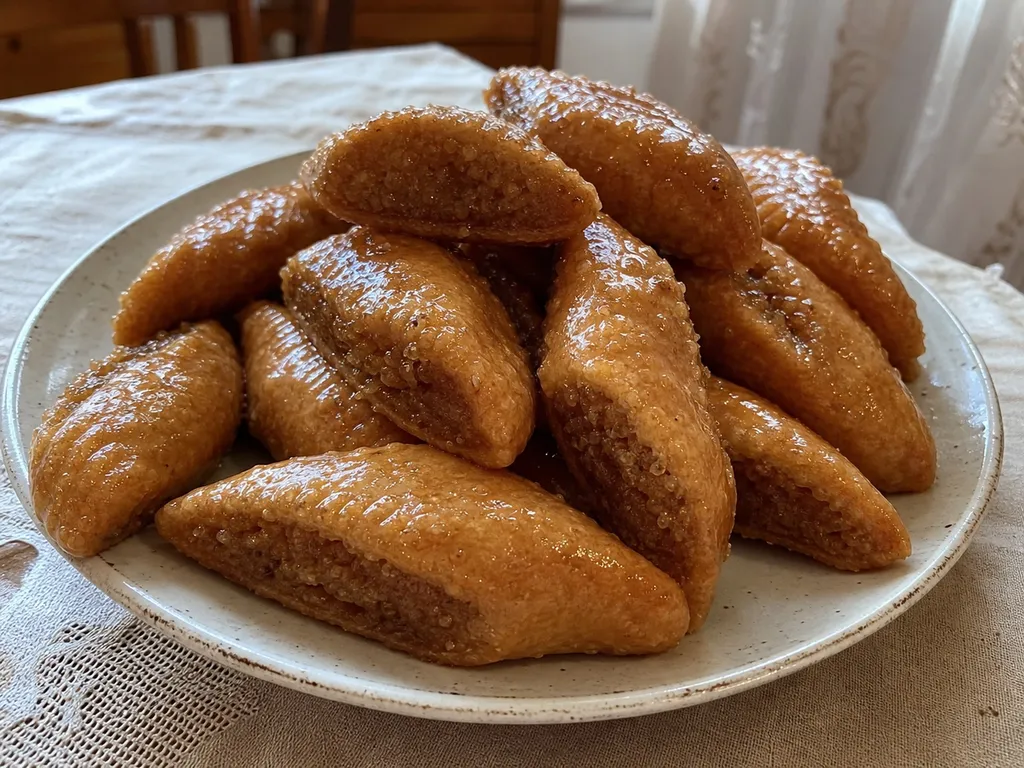
 Makroudh
Semolina pastries stuffed with spiced date paste, fried golden, and soaked in honey — Tunisia's jewel-like cookie that perfumes the whole kitchen with orange blossom.
Contains common allergens
In the app, Listahan checks these against your household automatically.
Good to know
- Crispy
Matched from this dish's own ingredients and timing. Browse more: crispy recipes
Instructions
5 steps- 1
Make Dough: In a large bowl, mix semolina with salt and melted butter until it resembles wet sand. Gradually add warm water and orange blossom water, kneading gently until a cohesive dough forms. Let rest for 15 minutes.
- 2
Prepare Date Filling: Mix the date paste with cinnamon and a splash of oil until smooth. Roll the paste into thin, pencil-like logs.
- 3
Shape Cookies: Take a portion of dough, form a long log, and make an indentation down the center. Place the date log inside, pinch the dough to enclose it, and roll smooth. Cut into diamond shapes.
- 4
Fry: Heat 2 inches of oil in a deep skillet to 350°F (175°C). Fry the diamonds in batches for 3-5 minutes until golden brown on all sides.
- 5
Soak in Honey: Remove the hot cookies with a slotted spoon and immediately plunge them into warm honey. Let soak for a few minutes, drain, and cool before serving.
 Images are for illustrative purposes only, may be inaccurate, and do not guarantee the presence or absence of specific ingredients.
 Listahan Family Score™
76/100
Good fit for most families
Score reflects how well this recipe fits a typical busy household. In the app, your Family Score is personalized to your household's allergens, kids, and pantry.
Nutrition
per serving725
Calories
9 g
Protein
120 g
Carbs
25 g
Fat
Estimated per serving. Actual values depend on the brands and portions you use.
Listahan cooking guide
Chef notes & practical guide
Technique notes, ingredient swaps, serve-alongside ideas, storage guidance, and equipment for this recipe.
Cultural context
Makroudh is a semolina and date pastry from the Maghreb, most closely associated with Tunisia, where it is produced in enormous quantities in the city of Kairouan, considered the cradle of Tunisian pastry traditions. The word itself is derived from the Arabic karaa, referring to the diamond or lozenge shape the pastry is cut into before frying. Makroudh is made for religious celebrations including Eid al-Fitr and Eid al-Adha, as a gift between households, and as a daily sweet in Tunisian bakeries served alongside espresso or tea. The combination of semolina dough, sweet date paste scented with orange blossom water, and a dip in honey after frying is characteristic of the Maghrebi pastry tradition that extends through Algeria and Morocco.
Listahan note
This version uses commercial date paste for convenience but mixes it with cinnamon and orange blossom water to bring the filling close to the traditional flavor. The key ratio is a semolina dough firm enough to hold the date filling without cracking when fried, which requires working the butter into the semolina thoroughly before any liquid is added.
Technique cues
- Rub the melted butter into the dry semolina with your fingertips until the mixture resembles wet sand and no dry patches remain before adding any liquid; this technique, similar to making pastry, ensures the fat coats the semolina grains and produces a tender, crumbly rather than dense texture.
- The dough is ready when it holds together when pressed in your palm but does not stick; if it cracks, add a tablespoon of water and knead briefly, but resist over-adding liquid, which produces a tough, dense pastry.
- Fry in oil that is not too hot (about 325-340F, lower than for many pastries); makroudh needs to cook through to the center and set the dough before the surface browns, and high-heat frying creates a browned exterior with an underdone, dense interior.
Kitchen flow
- Parallel prep
- Mix the date filling while the dough is resting; both can sit for 30 minutes without any issue while you set up for frying.
- Make-ahead
- Makroudh keeps well and actually improves overnight as the honey soaks slightly into the dough; make up to 3 days ahead and store uncovered at room temperature.
- Leftover move
- Day-old makroudh is excellent crumbled over plain yogurt or vanilla ice cream as a textural topping.
- Cleanup rhythm
- Fry in a small, deep saucepan rather than a wide skillet to minimize oil splatter; the honey dipping station is sticky, so line the work surface with parchment before dipping and cooling.
Ingredient brief
Role, handling, and swap guidance for each key ingredient.
3 cups semolina
dough base
Purpose: Semolina gives makroudh its characteristic grainy, short texture that is distinct from wheat flour pastry and holds up to frying without becoming greasy.
Handling: Use fine or medium semolina; coarse semolina produces a grittier texture and does not bind as easily.
Adaptation: For a gluten-free direction, a blend of fine rice flour and tapioca starch in equal parts can approximate the texture, though the result will be more delicate.
1 cup melted butter
fat and tenderness
Purpose: Butter rubbed into the semolina creates the short, crumbly texture of makroudh and carries the flavor of the dough.
Handling: Melt and allow to cool until barely warm before rubbing into the semolina; very hot butter can begin to cook the semolina rather than coat it.
Adaptation: For a dairy-free direction, refined coconut oil or a neutral vegetable fat rubbed into the semolina produces a similar binding effect.
1 cup date paste
sweet filling
Purpose: Date paste provides the characteristic dense, caramel-like sweetness of makroudh that contrasts with the crumbly semolina shell.
Handling: Knead the date paste briefly to soften and make it pliable before mixing in the cinnamon and orange blossom water.
Adaptation: Homemade date paste from pitted medjool dates blended with a tablespoon of water is superior to commercial paste for flavor and texture.
1 tbsp orange blossom water
floral accent
Purpose: Orange blossom water is the defining aromatic of Maghrebi pastry and gives makroudh its distinctive floral note.
Handling: Add to the date filling rather than the dough; the delicate aroma is partially lost during frying if it is in the outer layer.
Adaptation: Rose water can substitute in an equal amount for a different floral note common to Turkish and Lebanese sweets.
2 cups honey (for dipping)
sweet glaze
Purpose: The honey dip after frying sets into a light glaze as it cools, giving the makroudh its characteristic glossy surface and adding a floral sweetness.
Handling: Warm the honey gently so it is fluid and easy to dip into; cold honey is too thick and does not coat evenly.
Adaptation: A simple sugar syrup flavored with a squeeze of lemon and a drop of orange blossom water works as a lighter, cleaner glaze.
Technique notes
- Roll the semolina dough into a log and press the date paste through the center in a channel rather than trying to fold and seal individual pieces; slicing the log into diamond shapes after sealing is faster, more even, and produces the traditional lozenge shape with almost no wasted dough.
- Drain fried makroudh on a wire rack for 2 minutes before dipping in honey; excess oil on the surface prevents the honey from adhering cleanly.
- The finished makroudh should feel firm at room temperature and have a light, dry honey coating that does not stick to your fingers; if they are still sticky after an hour, they were dipped in honey that was too hot, which stays tacky rather than setting.
Ingredient swaps
- Gluten-free direction
- Replace the semolina with fine rice flour mixed with a tablespoon of tapioca starch; the texture differs but the recipe remains workable.
- Dairy-free option
- Replace the butter with refined coconut oil or a plant-based block butter rubbed into the semolina in the same way.
- Baked version
- Arrange the shaped makroudh on a lined baking sheet and bake at 375F for 18-22 minutes until golden; the texture is less rich than fried but significantly easier for large batches.
Serve alongside
- fresh dates alongside for contrast
- a plate of other Maghrebi cookies such as ghribia or cornes de gazelle
- strong Tunisian or Moroccan mint tea
- espresso
Serving suggestions only — check pairings for your household's allergens.
Storage & reheating
- Store at room temperature uncovered or in a loosely covered container for up to 5 days; airtight containers trap moisture and soften the pastry.
- Do not refrigerate; cold temperatures harden the date filling and make the dough dry and crumbly.
- Freeze unfried, shaped makroudh in a single layer and fry from frozen at a slightly lower temperature; do not freeze fried or honey-dipped pastries.
Equipment
- small deep saucepan for frying
- kitchen thermometer for oil temperature
- wire rack for draining before honey dipping
- shallow bowl for honey dipping
Make this household-aware
Listahan Pro checks this recipe against your household's allergens, finds pantry-aware swaps, builds the shopping list, and helps you plan the week around it.
Plan it in Listahan
Add Makroudh to your week, check it against your household's allergens, and build the shopping list automatically.
More North African recipes
 North African Lens Verified Images are for illustrative purposes only, may be inaccurate, and do not guarantee the presence or absence of specific ingredients.
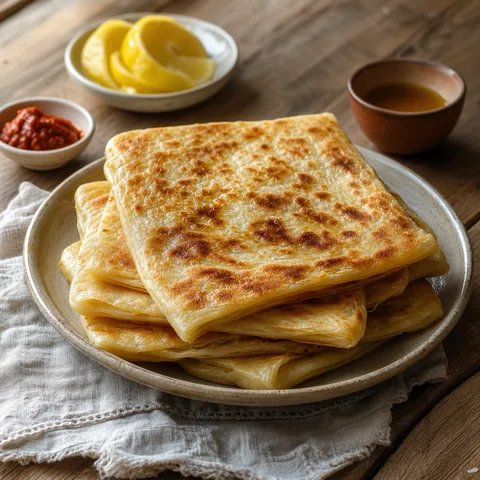
 Msemmen
Layered and folded semolina flatbread cooked on a griddle until the outside crisps and the inside stays wonderfully chewy — perfect with honey or harissa.
 North African Lens Verified Images are for illustrative purposes only, may be inaccurate, and do not guarantee the presence or absence of specific ingredients.
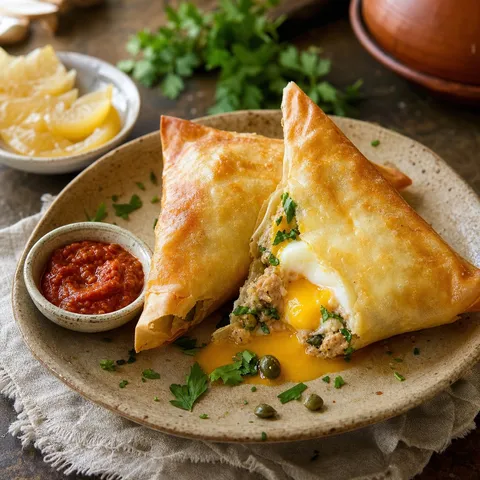
 Brik
Crispy paper-thin pastry folded around a whole egg, tuna, and parsley then flash-fried until golden — Tunisia's beloved street snack, eaten fast before the yolk escapes.
 North African Lens Verified Images are for illustrative purposes only, may be inaccurate, and do not guarantee the presence or absence of specific ingredients.
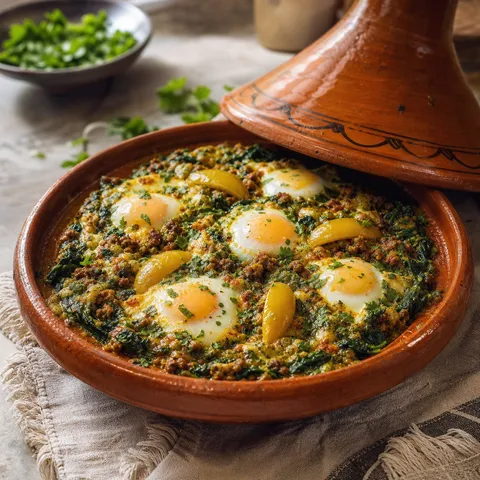
 Tajine El Bey
Tunisia's grand layered bake of spiced lamb, eggs, and cheese baked in a deep crust — a celebration dish with silky, complex layers in every slice.