 Spanish Images are for illustrative purposes only, may be inaccurate, and do not guarantee the presence or absence of specific ingredients.
  Serving Images are for illustrative purposes only, may be inaccurate, and do not guarantee the presence or absence of specific ingredients.
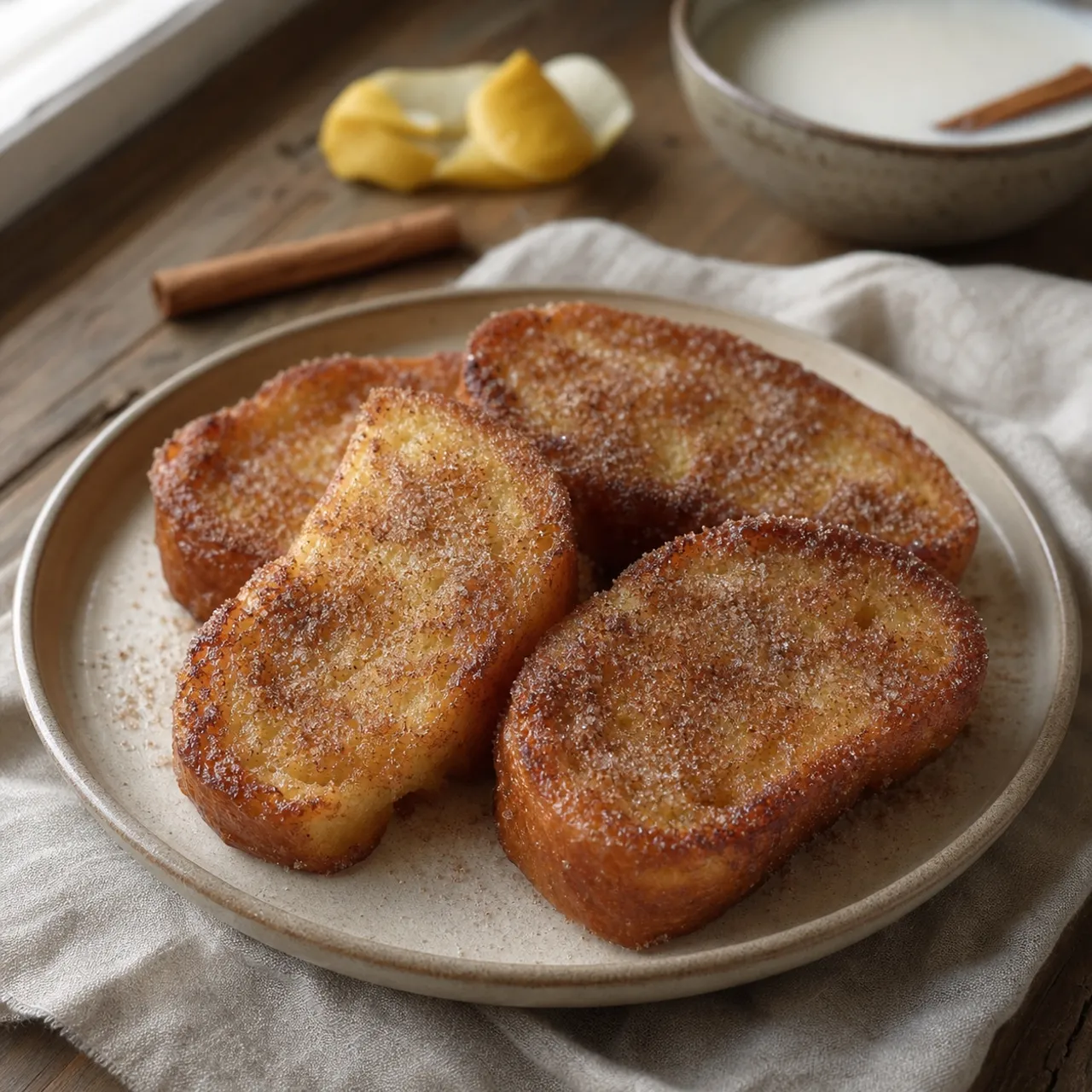
 Torrijas
Thick slices of bread soaked in warm spiced milk, fried golden, and dusted with cinnamon and sugar — Spain's indulgent Easter sweet treat.
Contains common allergens
In the app, Listahan checks these against your household automatically.
Good to know
- Crispy
- Ready in under 30 minutes
Matched from this dish's own ingredients and timing. Browse more: crispy recipes30-minute meals
Instructions
8 steps- 1
Warm the milk in a saucepan with the sugar, cinnamon stick, and lemon zest over low heat until the sugar dissolves and the milk is fragrant, about 5 minutes, then let cool slightly and strain.
- 2
Arrange the bread slices in a shallow dish and pour the warm spiced milk over them, letting them soak for 2-3 minutes per side until softened but still holding together.
- 3
Carefully lift each soaked slice and dip it into the beaten egg, coating both sides.
- 4
Heat a generous layer of olive oil in a skillet over medium heat until shimmering.
- 5
Fry the torrijas for 2-3 minutes per side, until deep golden brown and crisp on the outside.
- 6
Drain briefly on paper towels.
- 7
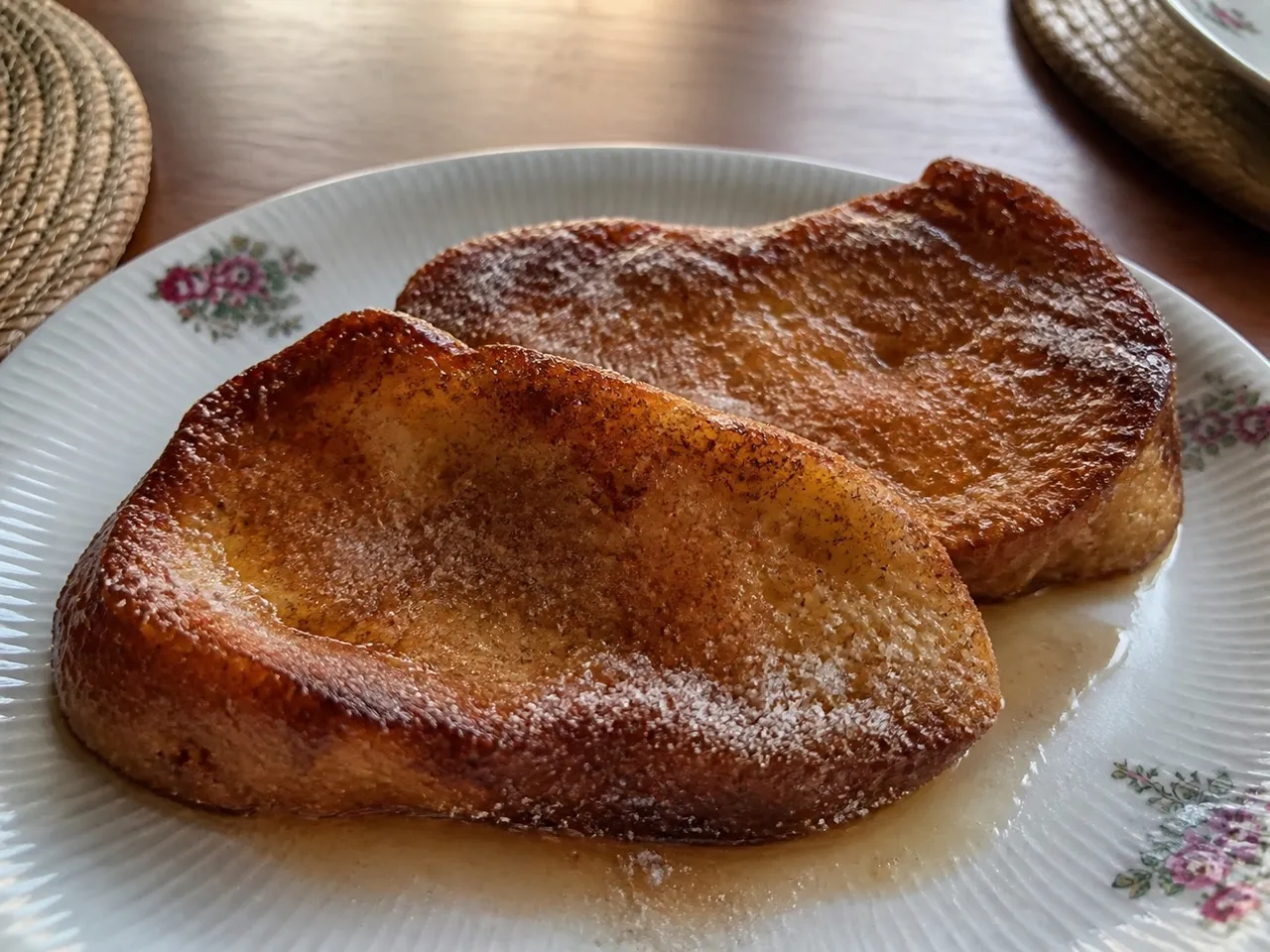
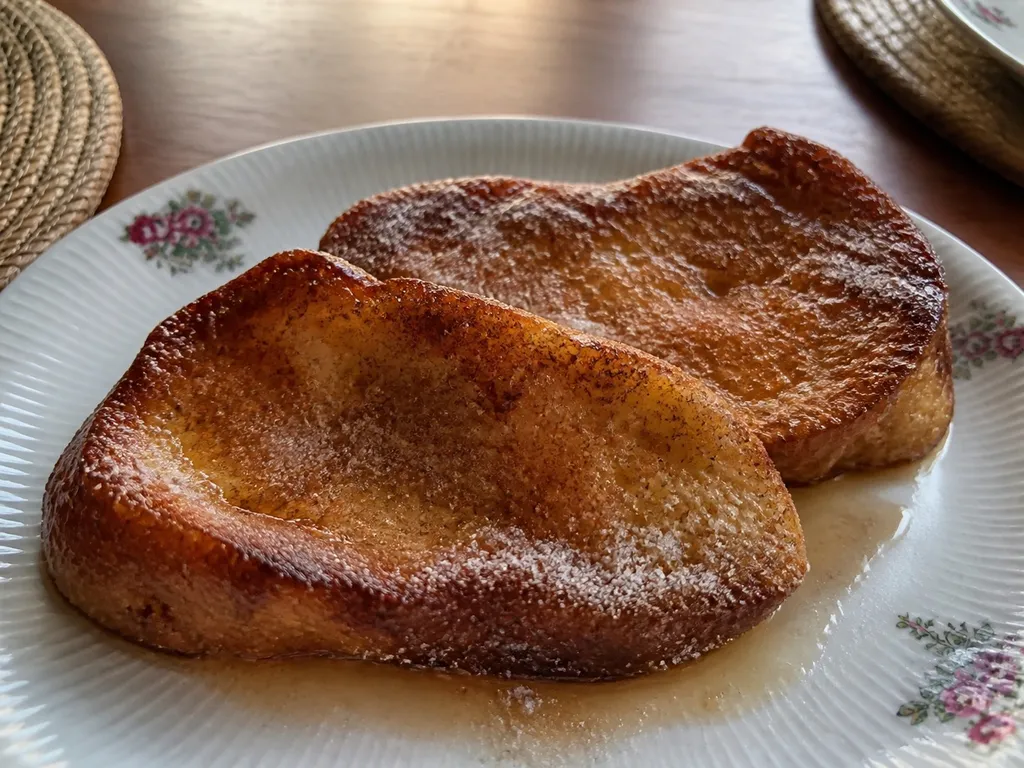
While still warm, dredge each slice in a mixture of sugar and ground cinnamon, coating generously on both sides.
- 8
Serve warm or at room temperature.
 Images are for illustrative purposes only, may be inaccurate, and do not guarantee the presence or absence of specific ingredients.
 Listahan Family Score™
69/100
Works for many families
Score reflects how well this recipe fits a typical busy household. In the app, your Family Score is personalized to your household's allergens, kids, and pantry.
Nutrition
per serving340
Calories
13 g
Protein
53 g
Carbs
9 g
Fat
Estimated per serving. Actual values depend on the brands and portions you use.
Listahan cooking guide
Chef notes & practical guide
Technique notes, ingredient swaps, serve-alongside ideas, storage guidance, and equipment for this recipe.
Cultural context
Torrijas are Spain's answer to French toast, traditionally eaten during Lent and Holy Week as a way to use up day-old bread. Slices are soaked in spiced sweet milk, dipped in egg, fried, and dusted with cinnamon-sugar — humble, frugal, and beloved.
Listahan note
This version infuses the soaking milk with cinnamon and lemon peel and uses sturdy day-old bread so the slices drink up the custard without falling apart in the pan.
Technique cues
- Use genuinely stale, sturdy bread — fresh bread turns to mush in the milk, while day-old slices soak up the custard and hold their shape.
- Let the soaked slices drain briefly before the egg dip so they're saturated but not dripping, which keeps them from breaking when you lift them.
- Fry in oil hot enough to set the egg coating quickly, sealing the custardy interior so it stays soft while the outside crisps.
Kitchen flow
- Parallel prep
- Infuse and cool the milk first, then beat the eggs while the bread soaks so frying moves quickly.
- Make-ahead
- The bread can be soaked and held briefly, but torrijas are best fried fresh and served warm.
- Leftover move
- Leftover torrijas are good cold the next day, or warmed briefly and topped with a drizzle of honey.
- Cleanup rhythm
- Keep a paper-towel-lined plate ready and skim the oil between batches so the coating stays clean and golden.
Ingredient brief
Role, handling, and swap guidance for each key ingredient.
Day-old rustic bread or brioche
structure
Purpose: Sturdy stale bread is the body of the dish; it soaks up the spiced milk while holding together through frying.
Handling: Slice thick (about 1 inch) and use bread that is a day or two old, not fresh.
Adaptation: Brioche makes a richer torrija; a baguette or country loaf gives a more traditional, less sweet result.
Whole milk
soaking custard
Purpose: The milk, infused with cinnamon and lemon, soaks into the bread to create the soft, custardy interior.
Handling: Heat it with the aromatics, then cool slightly before soaking so it absorbs evenly.
Adaptation: For a richer version, replace some milk with cream; some regions use sweet wine instead.
Eggs
frying coating
Purpose: A coat of beaten egg sets in the hot oil to seal the soaked bread and give a golden crust.
Handling: Dip each slice fully just before frying so the coating is fresh and even.
Adaptation: There is no real substitute; the egg coating defines the texture.
Cinnamon and lemon peel
aromatics
Purpose: Cinnamon and lemon perfume the soaking milk and the final cinnamon-sugar coating, defining the flavor.
Handling: Steep them in the warm milk and discard before soaking the bread.
Adaptation: A strip of orange peel can join or replace the lemon for a different citrus note.
Olive oil
frying medium
Purpose: Olive oil is the traditional Spanish frying fat and gives torrijas their characteristic flavor.
Handling: Heat until shimmering before adding the slices so they crisp rather than absorb oil.
Adaptation: A neutral oil works for a milder taste if you prefer.
Technique notes
- Don't rush the soak — the bread should be saturated to the center, but lift it carefully so it doesn't tear.
- Fry in batches without crowding the pan, which drops the oil temperature and makes the torrijas greasy.
- Toss in cinnamon-sugar while still warm so the coating adheres; some cooks drizzle with honey or syrup instead.
Ingredient swaps
- Wine-soaked direction
- Soak the bread in sweet wine (vino dulce) instead of milk for the traditional Holy Week vino version.
- Honey-finished direction
- Skip the cinnamon-sugar and drizzle the fried slices with warm honey thinned with a little water.
- Lighter direction
- Bake the egg-coated slices at 400°F until golden instead of frying for a lower-fat version.
Serve alongside
- Fresh orange segments
- A dollop of whipped cream
- Café con leche
- Sweet Pedro Ximénez sherry
- Hot chocolate
Serving suggestions only — check pairings for your household's allergens.
Storage & reheating
- Best eaten warm and fresh; store leftovers refrigerated up to 2 days.
- Reheat briefly in a 350°F oven to re-crisp the edges rather than the microwave.
- Not suitable for freezing — the soaked bread turns soggy on thawing.
Equipment
- Shallow dish for soaking
- Saucepan for the milk
- Skillet for frying
- Slotted spatula
Make this household-aware
Listahan Pro checks this recipe against your household's allergens, finds pantry-aware swaps, builds the shopping list, and helps you plan the week around it.
Plan it in Listahan
Add Torrijas to your week, check it against your household's allergens, and build the shopping list automatically.
More Spanish recipes
 Spanish Lens Verified Images are for illustrative purposes only, may be inaccurate, and do not guarantee the presence or absence of specific ingredients.
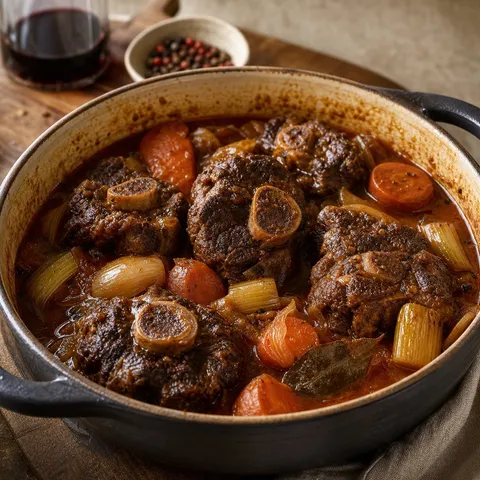
 Rabo de Toro
Oxtail slow-braised for hours with red wine, vegetables, and cloves until the meat falls from the bone in a deeply savoury, velvety Andalusian stew.
 Spanish Lens Verified Images are for illustrative purposes only, may be inaccurate, and do not guarantee the presence or absence of specific ingredients.
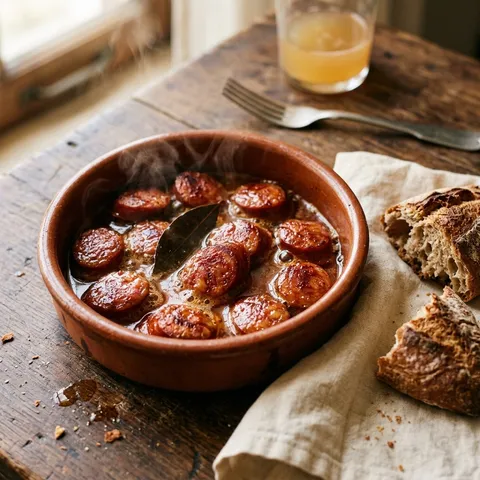
 Chorizo a la Sidra
Sliced Spanish chorizo simmered in dry Asturian cider until the sauce is tangy, smoky, and gloriously red — a quick tapas that pairs beautifully with beer.
 Spanish Lens Verified Images are for illustrative purposes only, may be inaccurate, and do not guarantee the presence or absence of specific ingredients.
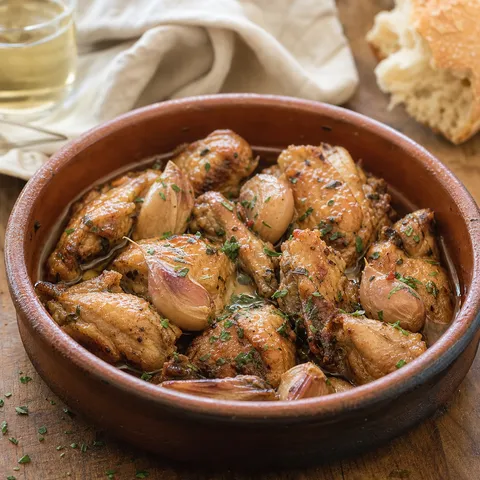
 Pollo al Ajillo
Chicken pieces braised in white wine and a generous amount of garlic until the sauce is sticky, fragrant, and impossible to resist mopping up.