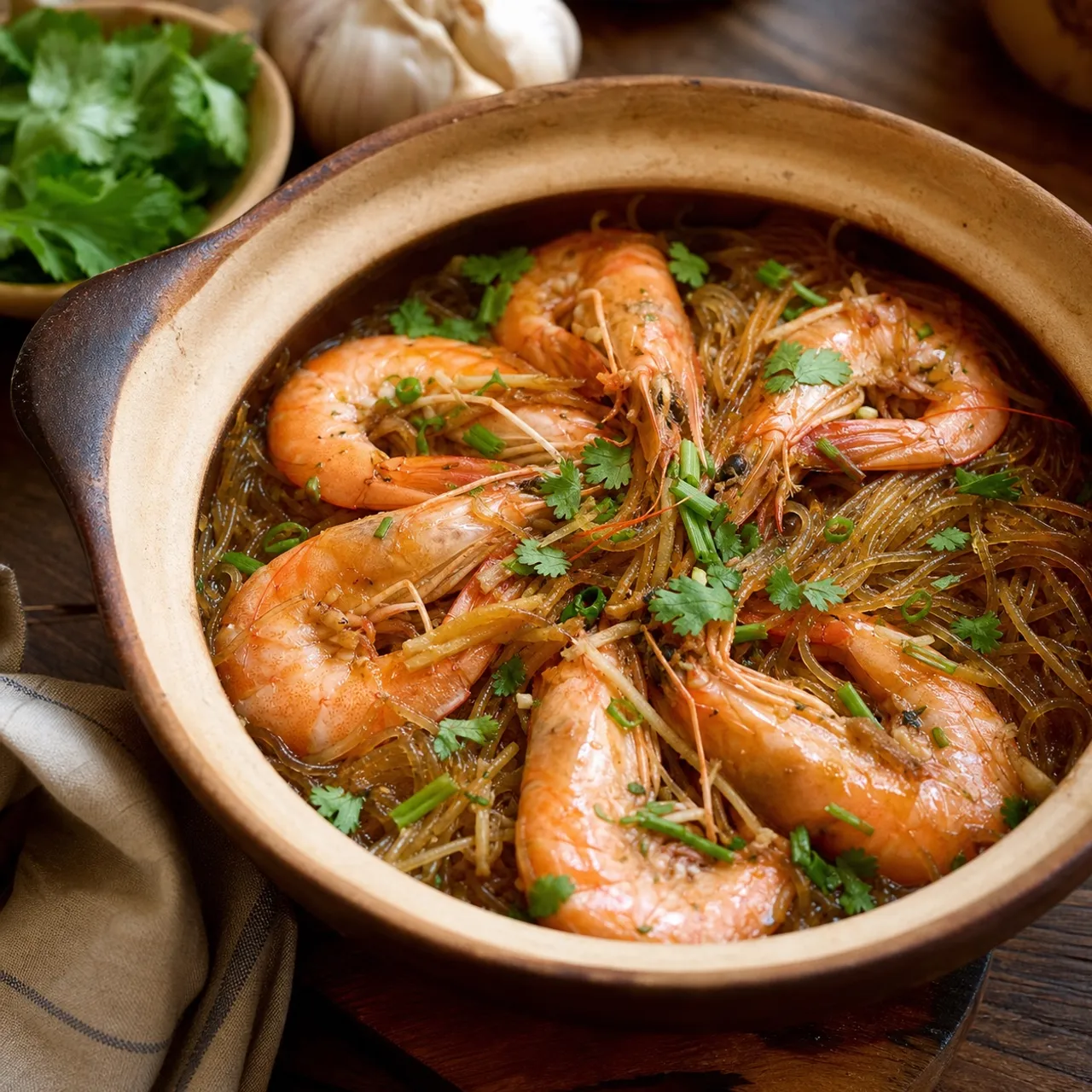
 Thai Images are for illustrative purposes only, may be inaccurate, and do not guarantee the presence or absence of specific ingredients.
 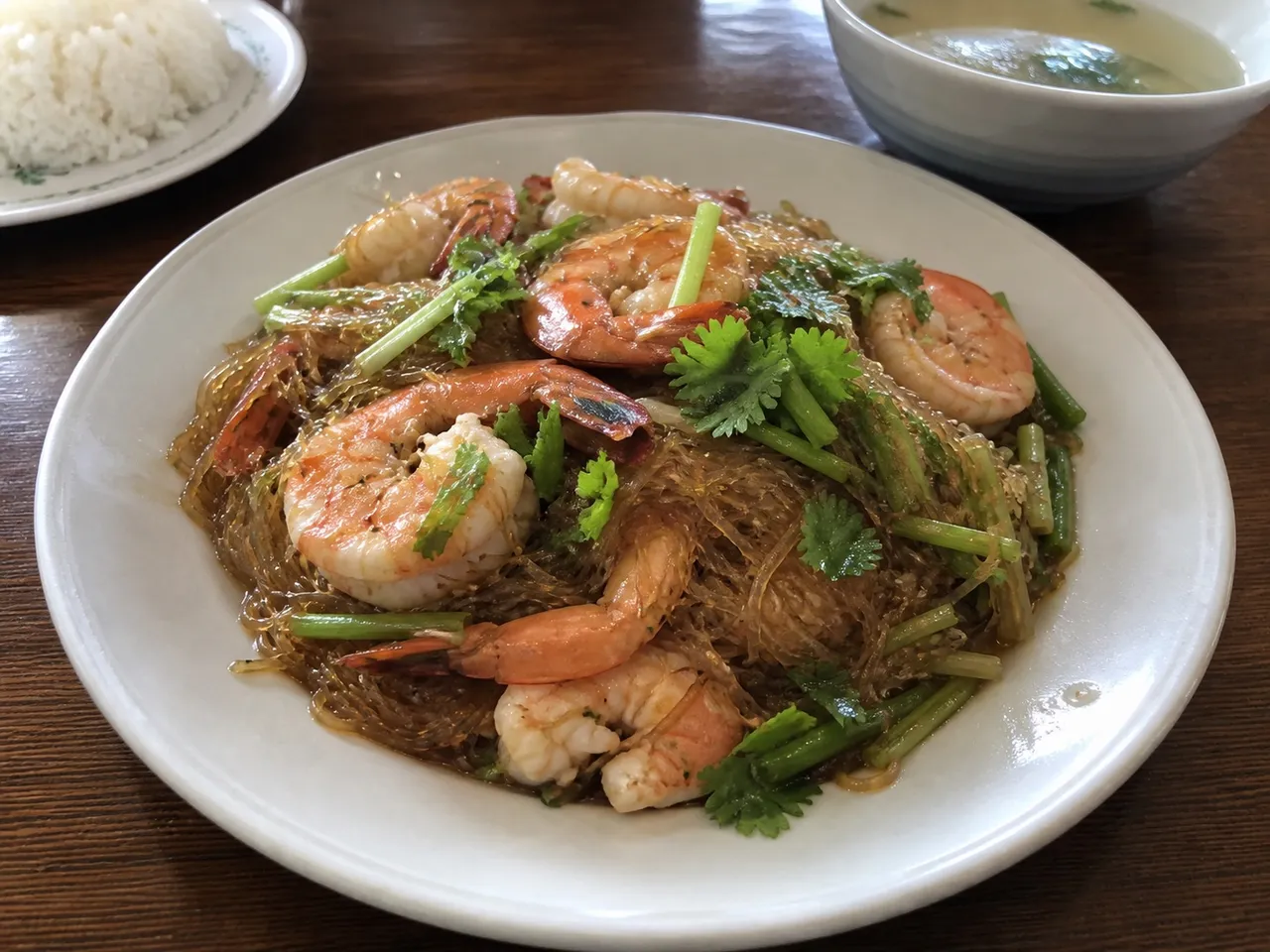 Serving Images are for illustrative purposes only, may be inaccurate, and do not guarantee the presence or absence of specific ingredients.
 Goong Ob Woonsen
Whole prawns and glass noodles slow-baked in a clay pot with ginger, garlic, and oyster sauce — the noodles absorb every drop of the sweet, briny, deeply savory sauce.
Contains common allergens
In the app, Listahan checks these against your household automatically.
Good to know
- One-pot
- Ready in under 30 minutes
Matched from this dish's own ingredients and timing. Browse more: one-pot dinners30-minute meals
Instructions
7 steps- 1
Line the bottom of a clay pot or heavy lidded pot with the smashed garlic, ginger, and cilantro roots.
- 2
Lay the drained glass noodles over the aromatics, then arrange the prawns and celery batons on top.
- 3
Whisk together oyster sauce, light and dark soy sauce, sugar, white pepper, stock, and cooking wine, and pour evenly over the prawns and noodles.
- 4
Cover the pot tightly and set over medium heat, letting it steam and simmer for 12 to 15 minutes without lifting the lid, until the prawns turn opaque pink and the noodles have absorbed nearly all the sauce.
- 5
Check that the noodles are tender and the sauce has thickened to a glossy coating; if the pot looks dry, add a splash more stock and cook a minute longer.
- 6
Finish with a drizzle of sesame oil and scatter fresh cilantro over the top.
- 7
Bring the pot straight to the table still bubbling and serve directly from it with steamed rice.
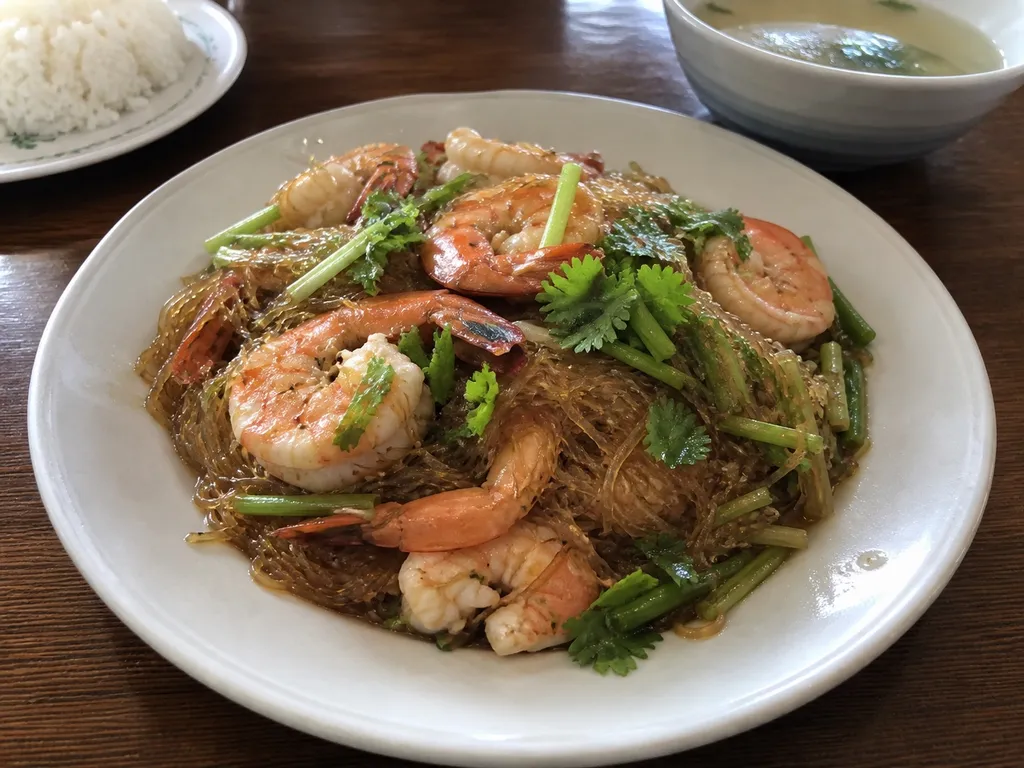 Images are for illustrative purposes only, may be inaccurate, and do not guarantee the presence or absence of specific ingredients.
 Listahan Family Score™
68/100
Works for many families
Score reflects how well this recipe fits a typical busy household. In the app, your Family Score is personalized to your household's allergens, kids, and pantry.
Nutrition
per serving255
Calories
32 g
Protein
29 g
Carbs
1 g
Fat
Estimated per serving. Actual values depend on the brands and portions you use.
Listahan cooking guide
Chef notes & practical guide
Technique notes, ingredient swaps, serve-alongside ideas, storage guidance, and equipment for this recipe.
Cultural context
Goong ob woonsen is a Thai-Chinese clay-pot dish of shrimp and glass noodles baked together so the noodles drink up the shrimp's juices and a fragrant ginger-pepper sauce. It is a restaurant favorite, brought to the table sealed and steaming in its pot so the aroma hits all at once when the lid comes off. The magic is in the layering, where pork fat, aromatics, and shrimp render their flavor down into the noodles as everything steams.
Listahan note
This version layers the aromatics under the noodles so they perfume from the bottom up and keeps the lid on to trap every bit of steam. It works in a covered skillet or Dutch oven when a clay pot is not on hand.
Technique cues
- Lay the aromatics and a little fat on the bottom of the pot so their flavor steams up into the noodles.
- Keep the lid sealed while it cooks so the trapped steam softens the noodles evenly without drying out.
- Toss gently only once at the end so the noodles absorb the sauce without breaking into mush.
Kitchen flow
- Parallel prep
- Soak the noodles and slice the aromatics while you mix the sauce and clean the shrimp.
- Make-ahead
- Assemble the layered pot ahead and refrigerate, then cook from cold just before serving.
- Leftover move
- Reheat leftovers in a covered pan with a splash of stock and serve over fresh greens.
- Cleanup rhythm
- Soak the pot right after serving so the caramelized sauce at the bottom lifts cleanly.
Ingredient brief
Role, handling, and swap guidance for each key ingredient.
shrimp
main protein
Purpose: Whole shrimp release sweet, briny juices that flavor the noodles as they steam.
Handling: Leave shells on for more flavor, or peel for easier eating, and devein either way.
Adaptation: Scallops or chunks of firm white fish give a similar coastal richness.
glass noodles
main starch
Purpose: Mung-bean noodles soak up the shrimp and sauce, turning slippery and deeply flavored.
Handling: Soak in warm water until pliable, then drain before layering into the pot.
Adaptation: Thin rice vermicelli works but absorbs liquid faster and can over-soften.
ginger
aromatic base
Purpose: Sliced ginger perfumes the whole pot with warm, fresh fragrance.
Handling: Slice into thin coins and lay across the bottom of the pot.
Adaptation: Galangal gives a more piney, distinctly Thai aroma if available.
oyster sauce
savory base
Purpose: Oyster sauce builds the deep, slightly sweet umami the noodles cook in.
Handling: Whisk with soy and a little stock, then pour over before sealing the pot.
Adaptation: Mushroom stir-fry sauce keeps it shellfish-free for the noodle base.
white pepper
spice
Purpose: White pepper gives the signature warm, peppery aroma central to this dish.
Handling: Add generously to the sauce, since it is a defining flavor here.
Adaptation: Black pepper works but is sharper and less floral.
cilantro roots
aromatic
Purpose: Cilantro roots add an earthy, herbal depth prized in Thai cooking.
Handling: Bruise and lay in the pot with the ginger.
Adaptation: Cilantro stems substitute well when roots are unavailable.
Technique notes
- Do not lift the lid early; every peek lets out the steam that cooks the noodles evenly.
- Cut the shrimp cooking close so they stay plump, since overcooked shrimp turn rubbery fast in the trapped heat.
- Add only enough liquid for the noodles to drink up, or the bottom turns soupy instead of glazed.
Ingredient swaps
- Shellfish-free direction
- Use chunks of firm white fish and a mushroom-based sauce to skip shellfish entirely.
- Gluten-free direction
- Use tamari and certified gluten-free oyster sauce to keep the dish wheat-free.
- Lower-sodium direction
- Cut the oyster and soy sauces and add extra ginger and pepper to keep the flavor lively.
Serve alongside
- Steamed jasmine rice
- Stir-fried Chinese broccoli
- Cucumber salad
- Tom yum goong
- Chrysanthemum tea
- Cold lager
- Lime soda
Serving suggestions only — check pairings for your household's allergens.
Storage & reheating
- Refrigerate up to two days in a sealed container. Reheat in a covered pan with a splash of stock to loosen the noodles rather than microwaving them dry. Freezing is not recommended because the glass noodles turn gummy on thaw.
Equipment
- Clay pot or Dutch oven with lid
- Fine-mesh strainer
- Sharp knife
- Tongs
Make this household-aware
Listahan Pro checks this recipe against your household's allergens, finds pantry-aware swaps, builds the shopping list, and helps you plan the week around it.
Plan it in Listahan
Add Goong Ob Woonsen to your week, check it against your household's allergens, and build the shopping list automatically.
More Thai recipes
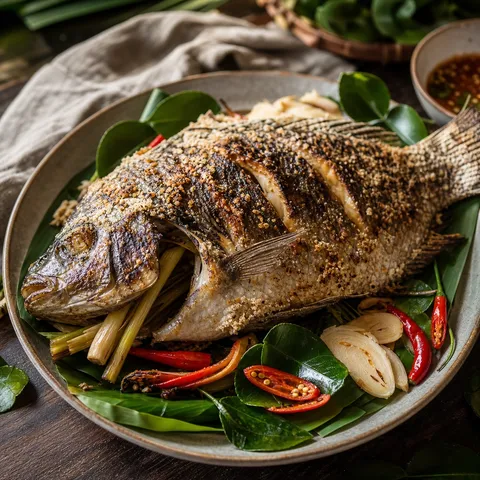 Thai Lens Verified Images are for illustrative purposes only, may be inaccurate, and do not guarantee the presence or absence of specific ingredients.
 Pla Pao
A whole salt-crusted fish stuffed with lemongrass and grilled until the skin is crackling and the flesh is silky.
 Thai Lens Verified Images are for illustrative purposes only, may be inaccurate, and do not guarantee the presence or absence of specific ingredients.
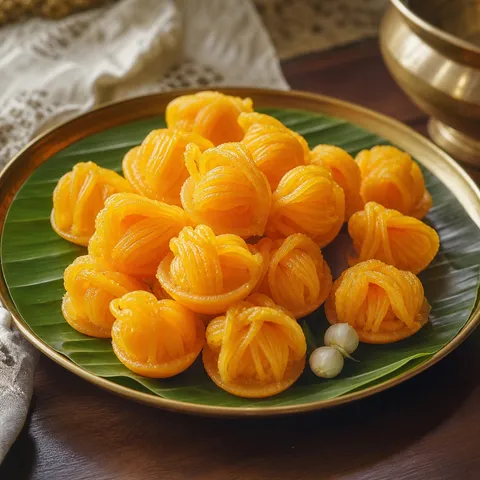
 Thong Yip
Petite golden flowers pressed from egg yolk and sugar, simmered in jasmine-scented syrup until set — a centuries-old Thai royal confection as beautiful as it is sweet.
 Thai Lens Verified Images are for illustrative purposes only, may be inaccurate, and do not guarantee the presence or absence of specific ingredients.
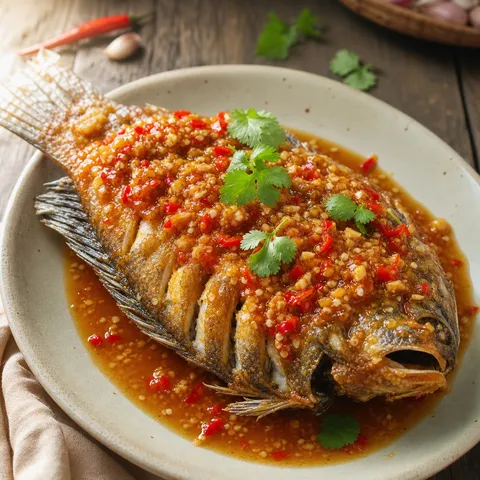
 Pla Rad Prik
Whole fish fried to a shatteringly crisp shell, then blanketed in a sticky, sweet-hot chili-tamarind sauce with garlic and basil — dramatic, punchy, and made for sharing.