 Thai Images are for illustrative purposes only, may be inaccurate, and do not guarantee the presence or absence of specific ingredients.
  Serving Images are for illustrative purposes only, may be inaccurate, and do not guarantee the presence or absence of specific ingredients.
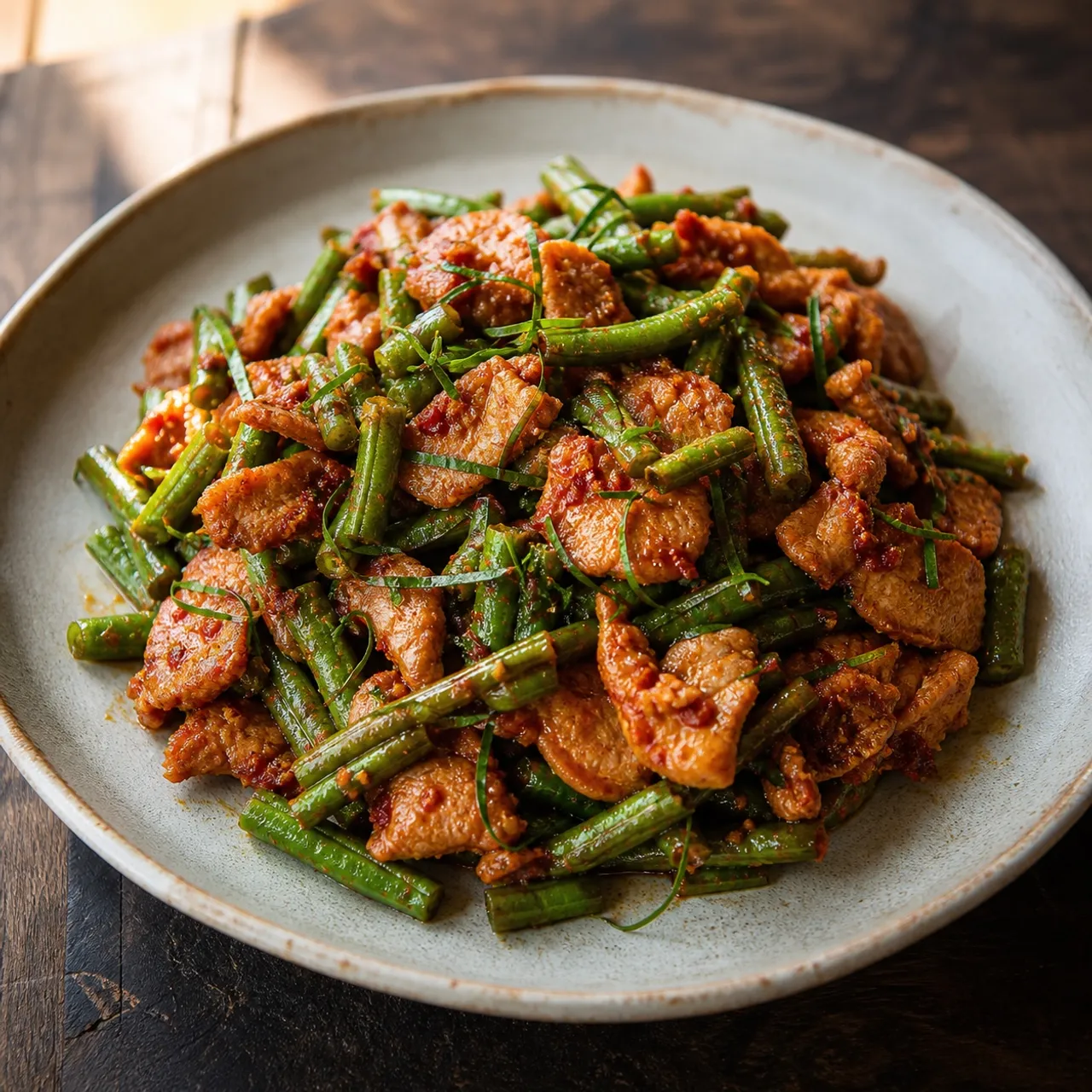
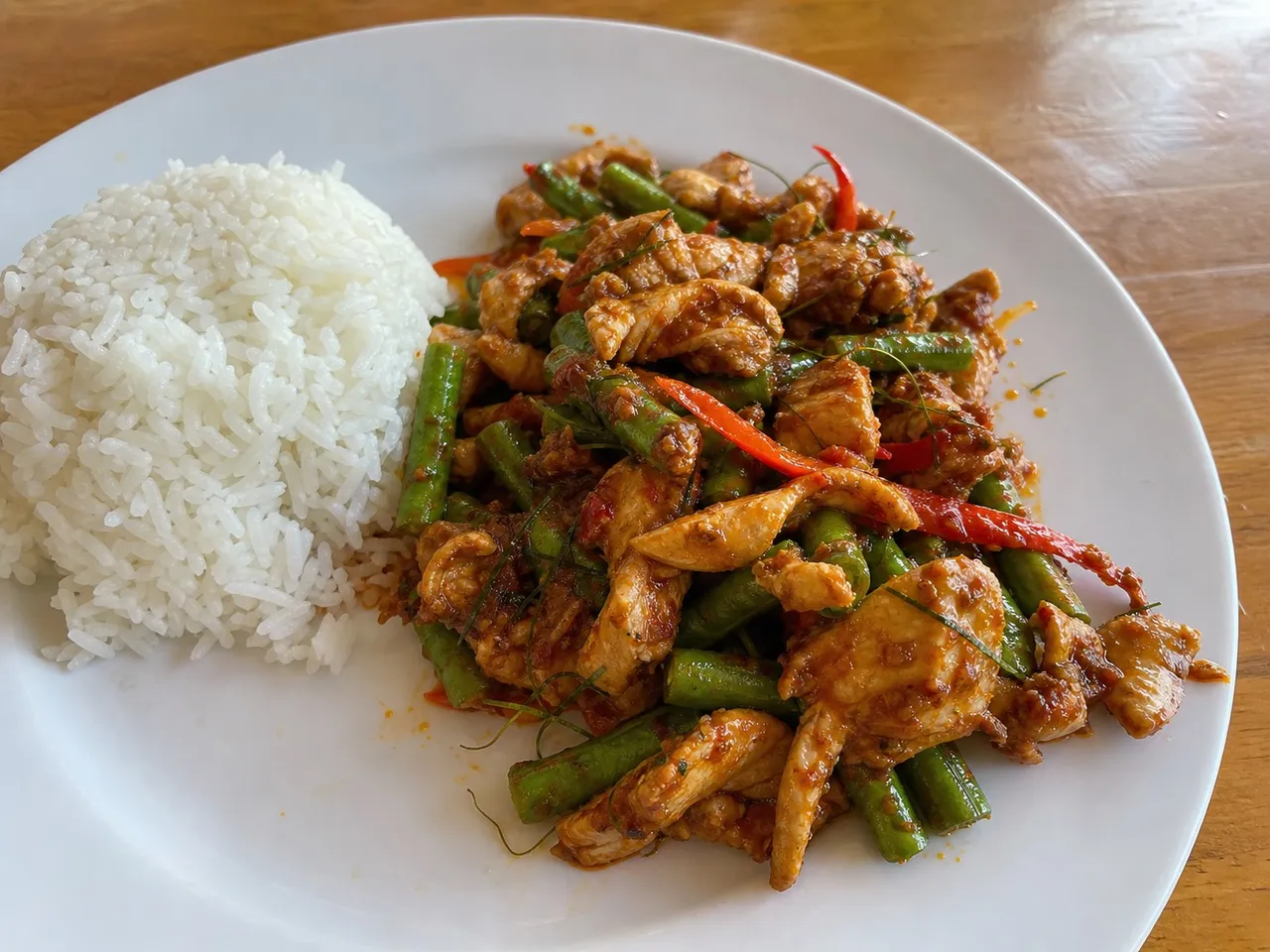
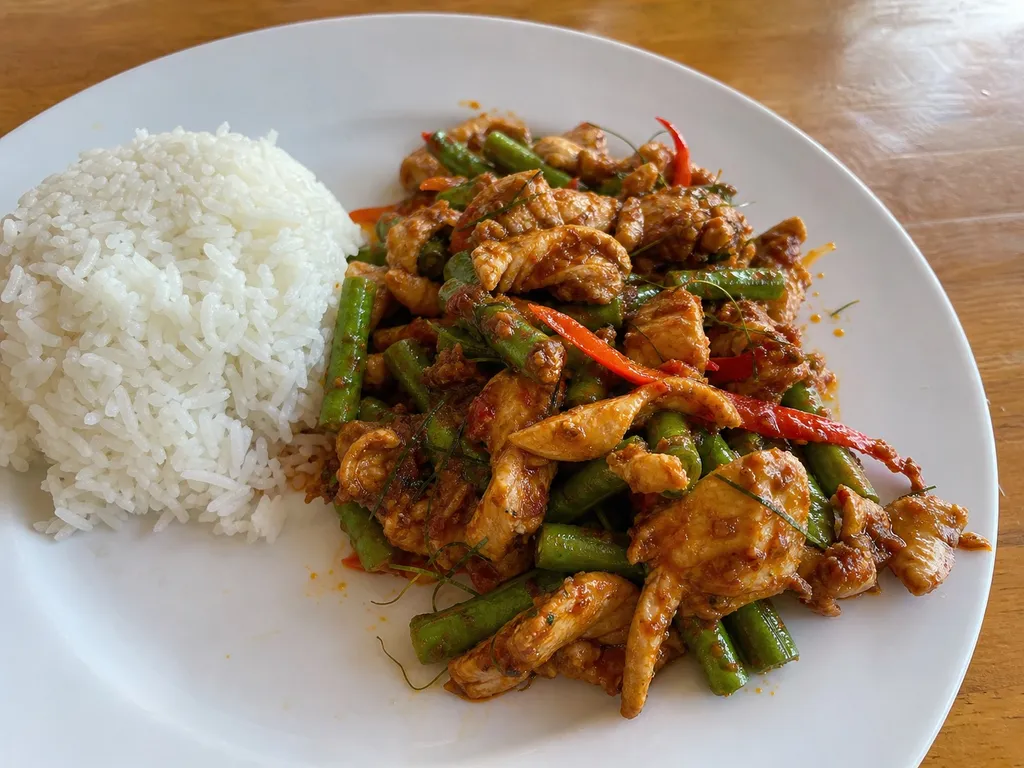
 Pad Prik King
Thinly sliced pork and crisp green beans wok-fried in a concentrated red curry paste with kaffir lime leaves — dry, fragrant, and packed with serious chili heat.
Contains common allergens
In the app, Listahan checks these against your household automatically.
Good to know
- Ready in under 30 minutes
Matched from this dish's own ingredients and timing. Browse more: 30-minute meals
Instructions
8 steps- 1
Heat the oil in a wok over medium heat and fry the prik king paste, stirring constantly, until the oil separates from the paste and it turns deeply fragrant, 2 to 3 minutes.
- 2
Add the sliced pork and stir-fry, breaking it apart, until it is coated in the paste and mostly cooked through.
- 3
Add the long beans and stir-fry over fairly high heat so they cook quickly and stay crisp-tender rather than going soft.
- 4
Splash in a little water or stock only if the mixture starts to look too dry or stick to the wok, since this dish should stay dry, not saucy.
- 5
Season with fish sauce and palm sugar, tossing to coat everything evenly and balancing the salty-sweet edge against the chili heat of the paste.
- 6
Cook until the pork is fully cooked and the beans are just tender with a little bite left, about 2 more minutes.
- 7
Stir in most of the sliced kaffir lime leaves off the heat so their fragrance stays bright rather than cooking off.
- 8
Transfer to a plate and scatter the remaining kaffir lime leaves on top before serving with steamed rice.
 Images are for illustrative purposes only, may be inaccurate, and do not guarantee the presence or absence of specific ingredients.
 Listahan Family Score™
67/100
Works for many families
Score reflects how well this recipe fits a typical busy household. In the app, your Family Score is personalized to your household's allergens, kids, and pantry.
Nutrition
per serving350
Calories
33 g
Protein
19 g
Carbs
17 g
Fat
Estimated per serving. Actual values depend on the brands and portions you use.
Listahan cooking guide
Chef notes & practical guide
Technique notes, ingredient swaps, serve-alongside ideas, storage guidance, and equipment for this recipe.
Cultural context
Pad prik king is a dry-style Thai stir-fry where red curry paste is fried in oil rather than loosened with coconut milk, leaving the protein and vegetables glazed in concentrated, clingy spice. The name points to its chili-and-ginger paste base, and the lack of liquid is the whole point: it is intense, coating, and meant to be eaten with plenty of rice. It shows how Thai curry paste can work as a stir-fry seasoning, not just a soup base.
Listahan note
This version keeps it true to the dry style, frying the paste until the oil splits so the sauce hugs every piece rather than pooling. Long beans and crisp protein give it crunch against the deep, salty-sweet glaze.
Technique cues
- Fry the curry paste in hot oil over medium heat until it darkens and the oil separates out; this is what gives pad prik king its rich, non-raw depth.
- Keep the pan dry and hot so the dish stays a glaze; if it starts to steam, raise the heat rather than adding liquid.
- Add the long beans toward the end and toss hard so they char slightly and stay snappy instead of going limp in the paste.
Kitchen flow
- Parallel prep
- Slice the protein, cut the long beans, and shred the lime leaves before you heat the pan, since the dry stir-fry moves fast once the paste is frying.
- Make-ahead
- Fry a larger batch of curry paste in oil and refrigerate it; you can then build the stir-fry in minutes on a busy night.
- Leftover move
- Fold leftovers into a fresh omelet or pack them cold over rice for a punchy next-day lunch box; the glaze keeps its flavor well.
- Cleanup rhythm
- Soak the wok in hot water right after cooking to lift the sticky paste, and wipe the cutting board well since the chili oil can carry heat to the next ingredient.
Ingredient brief
Role, handling, and swap guidance for each key ingredient.
red curry paste
flavor engine
Purpose: Fried dry, it becomes the entire sauce, contributing chili heat, garlic, galangal, and lemongrass in one spoonful.
Handling: Fry it in oil first until fragrant and the oil colors.
Adaptation: Make a quick paste from dried chilies, garlic, and lemongrass, or use a good store-bought paste.
long beans
crisp vegetable
Purpose: Their firm snap survives the high heat and stands up to the heavy glaze.
Handling: Cut into short batons and add late so they stay crunchy.
Adaptation: Green beans or thinly sliced broccoli stems give the same texture.
chicken thigh
protein
Purpose: Dark meat stays juicy under high heat and carries the clingy paste well.
Handling: Slice thin against the grain and stir-fry until just cooked.
Adaptation: Firm tofu or pressed extra-firm tofu makes a clean vegetarian version; fry it crisp first.
kaffir lime leaves
aromatic lift
Purpose: Their floral citrus perfume cuts through the rich paste and signals the dish is Thai.
Handling: Remove the center rib and slice into fine threads, adding near the end.
Adaptation: A little lime zest plus a bay leaf approximates the citrus note.
fish sauce
salty seasoning
Purpose: It seasons the dry stir-fry with salt and umami so the paste reads balanced, not just hot.
Handling: Add a splash near the end and taste before adding more.
Adaptation: Light soy sauce keeps it free of fish for plant-based eaters.
palm sugar
balancing sweetness
Purpose: A small amount rounds the chili heat and helps the glaze cling and gloss.
Handling: Shave fine and add with the seasoning so it melts into the paste.
Adaptation: Light brown sugar works directly.
Technique notes
- Watch for the oil splitting away from the paste as your signal that it is fried enough; cooking past raw is what separates a good pad prik king from a harsh one.
- Resist adding water even when the pan looks dry; the dish is defined by being a clinging glaze, and liquid turns it into an ordinary curry.
- Finish with a scatter of fresh lime-leaf threads off the heat so their perfume stays bright rather than cooking away.
Ingredient swaps
- Vegetarian direction
- Check that your curry paste is shrimp-free, swap fish sauce for soy, and use crisp-fried tofu as the protein.
- Gluten-free direction
- Use a gluten-free fish sauce and confirm the curry paste has no wheat; the rest of the dish is naturally gluten-free.
- Milder-heat direction
- Cut the curry paste with a spoon of tomato paste to keep the color and body while softening the chili burn for kids.
Serve alongside
- steamed jasmine rice
- a clear vegetable soup like gaeng jued
- sliced cucumber to cool the palate
- iced Thai milk tea
- cold coconut water
- plain iced jasmine tea
Serving suggestions only — check pairings for your household's allergens.
Storage & reheating
- Refrigerate in an airtight container for up to four days; the dry glaze holds its flavor without going watery. Reheat in a hot pan rather than the microwave to keep the protein and beans from steaming soft. It freezes for up to two months, though the long beans soften on thawing, so add a few fresh ones when reheating.
Equipment
- a wok or heavy skillet that holds high heat
- a wooden spatula for fast tossing
- a sharp knife for thin protein slices
- a small bowl to premix the seasoning sauce
Make this household-aware
Listahan Pro checks this recipe against your household's allergens, finds pantry-aware swaps, builds the shopping list, and helps you plan the week around it.
Plan it in Listahan
Add Pad Prik King to your week, check it against your household's allergens, and build the shopping list automatically.
More Thai recipes
 Thai Lens Verified Images are for illustrative purposes only, may be inaccurate, and do not guarantee the presence or absence of specific ingredients.
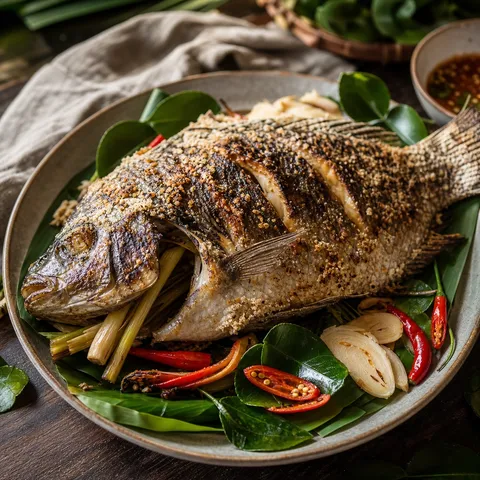
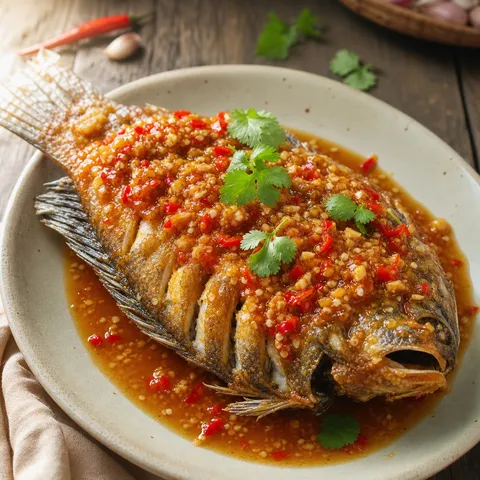
 Pla Pao
A whole salt-crusted fish stuffed with lemongrass and grilled until the skin is crackling and the flesh is silky.
 Thai Lens Verified Images are for illustrative purposes only, may be inaccurate, and do not guarantee the presence or absence of specific ingredients.
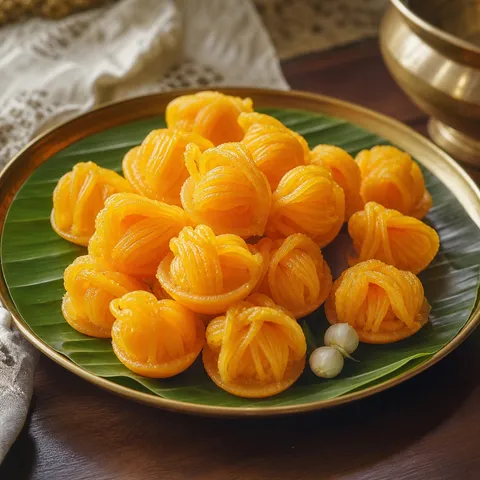
 Thong Yip
Petite golden flowers pressed from egg yolk and sugar, simmered in jasmine-scented syrup until set — a centuries-old Thai royal confection as beautiful as it is sweet.
 Thai Lens Verified Images are for illustrative purposes only, may be inaccurate, and do not guarantee the presence or absence of specific ingredients.
 Pla Rad Prik
Whole fish fried to a shatteringly crisp shell, then blanketed in a sticky, sweet-hot chili-tamarind sauce with garlic and basil — dramatic, punchy, and made for sharing.