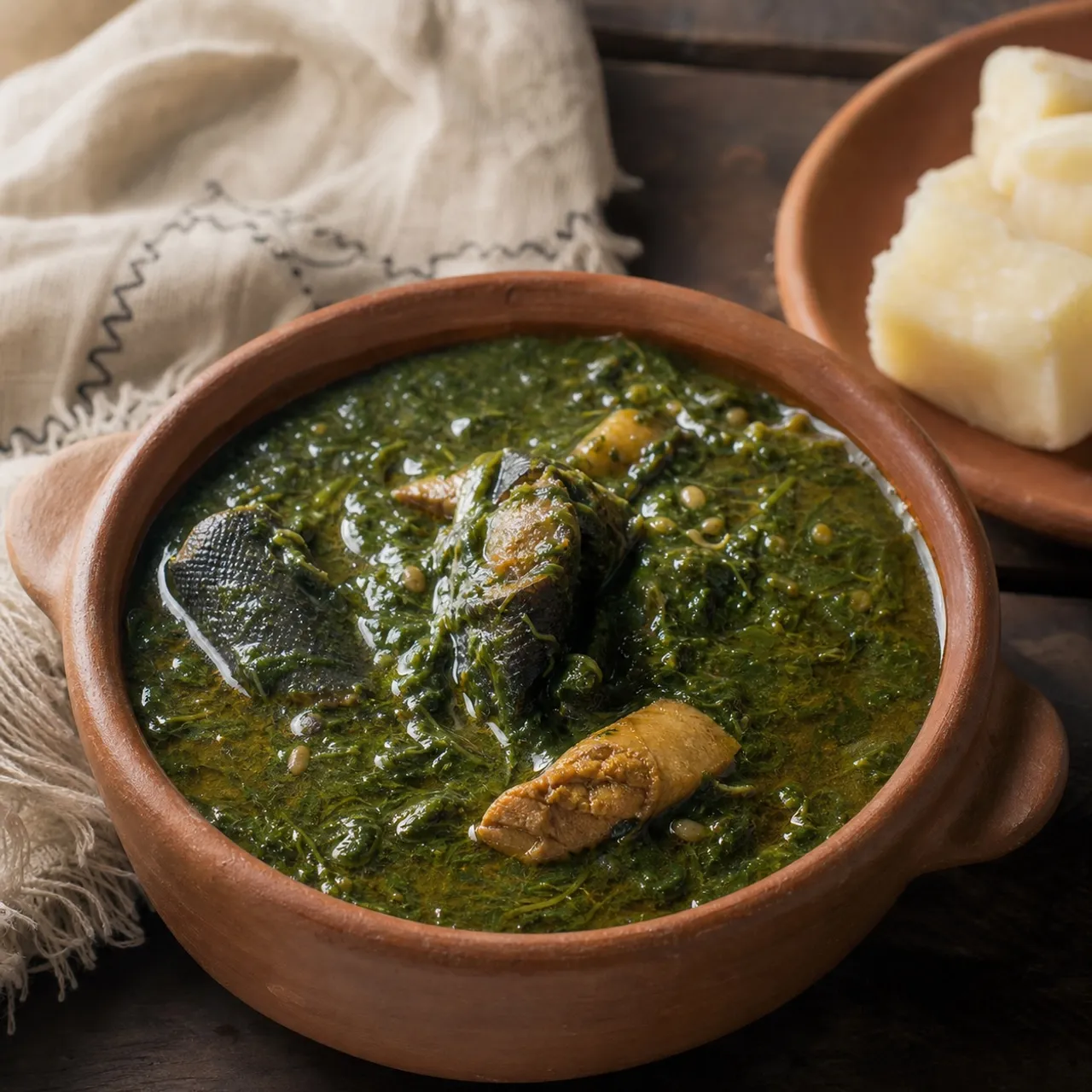
 West African Images are for illustrative purposes only, may be inaccurate, and do not guarantee the presence or absence of specific ingredients.
 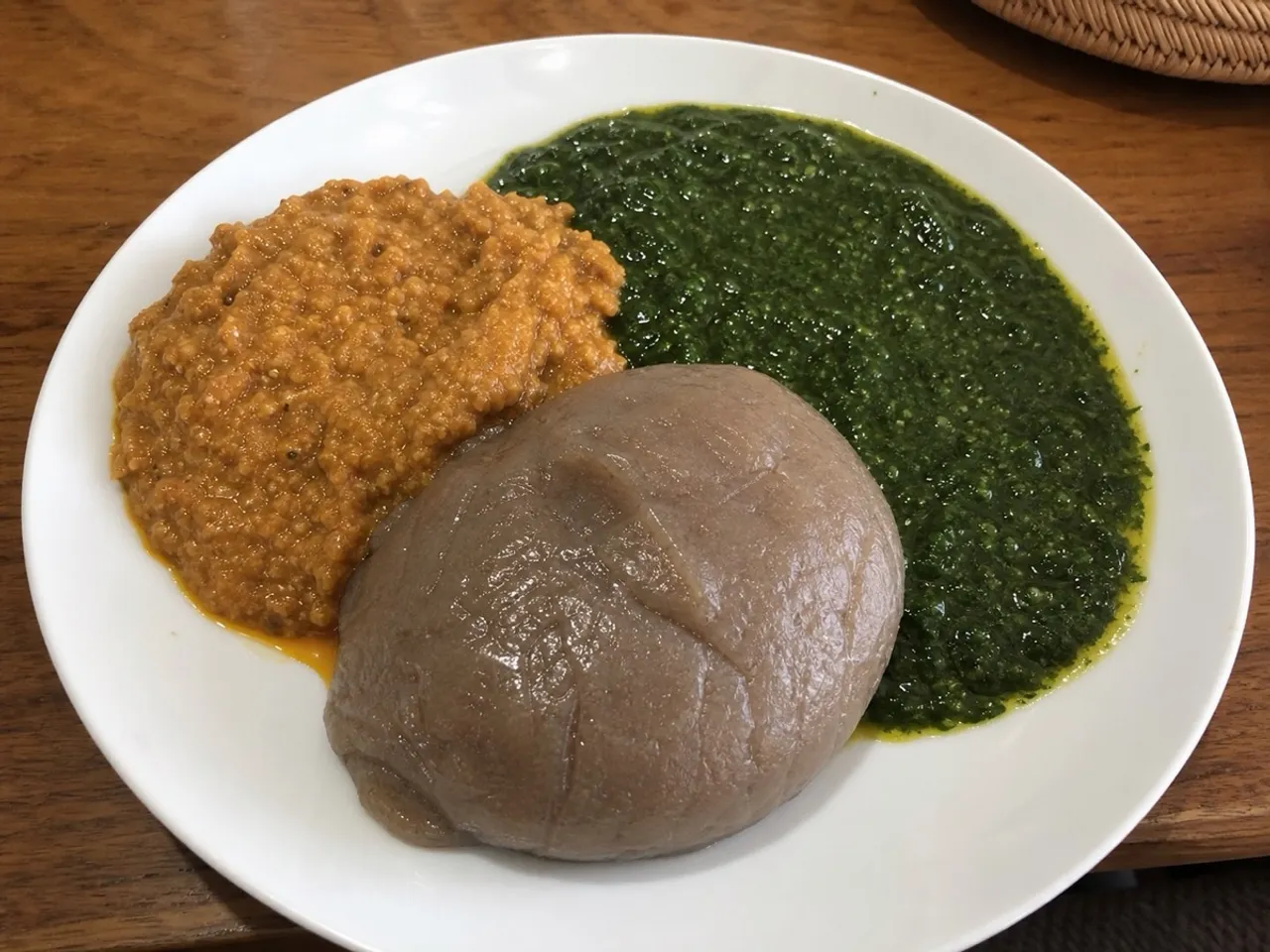 Serving Images are for illustrative purposes only, may be inaccurate, and do not guarantee the presence or absence of specific ingredients.
 Ewedu
Jute leaves blended into a silky, draw soup with a clean, grassy flavor — light yet deeply nutritious, and a classic Yoruba pairing with amala and gbegiri.
Contains common allergens
In the app, Listahan checks these against your household automatically.
Good to know
- One-pot
- Ready in under 30 minutes
Matched from this dish's own ingredients and timing. Browse more: one-pot dinners30-minute meals
Instructions
7 steps- 1
Wash the ewedu leaves well and roughly chop them.
- 2
Bring the water to a boil in a pot, add the leaves, and cook for 5 to 7 minutes, until fully wilted and soft.
- 3
Add the crayfish, dawadawa, seasoning cube, and the pinch of potash if using, and simmer for 2 more minutes.
- 4
Remove from the heat and blend directly in the pot with an immersion blender, or transfer to a blender, and puree until smooth.
- 5
Return the puree to low heat and use a traditional ewedu broom (or a whisk) to beat the soup vigorously in swirling strokes for 2 to 3 minutes, until it turns light green, frothy, and distinctly draw-y in texture.
- 6
Season with salt to taste.
- 7
Serve hot alongside amala and gbegiri as part of the classic abula trio.
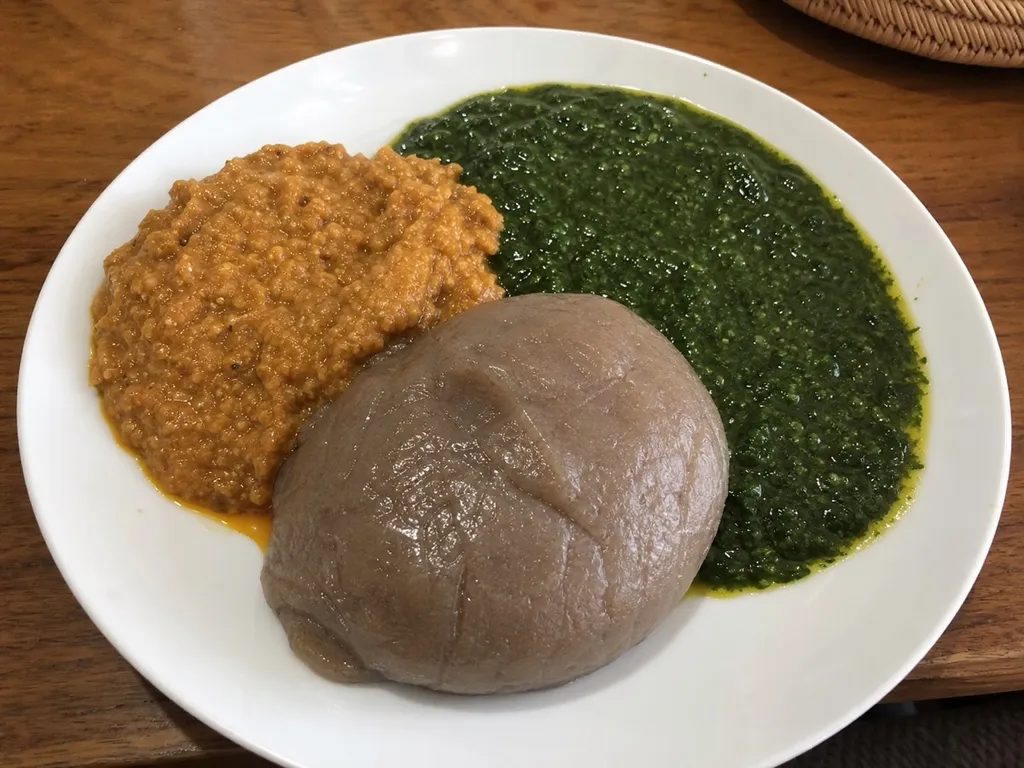 Images are for illustrative purposes only, may be inaccurate, and do not guarantee the presence or absence of specific ingredients.
 Listahan Family Score™
68/100
Works for many families
Score reflects how well this recipe fits a typical busy household. In the app, your Family Score is personalized to your household's allergens, kids, and pantry.
Listahan cooking guide
Chef notes & practical guide
Technique notes, ingredient swaps, serve-alongside ideas, storage guidance, and equipment for this recipe.
Cultural context
Ewedu is a Yoruba soup made from jute mallow leaves cooked down into a smooth, draw-y, bright green sauce, traditionally beaten with a broom-like whisk called an ijabe until silky. It is rarely eaten alone, almost always served alongside gbegiri bean soup and a pepper stew with amala, forming one of southwestern Nigeria's most cherished meals. Its appeal is textural as much as anything, a light, slippery sauce that helps swallows slide down.
Listahan note
This version keeps the ewedu bright green and lightly viscous, cooked just enough to soften without going dull. It is built as one part of the amala, ewedu, and gbegiri trio.
Technique cues
- Cook the jute leaves only briefly, since overcooking dulls the vivid green and flattens the fresh flavor.
- Blend or beat the leaves to break them down into the smooth, slightly draw-y texture rather than leaving them whole and stringy.
- Season lightly, often just with a little locust bean (iru) and salt, so the clean leafy taste comes through and the partnering stews carry the heat.
Kitchen flow
- Parallel prep
- Make ewedu alongside gbegiri and the pepper stew so all three of the classic trio land hot at the same time.
- Make-ahead
- Ewedu keeps a day or two; cook it ahead and reheat gently, as it is quick to revive and pairs with leftover stew.
- Leftover move
- Stir leftover ewedu into the next day's pepper stew or spoon it over fresh amala for a fast meal.
- Cleanup rhythm
- Rinse the blender or whisk right away before the sticky leaf residue dries onto it.
Ingredient brief
Role, handling, and swap guidance for each key ingredient.
jute mallow leaves (ewedu)
the soup itself
Purpose: These leaves give the soup its name, its bright green color, and the gentle slippery body that defines it.
Handling: Pick the leaves from the stems, wash, then cook briefly before breaking them down.
Adaptation: Frozen chopped ewedu works year-round; spinach mixed with a little okra approximates the draw if jute is unavailable.
locust beans (iru)
umami seasoning
Purpose: Fermented locust beans add the deep, funky umami that gives traditional ewedu its savory backbone.
Handling: Rinse and add a spoonful as the leaves cook so it melts into the sauce.
Adaptation: A small amount of miso or a dash of fish sauce lends a comparable savory depth.
potash or baking soda (small pinch, optional)
color and draw enhancer
Purpose: A tiny pinch helps the leaves break down quickly and keeps the color vivid, though it is optional.
Handling: Use only a small pinch, since too much turns the soup soapy.
Adaptation: Omit it entirely and simply cook the leaves a touch longer.
salt
seasoning
Purpose: It balances the leafy soup, which is otherwise mild by design.
Handling: Add to taste near the end after the locust beans have seasoned the pot.
Adaptation: Any fine salt works; go light since the accompanying stews are heavily seasoned.
Technique notes
- If using a blender instead of the traditional ijabe whisk, pulse briefly so you keep some body rather than pureeing it watery.
- Add the locust beans early enough to soften and melt but taste before salting, since iru is savory on its own.
- Keep the heat moderate; a hard boil dulls the color faster than a gentle simmer.
Ingredient swaps
- Vegetarian direction
- Skip any meat stock and rely on locust beans or miso for the umami, keeping the soup fully plant-based.
- No-iru direction
- Replace locust beans with a small spoon of miso or a dash of mushroom seasoning for similar depth without the fermented-bean funk.
- Quick direction
- Use frozen pre-chopped ewedu to skip the picking and washing and have the soup ready in under fifteen minutes.
Serve alongside
- amala
- gbegiri bean soup
- buka-style pepper stew
- chilled zobo hibiscus drink
- palm wine
- cold water
Serving suggestions only — check pairings for your household's allergens.
Storage & reheating
- Refrigerate ewedu in an airtight container for up to three days; reheat gently to preserve the color. It freezes well for up to two months and is often made in batches and frozen in portions. Reheat from frozen over low heat with a splash of water.
Equipment
- small pot
- blender or traditional ijabe whisk
- fine sieve for washing the leaves
- wooden spoon
Make this household-aware
Listahan Pro checks this recipe against your household's allergens, finds pantry-aware swaps, builds the shopping list, and helps you plan the week around it.
Plan it in Listahan
Add Ewedu to your week, check it against your household's allergens, and build the shopping list automatically.
More West African recipes
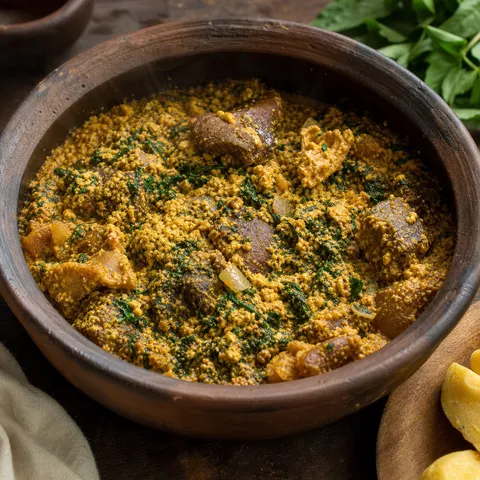 West African Lens Verified Images are for illustrative purposes only, may be inaccurate, and do not guarantee the presence or absence of specific ingredients.
 Egusi Soup
Ground melon seeds simmered with palm oil, leafy greens, and bold spices into a rich, nutty stew that's a cornerstone of Nigerian home cooking.
 West African Lens Verified Images are for illustrative purposes only, may be inaccurate, and do not guarantee the presence or absence of specific ingredients.
 Banku
A smooth, slightly tangy Ghanaian dough of fermented corn and cassava, cooked to a stretchy consistency — the perfect partner for okra stew or grilled tilapia.
 West African Lens Verified Images are for illustrative purposes only, may be inaccurate, and do not guarantee the presence or absence of specific ingredients.
 Pepper Soup
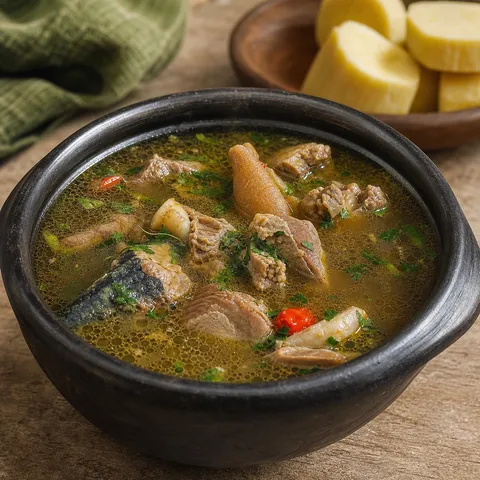
A piercingly spiced, crystal-clear broth simmered with goat meat or catfish and a blend of earthy Nigerian spices — warming, restorative, and intensely aromatic.