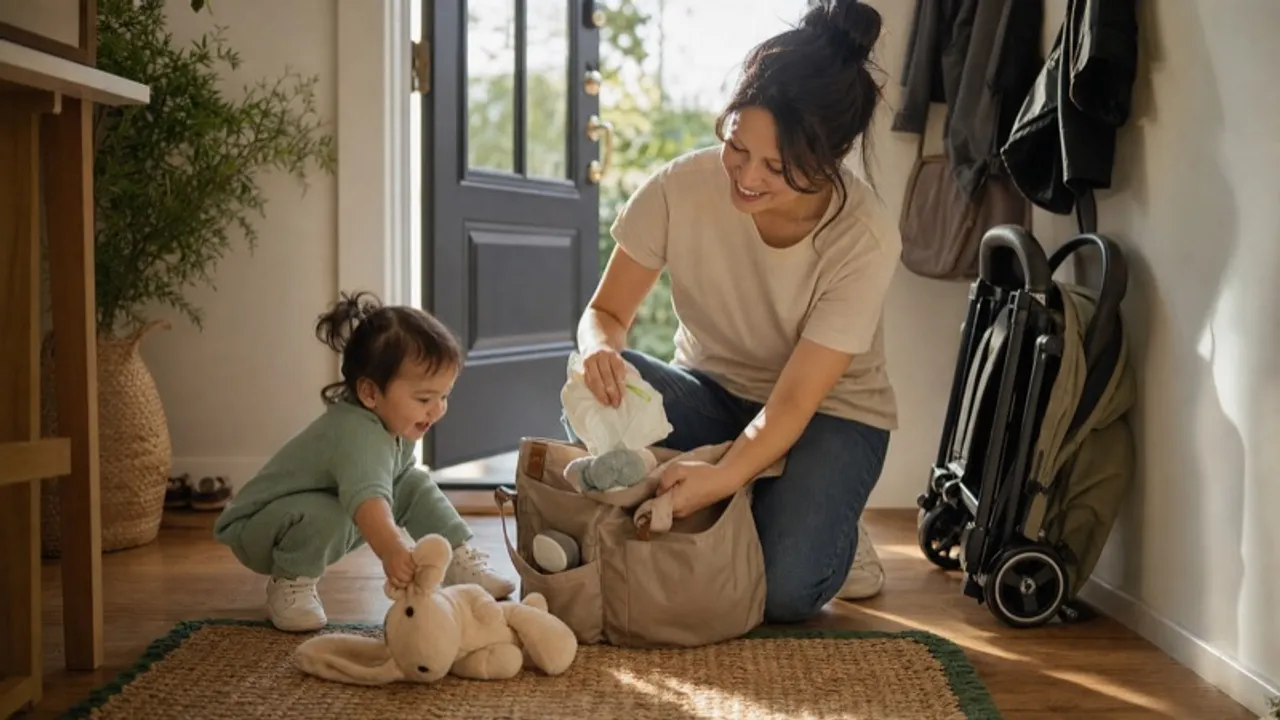
Kids / diaper bag Checklist
Out with young kids — the diaper bag and everything little ones need.
Before you go
- Pack more diapers, wipes, and snacks than the outing seems to need — changes and hunger come more often away from home, and running out cuts the trip short.
- Bring one familiar comfort item — a favorite toy, blanket, or pacifier — since familiarity soothes a young child in a new place better than anything new.
- Keep a spare change of clothes sealed in the bag; a single blowout or spilled drink is the most common reason an outing with little ones ends early.
Diapering
- Diapers
Disposable or cloth diapers for your child.
Why it's on the list & how to choose
Why pack it: The core supply for any outing with a child still in diapers.
How to choose: Pack more than the trip length suggests, sized to your child's current weight.
How many: Roughly one diaper for every two hours out, plus a couple of spares.
Good to know: Diaper blowouts and leaks usually mean the size is off, not the brand — a too-small diaper is the most common culprit behind the messes parents blame on the product.
Tip: Check the size fits before a long outing — a growth spurt can make a snug diaper leak.
- Wipes
Baby wipes for diaper changes and general cleanup.
Why it's on the list & how to choose
Why pack it: Used for far more than diapers — hands, faces, and spills too.
How to choose: Pick a travel-size pack that fits your bag without weighing it down.
Good to know: Baby wipes end up doing far more than diaper duty — hands, faces, spills, and surfaces — so they empty faster than the diaper count alone would predict.
Tip: Keep a spare mini-pack in the car in case the main bag runs out.
- Changing pad
A portable pad for diaper changes away from home.
Why it's on the list & how to choose
Why pack it: Gives a clean, comfortable surface for changes on any surface, indoors or out.
How to choose: Pick a foldable, wipeable pad that's easy to carry and clean.
Good to know: A portable changing pad matters most where there's no changing table at all — a car seat, a bench, or the ground — which is more places than most outings assume.
Tip: Fold it with the clean side in after use so it's ready for the next change.
- Diaper rash cream
A protective cream for diaper rash and irritation.
Why it's on the list & how to choose
Why pack it: Prevents or treats rash from extended time in a wet or soiled diaper.
How to choose: Pick a zinc-oxide based cream recommended by your pediatrician.
Good to know: Diaper rash is usually about how long skin stays wet, not how often you change — a barrier cream at the first pink patch heads off most of it.
Tip: Apply at the first sign of redness rather than waiting for a full rash.
- Disposable bags
Small disposable bags for sealing away used diapers.
Why it's on the list & how to choose
Why pack it: Keeps odors contained until you reach a trash can.
How to choose: Pick scented, sealable bags sized for used diapers.
Good to know: A sealable scented bag contains a used-diaper odor far better than a grocery bag, which matters when the nearest trash can is a long walk away.
Tip: Keep a small roll in an outside pocket so they're always within reach.
Feeding
- Bottles / formula
Bottles and formula or milk for feeding.
Why it's on the list & how to choose
Why pack it: Keeps your child fed on a schedule even while away from home.
How to choose: Pack enough bottles for the outing plus one spare in case of a spill.
Good to know: Prepared formula has a limited window at room temperature, so measuring the powder and water separately and mixing on demand keeps it fresher than premixing for the day.
Tip: Pre-measure formula portions at home so mixing on the go is faster.
- Snacks
Easy, mess-light snacks for older babies and toddlers.
Why it's on the list & how to choose
Why pack it: Keeps hunger and meltdowns at bay between meals.
How to choose: Pick snacks sized and textured appropriately for your child's age to avoid choking risk.
Good to know: Round, firm foods like whole grapes and nuts are common choking hazards for young children until they're cut small — texture and size matter more than the food itself.
Tip: Pack a variety so you have a backup if one gets refused mid-outing.
- Sippy cup
A spill-resistant cup for toddlers learning to drink independently.
Why it's on the list & how to choose
Why pack it: Lets your toddler drink on the go without a full spill.
How to choose: Pick one your child is already used to rather than introducing a new cup on an outing.
Good to know: Toddlers reject an unfamiliar cup at the worst moment, so an outing is the wrong time to introduce a new one — bring the cup they already accept.
Tip: Pack a backup in case the first one gets dropped or left behind.
- Bibs
Bibs to catch spills and drips while feeding.
Why it's on the list & how to choose
Why pack it: Saves outfits from getting soaked or stained mid-meal.
How to choose: Pick a wipeable or disposable bib for outings rather than one that needs washing.
Good to know: A wipeable or disposable bib beats a cloth one on an outing, since a soaked cloth bib just becomes another wet thing to carry home.
Tip: Pack two in case the first gets soaked through.
Clothing & comfort
- Change of clothes (1–2 spare)
A spare outfit in case of spills, blowouts, or weather.
Why it's on the list & how to choose
Why pack it: Kids get messy fast, and a spare outfit turns a disaster into a quick fix.
How to choose: Pack a full outfit including socks, sized for your child's current size.
How many: One to two full spare outfits, including socks.
Good to know: The spare outfit is the item parents skip and regret most, because a single blowout or spilled drink can otherwise end an outing early.
Tip: Keep it in a sealed bag so it stays clean until it's needed.
- Spare socks
An extra pair of socks for your child.
Why it's on the list & how to choose
Why pack it: Socks get wet or lost more easily than any other clothing item.
How to choose: Pack a pair that matches the season and the day's activities.
Good to know: Small socks vanish — kicked off in strollers, lost at play areas — so they go missing more than any other kid clothing item on an outing.
Tip: Pack two pairs if you're headed somewhere wet, like a splash pad or beach.
- Sun hat
A sun hat to protect a child's head and face.
Why it's on the list & how to choose
Why pack it: Young skin is more sensitive to sun than adult skin.
How to choose: Pick a hat with a chin strap so it doesn't blow off or get pulled off easily.
Good to know: A young child's skin burns faster than an adult's, and shade plus a brimmed hat protects the spots — face, ears, neck — that sunscreen is easiest to miss on a squirming kid.
Tip: Let your child wear it around the house first so they're used to it before the outing.
- Light blanket
A light blanket for warmth, shade, or comfort.
Why it's on the list & how to choose
Why pack it: Useful for naps, sun cover in a stroller, or a familiar comfort item away from home.
How to choose: Pick a lightweight blanket that packs small but still covers your child fully.
Good to know: A familiar blanket does double duty as a sunshade over a stroller and a comfort object, which is why a child's own one soothes better than a spare.
Tip: Bring one your child already sleeps with at home for extra comfort.
Health & safety
- Infant medication Nice to have
Infant-safe medication for fever or discomfort.
Why it's on the list & how to choose
Why pack it: Lets you respond quickly if your child develops a fever or discomfort while out.
How to choose: Check with your pediatrician for the right medication and dosage for your child's age and weight.
Good to know: Infant medicine is dosed by weight, not age, so a dose that was right months ago can be too low now — the number tracks the child's growth, not the calendar.
Safety: Keep all medication in its original labeled container and out of children's reach, and confirm the current dose with the packaging or your pediatrician before giving any.
Tip: Confirm the dose for your child’s current weight before you leave, since it changes as they grow.
- Thermometer Nice to have
A portable thermometer for checking a child's temperature.
Why it's on the list & how to choose
Why pack it: Lets you catch a fever early rather than guessing by touch.
How to choose: Pick a quick-read digital thermometer that's easy to use away from home.
Good to know: A digital thermometer catches a rising fever hours before it's obvious by touch, which is often the difference between heading home early and a worse afternoon.
Tip: Keep spare batteries with it since it's rarely used and easy to forget it needs power.
- Hand sanitizer
Hand sanitizer for quick cleanup without water.
Why it's on the list & how to choose
Why pack it: Useful before feeding or after touching surfaces away from home.
How to choose: Pick an alcohol-based sanitizer safe for use around young children.
Good to know: Sanitizer works on visibly clean hands but not on grime, so it's a between-meal stand-in for a sink, not a replacement for washing off real dirt.
Safety: Alcohol-based sanitizer should be used with adult supervision — keep it out of reach so a child can't swallow it or rub it in their eyes, and let it dry fully.
Tip: Keep it in an easy-access pocket for quick use before snacks or meals.
- Baby sunscreen
SPF lotion formulated for babies and young children.
Why it's on the list & how to choose
Why pack it: Protects a child's more sensitive skin from sun exposure during outdoor time.
How to choose: Pick a mineral, baby-formulated sunscreen recommended for your child's age.
Good to know: Sunscreen is generally advised only from six months of age; for younger babies, shade and clothing are the recommended sun protection instead.
Safety: Check the sunscreen hasn't expired, keep it out of a child's reach and mouth, and follow the label's age guidance before applying to young skin.
Tip: Test a small patch of skin at home first to check for any reaction before an outing.
- Small first-aid kit
A small first-aid kit sized for minor childhood scrapes.
Why it's on the list & how to choose
Why pack it: Kids fall and scrape more than adults, and having supplies handy avoids a scene.
How to choose: Pick a compact kit with kid-friendly bandages and basic antiseptic.
Good to know: For young kids the fun bandage does real work — the comfort of a chosen sticker often calms a scraped-knee meltdown faster than the bandage itself heals.
Safety: Keep any medications or small items in the kit out of children's reach, and check nothing has expired before an outing.
Tip: Let your child pick their own bandage design — it makes a scrape feel less scary.
Comfort, play & gear
- Pacifier
A pacifier for soothing your baby.
Why it's on the list & how to choose
Why pack it: A familiar comfort item can prevent or calm a meltdown in an unfamiliar place.
How to choose: Bring the exact pacifier your baby already uses and prefers.
Good to know: A dropped-and-lost pacifier at the wrong moment can unravel an outing, which is exactly why experienced parents never carry just one.
Tip: Pack at least one spare in case the first gets dropped or lost.
- Favorite toy
Your child's favorite small toy or comfort object.
Why it's on the list & how to choose
Why pack it: A familiar toy provides comfort and distraction in a new environment.
How to choose: Pick something small enough to carry easily but meaningful enough to actually soothe them.
Good to know: One familiar comfort object soothes an over-stimulated child better than a bag of new toys, because familiarity — not novelty — is what calms them in a strange place.
Tip: Attach a toy clip so it doesn't end up lost on the ground.
- Books Nice to have
A small board book or two for quiet moments.
Why it's on the list & how to choose
Why pack it: Gives a calm activity for waiting rooms, car rides, or downtime.
How to choose: Pick durable board books that survive being chewed on or dropped.
Good to know: Board books survive the chewing and dropping that would wreck paper pages, which is why they’re built for the age that treats a book as a toy.
Tip: Rotate which books you bring so they still feel new and interesting.
- Stroller or carrier
A stroller or baby carrier for getting around with your child.
Why it's on the list & how to choose
Why pack it: Lets you move hands-free while keeping your child safe and comfortable.
How to choose: Pick based on the outing — a stroller for longer walks, a carrier for crowds or uneven terrain.
Good to know: A carrier keeps your hands free in crowds and on stairs where a stroller stalls, while a stroller carries the bag and a napping child — which is why many parents bring both for different parts of a day.
Tip: Practice adjusting the straps or folding mechanism at home before you're out and in a hurry.
Common questions
What should always be in a diaper bag?
What should I pack for a baby in case of a fever while out?
How do I keep a toddler calm during an outing?
Get it in the app to check off & save
Start this checklist in Listahan, tick items off as they go in the bag, and it's saved for the next trip — pre-filled instead of starting over. Free to start, no card.