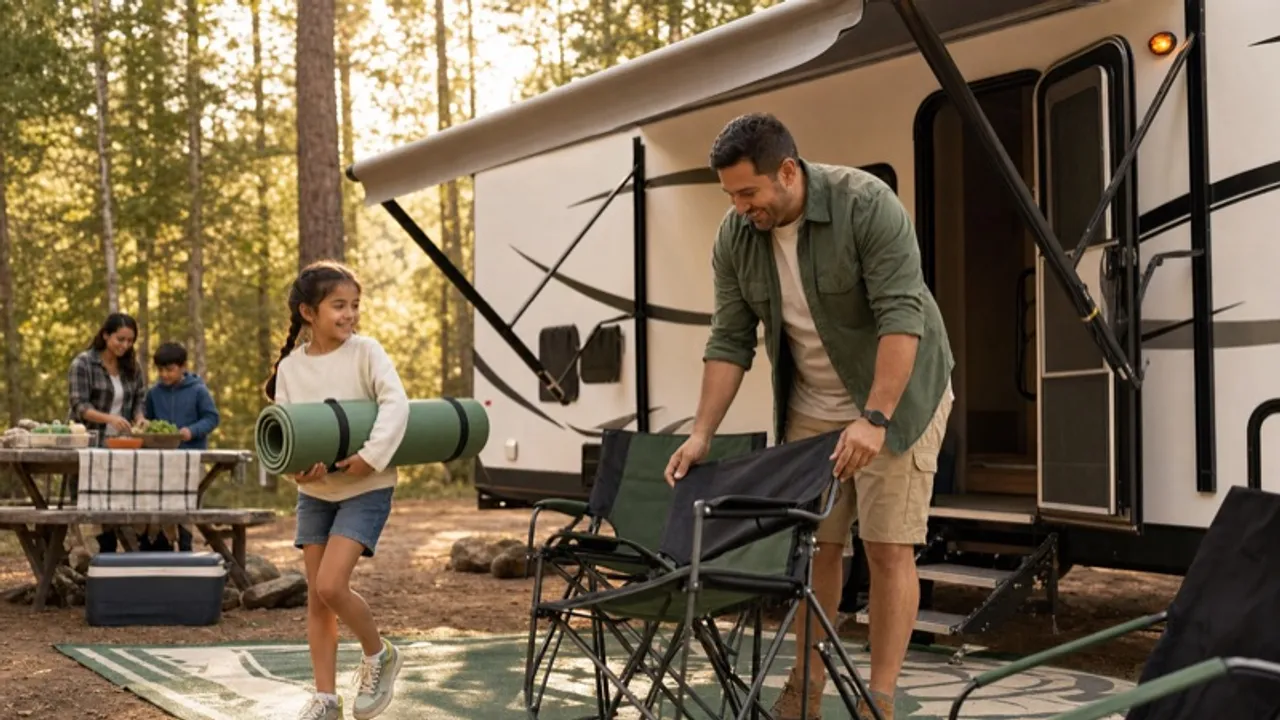
RV / camper trip Checklist
RV or travel-trailer trip — hookups, setup, and life on the road.
Before you go
- Walk a full pre-drive checklist every time you move — steps up, antenna down, slides in, hitch locked; a forgotten step is the classic RV mistake.
- Plug in your surge protector and let it test the pedestal before connecting the RV, so a miswired hookup never reaches your electronics.
- Know your rig's total height and weight and watch for low bridges and weight-limited roads — GPS built for cars won't route around them.
Hookups & utilities
- Fresh-water hose
A drinking-water-safe hose that connects your RV to the campground's water spigot.
Why it's on the list & how to choose
Why pack it: Fills your RV's tank so you have running water at the site.
How to choose: Buy a hose labeled 'drinking water safe' — a regular garden hose can leach chemicals into your water.
Good to know: A white or blue 'drinking water safe' hose is made without the chemicals a green garden hose can leach, which is why RVers never swap one for the other.
Tip: Keep it separate from any hose used near the sewer system, even if it never touches it.
- Sewer hose & gloves
A flexible hose plus gloves for draining the RV's waste tanks at a dump station.
Why it's on the list & how to choose
Why pack it: Lets you empty gray and black tanks without contact or mess.
How to choose: Get a hose long enough to comfortably reach the site's sewer connection with slack.
Good to know: Emptying the black tank before the gray one lets the gray water's soapiness rinse the hose out, a small sequence that keeps the whole job far cleaner.
Safety: Wear the gloves for every connection, keep this hose well away from the fresh-water hose, and wash your hands afterward.
Tip: Always wear the gloves and rinse the hose after every use before storing it.
- Surge protector
A device that plugs between your RV and the campground's power pedestal.
Why it's on the list & how to choose
Why pack it: Protects your RV's electrical system from power surges and wiring faults at unfamiliar hookups.
How to choose: Match the amperage (30 or 50 amp) to your RV's electrical system.
Good to know: Campground power pedestals are frequently miswired, and a surge protector that reads the pedestal first can catch a fault that would otherwise fry your RV's electronics.
Safety: Plug the surge protector into the pedestal first and let it test the supply before connecting your RV; never force a plug into a pedestal that reads a fault.
Tip: Plug it in and check its indicator lights before connecting anything else.
- Leveling blocks
Stackable plastic blocks placed under tires to level an uneven site.
Why it's on the list & how to choose
Why pack it: An unlevel RV makes appliances (especially the fridge) run poorly and sleep uncomfortable.
How to choose: Get blocks rated for your RV's weight, with enough of them to handle a noticeably sloped site.
Good to know: An absorption RV fridge relies on gravity to circulate its coolant, so parking badly off-level can slowly damage it — leveling is about the fridge as much as comfort.
Tip: Use a bubble level or level app on the floor to check before you fully park.
- Wheel chocks
Wedges placed against tires to stop the RV from rolling.
Why it's on the list & how to choose
Why pack it: Keeps the RV from shifting once it's parked and leveled.
How to choose: Choose chocks sized for your tire diameter and rated for your RV's weight.
Good to know: Chocking the wheels before you unhitch keeps a trailer from rolling the instant it leaves the tow ball — the moment a parked camper is most likely to move.
Safety: Set the chocks before unhitching or extending slide-outs, and don't rely on the parking brake alone on any slope.
Tip: Place them before you unhook from the tow vehicle or extend any slide-outs.
- Water pressure regulator Nice to have
A pressure regulator that attaches to the fresh-water hose connection.
Why it's on the list & how to choose
Why pack it: Protects RV plumbing from campground water pressure that's often higher than your system can handle.
How to choose: Pick an adjustable regulator so you can dial pressure down at high-pressure sites.
Good to know: Campground water pressure can spike high enough to burst RV plumbing lines, and a regulator at the spigot caps it before that pressure ever reaches your pipes.
Tip: Install it right at the spigot, before the hose, not at the RV end.
Setup & outside
- Outdoor mat Nice to have
A durable mat placed at the RV's entrance or under the awning.
Why it's on the list & how to choose
Why pack it: Keeps dirt and grass out of the RV and gives you a clean spot to sit outside.
How to choose: Pick a mat sized to fit under your awning with room to spare.
Good to know: A breathable woven mat lets the grass underneath breathe, while a solid tarp left down for days can kill the lawn — many campgrounds require the woven kind for that reason.
Tip: Shake it out before packing it away so you're not storing trapped dirt.
- Folding chairs
Portable outdoor chairs for sitting outside the RV.
Why it's on the list & how to choose
Why pack it: Most RV time happens outside under the awning, not inside.
How to choose: Look for compact, lightweight chairs that store easily in an outside compartment.
Good to know: Most RV living happens outdoors under the awning, so comfortable chairs get more hours of use than almost anything you pack inside.
Tip: Choose ones with armrests and a cup holder for comfort during long evenings outside.
- Electric adapters
Electrical adapters that let your RV plug into different amperage pedestals.
Why it's on the list & how to choose
Why pack it: Not every campground offers your RV's exact plug type, so an adapter keeps you from getting stuck.
How to choose: Carry both a 30-to-50 amp and 50-to-30 amp adapter to cover either direction.
Good to know: A '30-to-50' adapter, often called a dogbone, lets you connect either way, but it can't create power that isn't there — a 30-amp pedestal still only delivers 30 amps.
Tip: Keep adapters in a labeled bag near the power cord so you're not searching at hookup time.
- Outdoor lights Nice to have
String lights or lanterns for the outdoor living space.
Why it's on the list & how to choose
Why pack it: Makes the site usable and safe to move around after dark.
How to choose: Pick weatherproof, low-power LED lights that won't drain your battery or generator.
Good to know: Warm-white, low-lumen lights keep your campsite friendly without washing out the stars or annoying neighbors — many parks have quiet, low-light etiquette after dark.
Tip: Battery-powered or solar lights skip the need for another cord running outside.
Interior
- Bedding
Sheets, blankets, and pillows sized for the RV's beds.
Why it's on the list & how to choose
Why pack it: RV bed sizes are often nonstandard, so home bedding may not fit.
How to choose: Measure the RV mattress before the trip — many are shorter or narrower than standard sizes.
Good to know: RV mattresses often use odd sizes like 'RV queen,' which is shorter than a household queen — measuring before you buy sheets saves a frustrating mid-trip mismatch.
Tip: Pack bedding in a bag to keep it clean while in storage compartments.
- Towels
Bath and dish towels for the RV's bathroom and kitchen.
Why it's on the list & how to choose
Why pack it: The RV won't have towels stocked like a hotel, so you need to bring your own.
How to choose: Pack quick-dry towels since RV bathrooms have limited air circulation.
Good to know: Quick-dry towels matter more in an RV than at home, because a small bathroom with little airflow leaves a regular towel damp and musty for days.
Tip: Bring one extra beach towel for outdoor activities so bathroom towels stay dry.
- Kitchenware
Basic pots, dishes, and utensils for the RV's kitchenette.
Why it's on the list & how to choose
Why pack it: Lets you cook and eat meals inside without relying on restaurants.
How to choose: Stick to a compact, stackable set that fits the RV's small cabinets.
Good to know: Everything in an RV cabinet gets jostled down the road, so nesting, non-breakable dishes and a bit of shelf liner prevent the rattle-and-shatter of a normal dinner set.
Tip: Use nonbreakable dishes since things shift while driving.
- Trash bags
Bags for kitchen and general trash inside the RV.
Why it's on the list & how to choose
Why pack it: RVs have small trash bins that fill quickly on a multi-day trip.
How to choose: Pack a range of sizes for the small kitchen bin and any larger bags outside.
Good to know: A closed RV bakes in the sun, so even a little food waste turns strong fast — daily trash runs keep a small cabin from smelling like the bin.
Tip: Tie off and take out trash daily — RV interiors are small enough that odors build up fast.
Safety & driving
- First-aid kit
A kit with bandages, antiseptic, and basic medication for minor injuries.
Why it's on the list & how to choose
Why pack it: Having supplies on hand means small injuries don't derail the trip or require a store run.
How to choose: Get a kit sized for your group, including any personal medications.
Good to know: An RV can be hours from the nearest pharmacy, so restocking used-up items between trips matters more than the kit’s original size.
Safety: Store any medications out of children's reach and confirm nothing in the kit has expired before each trip.
Tip: Check it before each trip since items get used up over time.
- Flashlight
A handheld or headlamp light for nighttime tasks and emergencies.
Why it's on the list & how to choose
Why pack it: Useful for hookups, walking the site, or troubleshooting in the dark.
How to choose: Pick a bright, durable flashlight and keep spare batteries with it.
Good to know: Hooking up or troubleshooting an RV after dark is far easier with a headlamp than a handheld, since both hands stay free for the cord, hose, or hitch.
Tip: Store it in the same spot every trip, like the driver's door pocket, so it's easy to grab.
- Tire pressure gauge
A tool for checking tire pressure on the RV and tow vehicle.
Why it's on the list & how to choose
Why pack it: Correct tire pressure is critical for safe handling of a heavy RV, especially on long drives.
How to choose: A simple digital gauge is accurate and easy to read.
Good to know: A heavy RV's tires are among its biggest safety factors, and an underinflated one builds heat until it fails — the leading cause of RV tire blowouts.
Safety: Check tire pressure when the tires are cold, before driving, and don't exceed the load rating stamped on the tire's sidewall.
Tip: Check pressure cold, before driving, for the most accurate reading.
- Road flares / reflectors
Road flares or reflective triangles for roadside breakdowns.
Why it's on the list & how to choose
Why pack it: Makes your parked RV visible to other drivers if you break down on the roadside.
How to choose: Pick a set that's rated for highway visibility and easy to set up quickly.
Good to know: A stalled RV is big, but on a fast highway shoulder drivers still need warning distance — reflective triangles set back up the road buy the seconds that matter.
Safety: If you break down, pull as far off the road as you can and set reflectors well back up the road before walking around the vehicle.
Tip: Store them near the driver's seat so they're accessible without unpacking the whole RV.
- Basic toolkit
A basic set of hand tools for small repairs and adjustments.
Why it's on the list & how to choose
Why pack it: RVs need frequent small fixes — a loose screw or hitch adjustment shouldn't end the trip.
How to choose: A compact set with pliers, a wrench set, and a screwdriver covers most RV repairs.
Good to know: RVs vibrate loose the small stuff — a screwdriver and a socket set fix most of what rattles free on a trip, long before you would need a mechanic.
Tip: Add RV-specific items like a hitch pin and a sewer hose wrench to the standard kit.
Common questions
What's the most important safety item for RV camping?
Do I need a special hose for RV water hookups?
How do I level an RV on an uneven campsite?
Get it in the app to check off & save
Start this checklist in Listahan, tick items off as they go in the bag, and it's saved for the next trip — pre-filled instead of starting over. Free to start, no card.