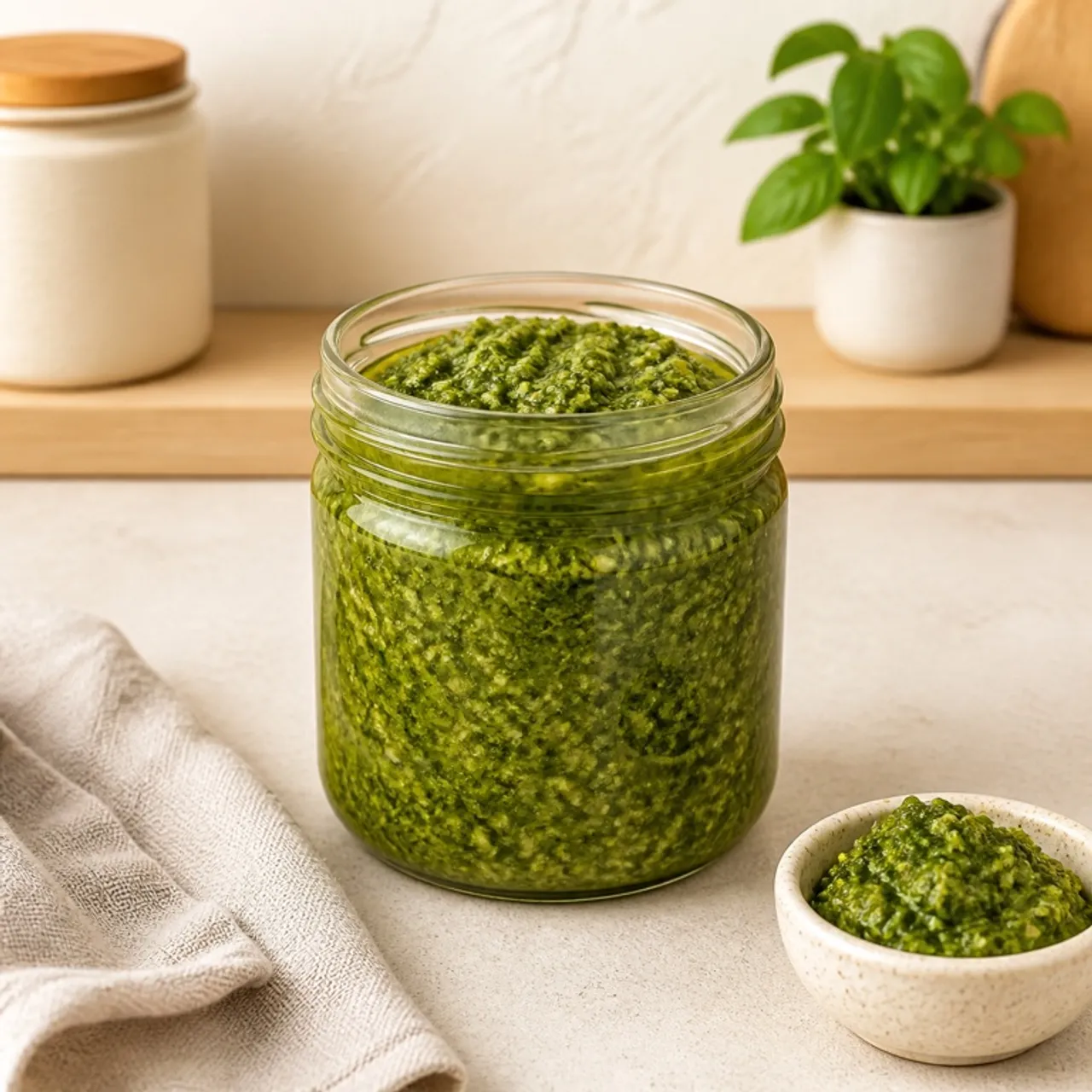
 Food Lens Images are for illustrative purposes only, may be inaccurate, and do not guarantee the presence or absence of specific ingredients.
 Food Lens · Recipe ingredients
Basil Pesto
Bright, grassy, and herbaceous with a savory depth from Parmesan and garlic; pine nuts add a mild buttery richness that rounds out the sharpness of the basil.
Lens VerifiedBasil pesto is a vibrant green sauce originating from Genoa, Italy, traditionally made by pounding fresh basil, pine nuts, Parmesan, garlic, and olive oil together. Today the word 'pesto' has expanded into a broader category that includes sun-dried tomato, arugula, walnut, and kale variations. It's one of the most versatile no-cook sauces in the home kitchen, equally at home on pasta, pizza, sandwiches, and grilled meats.
Where it comes from
Born in the sun-drenched port city of Genoa, pesto started as a simple peasant paste ground in a marble mortar — today it anchors everything from weeknight pasta to artisan sandwiches.
Varieties — Classic Genovese pesto uses pine nuts and Parmesan, but regional Italian versions swap in walnuts or pistachios. Modern supermarket shelves carry sun-dried tomato pesto (rosso), arugula pesto, and kale-walnut variations.
In Liguria, pesto-making is so culturally significant that the region holds a biennial World Pesto Championship, with strict rules about ingredients and the use of a marble mortar and wooden pestle.
In a modern kitchen — Store-bought pesto is a reliable shortcut — look for jars with bright green color and olive oil as the first fat listed for the best flavor.
Buying it
Choose refrigerated fresh pesto over shelf-stable jars when possible, as the flavor is noticeably brighter. For jarred pesto, look for olive oil (not sunflower or canola) listed as the primary fat and a vivid green color. Avoid products with yellowing basil, which signals oxidation.
Storing it
Unopened jarred pesto keeps in a cool pantry; once opened, refrigerate and use within about a week. Fresh, homemade pesto should always be refrigerated right away or frozen in small portions.
Keeps about 1 year in the pantry.
Out of basil pesto? Good swaps
- sun-dried tomato pesto — Sweeter and more umami-forward; swap 1:1 on pasta or pizza where a bolder flavor is welcome
- arugula-walnut pesto — Peppery and earthy; a good cold-weather alternative when fresh basil is out of season
- chimichurri — Herb-forward but tangier and thinner; works on grilled proteins where pesto would also shine
General cooking guidance — always check the labels on the products you use. Listahan’s allergen checks run automatically when you plan a recipe in the app. Not medical advice.
Recipes that use basil pesto
Common questions about basil pesto
Is basil pesto vegan?
Basil Pesto is generally plant-based and suitable for a vegan diet, but brands differ — confirm on the label.
What can I use instead of basil pesto?
Good swaps include sun-dried tomato pesto, arugula-walnut pesto, chimichurri. Each behaves a little differently — see the swaps above for notes, and always check labels for allergens.
How do I store basil pesto?
Unopened jarred pesto keeps in a cool pantry; once opened, refrigerate and use within about a week. Fresh, homemade pesto should always be refrigerated right away or frozen in small portions. It keeps about 1 year in the pantry.
More recipe ingredients
See all


Make basil pesto about your kitchen — with Listahan Pro
Everything above is free, forever. Pro adds the Household Lens — the same food, seen for your family:
-
Checked for each member
Flags basil pesto per person against your household's allergies and school rules — not just a generic "contains" tag.
-
Pantry-aware
Knows whether you already have it, what is running low, and the best swap from what is in your kitchen tonight.
-
What it costs near you
A real price from the Presyo community index, so you can plan the budget — not guess.
-
Your household memory
Who likes it, plus your own private notes — brand, where you keep it, who skips it.
Allergen safety is always free — Pro adds the automation, never the safety.
Cook with basil pesto — safely
Plan a recipe in Listahan and the household allergen check runs automatically — every plan, every swap, every lunchbox. Safety is never paywalled.