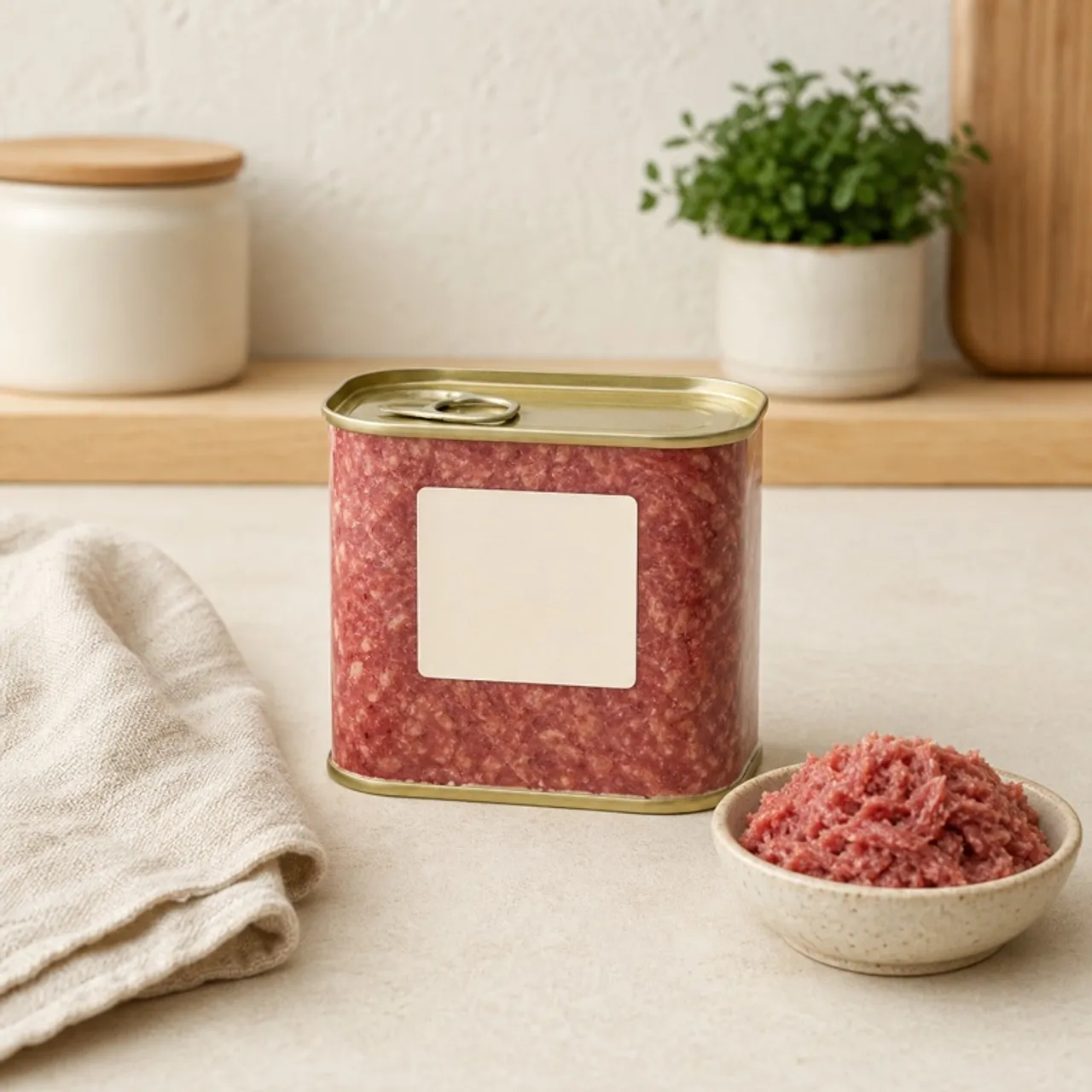
 Food Lens Images are for illustrative purposes only, may be inaccurate, and do not guarantee the presence or absence of specific ingredients.
 Food Lens · Canned
Corned beef
Deeply savory and salt-forward, with a subtle sweetness from the cure and warm spice notes — coriander, black pepper, bay, and clove are common in pickling spice blends. The texture of properly cooked brisket is fork-tender with a slight chew.
Lens VerifiedCorned beef is beef — typically brisket — that has been cured in a brine of salt, sugar, and pickling spices, giving it a distinctive pink hue, tender texture, and deeply savory flavor. The name 'corned' refers to the large rock-salt crystals (historically called 'corns') used in curing. It is beloved both in its classic deli-sliced form and as canned convenience protein.
Where it comes from
Salt-curing beef as a preservation method originated in pre-refrigeration Europe, with the particular corned beef style becoming central to Irish-American immigrant cuisine in 19th-century New York.
Varieties — Flat-cut brisket (leaner, uniform slices); point-cut brisket (fattier, more flavor); canned corned beef (shelf-stable, finely textured, used across the Philippines, Caribbean, and Latin America as everyday pantry protein).
In the Philippines and many Caribbean nations, canned corned beef is a beloved everyday pantry staple — cooked with onions, garlic, and tomatoes as a quick rice accompaniment. In the United States, corned beef and cabbage is synonymous with St. Patrick's Day.
In a modern kitchen — Home curing of corned beef has become popular among enthusiasts, requiring only a week of brining. Chefs also use corned beef in tacos, grain bowls, and bánh mì-inspired sandwiches.
Buying it
For deli-style: look for deep pink color with even marbling and no graying at the edges. For canned: check the sodium content if you plan to season further — most are already quite salty. Flat-cut brisket is easier to slice cleanly; point-cut is richer in flavor.
Storing it
Keep an unopened can of corned beef in the pantry for up to about two years; refrigerate leftovers in a sealed container and use them within a few days.
Keeps about 2 years in the pantry.
Out of corned beef? Good swaps
General cooking guidance — always check the labels on the products you use. Listahan’s allergen checks run automatically when you plan a recipe in the app. Not medical advice.
Recipes that use corned beef
Common questions about corned beef
What can I use instead of corned beef?
Good swaps include , , . Each behaves a little differently — see the swaps above for notes, and always check labels for allergens.
How do I store corned beef?
Keep an unopened can of corned beef in the pantry for up to about two years; refrigerate leftovers in a sealed container and use them within a few days. It keeps about 2 years in the pantry.
More canned
See all


Make corned beef about your kitchen — with Listahan Pro
Everything above is free, forever. Pro adds the Household Lens — the same food, seen for your family:
-
Checked for each member
Flags corned beef per person against your household's allergies and school rules — not just a generic "contains" tag.
-
Pantry-aware
Knows whether you already have it, what is running low, and the best swap from what is in your kitchen tonight.
-
What it costs near you
A real price from the Presyo community index, so you can plan the budget — not guess.
-
Your household memory
Who likes it, plus your own private notes — brand, where you keep it, who skips it.
Allergen safety is always free — Pro adds the automation, never the safety.
Cook with corned beef — safely
Plan a recipe in Listahan and the household allergen check runs automatically — every plan, every swap, every lunchbox. Safety is never paywalled.