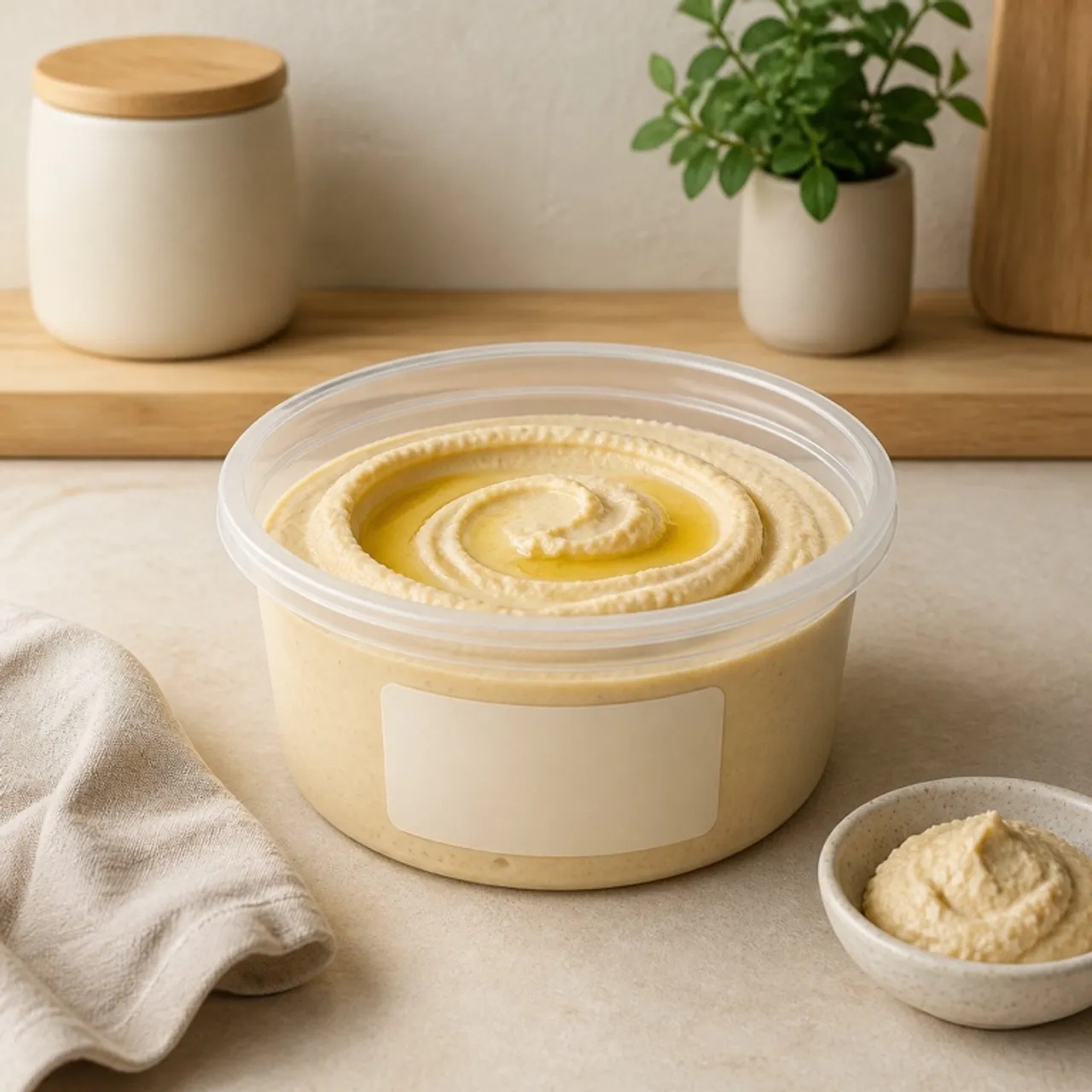
 Food Lens Images are for illustrative purposes only, may be inaccurate, and do not guarantee the presence or absence of specific ingredients.
 Food Lens · Prepared
Hummus
Rich, nutty, and savory from tahini and chickpeas, with bright lemon acidity and a gentle garlic warmth. The texture is smooth and creamy with a slight denseness. A generous pour of olive oil on top adds fruitiness and sheen.
Lens VerifiedHummus is a creamy, protein-rich dip and spread made from cooked chickpeas blended with tahini, lemon juice, garlic, and olive oil. A staple across the Middle East, North Africa, and the Mediterranean, it is one of the most widely consumed foods in the world and has become a fixture on grocery shelves globally. Its combination of nutty depth, bright acidity, and silky texture makes it equally at home as a dip, spread, or component in composed dishes.
Where it comes from
Hummus has been prepared across the Levant and North Africa for centuries, with its roots in the ancient cultivation of chickpeas throughout the Middle East and the longstanding trade of sesame paste along Mediterranean routes.
Varieties — Classic hummus bi tahini is the foundation, but regional and modern variations include roasted red pepper, roasted garlic, beet, black bean, and edamame versions. In Israel, it is often served warm and fresh with whole chickpeas on top; in Lebanon, it is drizzled generously with olive oil.
In many Middle Eastern countries, hummus is not just a condiment but a full meal — a plate of fresh hummus with warm bread, olive oil, and perhaps a soft-boiled egg is a common breakfast in Israel and Palestine. Heated debates about its cultural ownership have become a lens for broader political discussions.
In a modern kitchen — The secret to restaurant-quality hummus is peeling the chickpeas before blending and adding ice water gradually while the machine runs — both steps produce an exceptionally smooth, airy texture. Ultra-long blending (3–4 minutes) is also key.
Buying it
When buying prepared hummus, check the ingredient list for minimal, recognizable components — good hummus needs only chickpeas, tahini, lemon, garlic, and olive oil. Fresh or refrigerated hummus from specialty stores or Middle Eastern bakeries is typically superior to shelf-stable versions. Look for a pale, creamy color without grayness.
Storing it
Keep hummus tightly covered in the fridge and use within about a week of opening. A dry, cracked surface can be revived with a drizzle of oil, but discard it if you see mold or smell sourness.
Keeps about 10 days in the fridge.
Out of hummus? Good swaps
General cooking guidance — always check the labels on the products you use. Listahan’s allergen checks run automatically when you plan a recipe in the app. Not medical advice.
Recipes that use hummus
Common questions about hummus
Is hummus vegan?
Hummus is generally plant-based and suitable for a vegan diet, but brands differ — confirm on the label.
What can I use instead of hummus?
Good swaps include , , . Each behaves a little differently — see the swaps above for notes, and always check labels for allergens.
How do I store hummus?
Keep hummus tightly covered in the fridge and use within about a week of opening. A dry, cracked surface can be revived with a drizzle of oil, but discard it if you see mold or smell sourness. It keeps about 10 days in the fridge.
More prepared
See all
Make hummus about your kitchen — with Listahan Pro
Everything above is free, forever. Pro adds the Household Lens — the same food, seen for your family:
-
Checked for each member
Flags hummus per person against your household's allergies and school rules — not just a generic "contains" tag.
-
Pantry-aware
Knows whether you already have it, what is running low, and the best swap from what is in your kitchen tonight.
-
What it costs near you
A real price from the Presyo community index, so you can plan the budget — not guess.
-
Your household memory
Who likes it, plus your own private notes — brand, where you keep it, who skips it.
Allergen safety is always free — Pro adds the automation, never the safety.
Cook with hummus — safely
Plan a recipe in Listahan and the household allergen check runs automatically — every plan, every swap, every lunchbox. Safety is never paywalled.