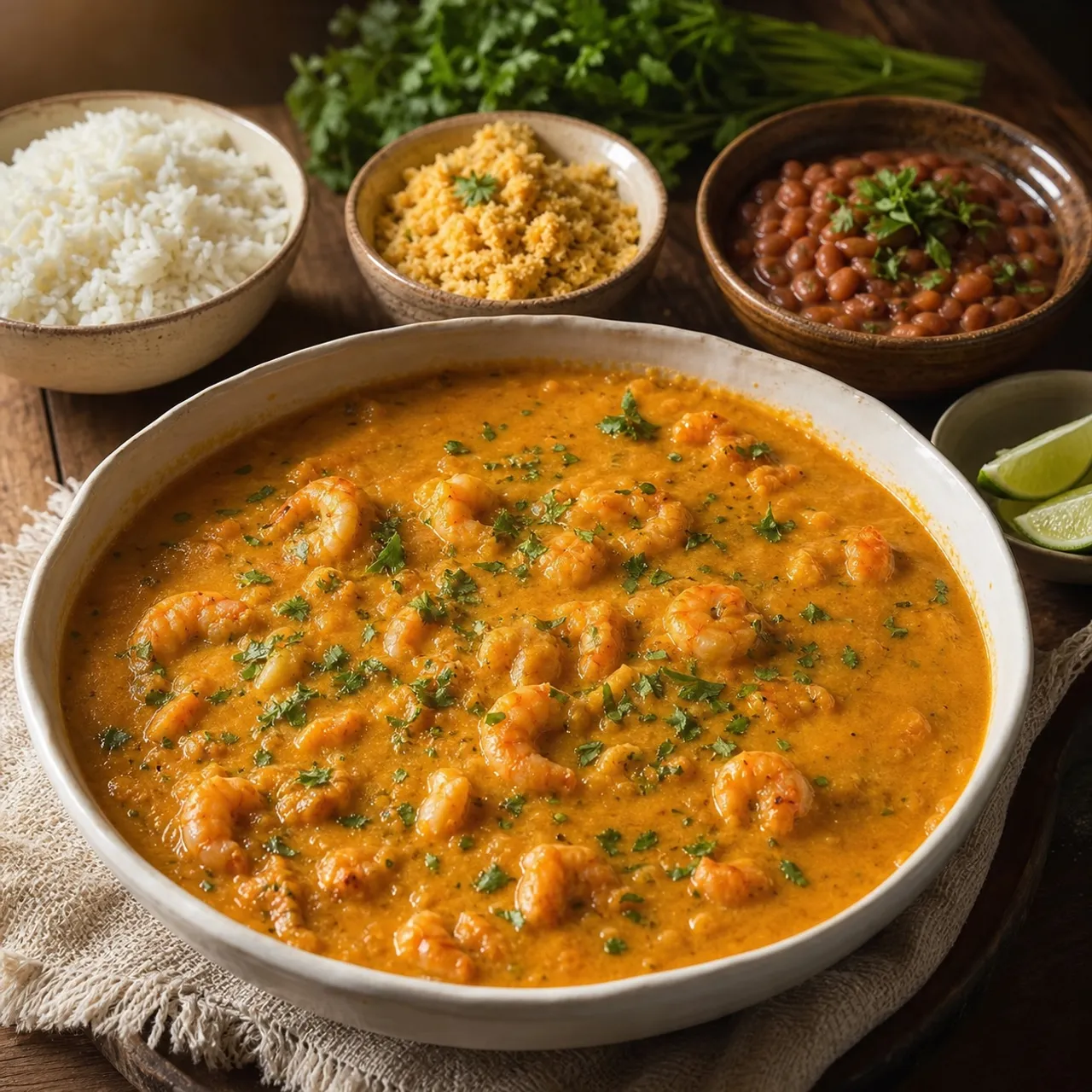
 Brazilian Images are for illustrative purposes only, may be inaccurate, and do not guarantee the presence or absence of specific ingredients.
 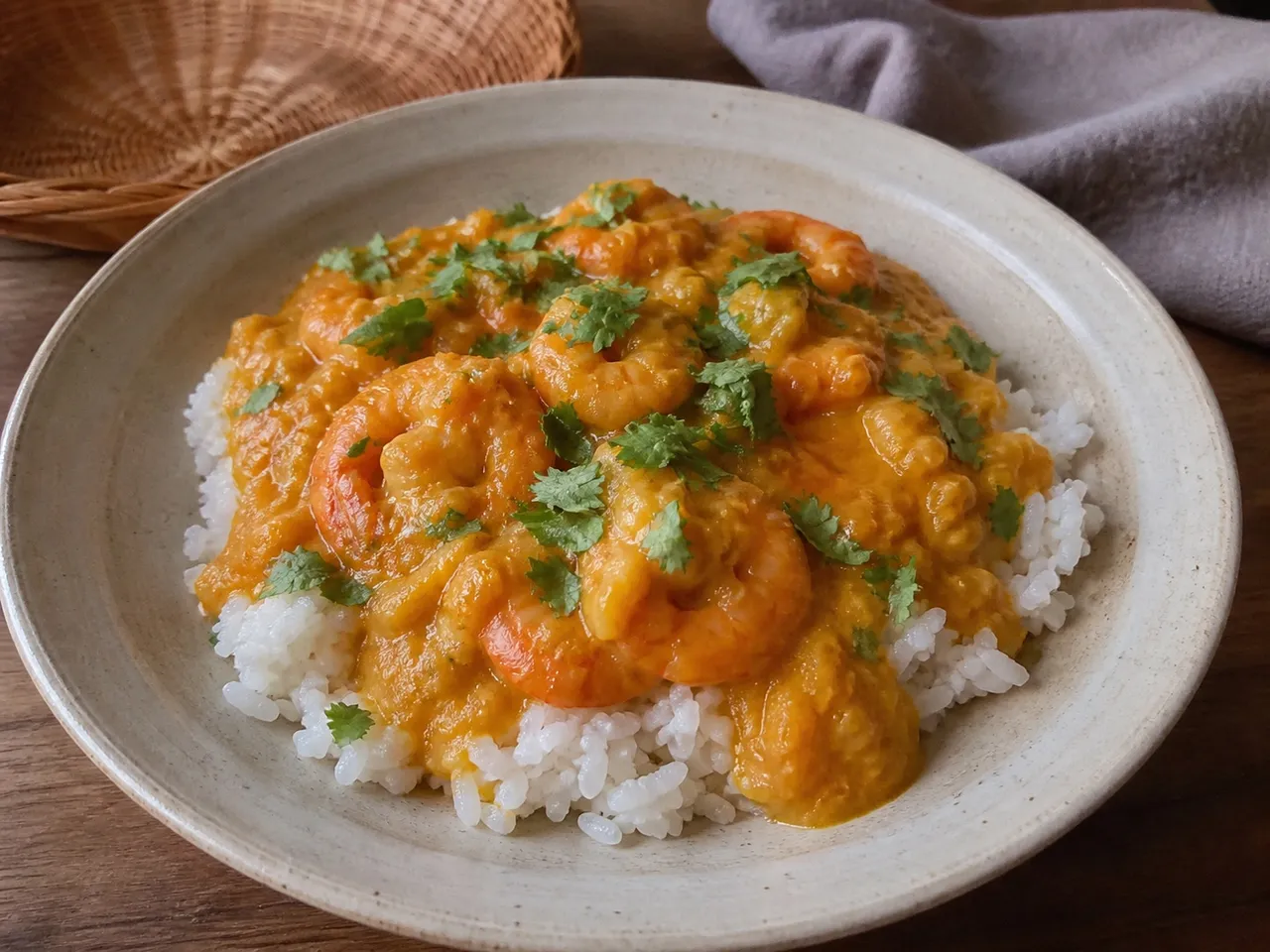 Serving Images are for illustrative purposes only, may be inaccurate, and do not guarantee the presence or absence of specific ingredients.
 Bobó de Camarão (Brazilian Shrimp and Cassava Stew)
A rich Bahian stew of shrimp simmered in a creamy cassava purée colored with dendê palm oil and coconut milk, fragrant with cilantro.
Contains common allergens
In the app, Listahan checks these against your household automatically.
Instructions
7 steps- 1
Toss the shrimp with lime juice and half the salt, and set aside to marinate.
- 2
Boil the cassava in salted water until very tender, about 20 minutes, then drain, reserving 1 cup of the cooking liquid.
- 3
Purée the cooked cassava with the reserved liquid until smooth; set aside.
- 4
In a large pot, heat the dendê oil and sauté the onion, garlic, and bell pepper until softened, about 5 minutes.
- 5
Add the tomatoes and cook until they break down, about 5 minutes, then stir in the cassava purée and coconut milk.
- 6
Add the marinated shrimp and simmer gently for 6-8 minutes until just cooked through.
- 7
Stir in cilantro and remaining salt to taste, and serve over white rice.
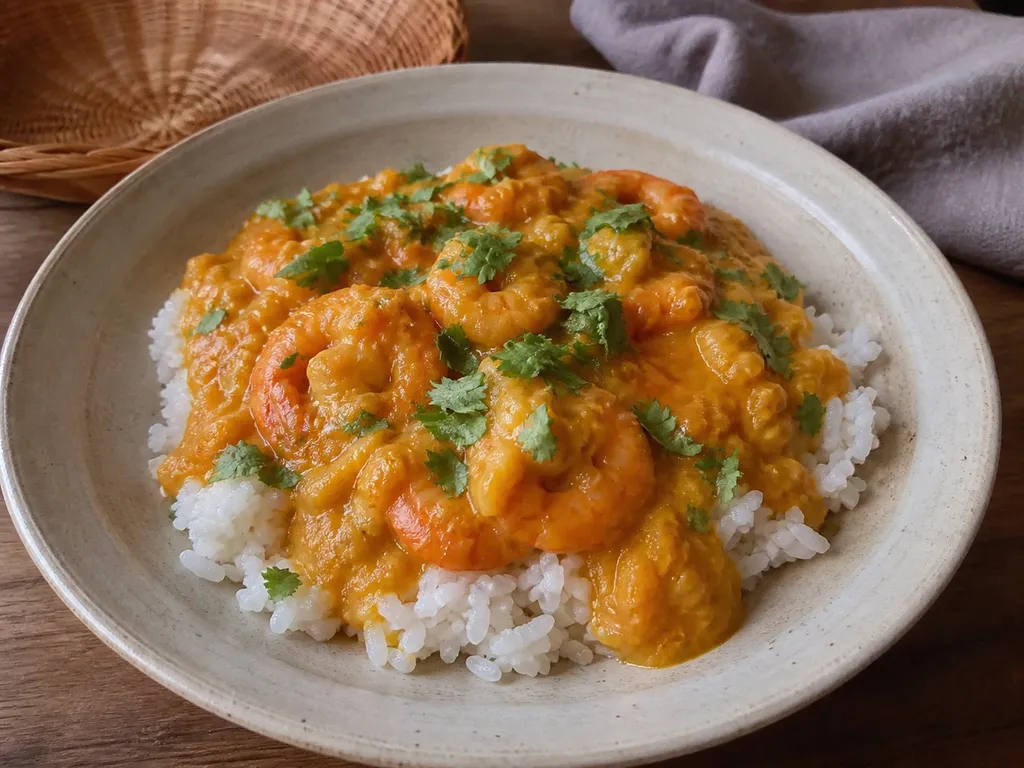 Images are for illustrative purposes only, may be inaccurate, and do not guarantee the presence or absence of specific ingredients.
 Listahan Family Score™
64/100
Works for many families
Score reflects how well this recipe fits a typical busy household. In the app, your Family Score is personalized to your household's allergens, kids, and pantry.
Nutrition
per serving370
Calories
41 g
Protein
22 g
Carbs
15 g
Fat
Estimated per serving. Actual values depend on the brands and portions you use.
Listahan cooking guide
Chef notes & practical guide
Technique notes, ingredient swaps, serve-alongside ideas, storage guidance, and equipment for this recipe.
Cultural context
Bobo de camarao comes from Bahia, the Afro-Brazilian coastal state where dende oil and coconut milk define a whole school of cooking distinct from the rest of the country. The dish traces back to West African cassava stews brought over during the slave trade, adapted in Bahia with local shrimp and the region's signature red palm oil.
Listahan note
This version purees the cassava into the stew base itself rather than serving it as a side, which is what gives real bobo its characteristic thick, creamy texture instead of a thinner shrimp soup.
Technique cues
- Pureeing the boiled cassava with its own cooking liquid, rather than water, is what builds the stew's body - the starch in the cooking liquid thickens as it cooks with the coconut milk.
- Dende oil's distinct red color and slightly funky, nutty flavor is what separates Bahian cooking from the rest of Brazil - a generic substitute changes the dish's identity more than any other swap here.
- Adding the shrimp only in the last 6-8 minutes keeps them tender - shrimp muscle fibers seize and toughen fast once they hit a simmering liquid, so they go in only after the base is fully built.
Kitchen flow
- Parallel prep
- Marinate the shrimp in lime juice while the cassava boils, so both components are ready around the same time.
- Make-ahead
- The pureed cassava base can be made a day ahead and refrigerated, then reheated gently before adding the shrimp fresh.
- Leftover move
- Reheat leftover stew (without fresh shrimp) and add freshly cooked shrimp just before serving to avoid rubbery reheated seafood.
- Cleanup rhythm
- Let the dende oil cool in the pot before wiping it out, since it stains lighter-colored cloths and sponges.
Ingredient brief
Role, handling, and swap guidance for each key ingredient.
cassava (yuca), peeled and chopped
stew thickener and base
Purpose: pureed cassava gives bobo its signature thick, almost creamy texture without any dairy or flour
Handling: boil until very tender, then puree with reserved cooking liquid until smooth
Adaptation: a mix of potato and a spoonful of cornstarch slurry can mimic the thickness, though the flavor will be milder and less earthy
medium shrimp, peeled and deveined
main protein
Purpose: shrimp cook quickly and their brininess balances the rich, coconut-and-palm-oil base
Handling: marinate briefly in lime juice and salt, then add only at the end so they do not overcook
Adaptation: firm white fish cut into chunks works for a pescatarian variation, added in the same final simmering step
dende (palm) oil
signature Bahian flavor and color
Purpose: this red palm oil is the defining ingredient of Bahian cuisine, giving the stew its orange hue and a distinct nutty, slightly smoky depth
Handling: heat gently before sauteing the aromatics so it doesn't scorch, since it burns at a lower temperature than neutral oils
Adaptation: a mix of annatto-infused oil and a neutral oil approximates the color, but true dende flavor has no real substitute
coconut milk
body and richness
Purpose: coconut milk rounds out the pureed cassava base into a silky, rich stew typical of Bahian cooking
Handling: stir in after the cassava puree is incorporated, then simmer gently rather than boil to avoid it splitting
Adaptation: a lighter coconut milk works for a thinner stew, though full-fat is closer to the traditional richness
chopped fresh cilantro
fresh finish
Purpose: a handful stirred in at the end adds brightness against the rich, oily base
Handling: chop just before serving and stir in off the heat so it stays vibrant
Adaptation: chopped green onion tops can add fresh color if cilantro is not preferred
Technique notes
- Reserve the cassava cooking liquid before draining - it carries starch that thickens the pureed base, and using plain water instead makes a noticeably thinner stew.
- Keep the coconut milk at a gentle simmer, not a boil, once it's added - boiling coconut milk hard can cause it to separate into a grainy, oily texture.
- Add the shrimp in a single layer if possible so they cook evenly in the short 6-8 minute window, rather than piling them into the center of the pot.
Ingredient swaps
- Gluten-free direction
- Naturally gluten-free as written; confirm the coconut milk brand doesn't add wheat-based stabilizers.
- Shellfish-free direction
- This dish contains shrimp as its defining ingredient - substitute firm white fish chunks like cod for a shellfish-free version, added the same way in the last few minutes.
- Lower-sodium direction
- Cut the added salt in the marinade and stew by about a third, since the shrimp and coconut milk both carry some natural saltiness.
- Weeknight shortcut
- Use frozen pre-peeled shrimp and canned coconut milk to cut prep time, and puree the cassava in a blender rather than by hand for speed.
Serve alongside
- Cooked white rice
- Farofa
- Sliced ripe plantain
- Pao de queijo
- Chilled white wine like a Brazilian Chardonnay
- Caipirinha
- Coconut water for a non-alcoholic pairing
Serving suggestions only — check pairings for your household's allergens.
Storage & reheating
- Refrigerate in an airtight container for up to 2 days
- Reheat gently over low heat, stirring often, to keep the coconut base from splitting
- Freeze the cassava-coconut base without the shrimp for up to 2 months, adding freshly cooked shrimp after thawing and reheating
Equipment
- Large pot
- Blender or immersion blender
- Fine-mesh strainer (for cassava liquid, if needed)
- Wooden spoon
Make this household-aware
Listahan Pro checks this recipe against your household's allergens, finds pantry-aware swaps, builds the shopping list, and helps you plan the week around it.
Plan it in Listahan
Add Bobó de Camarão (Brazilian Shrimp and Cassava Stew) to your week, check it against your household's allergens, and build the shopping list automatically.
More Brazilian recipes
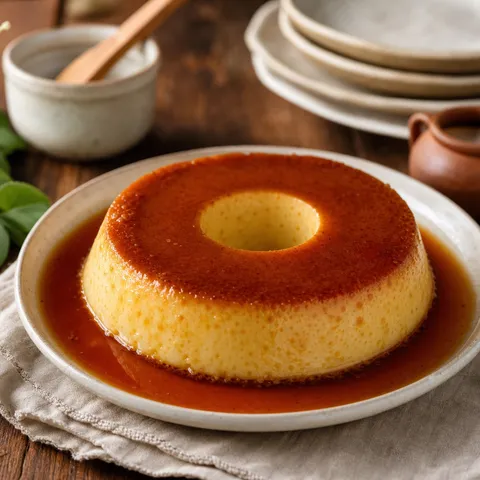 Brazilian Lens Verified Images are for illustrative purposes only, may be inaccurate, and do not guarantee the presence or absence of specific ingredients.
 Pudim de Leite (Brazilian Flan)
A silky caramel-topped milk pudding made with sweetened condensed milk, the most requested dessert at any Brazilian family gathering.
 Brazilian Lens Verified Images are for illustrative purposes only, may be inaccurate, and do not guarantee the presence or absence of specific ingredients.
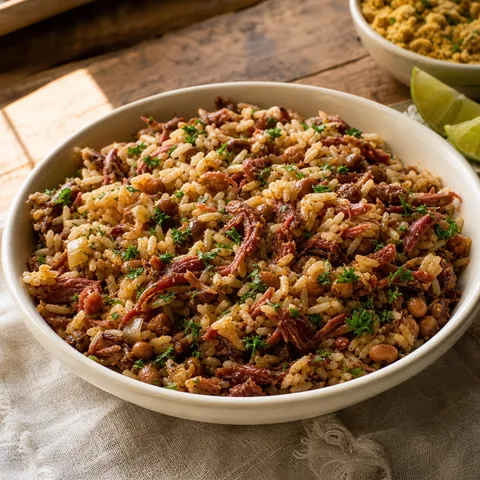
 Arroz Carreteiro (Brazilian Rice with Dried Beef)
A smoky one-pot rice from the gaúcho cattle-drivers of southern Brazil, cooked with shredded dried beef, tomato, and peppers.
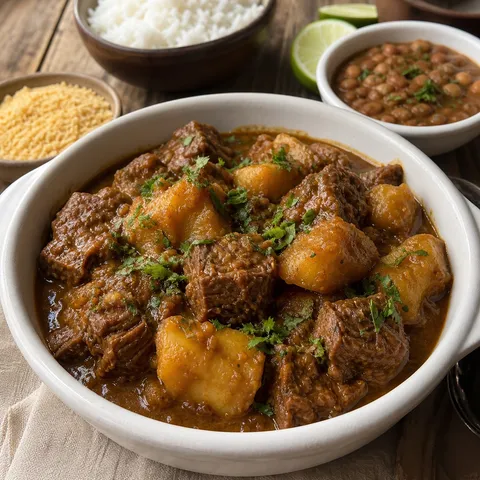 Brazilian Lens Verified Images are for illustrative purposes only, may be inaccurate, and do not guarantee the presence or absence of specific ingredients.
 Vaca Atolada (Beef and Cassava Stew)
"Stuck cow" stew: fall-apart beef short ribs braised with cassava until the pot turns thick and glossy, a Minas Gerais farmhouse classic.