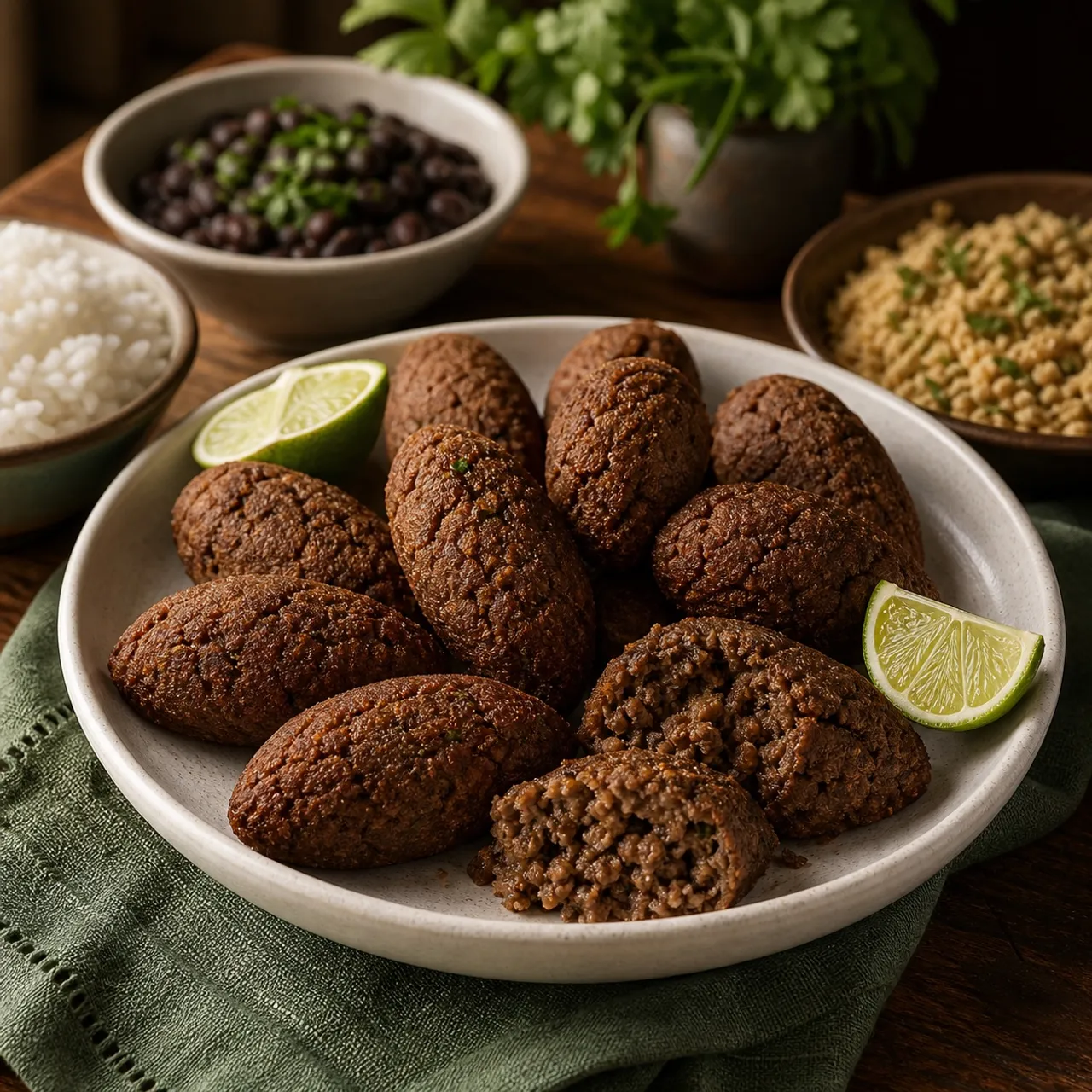
 Brazilian Images are for illustrative purposes only, may be inaccurate, and do not guarantee the presence or absence of specific ingredients.
 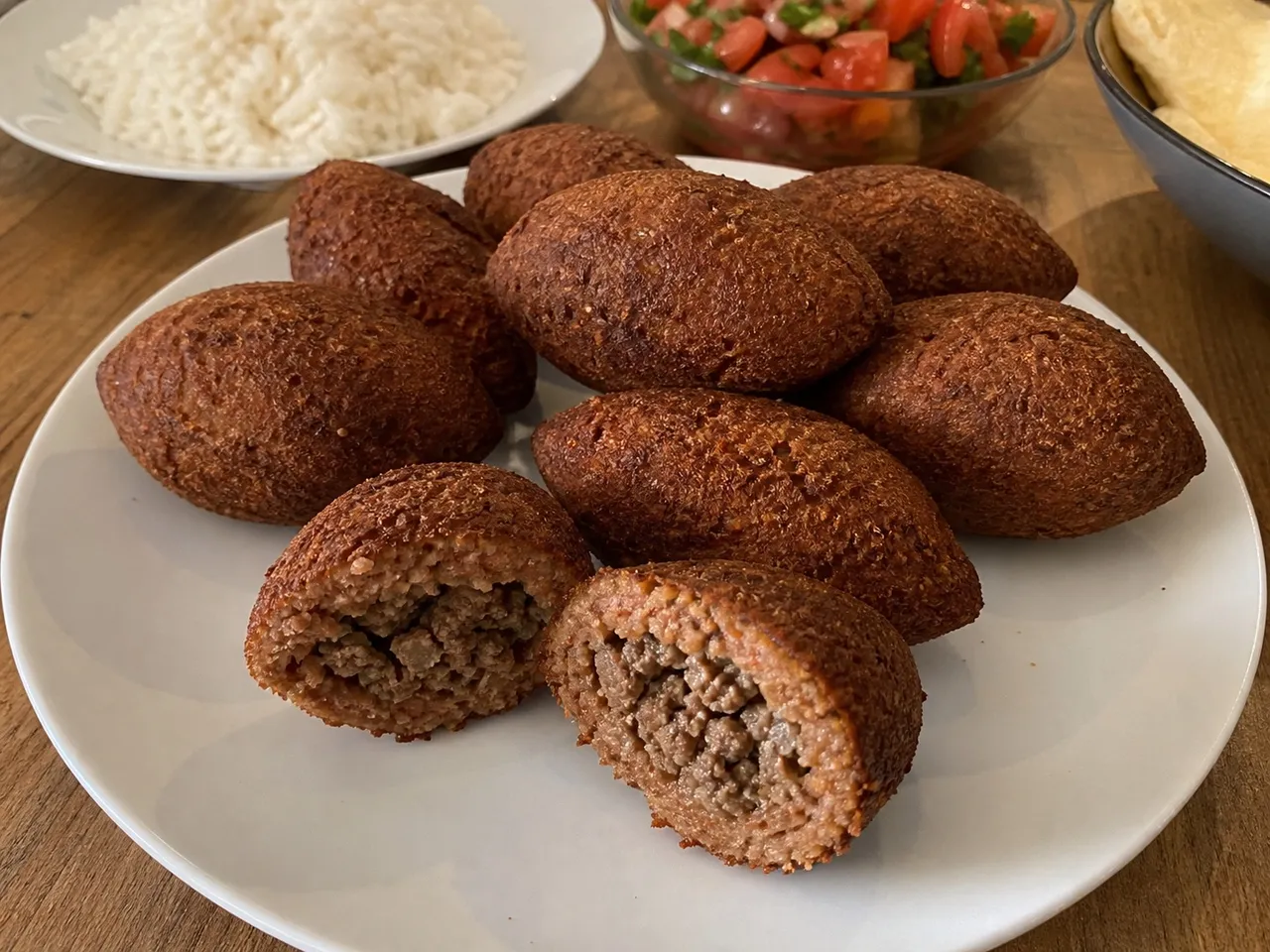 Serving Images are for illustrative purposes only, may be inaccurate, and do not guarantee the presence or absence of specific ingredients.
 Kibe (Brazilian Beef and Bulgur Croquettes)
Torpedo-shaped fried croquettes of ground beef and bulgur wheat, spiced with mint and onion — a legacy of Brazil's Lebanese community.
Contains common allergens
In the app, Listahan checks these against your household automatically.
Good to know
- Crispy
Matched from this dish's own ingredients and timing. Browse more: crispy recipes
Instructions
7 steps- 1
Soak the bulgur in warm water for 15 minutes until softened, then drain thoroughly, squeezing out excess water.
- 2
In a food processor, combine the soaked bulgur with half the ground beef, half the onion, garlic, mint, cumin, cinnamon, salt, and pepper, and pulse until a smooth, pliable paste forms.
- 3
In a skillet, cook the remaining ground beef and onion over medium heat until browned, about 8 minutes, to make the filling; season lightly and let cool.
- 4
Wet your hands and shape the bulgur mixture into small torpedo shapes, making an indentation in the center.
- 5
Stuff each with a spoonful of the cooked beef filling and seal, reshaping into a smooth torpedo.
- 6
Heat the oil to 350°F and fry the kibe in batches for 3-4 minutes until deep golden brown.
- 7
Drain on paper towels and serve hot.
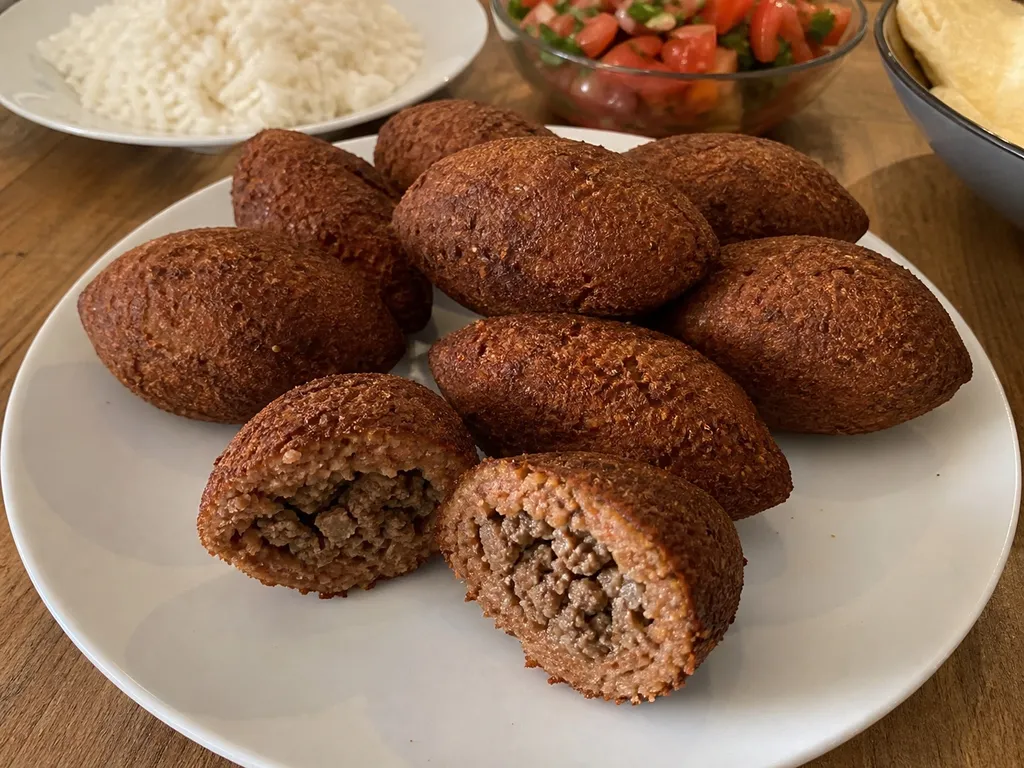 Images are for illustrative purposes only, may be inaccurate, and do not guarantee the presence or absence of specific ingredients.
 Listahan Family Score™
71/100
Good fit for most families
Score reflects how well this recipe fits a typical busy household. In the app, your Family Score is personalized to your household's allergens, kids, and pantry.
Nutrition
per serving410
Calories
23 g
Protein
20 g
Carbs
26 g
Fat
Estimated per serving. Actual values depend on the brands and portions you use.
Listahan cooking guide
Chef notes & practical guide
Technique notes, ingredient swaps, serve-alongside ideas, storage guidance, and equipment for this recipe.
Cultural context
Kibe is Brazil's adaptation of kibbeh, brought by Syrian and Lebanese immigrants who arrived in large numbers in the late nineteenth and early twentieth centuries. It integrated so thoroughly into Brazilian snack culture that it now sits alongside distinctly Brazilian bar food like coxinha and pastel on menus, usually deep-fried into its recognizable torpedo shape rather than baked, which is more common in the Levantine original.
Listahan note
This version splits the ground beef in two - half worked raw into the bulgur shell, half cooked separately as a filling - so the outer shell stays tender and pliable while the center delivers a distinctly savory, browned bite.
Technique cues
- Bulgur must be thoroughly drained and squeezed dry after soaking, since excess water in the shell mixture makes it too loose to hold a torpedo shape.
- Processing the raw beef and bulgur together, rather than just mixing by hand, creates the smooth, almost paste-like texture that lets the shell be shaped and stuffed without cracking.
- Wetting your hands before shaping keeps the sticky bulgur-beef mixture from clinging to your fingers instead of holding its torpedo form.
Kitchen flow
- Parallel prep
- Soak the bulgur while browning the filling portion of beef, so both are ready to combine around the same time
- Make-ahead
- Shape the kibe and refrigerate uncooked up to a day ahead, or freeze for longer storage, frying just before serving
- Leftover move
- Reheat leftover kibe in the oven or air fryer rather than the microwave to keep the shell from turning soft
- Cleanup rhythm
- Wash the food processor bowl right after use, since the raw beef and bulgur mixture dries onto the blade quickly
Ingredient brief
Role, handling, and swap guidance for each key ingredient.
fine bulgur wheat
The shell's defining texture
Purpose: Its fine, quick-cooking texture is what lets the shell be worked smooth and shaped around a filling
Handling: Soak until softened, then drain and squeeze out as much water as possible before processing
Adaptation: There isn't a good gluten-free substitute that preserves the shell's texture; a rice-based croquette would need a different method entirely
ground beef
Split between shell and filling
Purpose: Half is processed raw into the shell for structure and flavor, half is cooked separately as the savory center
Handling: Process the raw portion with the bulgur until smooth; brown the other portion separately with onion for the filling
Adaptation: Ground lamb, traditional in the Levantine original, gives a richer, slightly gamier flavor
onion
Aromatic in both shell and filling
Purpose: Split between the raw shell mixture and the cooked filling, it adds sweetness and depth to both components
Handling: Finely chop so it blends smoothly into the processed shell and cooks evenly in the filling
Adaptation: Shallot works in the shell mixture for a milder background flavor
fresh mint
Fresh, herbaceous lift in the shell
Purpose: A hallmark of the Levantine origin, it keeps the dense beef-and-bulgur shell from tasting flat
Handling: Chop and process it directly into the raw shell mixture
Adaptation: Fresh parsley can stand in, though the flavor will be noticeably less aromatic
ground cumin
Warm spice base
Purpose: Along with cinnamon, it gives the shell its distinctive Middle Eastern-inflected flavor that sets kibe apart from other Brazilian fried snacks
Handling: Add directly to the food processor with the bulgur and beef so it distributes evenly
Adaptation: Ground coriander can partially stand in, though the flavor profile shifts noticeably
ground cinnamon
Warm, subtly sweet spice note
Purpose: A small amount rounds out the savory shell with a background warmth typical of Levantine spicing
Handling: Add sparingly directly to the processor along with the cumin
Adaptation: Allspice gives a similar warm complexity in a slightly different direction
Technique notes
- Squeeze the soaked bulgur as dry as possible before processing - even a little excess water makes the shell too loose to hold its shape when fried.
- Wet your hands between shaping each piece; the tackiness of the raw beef-bulgur mixture otherwise builds up and makes shaping increasingly messy.
- Make a deep enough indentation for the filling and pinch the seams firmly closed, since any gap is where the filling leaks out during frying.
Ingredient swaps
- Baked direction
- Brush shaped kibe with oil and bake at 400F for 20-25 minutes, flipping once, for a version with less oil though a firmer, less crisp shell
- Lamb direction
- Use ground lamb in place of some or all of the beef for a flavor closer to the traditional Levantine kibbeh
- Gluten-free note
- There isn't a reliable gluten-free swap for the bulgur shell without changing the dish's fundamental texture; this one is best made as written
Serve alongside
- Tabbouleh or a simple parsley salad
- Vinagrete (Brazilian Tomato Onion Relish)
- pita or flatbread
- a yogurt-based dipping sauce
- Cold Brazilian lager
- mint tea
- sparkling water with lemon
Serving suggestions only — check pairings for your household's allergens.
Storage & reheating
- Refrigerate cooked kibe up to 3 days in an airtight container
- Reheat in a 375F oven or air fryer until hot through, about 8-10 minutes
- Freeze uncooked, shaped kibe up to 2 months; fry straight from frozen, adding a couple minutes to the fry time
Equipment
- Food processor
- Deep pot or fryer with a thermometer
- Fine-mesh strainer for squeezing the bulgur
- Slotted spoon for removing from oil
Make this household-aware
Listahan Pro checks this recipe against your household's allergens, finds pantry-aware swaps, builds the shopping list, and helps you plan the week around it.
Plan it in Listahan
Add Kibe (Brazilian Beef and Bulgur Croquettes) to your week, check it against your household's allergens, and build the shopping list automatically.
More Brazilian recipes
 Brazilian Lens Verified Images are for illustrative purposes only, may be inaccurate, and do not guarantee the presence or absence of specific ingredients.
 Pudim de Leite (Brazilian Flan)
A silky caramel-topped milk pudding made with sweetened condensed milk, the most requested dessert at any Brazilian family gathering.
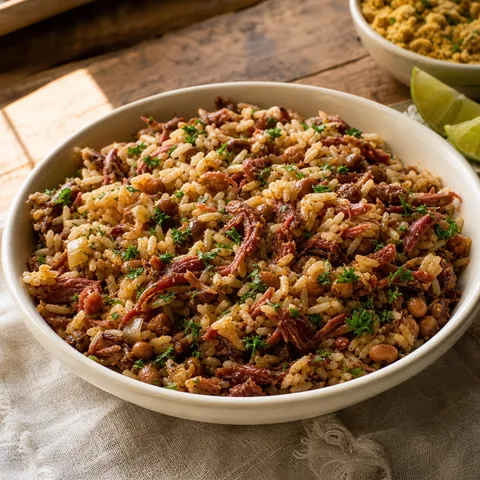 Brazilian Lens Verified Images are for illustrative purposes only, may be inaccurate, and do not guarantee the presence or absence of specific ingredients.
 Arroz Carreteiro (Brazilian Rice with Dried Beef)
A smoky one-pot rice from the gaúcho cattle-drivers of southern Brazil, cooked with shredded dried beef, tomato, and peppers.
 Brazilian Lens Verified Images are for illustrative purposes only, may be inaccurate, and do not guarantee the presence or absence of specific ingredients.
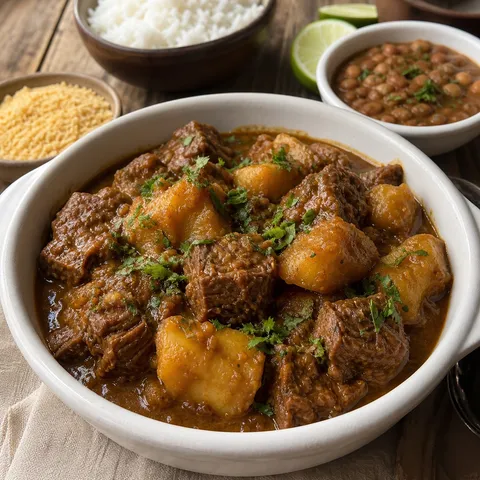
 Vaca Atolada (Beef and Cassava Stew)
"Stuck cow" stew: fall-apart beef short ribs braised with cassava until the pot turns thick and glossy, a Minas Gerais farmhouse classic.