 Brazilian Images are for illustrative purposes only, may be inaccurate, and do not guarantee the presence or absence of specific ingredients.
  Serving Images are for illustrative purposes only, may be inaccurate, and do not guarantee the presence or absence of specific ingredients.
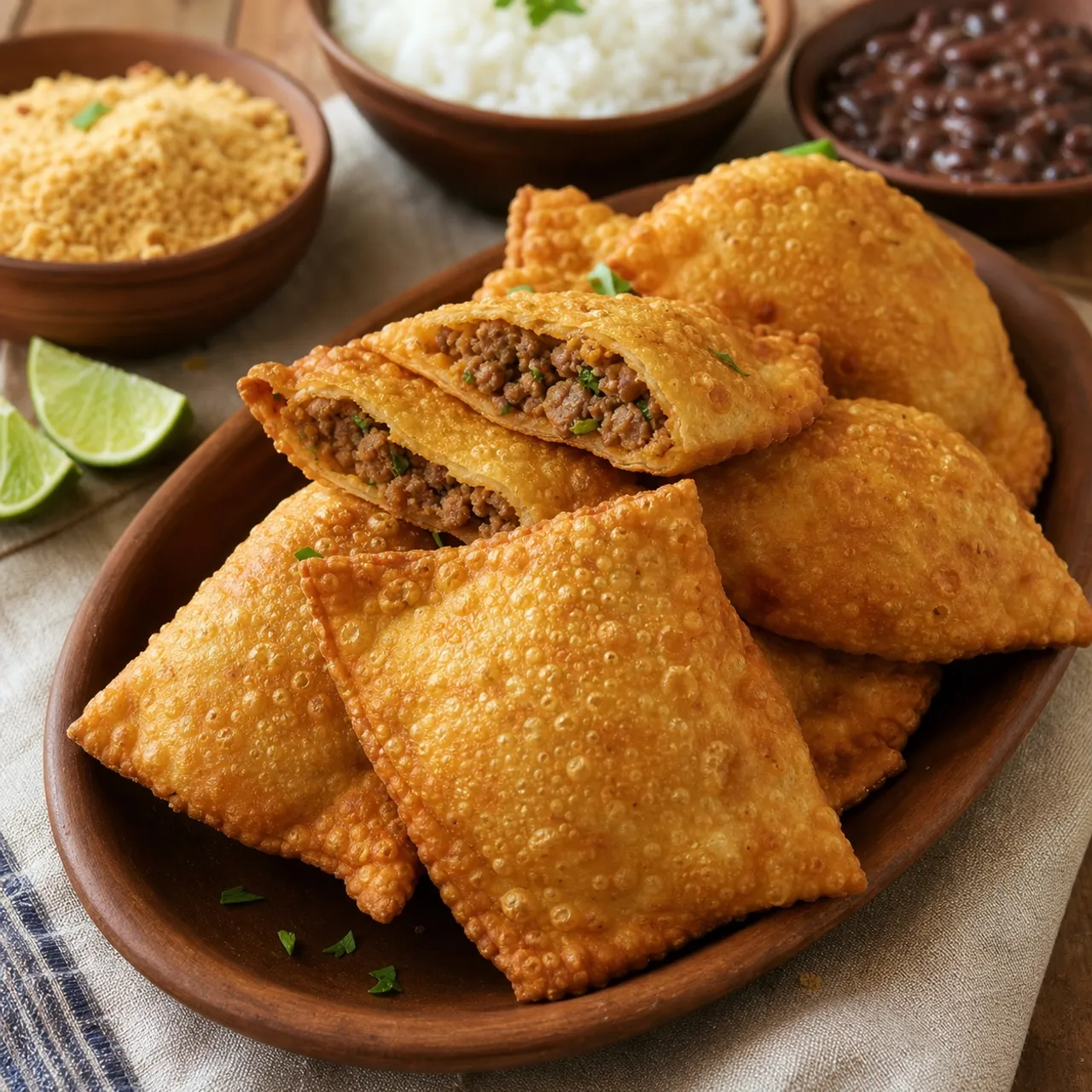
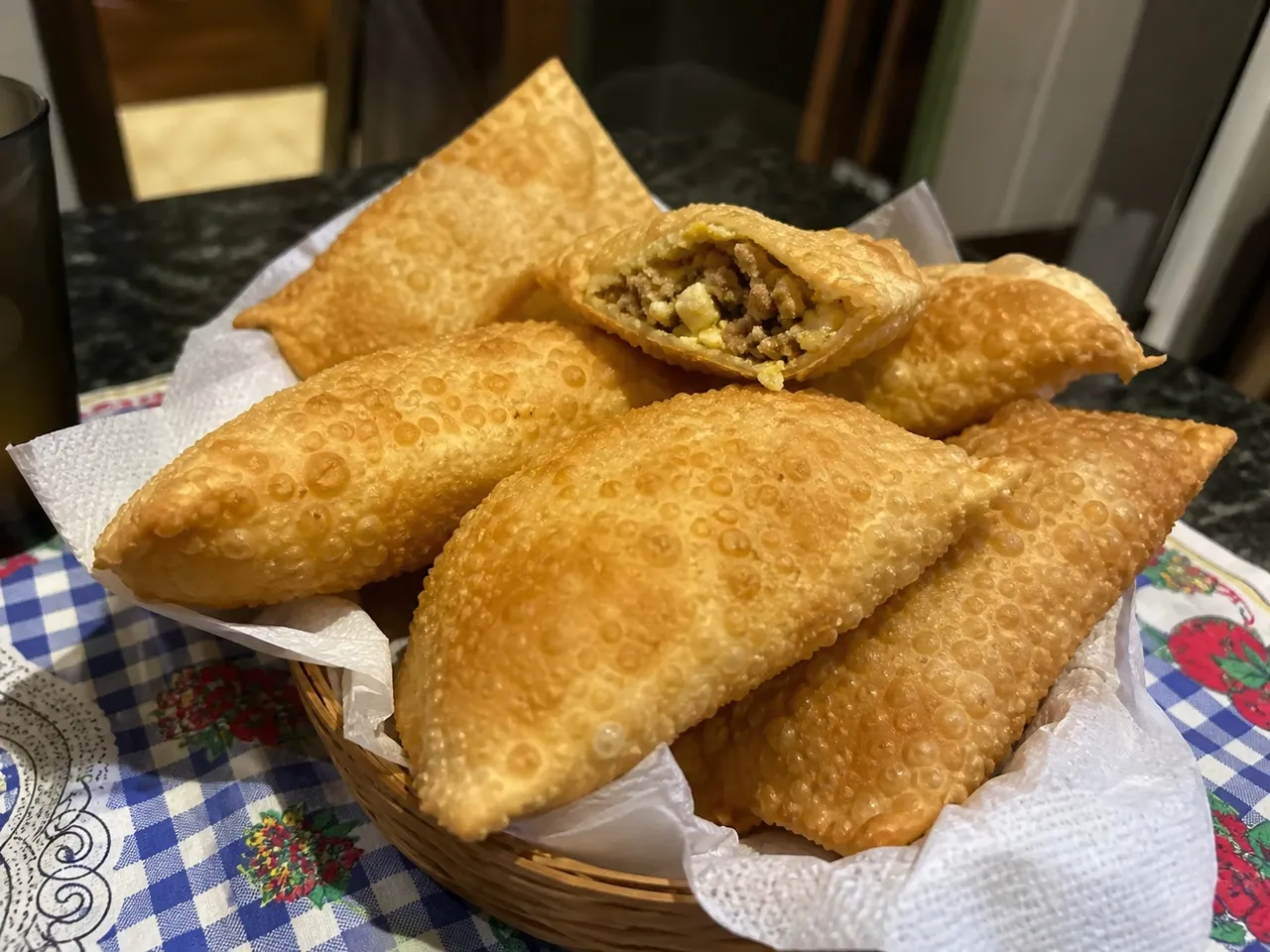
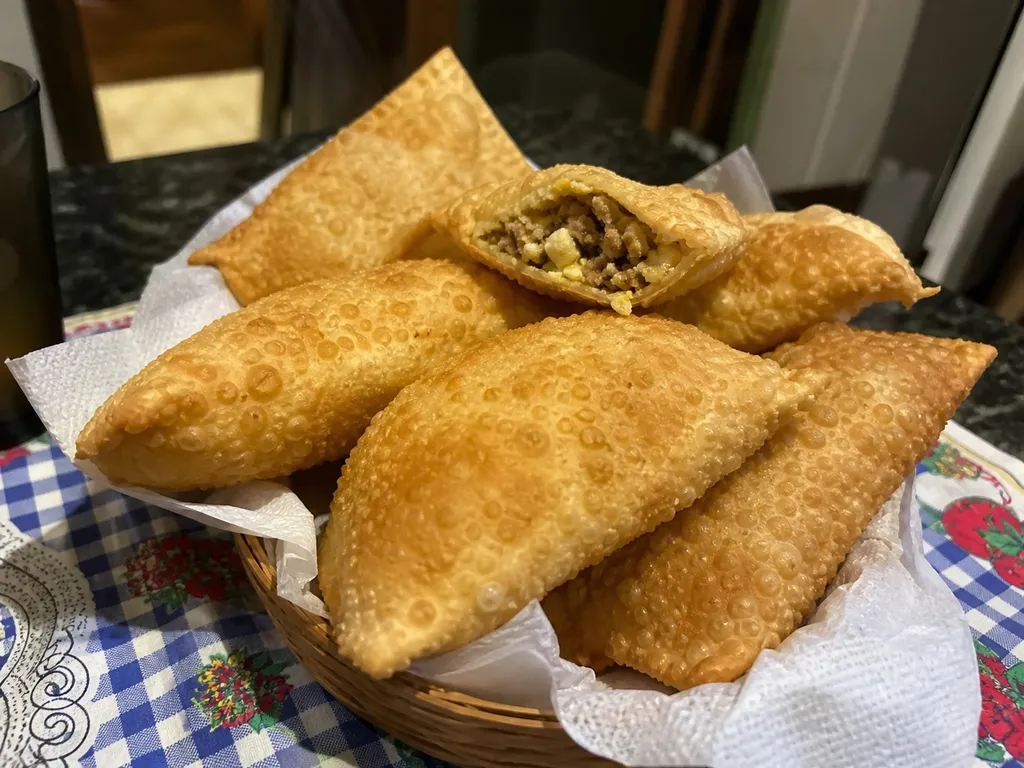
 Pastel de Carne (Fried Beef Pastry)
Paper-thin fried pastry pockets stuffed with seasoned ground beef, olives, and egg — the star of Brazilian street fairs and food courts.
Contains common allergens
In the app, Listahan checks these against your household automatically.
Good to know
- Crispy
Matched from this dish's own ingredients and timing. Browse more: crispy recipes
Instructions
7 steps- 1
Make the dough by mixing flour, cachaça, vinegar, salt, 2 tablespoons oil, and warm water into a smooth, elastic dough; cover and rest for 30 minutes.
- 2
Meanwhile, cook the ground beef with onion and garlic in a skillet over medium heat until browned, about 8 minutes.
- 3
Stir in the tomato paste, olives, and chopped hard-boiled eggs, season with salt and pepper, and cook for 3-4 minutes; let cool.
- 4
Roll the dough out very thinly and cut into rectangles about 5 by 4 inches.
- 5
Place a spoonful of filling on half of each rectangle, fold over, and seal the edges tightly with a fork or by crimping.
- 6
Heat the frying oil to 350°F and fry the pastéis in batches for 2-3 minutes per side until golden and blistered.
- 7
Drain on paper towels and serve hot.
 Images are for illustrative purposes only, may be inaccurate, and do not guarantee the presence or absence of specific ingredients.
 Listahan Family Score™
67/100
Works for many families
Score reflects how well this recipe fits a typical busy household. In the app, your Family Score is personalized to your household's allergens, kids, and pantry.
Nutrition
per serving465
Calories
28 g
Protein
51 g
Carbs
15 g
Fat
Estimated per serving. Actual values depend on the brands and portions you use.
Listahan cooking guide
Chef notes & practical guide
Technique notes, ingredient swaps, serve-alongside ideas, storage guidance, and equipment for this recipe.
Cultural context
Pastel traces back to Chinese immigrants who settled in São Paulo's markets in the early twentieth century, adapting a spring-roll-style snack for local tastes into the ultra-thin, deeply fried pastry now sold at street markets across Brazil. The beef version, filled with a savory ground beef mixture studded with olives and hard-boiled egg, remains one of the most requested fillings at any pastelaria.
Listahan note
This version rolls the dough as thin as it will go before filling, since a truly thin pastel is what gives the fried shell its signature blistered, bubbly crust rather than a thick, bready one.
Technique cues
- Adding a splash of cachaça or vodka to the dough isn't for flavor - the alcohol inhibits gluten development, which is part of why pastel dough can be rolled paper-thin without tearing.
- The filling needs to be fully cooled before assembly, since warm filling steams the dough from the inside and prevents a properly crisp seal.
- Sealing the edges tightly, crimped or pressed with a fork, is what keeps the thin dough from bursting open in hot oil, where any weak spot becomes an entry point for oil and a blowout.
Kitchen flow
- Parallel prep
- Make the dough and let it rest while the beef filling cooks and cools, so both are ready to assemble at the same time
- Make-ahead
- The filling can be made up to 2 days ahead and refrigerated; the dough is best made the same day it's used
- Leftover move
- Reheat leftover pastéis in a dry skillet or oven rather than the microwave to bring back some crispness instead of turning them soggy
- Cleanup rhythm
- Set up a dedicated flouring station away from the stove so the frying oil area stays clean while you roll and fill
Ingredient brief
Role, handling, and swap guidance for each key ingredient.
all-purpose flour
Dough base
Purpose: Provides the structure that, with the alcohol and vinegar, becomes thin and blister-prone when fried
Handling: Mix into a smooth, elastic dough and rest it covered for a full 30 minutes before rolling
Adaptation: A 1:1 gluten-free flour blend can work but will be more delicate to roll thin without tearing
cachaça
Dough tenderizer
Purpose: The alcohol interferes with gluten formation, which is part of what lets the dough stretch thin without snapping back
Handling: Mix in with the vinegar and water when forming the dough
Adaptation: Vodka works identically for the same effect if cachaça isn't on hand
ground beef
The filling's main protein
Purpose: Browned with onion and garlic, it forms the savory core of the filling
Handling: Cook until fully browned and let the whole filling cool before it goes into the dough
Adaptation: Ground turkey or a plant-based ground substitute both work, adjusting cooking time slightly
green olives
Briny contrast in the filling
Purpose: Cuts through the richness of the beef with a sharp, salty pop in each bite
Handling: Dice small so they distribute evenly through the filling rather than clumping in one spot
Adaptation: Capers give a similar briny note in a smaller, more concentrated dose
hard-boiled eggs
Adds richness and texture
Purpose: A classic addition to Brazilian beef pastel filling, giving pockets of soft egg among the meat
Handling: Chop and fold in after the beef mixture has mostly cooled to keep the egg pieces distinct
Adaptation: Omit entirely for a lighter filling, or substitute a scrambled egg mixed straight into the hot beef
tomato paste
Concentrates the filling's savoriness
Purpose: Adds body and a touch of acidity that balances the rich beef and salty olives
Handling: Stir in during the last few minutes of cooking so it darkens slightly rather than tasting raw
Adaptation: A tablespoon of ketchup in a pinch, though it adds more sweetness than tomato paste
Technique notes
- Roll the dough thin enough to see your hand's shadow through it - anything thicker won't blister and crisp the way proper pastel does.
- Fry at a steady 350F rather than letting the oil creep hotter between batches, since too-hot oil burns the thin dough before the inside heats through.
- Crimp the edges with a fork rather than just pinching by hand - the fork's tines create tiny grooves that seal more reliably under the pressure of frying.
Ingredient swaps
- Baked direction
- Brush assembled pastéis with oil and bake at 400F for 20-25 minutes, flipping halfway, for a lighter version with less blistering than frying
- Dairy-free option
- The recipe is naturally dairy-free as written; just double-check that any store-bought dough alternative doesn't include butter
- Vegetarian direction
- Swap the ground beef for a mix of sautéed mushrooms and hearts of palm, keeping the olives, egg, and tomato paste for the same briny, rich profile
Serve alongside
- Vinagrete (Brazilian Tomato Onion Relish)
- caldo de cana (fresh sugarcane juice) as a classic street-food pairing
- a simple green salad
- Fresh sugarcane juice (caldo de cana)
- cold Brazilian lager
- guaraná soda
Serving suggestions only — check pairings for your household's allergens.
Storage & reheating
- Refrigerate cooked pastéis up to 3 days in an airtight container
- Reheat in a 375F oven or air fryer until hot and crisp again, about 8-10 minutes
- Freeze uncooked, filled pastéis up to 2 months; fry straight from frozen, adding a minute or two to the fry time
Equipment
- Rolling pin
- Deep pot or fryer with a thermometer
- Fork for crimping edges
- Slotted spoon for removing from oil
Make this household-aware
Listahan Pro checks this recipe against your household's allergens, finds pantry-aware swaps, builds the shopping list, and helps you plan the week around it.
Plan it in Listahan
Add Pastel de Carne (Fried Beef Pastry) to your week, check it against your household's allergens, and build the shopping list automatically.
More Brazilian recipes
 Brazilian Lens Verified Images are for illustrative purposes only, may be inaccurate, and do not guarantee the presence or absence of specific ingredients.
 Pudim de Leite (Brazilian Flan)
A silky caramel-topped milk pudding made with sweetened condensed milk, the most requested dessert at any Brazilian family gathering.
 Brazilian Lens Verified Images are for illustrative purposes only, may be inaccurate, and do not guarantee the presence or absence of specific ingredients.
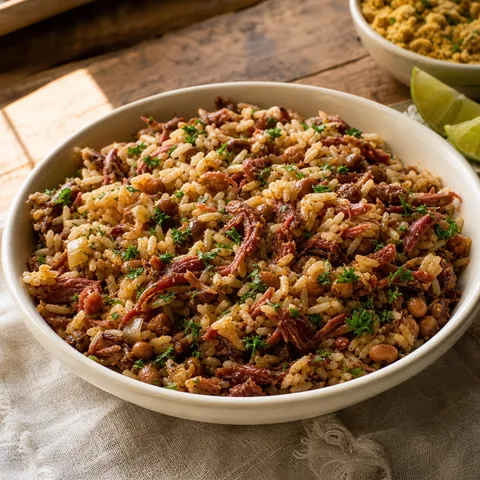
 Arroz Carreteiro (Brazilian Rice with Dried Beef)
A smoky one-pot rice from the gaúcho cattle-drivers of southern Brazil, cooked with shredded dried beef, tomato, and peppers.
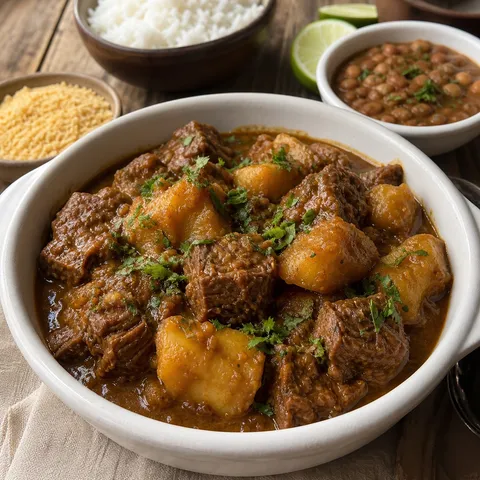 Brazilian Lens Verified Images are for illustrative purposes only, may be inaccurate, and do not guarantee the presence or absence of specific ingredients.
 Vaca Atolada (Beef and Cassava Stew)
"Stuck cow" stew: fall-apart beef short ribs braised with cassava until the pot turns thick and glossy, a Minas Gerais farmhouse classic.