 Breads Images are for illustrative purposes only, may be inaccurate, and do not guarantee the presence or absence of specific ingredients.
  Serving Images are for illustrative purposes only, may be inaccurate, and do not guarantee the presence or absence of specific ingredients.
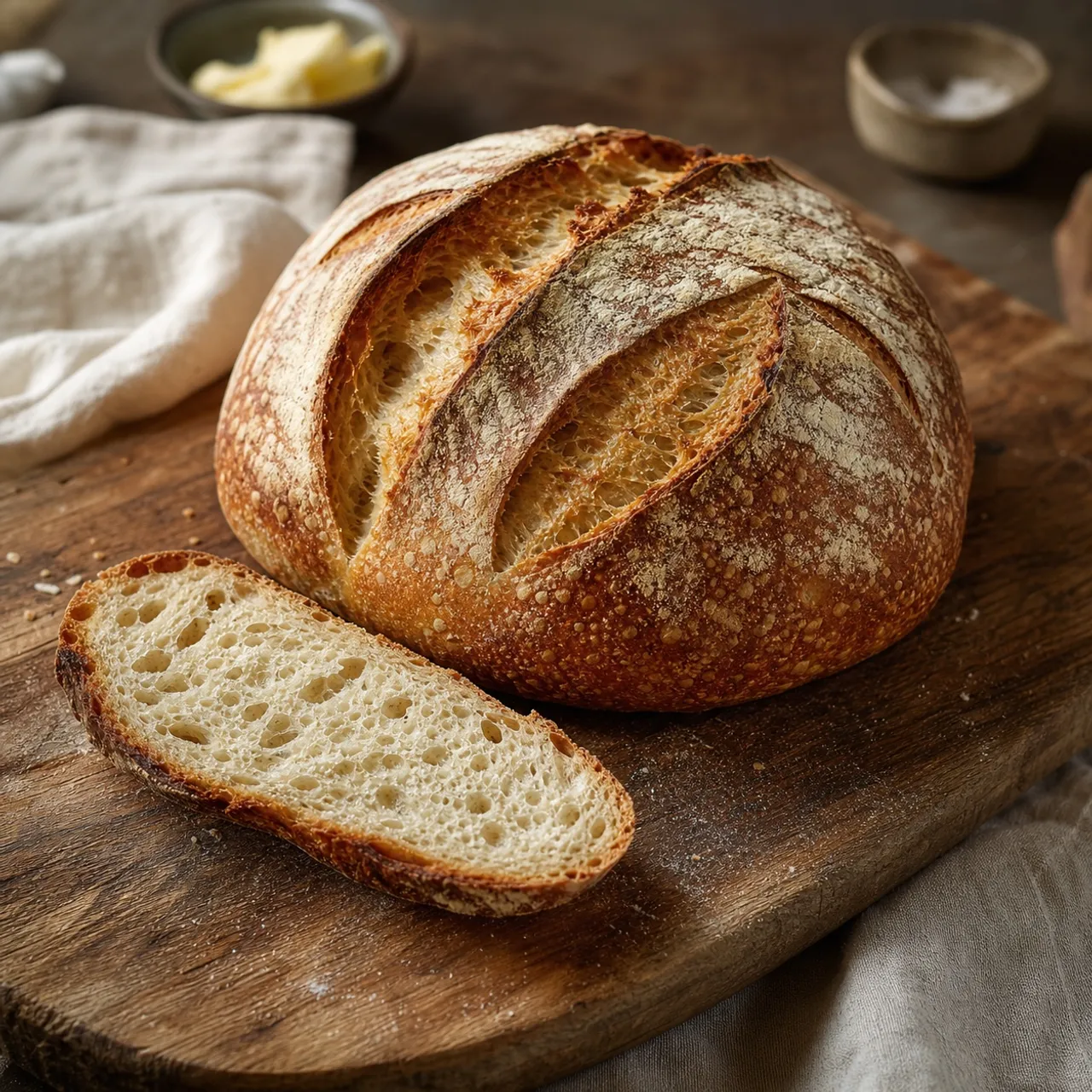
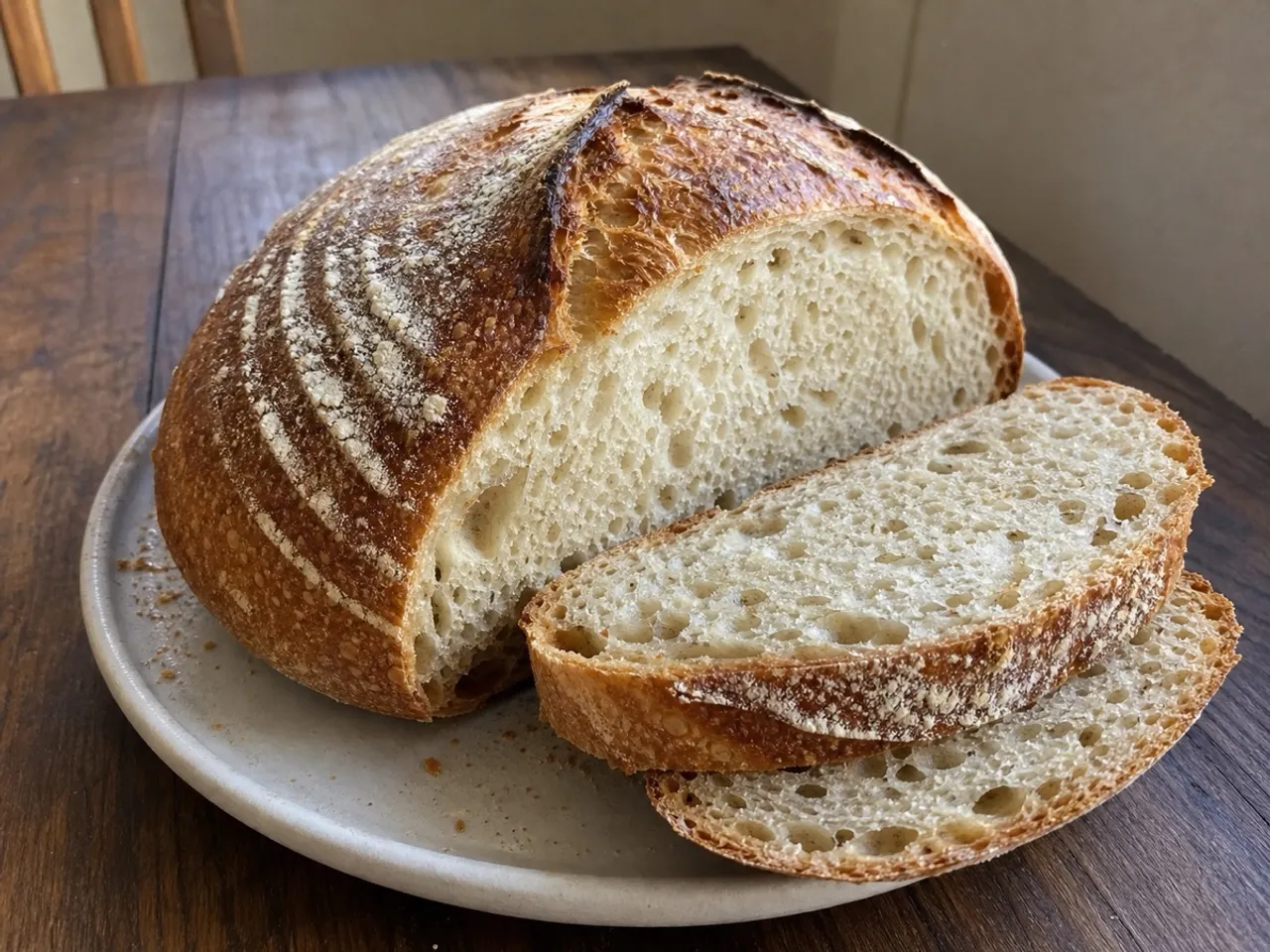
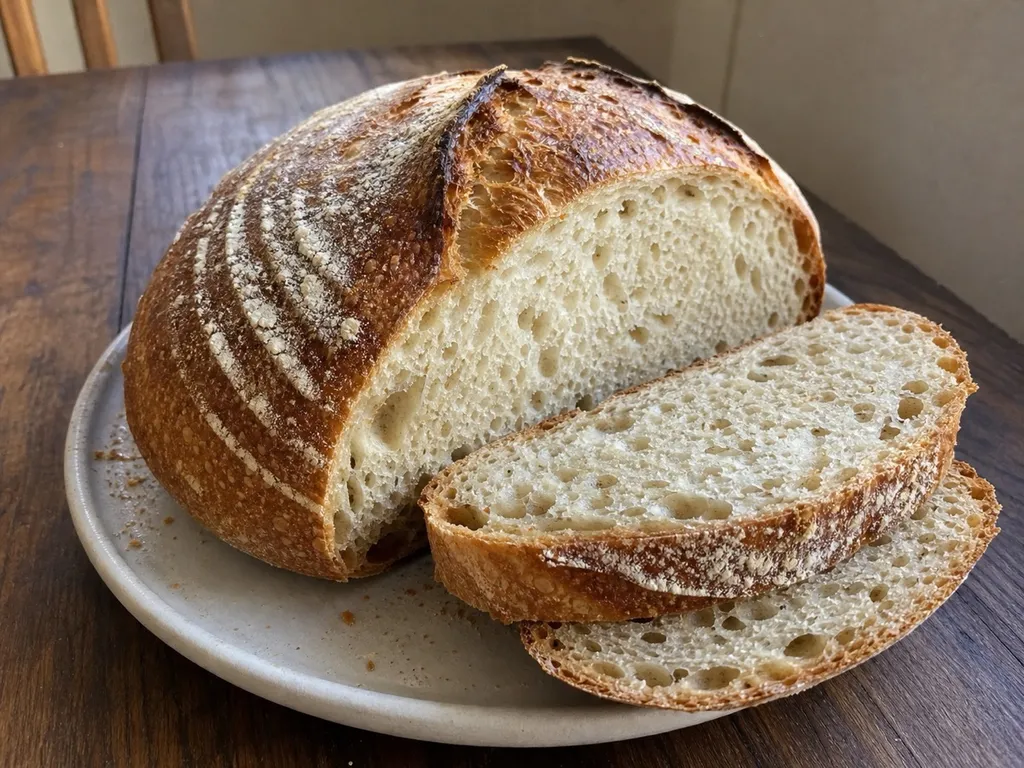
 Artisan Sourdough Boule
A crusty, tangy round loaf leavened entirely with a bubbly sourdough starter and given a long, slow rise for deep flavor.
Contains common allergens
In the app, Listahan checks these against your household automatically.
Good to know
- Crispy
Matched from this dish's own ingredients and timing. Browse more: crispy recipes
Instructions
9 steps- 1
Whisk starter into water until dissolved, then mix in bread flour until no dry patches remain; rest (autolyse) 45 minutes.
- 2
Sprinkle salt over dough, add a splash of water, and squeeze/fold in until fully incorporated.
- 3
Perform 4 sets of stretch-and-folds every 30 minutes over 2 hours, then let bulk ferment at room temperature 4-6 hours until puffy and 50% larger.
- 4
Turn dough out, shape into a tight round, and place seam-side up in a rice-flour-dusted proofing basket.
- 5
Cover and refrigerate 12-16 hours (cold retard) for flavor and easier scoring.
- 6
Preheat a Dutch oven at 475°F (245°C) for 45 minutes with the lid on.
- 7
Turn dough onto parchment, score the top with a razor, and lower into the hot Dutch oven; cover and bake 20 minutes.
- 8
Uncover and bake 20-25 minutes more until deeply golden brown and hollow-sounding when tapped.
- 9
Cool completely on a wire rack, at least 1 hour, before slicing.
 Images are for illustrative purposes only, may be inaccurate, and do not guarantee the presence or absence of specific ingredients.
 Listahan Family Score™
74/100
Good fit for most families
Score reflects how well this recipe fits a typical busy household. In the app, your Family Score is personalized to your household's allergens, kids, and pantry.
Nutrition
per serving150
Calories
4 g
Protein
32 g
Carbs
0 g
Fat
Estimated per serving. Actual values depend on the brands and portions you use.
Listahan cooking guide
Chef notes & practical guide
Technique notes, ingredient swaps, serve-alongside ideas, storage guidance, and equipment for this recipe.
Cultural context
A boule is simply a round loaf, but the shape is tied to old European hearth-bread traditions where one well-fermented dough could be baked into a sturdy household loaf. Sourdough leavening came before commercial yeast, and its slow rhythm is still useful at home because time builds flavor, structure, and a crust that feels different from quick bread.
Listahan note
This version keeps the formula spare so the cook can focus on dough behavior: a bubbly starter, enough folding to build strength, a long cold proof, and a hot covered bake for oven spring.
Technique cues
- Watch the dough more than the clock during bulk fermentation. A 50 percent rise with a puffier feel matters more than hitting exactly 4 or 6 hours.
- The cold proof is doing two jobs here: deepening the tang and firming the shaped loaf so it scores cleanly before baking.
- Do not slice while the loaf is hot. The crumb finishes setting as it cools, and cutting early can make the inside gummy even when the crust looks done.
Kitchen flow
- Parallel prep
- Feed the starter early enough that it is bubbly when you mix, then use the 45-minute autolyse to clear counter space and set up a folding bowl or tub.
- Make-ahead
- Shape the loaf in the evening and refrigerate it overnight; the dough is easier to score straight from the cold.
- Leftover move
- Toast thick slices for open-faced eggs, tomato sandwiches, or torn croutons for soup.
- Cleanup rhythm
- Rinse sticky bowls and tools with cool water before the dough dries, then scrub after the gluten loosens.
Ingredient brief
Role, handling, and swap guidance for each key ingredient.
Bread flour
Structure builder
Purpose: Bread flour has the strength to hold gas through a long fermentation and support a round, tall loaf.
Handling: Mix until no dry patches remain, then let the flour hydrate fully during the autolyse before adding salt.
Adaptation: All-purpose flour can make a softer, flatter loaf; hold back a little water at first and add more only if the dough feels tight.
Active sourdough starter (fed, bubbly)
Natural leaven
Purpose: A recently fed starter lifts the dough and brings the mild acidity that gives sourdough its character.
Handling: Use it when it looks airy and domed or just beginning to recede, not when it has collapsed and smells overly sharp.
Adaptation: A stiffer starter can work, but the dough may need a touch more water to reach the same supple feel.
Water, room temperature
Hydration
Purpose: Water controls how open, elastic, and workable the dough becomes.
Handling: Whisk the starter into the water first so it disperses evenly before the flour goes in.
Adaptation: Cooler water slows fermentation; slightly warmer water moves it along in a cool kitchen.
Fine sea salt
Flavor and dough control
Purpose: Salt sharpens the bread's flavor and helps the dough feel stronger after it is worked in.
Handling: Add it after the autolyse with a small splash of water, then squeeze and fold until it no longer feels gritty.
Adaptation: Kosher salt can be used by weight; measuring by volume will not match fine sea salt cleanly.
Rice flour for dusting
Release coating
Purpose: Rice flour resists absorbing moisture, so the shaped loaf is less likely to stick in the proofing basket.
Handling: Dust the basket generously, especially around the lower curve where dough tends to cling.
Adaptation: Bread flour can dust the basket in a pinch, but it absorbs more moisture and may need a heavier coating.
Technique notes
- Keep your hands lightly damp during stretch-and-folds so you can pull the dough without tearing it.
- Shape with steady tension, not heavy pressure. The goal is a tight outer skin while keeping the gas you built during bulk fermentation.
- Score decisively at a shallow angle. A hesitant cut can drag the dough and make the loaf burst unpredictably.
Ingredient swaps
- Milder tang direction
- Shorten the cold proof toward 12 hours and bake when the loaf is risen but still springy.
- Deeper flavor direction
- Use the full 16-hour cold proof and bake to a darker golden crust for more toasted, caramelized notes.
- No basket path
- Line a medium bowl with a clean towel and dust it well with rice flour to support the shaped boule.
- Softer crust finish
- Cool the loaf uncovered for a crisp crust, or wrap it in a clean towel as it cools if you prefer the crust less crackly.
Serve alongside
- Tomato basil soup
- Soft scrambled eggs with chives
- White bean and rosemary stew
- Roasted mushroom toast
- Black coffee
- Earl Grey tea
- Dry hard cider
Serving suggestions only — check pairings for your household's allergens.
Storage & reheating
- Avoid refrigerating the cut loaf for everyday storage; keep it cut-side down at room temperature for the best crust and crumb.
- Refresh slices in a toaster or warm whole portions in a low oven until the crust crisps again.
- Freeze sliced bread in a sealed bag, then toast slices straight from frozen or thaw a larger piece before warming.
Equipment
- Large mixing bowl or straight-sided dough tub
- Proofing basket
- Razor or bread lame
- Dutch oven with lid
Make this household-aware
Listahan Pro checks this recipe against your household's allergens, finds pantry-aware swaps, builds the shopping list, and helps you plan the week around it.
Plan it in Listahan
Add Artisan Sourdough Boule to your week, check it against your household's allergens, and build the shopping list automatically.
More Breads recipes
Rice Crust for Quiches or Pies
A simple pressed crust made from cooked rice that holds savory quiche and pie fillings beautifully.
 Breads Lens Verified Images are for illustrative purposes only, may be inaccurate, and do not guarantee the presence or absence of specific ingredients.
 Kentucky Biscuits
Tall, flaky Southern-style biscuits with a tender crumb, perfect with butter and jam.
 Breads Lens Verified Images are for illustrative purposes only, may be inaccurate, and do not guarantee the presence or absence of specific ingredients.
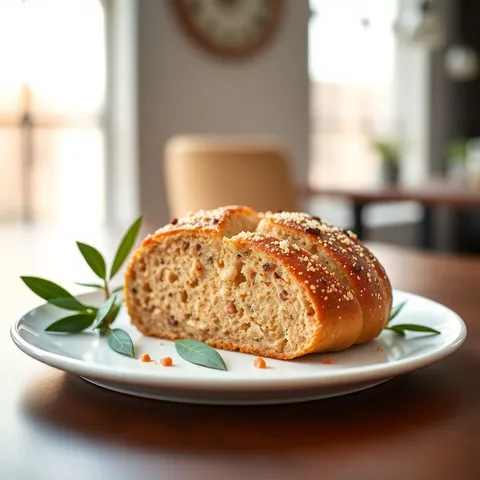
 Bread Machine Sage-Wheat Bread
A fragrant whole-wheat loaf scented with sage and a hint of cornmeal, made effortlessly in a bread machine.