 Breads Images are for illustrative purposes only, may be inaccurate, and do not guarantee the presence or absence of specific ingredients.
  Serving Images are for illustrative purposes only, may be inaccurate, and do not guarantee the presence or absence of specific ingredients.
 Flaky Butter Croissants
Laminated French pastries with dozens of buttery, flaky layers and a crisp golden crust, worth the multi-hour process.
Contains common allergens
In the app, Listahan checks these against your household automatically.
Good to know
- Crispy
Matched from this dish's own ingredients and timing. Browse more: crispy recipes
Instructions
12 steps- 1
Mix flour, sugar, salt, and yeast in a stand mixer, add cold milk and softened butter, and knead 6-8 minutes into a smooth dough.
- 2
Shape into a rectangle, wrap, and refrigerate 1 hour.
- 3
Pound the 280 g cold butter between parchment into a 7x7-inch square block; keep chilled.
- 4
Roll the dough into a rectangle roughly double the size of the butter block, place the butter in the center, and fold the dough over to encase it completely.
- 5
Roll the encased dough into a long rectangle, then fold in thirds like a letter (first turn); wrap and chill 30-45 minutes.
- 6
Repeat the roll-and-fold two more times, chilling 30-45 minutes between each turn, for 3 total turns.
- 7
After the final turn, chill the dough at least 1 hour, then roll into a large rectangle about 1/4-inch thick.
- 8
Trim edges and cut into long triangles; roll each triangle from the base to the tip into a crescent shape.
- 9
Place croissants on parchment-lined baking sheets, curving the ends slightly, and cover loosely.
- 10
Proof at cool room temperature 2-3 hours until visibly puffy and jiggly.
- 11
Preheat oven to 400°F (200°C). Brush croissants with egg wash.
- 12
Bake 16-20 minutes until deeply golden brown and crisp; cool on a wire rack at least 15 minutes before serving.
 Images are for illustrative purposes only, may be inaccurate, and do not guarantee the presence or absence of specific ingredients.
 Listahan Family Score™
68/100
Works for many families
Score reflects how well this recipe fits a typical busy household. In the app, your Family Score is personalized to your household's allergens, kids, and pantry.
Nutrition
per serving380
Calories
5 g
Protein
38 g
Carbs
23 g
Fat
Estimated per serving. Actual values depend on the brands and portions you use.
Listahan cooking guide
Chef notes & practical guide
Technique notes, ingredient swaps, serve-alongside ideas, storage guidance, and equipment for this recipe.
Cultural context
Croissants sit in the French viennoiserie family, where yeasted dough is handled with the care of pastry. The crescent shape has older Central European roots, but the butter-laminated croissant home bakers recognize today was refined in French bakeries, where chill time, rolling, and proofing matter as much as the ingredient list.
Listahan note
This version keeps the formula straightforward and puts the work into temperature control: cold milk, a firm butter block, patient turns, and a cool proof. It is built for a home kitchen where the refrigerator does the heavy lifting between short bursts of hands-on work.
Technique cues
- The butter block and dough should feel similar in firmness before rolling. If the butter is rock hard it can break into chunks, and if it is soft it can smear into the dough.
- Sharp edges are not just for looks. Trimming the final sheet exposes clean layers, which helps the croissants expand evenly in the oven.
- Proofing is finished when the shaped croissants look puffy and wobble slightly when the tray is nudged. Underproofed croissants bake dense, while overproofed ones lose lift and leak more butter.
Kitchen flow
- Parallel prep
- Make the butter block while the dough takes its first chill, then clear counter space and line the baking sheets before the final roll.
- Make-ahead
- Complete the three turns the day before, chill the dough overnight, then roll, shape, proof, and bake the next morning.
- Leftover move
- Split day-old croissants and toast them cut-side down for breakfast sandwiches or a quick ham and cheese bake.
- Cleanup rhythm
- Keep parchment under the butter block, brush loose flour off the counter between turns, and wash the egg-wash bowl while the croissants bake.
Ingredient brief
Role, handling, and swap guidance for each key ingredient.
Bread flour
Structure builder
Purpose: Bread flour gives the dough enough strength to stretch through repeated rolling without tearing easily.
Handling: Measure by weight and mix until the dough is smooth before the first chill.
Adaptation: All-purpose flour makes a more tender dough, but it can be softer to roll and may need gentler handling.
Cold whole milk
Dough hydrator
Purpose: Milk adds tenderness and helps the crust brown while keeping the dough cool at the start.
Handling: Use it cold from the refrigerator so the dough does not warm the butter during mixing.
Adaptation: Lower-fat milk will work, with a slightly less rich crumb.
Instant yeast
Leavening
Purpose: Instant yeast gives the dough lift during the long proof without needing a separate activation step.
Handling: Mix it with the dry ingredients, keeping it from sitting directly on a pile of salt for long.
Adaptation: Active dry yeast can be used if bloomed first in some of the milk, then added to the dough.
Unsalted butter, softened (for dough)
Dough enrichment
Purpose: A small amount of butter in the dough makes it easier to roll and gives the interior a softer bite.
Handling: Use softened butter so it disappears into the dough instead of leaving firm streaks.
Adaptation: Salted butter changes the seasoning, so reduce the added salt slightly if using it.
Cold unsalted butter (for the butter block)
Lamination fat
Purpose: This butter creates the separate layers that puff, flake, and shatter at the edges.
Handling: Pound it into an even square between parchment and chill until flexible but not soft.
Adaptation: European-style butter gives a richer flavor and often rolls cleanly because it contains less water.
Egg beaten with 1 tablespoon milk, for egg wash
Gloss and color
Purpose: Egg wash gives the croissants a polished golden surface and helps the ridges stand out.
Handling: Brush lightly so it coats the top without pooling along the cut layers.
Adaptation: Milk alone gives gentler browning and less shine.
Technique notes
- If butter starts showing through the dough, stop rolling and chill the packet for 15-20 minutes before continuing.
- Roll from the center outward with steady pressure instead of forcing the corners; forcing the dough can squeeze butter into uneven pockets.
- Bake until deeply golden, not just pale blond. A darker crust gives better crispness and helps the inner layers finish.
Ingredient swaps
- Richer butter path
- Use European-style unsalted butter for the butter block if available; it rolls smoothly and gives a deeper dairy flavor.
- Smaller batch direction
- Halve the recipe cleanly, but keep the same chill times because the butter still needs to firm between turns.
- Savory finish
- Before rolling each triangle, add a thin slice of ham or a small amount of shredded Gruyere, keeping the filling light so the layers can still expand.
- Overnight schedule
- Shape the croissants late in the day, chill them covered overnight, then finish proofing at cool room temperature before baking.
Serve alongside
- Soft scrambled eggs with chives
- Ham and Gruyere omelet
- Citrus salad with mint
- Yogurt with berries and honey
- Cafe au lait
- Black coffee
- French hot chocolate
Serving suggestions only — check pairings for your household's allergens.
Storage & reheating
- Refrigerate leftover croissants in a sealed container when you need to hold them longer than a day, knowing the crust will soften.
- Reheat in a 325°F oven until the outside crisps again and the center feels warm.
- Freeze baked croissants in a sealed bag, thaw at room temperature, then refresh in the oven to bring back some flake.
Equipment
- Stand mixer with dough hook
- Rolling pin
- Parchment-lined baking sheets
- Pastry brush
Make this household-aware
Listahan Pro checks this recipe against your household's allergens, finds pantry-aware swaps, builds the shopping list, and helps you plan the week around it.
Plan it in Listahan
Add Flaky Butter Croissants to your week, check it against your household's allergens, and build the shopping list automatically.
More Breads recipes
Rice Crust for Quiches or Pies
A simple pressed crust made from cooked rice that holds savory quiche and pie fillings beautifully.
 Breads Lens Verified Images are for illustrative purposes only, may be inaccurate, and do not guarantee the presence or absence of specific ingredients.
 Kentucky Biscuits
Tall, flaky Southern-style biscuits with a tender crumb, perfect with butter and jam.
 Breads Lens Verified Images are for illustrative purposes only, may be inaccurate, and do not guarantee the presence or absence of specific ingredients.
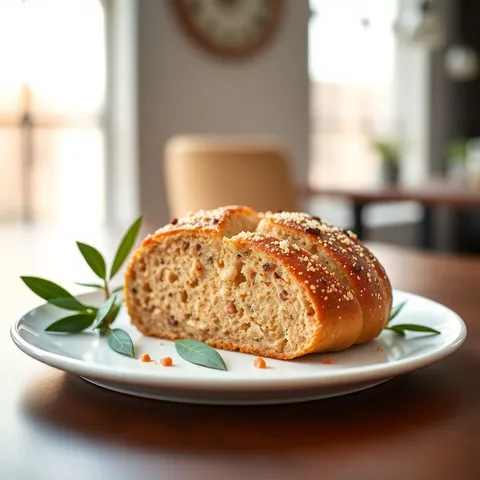
 Bread Machine Sage-Wheat Bread
A fragrant whole-wheat loaf scented with sage and a hint of cornmeal, made effortlessly in a bread machine.