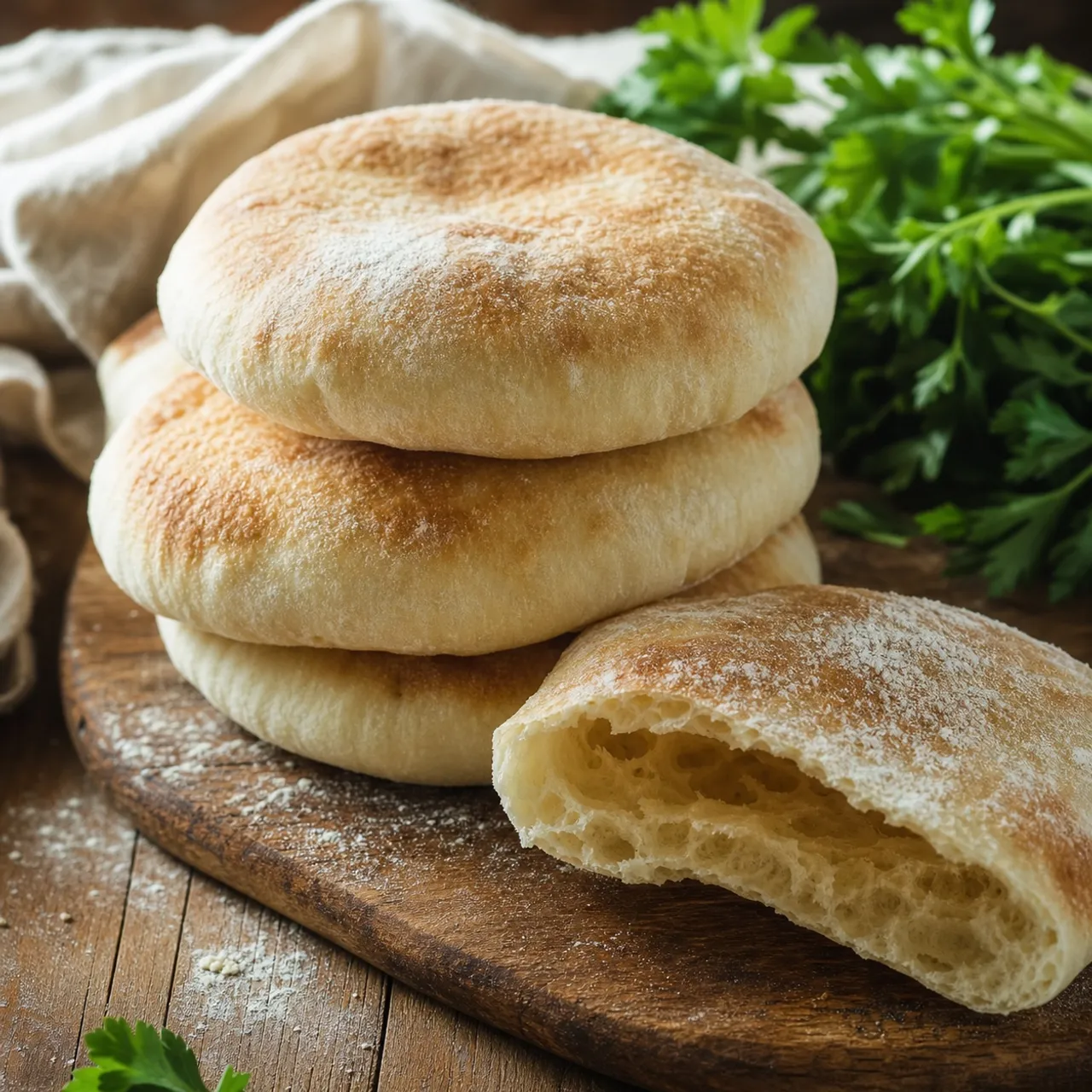
 Breads Images are for illustrative purposes only, may be inaccurate, and do not guarantee the presence or absence of specific ingredients.
 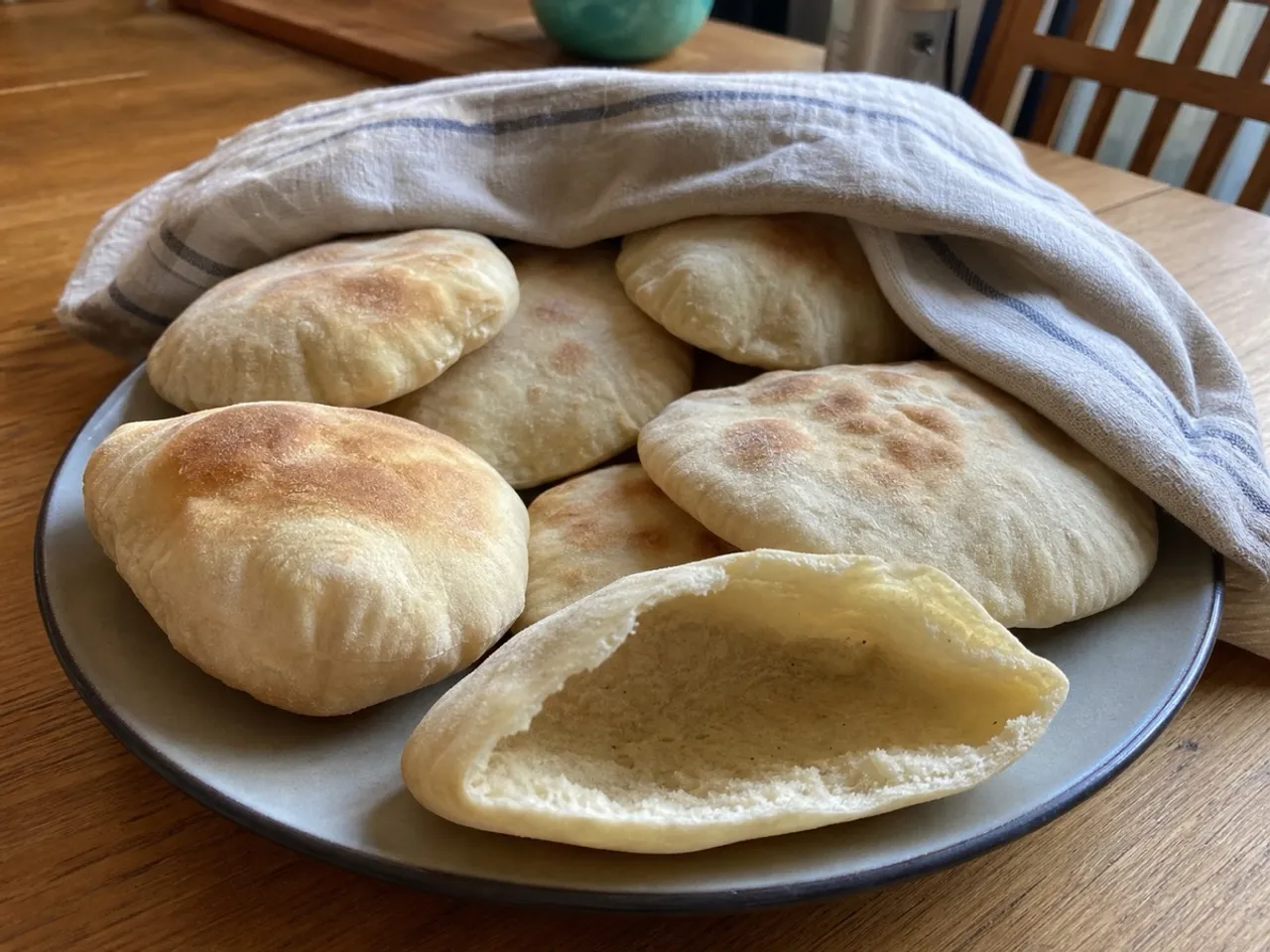 Serving Images are for illustrative purposes only, may be inaccurate, and do not guarantee the presence or absence of specific ingredients.
 Pocket Pita Bread
Simple yeasted flatbreads baked at high heat so steam puffs them into a hollow pocket for stuffing.
Contains common allergens
In the app, Listahan checks these against your household automatically.
Instructions
8 steps- 1
Whisk warm water, yeast, and sugar; let stand 5 minutes until foamy.
- 2
Add flour, salt, and olive oil; knead 8 minutes until smooth and elastic.
- 3
Cover and rise 1 hour until doubled.
- 4
Divide dough into 8 balls, cover, and rest 15 minutes.
- 5
Roll each ball into a 6-inch round about 1/4-inch thick on a floured surface.
- 6
Preheat a baking stone or heavy baking sheet in the oven at 500°F (260°C) for 30 minutes.
- 7
Bake pitas directly on the hot surface 3-4 minutes until puffed into a dome and lightly golden.
- 8
Wrap baked pitas in a clean towel to keep soft while remaining batches bake.
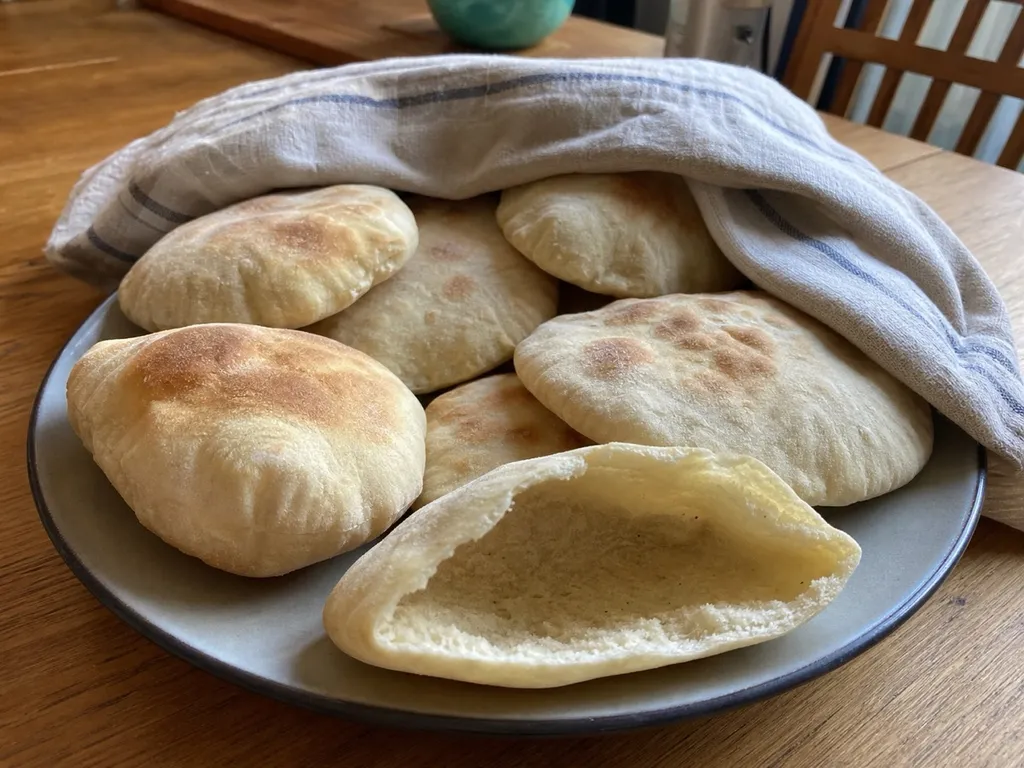 Images are for illustrative purposes only, may be inaccurate, and do not guarantee the presence or absence of specific ingredients.
 Listahan Family Score™
72/100
Good fit for most families
Score reflects how well this recipe fits a typical busy household. In the app, your Family Score is personalized to your household's allergens, kids, and pantry.
Nutrition
per serving265
Calories
7 g
Protein
49 g
Carbs
4 g
Fat
Estimated per serving. Actual values depend on the brands and portions you use.
Listahan cooking guide
Chef notes & practical guide
Technique notes, ingredient swaps, serve-alongside ideas, storage guidance, and equipment for this recipe.
Cultural context
Pita sits in a broad family of Middle Eastern and Eastern Mediterranean flatbreads, where simple doughs are cooked quickly on very hot surfaces. The pocket is a practical accident of heat and moisture: steam inflates the thin round, then leaves a hollow space once the bread cools.
Listahan note
This version keeps the dough lean and dependable, then puts the real attention on rolling evenly and baking on a fully heated surface. The goal is soft pitas with a pocket that opens cleanly for stuffing.
Technique cues
- Roll each round to an even thickness; thin edges or a thick center can stop the steam from lifting the whole pita.
- A baking stone or heavy sheet needs a long preheat because the first blast of bottom heat is what makes the pocket form.
- Wrap the baked pitas right away so trapped steam softens the crust instead of letting it turn crisp.
Kitchen flow
- Parallel prep
- Preheat the baking stone or heavy sheet during the second dough rest so the oven is ready when the rounds are rolled.
- Make-ahead
- Mix and rise the dough, then refrigerate the covered dough balls for several hours before rolling and baking.
- Leftover move
- Tear extra pita into pieces, toast until crisp, and use them over chopped salad or soup.
- Cleanup rhythm
- Flour the counter lightly and brush it clean between batches so dry flour does not burn on the hot baking surface.
Ingredient brief
Role, handling, and swap guidance for each key ingredient.
Bread flour
Structure base
Purpose: Bread flour gives the dough enough strength to stretch around the steam pocket without tearing too easily.
Handling: Knead until the dough feels smooth and elastic rather than shaggy.
Adaptation: All-purpose flour makes a softer, slightly less chewy pita and may need a touch less water.
Instant yeast
Leavening
Purpose: Instant yeast gives the dough enough lift and fermentation flavor within a short rise.
Handling: Whisk it with warm water and sugar first so you can see that it is active before adding the flour.
Adaptation: Active dry yeast can be used in the same amount, but give it the full foaming time before mixing.
Sugar
Yeast support
Purpose: A small amount helps the yeast wake up and encourages light browning in the hot oven.
Handling: Dissolve it with the yeast so it is evenly distributed through the dough.
Adaptation: Honey works in the same small amount, adding a rounder sweetness to the dough.
Olive oil
Softness and flavor
Purpose: Olive oil keeps the pita more tender after baking and adds a gentle savory note.
Handling: Add it with the flour so it kneads evenly into the dough.
Adaptation: A neutral oil gives a plainer bread with less olive flavor.
Technique notes
- Keep the rounds covered after shaping; a dry skin can prevent a clean puff in the oven.
- Bake only a few pitas at a time so each one lands on a very hot surface with space to expand.
- Pull the pitas when they are puffed and lightly golden, not deeply browned, if you want them soft enough to fold.
Ingredient swaps
- All-purpose flour path
- Use all-purpose flour for a softer pita; start with the same dough feel and add flour only if it stays sticky after kneading.
- Whole wheat direction
- Replace up to half the bread flour with whole wheat flour for a nuttier taste and slightly denser pocket.
- Skillet backup
- Cook rounds one at a time in a very hot dry cast-iron skillet, flipping once they balloon and spot-brown.
Serve alongside
- Hummus with olive oil
- Falafel with tahini sauce
- Chicken shawarma
- Israeli chopped salad
- Mint lemonade
- Ayran
- Iced black tea with lemon
Serving suggestions only — check pairings for your household's allergens.
Storage & reheating
- Refrigerate fully cooled pitas in a sealed bag for up to 4 days.
- Reheat in a warm oven wrapped in foil or briefly toast if you want crisp edges.
- Freeze with parchment between pitas, then thaw at room temperature before warming.
Equipment
- Large mixing bowl
- Bench scraper
- Rolling pin
- Baking stone or heavy baking sheet
Make this household-aware
Listahan Pro checks this recipe against your household's allergens, finds pantry-aware swaps, builds the shopping list, and helps you plan the week around it.
Plan it in Listahan
Add Pocket Pita Bread to your week, check it against your household's allergens, and build the shopping list automatically.
More Breads recipes
Rice Crust for Quiches or Pies
A simple pressed crust made from cooked rice that holds savory quiche and pie fillings beautifully.
 Breads Lens Verified Images are for illustrative purposes only, may be inaccurate, and do not guarantee the presence or absence of specific ingredients.
 Kentucky Biscuits
Tall, flaky Southern-style biscuits with a tender crumb, perfect with butter and jam.
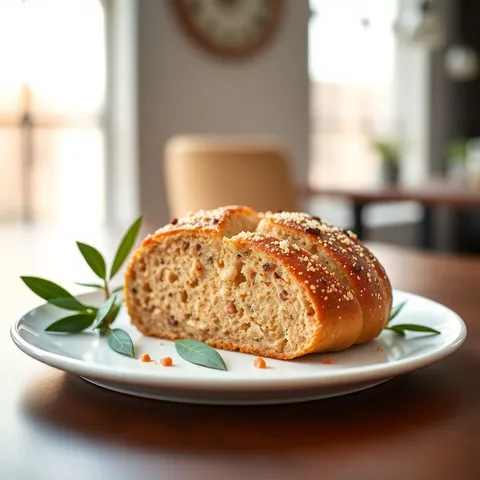 Breads Lens Verified Images are for illustrative purposes only, may be inaccurate, and do not guarantee the presence or absence of specific ingredients.
 Bread Machine Sage-Wheat Bread
A fragrant whole-wheat loaf scented with sage and a hint of cornmeal, made effortlessly in a bread machine.