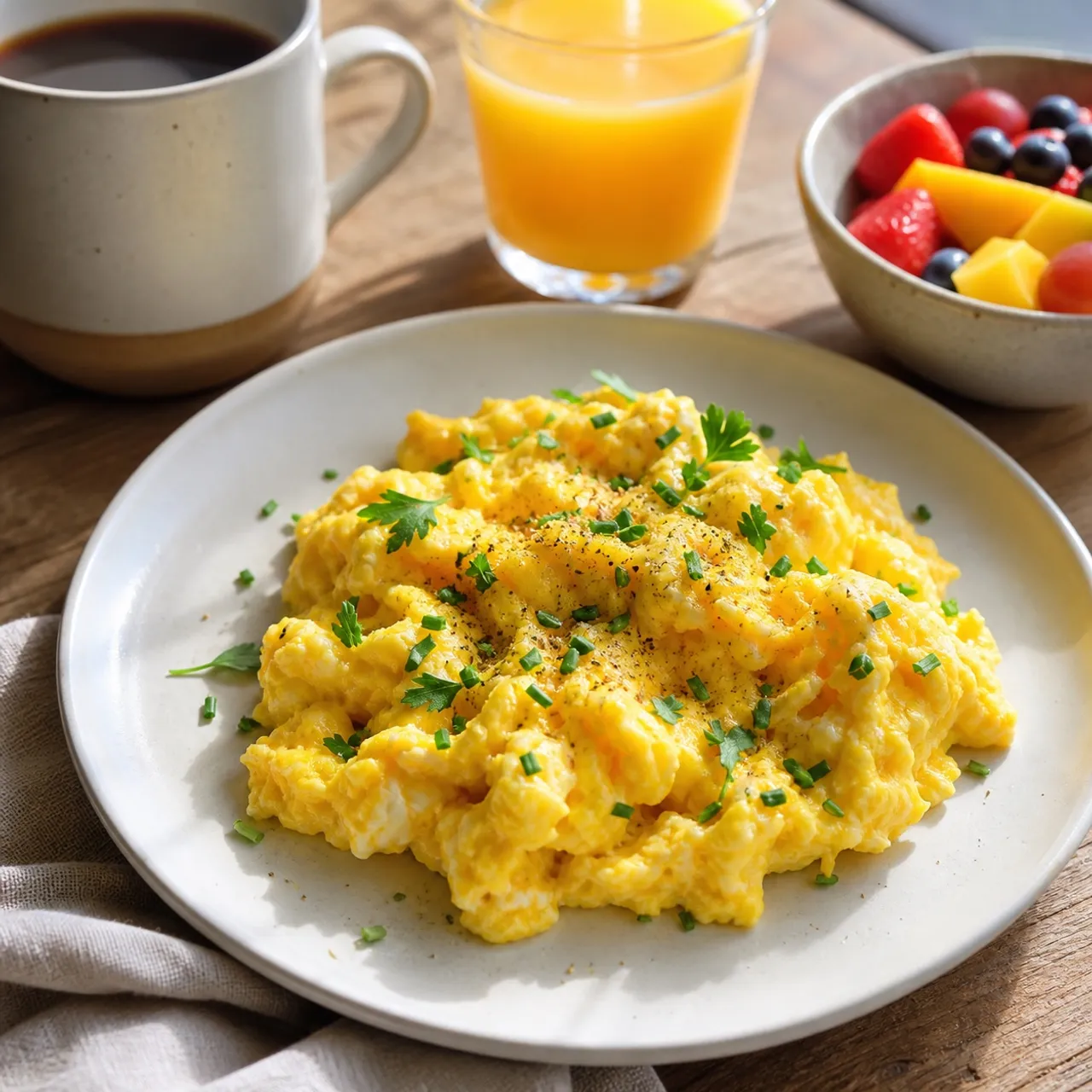
 Breakfast Images are for illustrative purposes only, may be inaccurate, and do not guarantee the presence or absence of specific ingredients.
 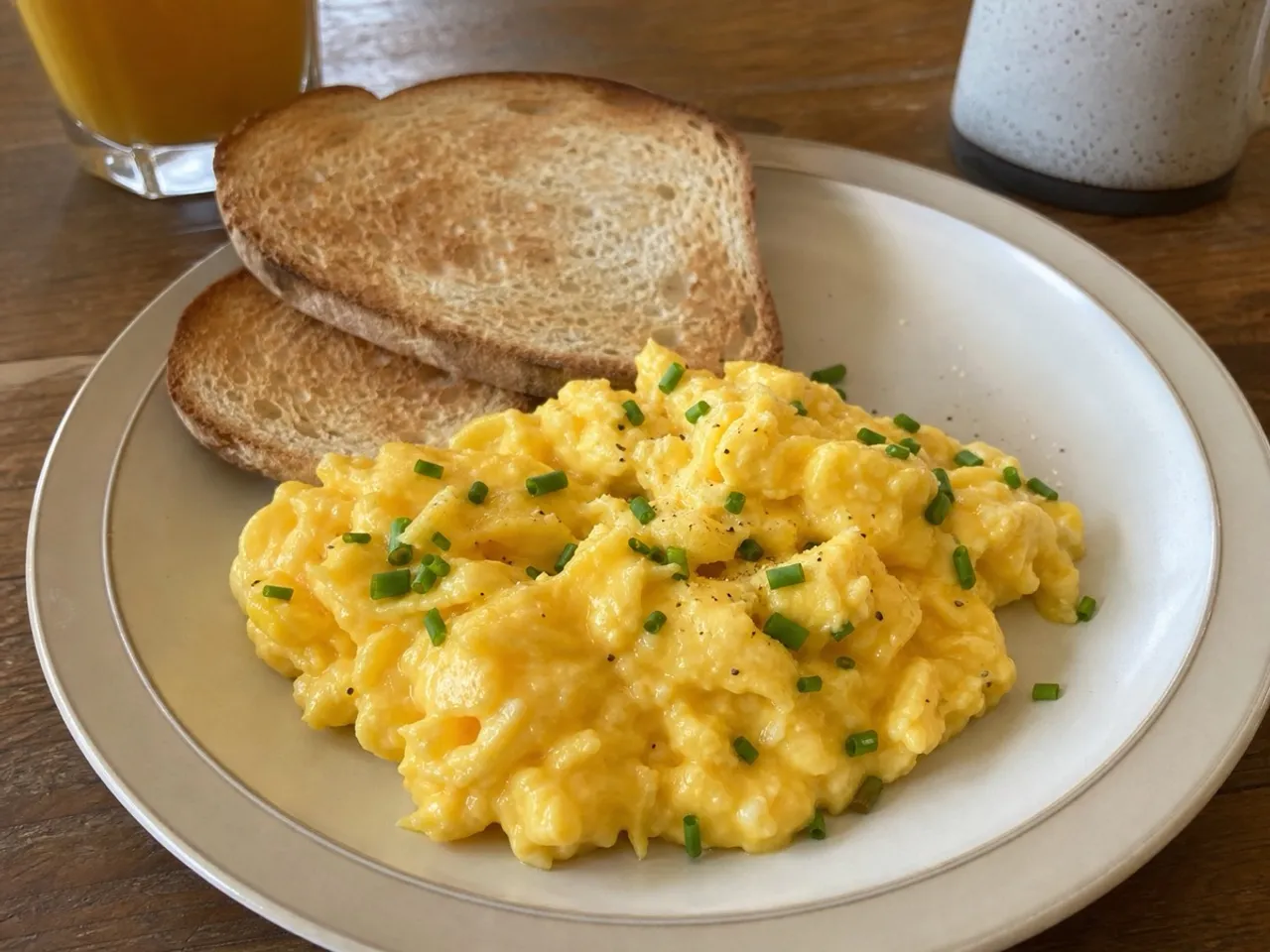 Serving Images are for illustrative purposes only, may be inaccurate, and do not guarantee the presence or absence of specific ingredients.
 Classic Scrambled Eggs
Soft, creamy scrambled eggs cooked low and slow with butter and a splash of milk. The everyday breakfast staple.
Contains common allergens
In the app, Listahan checks these against your household automatically.
Good to know
- Ready in under 30 minutes
Matched from this dish's own ingredients and timing. Browse more: 30-minute meals
Instructions
5 steps- 1
Crack eggs into a bowl, add milk, salt, and pepper, and whisk until fully blended.
- 2
Melt butter in a nonstick skillet over low heat.
- 3
Pour in eggs and let sit a few seconds, then gently push and fold with a spatula as curds form.
- 4
Continue folding over low heat until eggs are just set but still glossy, about 3-4 minutes.
- 5
Remove from heat immediately (residual heat finishes cooking), garnish with chives, and serve.
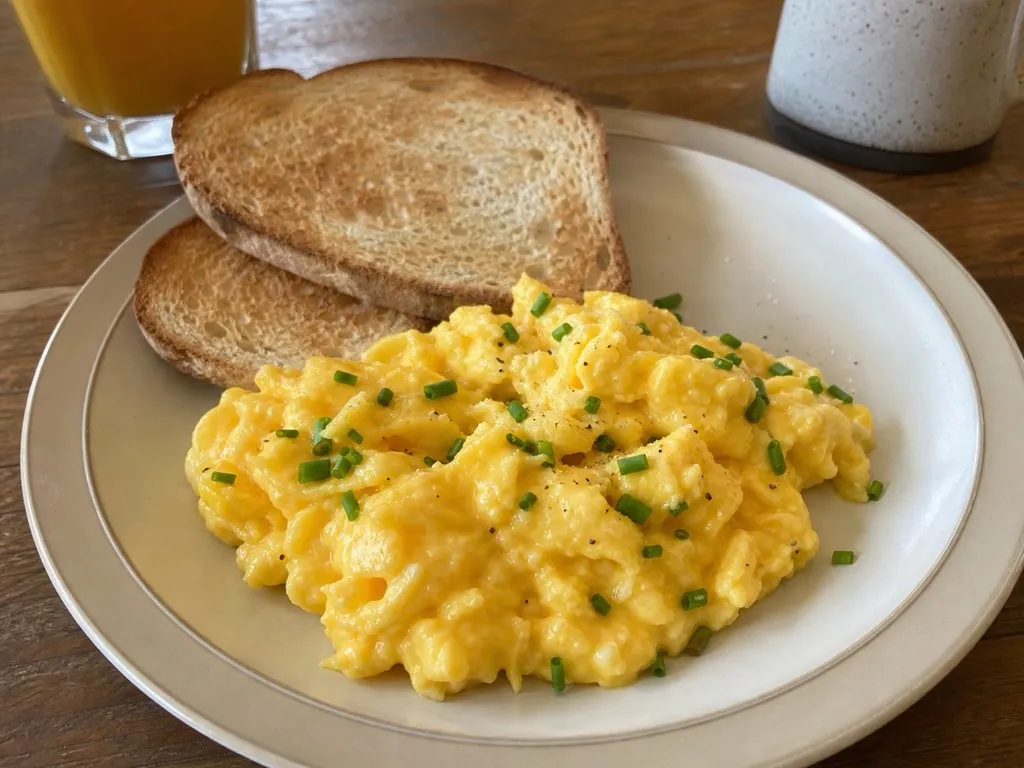 Images are for illustrative purposes only, may be inaccurate, and do not guarantee the presence or absence of specific ingredients.
 Listahan Family Score™
83/100
Good fit for most families
Score reflects how well this recipe fits a typical busy household. In the app, your Family Score is personalized to your household's allergens, kids, and pantry.
Nutrition
per serving205
Calories
14 g
Protein
2 g
Carbs
16 g
Fat
Estimated per serving. Actual values depend on the brands and portions you use.
Listahan cooking guide
Chef notes & practical guide
Technique notes, ingredient swaps, serve-alongside ideas, storage guidance, and equipment for this recipe.
Cultural context
Scrambled eggs sit in the practical breakfast lane of many North American kitchens, but the soft, glossy style borrows more from low-heat European technique than from diner-style firm curds. The dish works because eggs set quickly, so small choices like pan heat, stirring pace, and when you pull them off the burner change the result more than extra ingredients do.
Listahan note
This version keeps the flavor familiar and puts the attention on gentle heat, butter in the pan, and stopping while the eggs still look a little glossy. It is built for a weekday breakfast, not a special setup.
Technique cues
- Low heat gives you time to make small, tender curds instead of dry sheets of egg.
- Whisk until the yolks and whites are fully blended; streaky eggs cook unevenly and can turn patchy in the pan.
- Pull the eggs before they look completely finished. Residual heat from the skillet keeps setting them for another minute.
Kitchen flow
- Parallel prep
- Toast bread or warm tortillas while the butter melts; the eggs only need a few minutes once they hit the pan.
- Make-ahead
- Whisk the eggs, milk, salt, and pepper just before cooking rather than hours ahead, since the texture is best when cooked right away.
- Leftover move
- Fold leftover eggs into a breakfast wrap with potatoes or spoon them onto toast with extra chives.
- Cleanup rhythm
- Rinse the nonstick skillet while it is still warm, then wipe with a soft sponge so cooked egg does not dry onto the surface.
Ingredient brief
Role, handling, and swap guidance for each key ingredient.
4 large eggs
Main structure
Purpose: Eggs provide the body of the dish, and their proteins set quickly into soft curds when cooked gently.
Handling: Crack them into a bowl first so you can remove shell pieces and whisk evenly before the pan is hot.
Adaptation: Use the same number of extra-large eggs for slightly fuller portions, but watch the pan a little longer.
Whole milk
Moisture and tenderness
Purpose: A small splash loosens the eggs and helps the curds stay soft rather than tight.
Handling: Whisk it in with the eggs before cooking so it distributes evenly.
Adaptation: Half-and-half makes a richer scramble, while skipping the milk gives a firmer, more egg-forward texture.
Unsalted butter
Pan fat and flavor
Purpose: Butter coats the skillet, helps prevent sticking, and gives the eggs a rounded breakfast flavor.
Handling: Melt it gently and pour in the eggs when it is foamy but not browned.
Adaptation: A neutral oil works for cooking the eggs, though the finished flavor will be cleaner and less rich.
Black pepper
Finishing warmth
Purpose: A small amount gives the eggs a mild peppery edge without covering their delicate flavor.
Handling: Add it before cooking for even seasoning, or finish with a fresh grind for more aroma.
Adaptation: White pepper gives a quieter look and a slightly sharper pepper note.
Chives, chopped (optional)
Fresh garnish
Purpose: Chives add a light onion note that cuts through the butter without making the eggs taste heavy.
Handling: Slice them finely and add at the end so they stay bright and fresh.
Adaptation: Thinly sliced scallion greens or a little parsley can stand in, with scallions tasting more onion-forward.
Technique notes
- Keep the spatula moving slowly, not constantly. Letting the eggs sit for a few seconds between folds helps curds form.
- Use a silicone spatula if you have one; it sweeps the pan cleanly and keeps the curds intact.
- If the eggs start setting too fast around the edges, lift the pan off the heat for a few seconds and keep folding.
Ingredient swaps
- No-milk direction
- Skip the milk and cook even more gently for a firmer scramble with a stronger egg flavor.
- Richer curds
- Use half-and-half in place of whole milk for a softer, fuller texture.
- Herb backup
- Use parsley, dill, or scallion greens instead of chives, adding them after cooking so they stay fresh.
Serve alongside
- Buttered sourdough toast
- Crispy breakfast potatoes
- Roasted tomato halves
- Warm flour tortillas
- Fresh orange juice
- Black coffee
- English breakfast tea
Serving suggestions only — check pairings for your household's allergens.
Storage & reheating
- Refrigerate leftover scrambled eggs in a sealed container for up to 2 days.
- Reheat gently in a skillet over low heat, stirring with a small pat of butter or splash of milk to loosen the curds.
- Freezing is not ideal because the curds can turn watery and grainy after thawing.
Equipment
- Mixing bowl
- Balloon whisk
- Small nonstick skillet
- Silicone spatula
Make this household-aware
Listahan Pro checks this recipe against your household's allergens, finds pantry-aware swaps, builds the shopping list, and helps you plan the week around it.
Plan it in Listahan
Add Classic Scrambled Eggs to your week, check it against your household's allergens, and build the shopping list automatically.
More Breakfast recipes
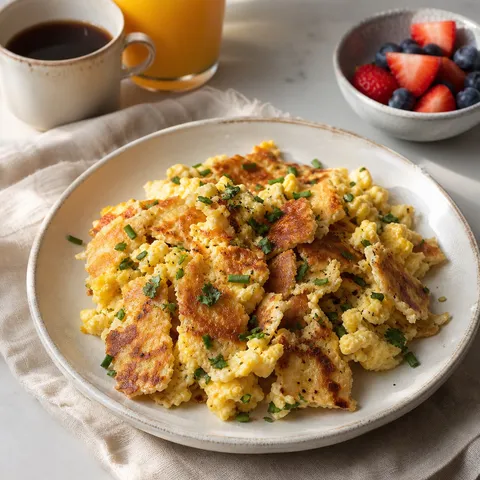 Breakfast Lens Verified Images are for illustrative purposes only, may be inaccurate, and do not guarantee the presence or absence of specific ingredients.
 Matzo Brei
A beloved Passover-week breakfast: matzo soaked in egg, fried until golden, and served sweet with cinnamon-sugar or savory with salt.
 Breakfast Lens Verified Images are for illustrative purposes only, may be inaccurate, and do not guarantee the presence or absence of specific ingredients.
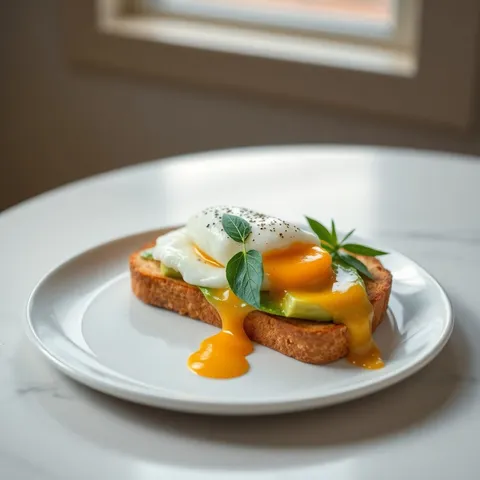
 Avocado Toast with Poached Egg
Crusty toasted sourdough piled with bright, lemony smashed avocado and topped with a soft poached egg that spills its golden yolk on first cut.
 Breakfast Lens Verified Images are for illustrative purposes only, may be inaccurate, and do not guarantee the presence or absence of specific ingredients.
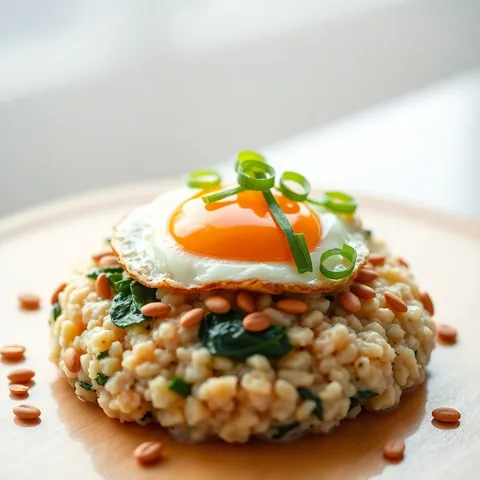
 Savory Steel-Cut Oatmeal
Hearty steel-cut oats simmered in savory broth and topped with a soft egg, sauteed greens, and toasted seeds.