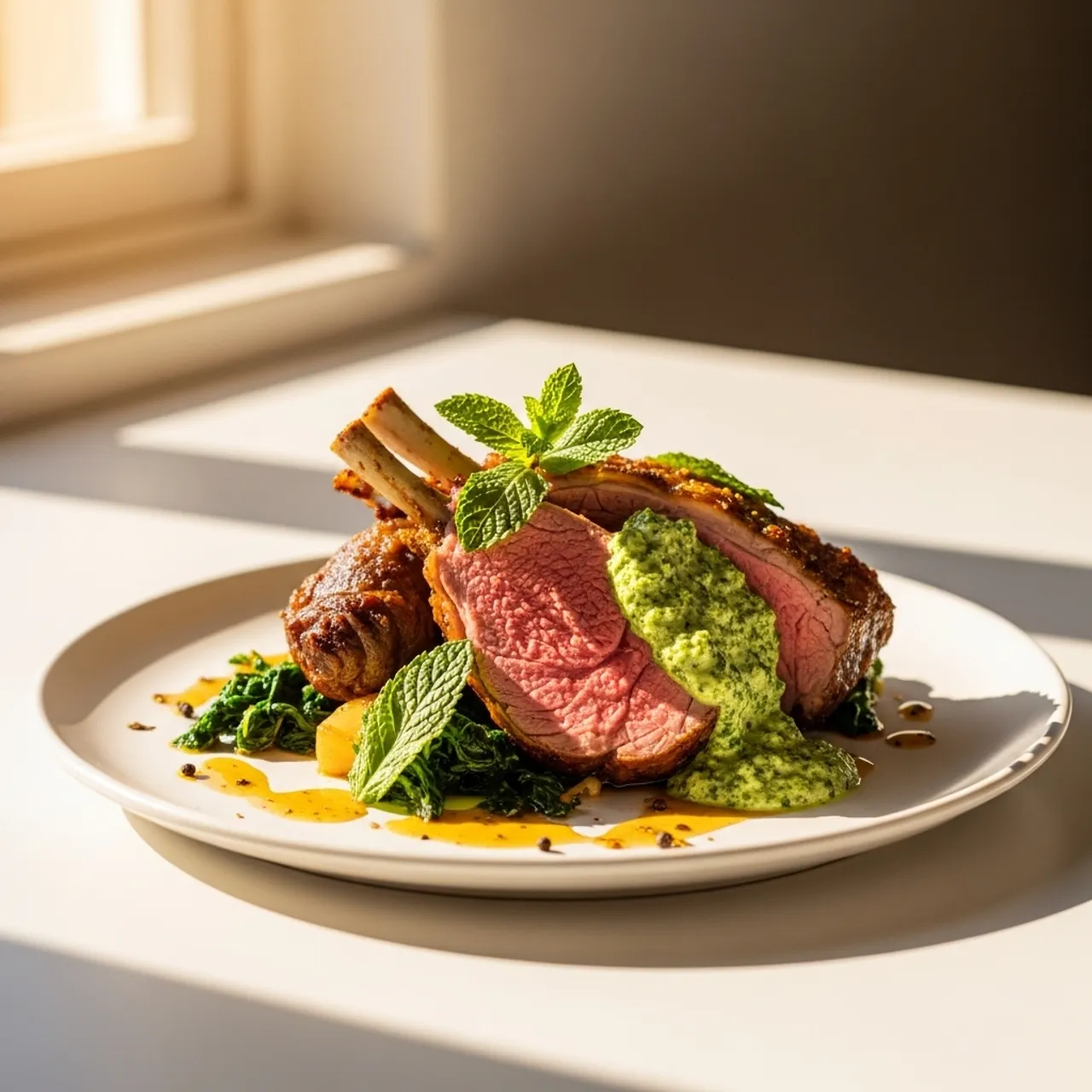
 British & Irish Images are for illustrative purposes only, may be inaccurate, and do not guarantee the presence or absence of specific ingredients.
 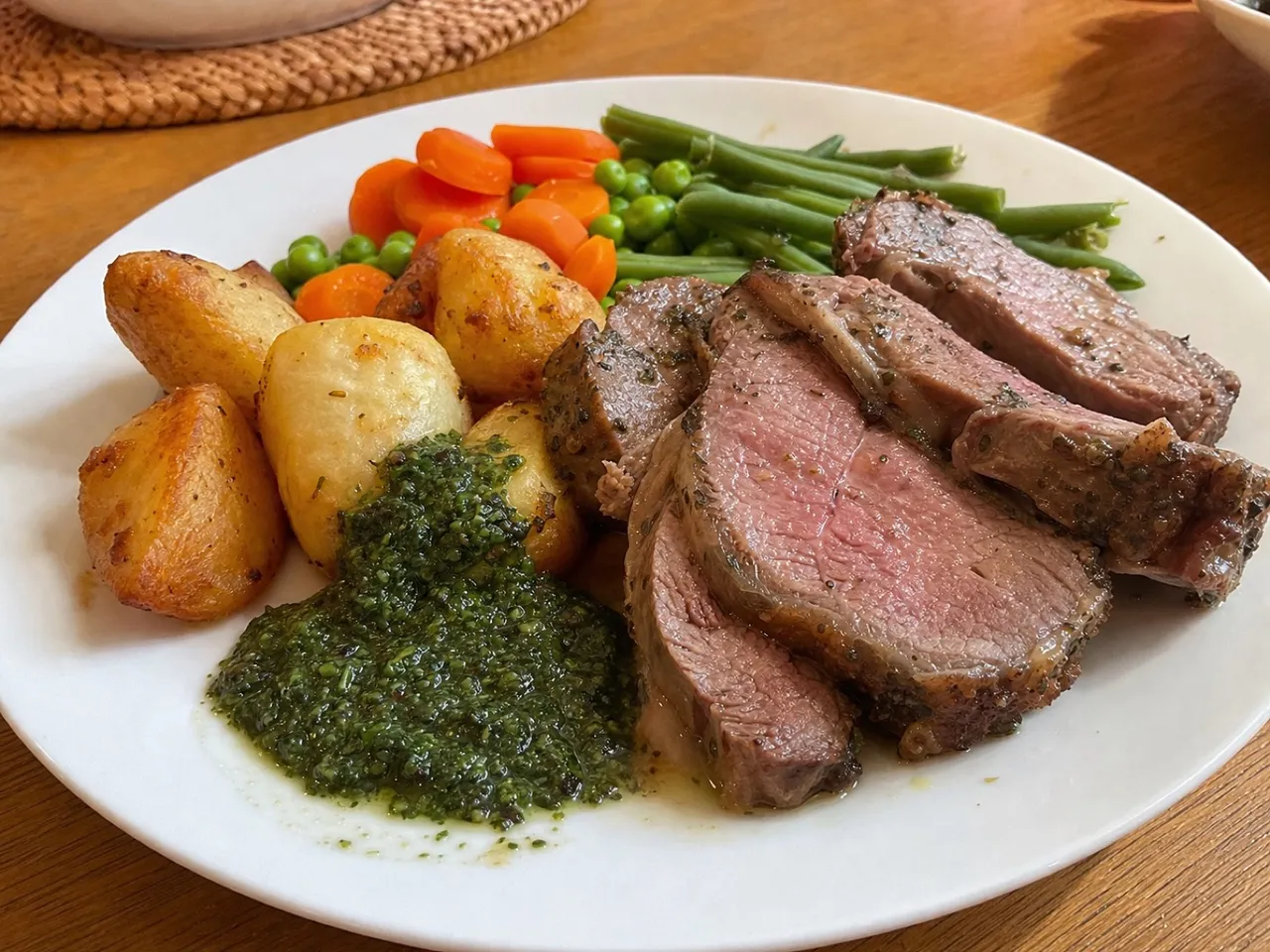 Serving Images are for illustrative purposes only, may be inaccurate, and do not guarantee the presence or absence of specific ingredients.
 Roast Lamb with Mint Sauce
Slow-roasted leg of lamb rubbed with garlic and rosemary, served with a bright, sharp fresh mint sauce — the crowning glory of a British Easter Sunday table.
No common allergens detected
Based on this recipe's ingredient list. Always verify with your own brands and labels.
Instructions
7 steps- 1
Using a small knife, cut slits all over the lamb and push a sliver of garlic and a small piece of rosemary into each one.
- 2
Rub the lamb all over with olive oil and season generously with salt and pepper, then place on a rack in a roasting tin with the extra rosemary sprigs underneath.
- 3
Roast at 220C (425F) for 20 minutes to brown the outside, then lower the oven to 180C (350F) and continue roasting, allowing about 25 minutes per 500g for medium, or until a meat thermometer reads 63C for medium.
- 4
Rest the lamb, loosely covered with foil, for 20 minutes before carving.
- 5
Meanwhile, finely chop the mint leaves with the sugar to release their oils.
- 6
Stir in the boiling water to dissolve the sugar, then add the vinegar and let the sauce sit for at least 10 minutes so the flavors infuse.
- 7
Carve the lamb and serve with the mint sauce spooned over or alongside.
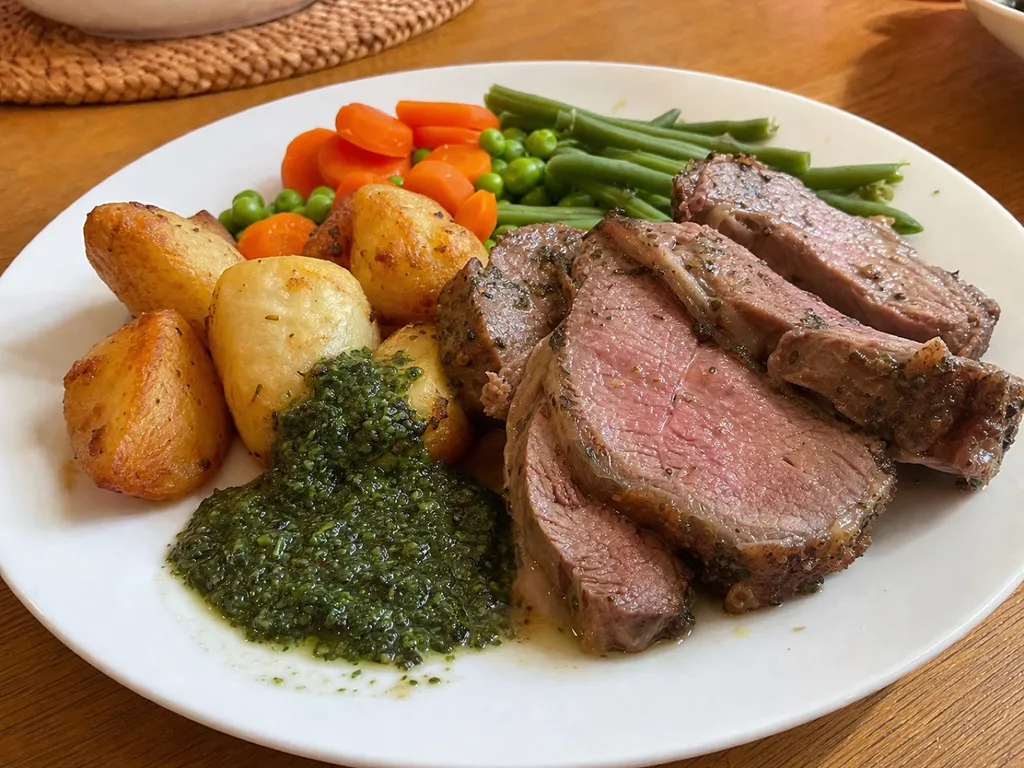 Images are for illustrative purposes only, may be inaccurate, and do not guarantee the presence or absence of specific ingredients.
 Listahan Family Score™
69/100
Works for many families
Score reflects how well this recipe fits a typical busy household. In the app, your Family Score is personalized to your household's allergens, kids, and pantry.
Nutrition
per serving505
Calories
43 g
Protein
0 g
Carbs
36 g
Fat
Estimated per serving. Actual values depend on the brands and portions you use.
Listahan cooking guide
Chef notes & practical guide
Technique notes, ingredient swaps, serve-alongside ideas, storage guidance, and equipment for this recipe.
Cultural context
Roast lamb with mint sauce has been the centerpiece of the British Sunday lunch table for centuries, deeply connected to both the pastoral landscape of Wales and the north of England where sheep farming has been central to the economy since the medieval wool trade. The pairing of lamb with mint sauce — fresh mint steeped in sugar and sharp malt vinegar — is specifically British; French cooks use mint jelly or no mint at all, and the vinegar-sharpened sauce is largely unknown outside the UK and its former colonies. The tradition of serving a leg or shoulder of lamb on Sundays and at Easter is so embedded in British culture that 'a leg of lamb' still signals both occasion and generosity.
Listahan note
This version rests the leg on a bed of garlic cloves and rosemary in the roasting tin so the fat drips down and bastes the aromatics, turning the pan drippings into the foundation of an exceptional gravy.
Technique cues
- Rest the lamb for at least 20 minutes after it comes out of the oven before carving; the muscle fibers need time to relax and reabsorb the juices that migrate to the center during roasting — cutting too early loses them permanently to the board.
- Make the mint sauce at least 30 minutes before serving so the vinegar has time to dissolve the sugar completely and the mint leaves wilt slightly and release their oils into the liquid; fresh-made mint sauce is harsh and underdeveloped.
- Start the lamb at a high temperature — 425 degrees for the first 20 minutes — to create a crust, then reduce to 350 degrees for the remainder of the cooking so the interior cooks evenly without drying the outer meat.
Kitchen flow
- Parallel prep
- Make the mint sauce and start the potatoes roasting in the oven on a separate shelf while the lamb finishes; use the lamb resting time to make the gravy from the pan drippings.
- Make-ahead
- The mint sauce keeps in the refrigerator for up to three days and is always better the day after it is made; the lamb can be brought to room temperature one hour before roasting to ensure even cooking.
- Leftover move
- Cold sliced roast lamb in a sandwich with mint sauce and a slick of mayonnaise on white bread is an iconic British leftover; the meat also makes an excellent base for a lamb and vegetable soup or a shepherd's pie filling.
- Cleanup rhythm
- Deglaze the roasting tin immediately while it is still hot with a splash of stock or wine to lift the fond; if the tin cools with hardened drippings they require a long soak and vigorous scrubbing.
Ingredient brief
Role, handling, and swap guidance for each key ingredient.
leg of lamb
primary roast
Purpose: A whole leg provides both the shank end, which is richer and more gelatinous, and the thicker top round, which has a more uniform rosy interior — two textures and levels of doneness in a single cut that satisfies different preferences at the table.
Handling: Score the fat cap in a crosshatch pattern and stud with slivers of garlic pushed deep into the cuts; this allows the seasoning to penetrate the interior and flavors the fat as it renders.
Adaptation: Bone-in shoulder is a more forgiving cut for new roasters and produces a richer, more gelatinous result; it benefits from longer, slower cooking at a lower temperature.
fresh mint
sauce base
Purpose: Fresh mint's volatile oils are the entire point of the sauce; dried mint cannot substitute because the oils have largely evaporated and the sauce would taste flat and dusty.
Handling: Chop very finely — almost to a paste — so the leaves release maximum oil into the vinegar and sugar syrup.
Adaptation: A combination of mint and a small amount of fresh flat-leaf parsley produces a more complex sauce; adding a teaspoon of finely grated lemon zest brightens the whole preparation.
malt vinegar
acid in mint sauce
Purpose: Malt vinegar's sharp, slightly fermented character is the specific acidity that defines British mint sauce; it cuts through the richness of the lamb fat far more assertively than a milder vinegar would.
Handling: Combine with the sugar first and stir until dissolved before adding the mint so the sugar does not soak into the leaves unevenly.
Adaptation: White wine vinegar produces a cleaner, more refined sauce; cider vinegar adds a mild fruitiness that works particularly well with younger spring lamb.
garlic cloves
aromatic for lamb and gravy
Purpose: Garlic pushed into the lamb and scattered in the roasting tin infuses both the meat and the pan drippings with a gentle aromatic base that becomes the foundation of the gravy.
Handling: Slice into thin slivers for the meat and leave whole cloves in the pan so they soften and caramelize without burning.
Adaptation: Anchovy fillets pushed into the same cuts in place of half the garlic are a classic Italian-influenced approach that adds umami depth without any fish flavor in the finished roast.
fresh rosemary
herb pairing for lamb
Purpose: Rosemary's resinous, piney character is one of the most natural pairings with lamb's rich fat, and together they produce the aromatic that most people associate immediately with a Sunday roast.
Handling: Strip the needles from the woody stems and stuff sprigs into the cuts alongside the garlic, or scatter whole sprigs in the roasting tin to perfume the drippings.
Adaptation: Thyme is a subtler alternative that works well with lamb without being as dominant as rosemary; a combination of both is equally traditional.
Technique notes
- An instant-read thermometer is the only reliable way to know when the lamb is at your preferred doneness: 125 to 130 degrees for medium-rare, 135 to 140 for medium, 145 and above for well-done — oven temperatures and size variations make timing alone unreliable.
- For a particularly impressive presentation, remove the aitchbone before roasting so the leg sits flat and can be carved cleanly into even slices without navigating around an awkward bone; ask the butcher to do this.
- Whisking a tablespoon of cold butter into the gravy off the heat gives it a glossy, restaurant-quality finish that plain gravy powder alone cannot achieve.
Ingredient swaps
- Lower-fat direction
- Trim the fat cap down to a thin layer before roasting; this reduces the richness of the drippings and produces a leaner joint that still crisps on the outside with a proper crust.
- Allium-free direction
- Omit the garlic and use a combination of rosemary, lemon zest, and dried oregano rubbed into the cuts instead; the result is highly aromatic without any allium compounds.
- Weeknight shortcut
- Use bone-in lamb chops instead of a whole leg; season and roast at 400 degrees for 15 to 18 minutes for medium-rare, and the same mint sauce and accompaniments create the full Sunday roast experience in under 30 minutes.
Serve alongside
- Roasted potatoes with duck fat and rosemary
- Minted garden peas with butter
- Honey-glazed roasted carrots and parsnips
- Bordeaux-style Cabernet blend or a Rioja Reserva
- Real ale — a session bitter or amber ale
- Elderflower cordial with sparkling water for a non-alcoholic pairing
Serving suggestions only — check pairings for your household's allergens.
Storage & reheating
- Leftover roast lamb keeps in the refrigerator for up to four days wrapped or in a container; the fat solidifies when cold and the lamb is best eaten cold in sandwiches or reheated slowly in gravy on the stovetop.
- The carcass and bones make an excellent stock simmered for three to four hours with onion, carrot, celery, and herbs; the lamb stock can be frozen for up to three months and used as a gravy or soup base.
Equipment
- Large roasting tin at least 3 inches deep to contain the drippings without overflow
- Meat thermometer (instant-read or leave-in probe) for precise doneness
- Carving board with a juice groove to catch the resting juices
- Sharp carving knife and fork for clean, even slices
Make this household-aware
Listahan Pro checks this recipe against your household's allergens, finds pantry-aware swaps, builds the shopping list, and helps you plan the week around it.
Plan it in Listahan
Add Roast Lamb with Mint Sauce to your week, check it against your household's allergens, and build the shopping list automatically.
More British & Irish recipes
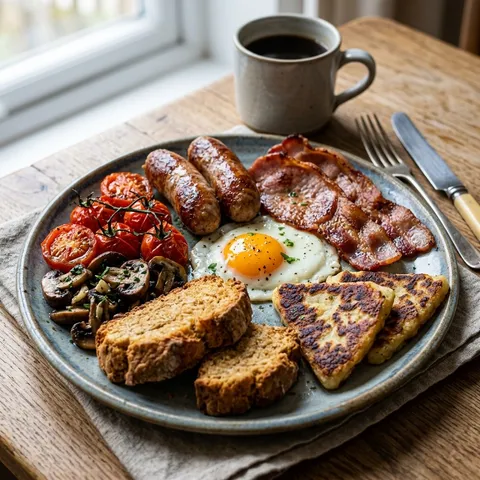 British & Irish Lens Verified Images are for illustrative purposes only, may be inaccurate, and do not guarantee the presence or absence of specific ingredients.
 Ulster Fry
Northern Ireland's legendary fry-up: bacon, sausages, eggs, black pudding, potato bread, and soda bread — fuller and heartier than its English cousin.
 British & Irish Lens Verified Images are for illustrative purposes only, may be inaccurate, and do not guarantee the presence or absence of specific ingredients.
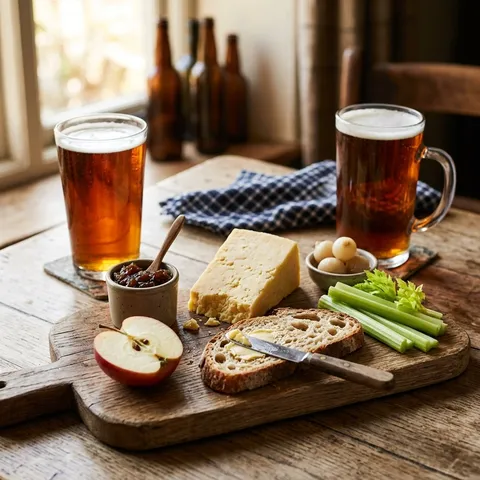
 Ploughman's Lunch
Sharp aged cheddar, crusty bread, tangy Branston pickle, and a boiled egg — a beloved no-cook British lunch that's greater than the sum of its parts.
 British & Irish Lens Verified Images are for illustrative purposes only, may be inaccurate, and do not guarantee the presence or absence of specific ingredients.
 Treacle Tart
A sweet, sticky tart filled with golden syrup and fresh breadcrumbs, with a gently caramelized top and a hint of lemon — Harry Potter's favorite dessert.