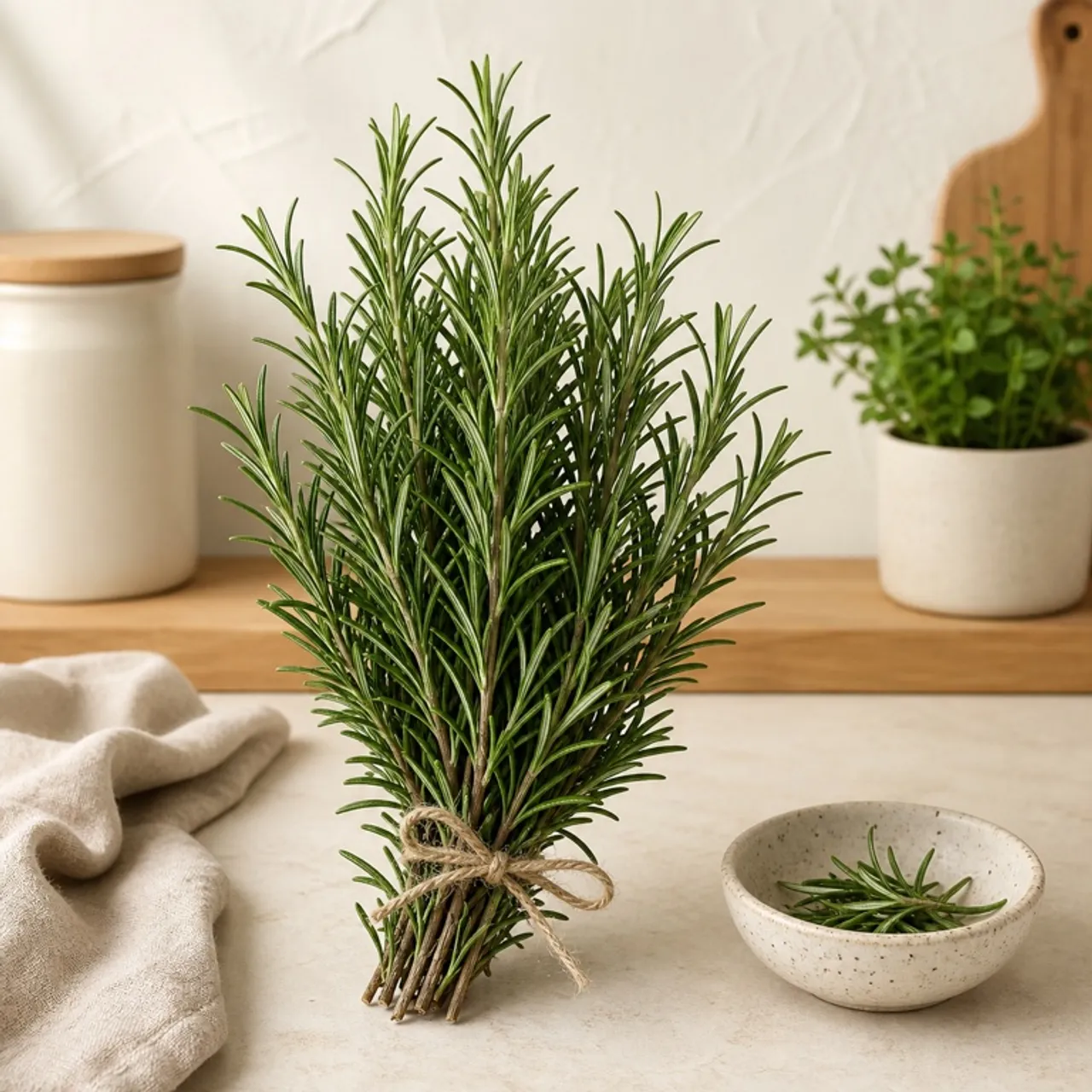
 Food Lens Images are for illustrative purposes only, may be inaccurate, and do not guarantee the presence or absence of specific ingredients.
 Food Lens · Produce
Rosemary
Intensely aromatic and piney with a resinous, almost camphor-like quality, a floral lavender-like note, and a warm, slightly bitter finish.
Lens VerifiedRosemary is a robust, needle-leaved Mediterranean herb with an intensely piney, resinous, and floral aroma that anchors roasted meats, potatoes, breads, and grilled vegetables.
Where it comes from
Rosemary has grown wild along Mediterranean coastlines for millennia and appears in the written records of ancient Greece and Rome, where it symbolized memory and fidelity. It was among the first herbs carried by European settlers to North America, planted in gardens as both a culinary and medicinal herb. Today it thrives in home gardens across warm and temperate regions of the continent and is sold fresh year-round in North American supermarkets, a reliable bridge between Italian-American family traditions and contemporary farm-to-table cooking.
Varieties — Upright rosemary (the standard culinary type) is the most common. Creeping or prostrate rosemary is used as a ground cover but is equally edible. Most rosemary sold in North American markets is the same species (Salvia rosmarinus) regardless of brand or origin.
Rosemary is tied to Italian and Provençal cooking — essential to Tuscan arrosto di maiale (roast pork), herb de Provence blends, and Ligurian focaccia; in North African cooking it flavors lamb and merguez; in Greek cuisine it seasons roast lamb alongside oregano and lemon.
In a modern kitchen — Rosemary is potent — a little goes a long way. Start with less than you think you need. Adding a whole sprig during cooking and removing it before serving gives a gentle infusion; mincing leaves fine and adding them early delivers full intensity. Pair with fat (olive oil, butter) to soften its resinous edge.
Buying it
Look for sprigs with stiff, upright needles that are dark green on top and pale silver-green underneath. The aroma should be powerful and piney when you rub a few needles — faint scent means old or dried-out rosemary. Avoid yellowed, dried-out, or brittle sprigs.
Storing it
Wrap loosely in a damp paper towel and store in the fridge crisper, or stand sprigs in a glass of water. Fresh rosemary stays fragrant for over a week; discard if it blackens or turns slimy.
Keeps about 10 days in the fridge.
In season
Peak season is June–September, though it's available year-round.
Outdoor garden rosemary peaks in warm months, while greenhouse and imported sprigs keep it available year-round.
Out of rosemary? Good swaps
- Dried rosemary — Use ⅓ the amount of fresh (1 tsp dried = 1 tablespoon fresh); good in braises and roasts but less vibrant
- Fresh thyme — More delicate and floral; use 1.5x the amount — works well in most savory applications
- Fresh sage — Earthier and more pungent; use ½ the amount — particularly good with pork and poultry
General cooking guidance — always check the labels on the products you use. Listahan’s allergen checks run automatically when you plan a recipe in the app. Not medical advice.
Recipes that use rosemary
- Santa Maria Tri-Tip
- Pollo al Ajillo
- Arni Souvlaki (Grilled Lamb Skewers)
- Sheet-Pan Chicken and Vegetables
- Herbed Pizza Crust
- Pasta e Fagioli
- Chicken Cacciatore
- Lamb Kleftiko (Slow-Roasted Lamb in Parchment)
- Grilled Ribeye Steak
- Ribeye Steak Florentine (Bistecca alla Fiorentina)
- Mixed Onion Soup in Sourdough Bread Bowls
- Tibs
Common questions about rosemary
Is rosemary vegan?
Rosemary is generally plant-based and suitable for a vegan diet, but brands differ — confirm on the label.
What can I use instead of rosemary?
Good swaps include Dried rosemary, Fresh thyme, Fresh sage. Each behaves a little differently — see the swaps above for notes, and always check labels for allergens.
How do I store rosemary?
Wrap loosely in a damp paper towel and store in the fridge crisper, or stand sprigs in a glass of water. Fresh rosemary stays fragrant for over a week; discard if it blackens or turns slimy. It keeps about 10 days in the fridge.
More produce
See all


Make rosemary about your kitchen — with Listahan Pro
Everything above is free, forever. Pro adds the Household Lens — the same food, seen for your family:
-
Checked for each member
Flags rosemary per person against your household's allergies and school rules — not just a generic "contains" tag.
-
Pantry-aware
Knows whether you already have it, what is running low, and the best swap from what is in your kitchen tonight.
-
What it costs near you
A real price from the Presyo community index, so you can plan the budget — not guess.
-
Your household memory
Who likes it, plus your own private notes — brand, where you keep it, who skips it.
Allergen safety is always free — Pro adds the automation, never the safety.
Cook with rosemary — safely
Plan a recipe in Listahan and the household allergen check runs automatically — every plan, every swap, every lunchbox. Safety is never paywalled.